ALL
Profile
Ghazal343
Nazm1
Sher256
E-book130
TOP 20 SHAYARI 20
Image Shayari31
Audio46
Video47
Marsiya34
Qita27
Rubai104
Blog8
Other
Scholar17
Kulliyat1895
Qasida8
Naat1
Salam7
Manqabat16
Mukhammas4
Rubai Mustazaad1
Khud-Navisht Savaneh3
Masnavi39
Waasokht4
Tazmin4
Tarkib Band2
- ALL
- Profile
- Ghazal 343
- Nazm 1
- Sher 256
E-book130
- TOP 20 SHAYARI 20
- Image Shayari 31
- Audio 46
- Video 47
- Marsiya 34
- Qita 27
- Rubai 104
- Blog 8
- Other
- Scholar 17
- Kulliyat 1895
- Qasida 8
- Naat 1
- Salam 7
- Manqabat 16
- Mukhammas 4
- Rubai Mustazaad 1
- Khud-Navisht Savaneh 3
- Masnavi 39
- Waasokht 4
- Tazmin 4
- Tarkib Band 2
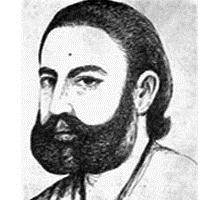
Meer Taqi Meer
Ghazal 343
Nazm 1
Sher-o-Shayari 256
nāzukī us ke lab kī kyā kahiye
pañkhuḌī ik gulāb kī sī hai
Interpretation:
Rekhta AI
The speaker is struck by the beloved’s refined beauty and finds ordinary language inadequate. By comparing the lips to a rose petal, the couplet conveys softness, freshness, and fragile tenderness. The rhetorical question intensifies wonder, suggesting that this beauty is almost beyond expression.
nazuki us ke lab ki kya kahiye
pankhuDi ek gulab ki si hai
Interpretation:
Rekhta AI
The speaker is struck by the beloved’s refined beauty and finds ordinary language inadequate. By comparing the lips to a rose petal, the couplet conveys softness, freshness, and fragile tenderness. The rhetorical question intensifies wonder, suggesting that this beauty is almost beyond expression.
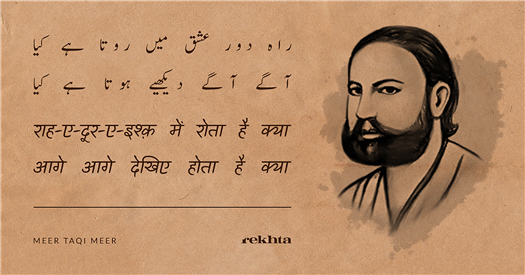
rāh-e-dūr-e-ishq meñ rotā hai kyā
aage aage dekhiye hotā hai kyā
Interpretation:
Rekhta AI
Meer Taqi Meer presents love as a long, demanding journey where early tears are premature. The speaker urges endurance, hinting that harsher trials may come later. The couplet carries a stoic, almost teasing consolation: don’t collapse at the start; love reveals its true cost as one moves forward.
rah-e-dur-e-ishq mein rota hai kya
aage aage dekhiye hota hai kya
Interpretation:
Rekhta AI
Meer Taqi Meer presents love as a long, demanding journey where early tears are premature. The speaker urges endurance, hinting that harsher trials may come later. The couplet carries a stoic, almost teasing consolation: don’t collapse at the start; love reveals its true cost as one moves forward.
pattā pattā buuTā buuTā haal hamārā jaane hai
jaane na jaane gul hī na jaane baaġh to saarā jaane hai
only the flower's unaware, rest of the garden knows
my state,each leaf and every bud that in the garden grows
Interpretation:
Rekhta AI
The speaker’s grief has become so visible that even nature seems aware of it. Each leaf and twig is a witness to the lover’s condition, while the “flower” (the beloved) remains unaware or indifferent. By contrasting the garden’s knowing with the flower’s not knowing, the couplet captures the ache of unreturned attention and public, undeniable sorrow.
patta patta buTa buTa haal hamara jaane hai
jaane na jaane gul hi na jaane bagh to sara jaane hai
only the flower's unaware, rest of the garden knows
my state,each leaf and every bud that in the garden grows
Interpretation:
Rekhta AI
The speaker’s grief has become so visible that even nature seems aware of it. Each leaf and twig is a witness to the lover’s condition, while the “flower” (the beloved) remains unaware or indifferent. By contrasting the garden’s knowing with the flower’s not knowing, the couplet captures the ache of unreturned attention and public, undeniable sorrow.
koī tum sā bhī kaash tum ko mile
mudda.ā ham ko intiqām se hai
Interpretation:
Rekhta AI
The speaker’s ‘revenge’ is a moral, ironic wish: that the beloved experiences the same coldness or cruelty from a person just like themselves. By mirroring the beloved’s behavior back to them, the speaker seeks recognition and self-realization rather than harm. The emotional core is wounded love that turns into a desire for the beloved to finally ‘feel’ what the speaker has endured.
koi tum sa bhi kash tum ko mile
muddaa hum ko intiqam se hai
Interpretation:
Rekhta AI
The speaker’s ‘revenge’ is a moral, ironic wish: that the beloved experiences the same coldness or cruelty from a person just like themselves. By mirroring the beloved’s behavior back to them, the speaker seeks recognition and self-realization rather than harm. The emotional core is wounded love that turns into a desire for the beloved to finally ‘feel’ what the speaker has endured.
ab to jaate haiñ but-kade se 'mīr'
phir mileñge agar ḳhudā laayā
Interpretation:
Rekhta AI
The couplet is a quiet goodbye filled with uncertainty: the speaker departs from the beloved’s place, called a “but-kadah” in the lover’s idiom. By saying “if God brings it about,” he admits that reunion is not in his control but in fate’s hands. The emotional core is a restrained sadness—hope remains, yet it is surrendered to divine will.
ab to jate hain but-kade se 'mir'
phir milenge agar KHuda laya
Interpretation:
Rekhta AI
The couplet is a quiet goodbye filled with uncertainty: the speaker departs from the beloved’s place, called a “but-kadah” in the lover’s idiom. By saying “if God brings it about,” he admits that reunion is not in his control but in fate’s hands. The emotional core is a restrained sadness—hope remains, yet it is surrendered to divine will.
Marsiya 34
Qita 27
Rubai 104
Kulliyat 1895
BOOKS 130
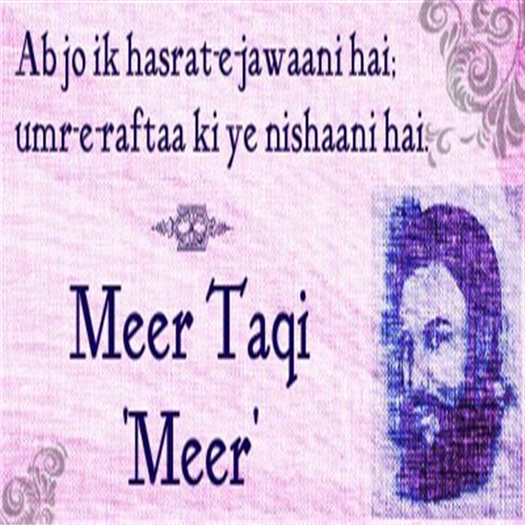
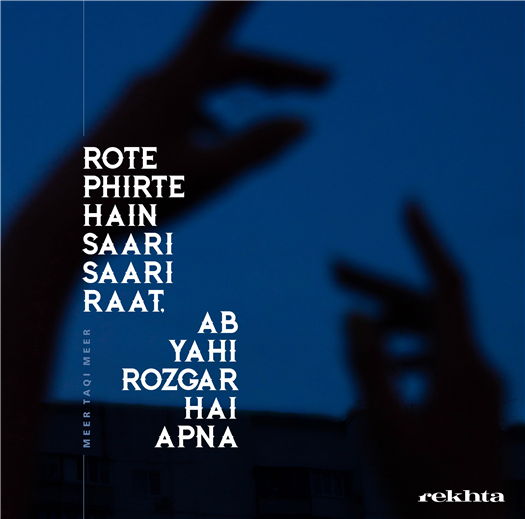
Videos 47
Audios 46
aa jaa.e.n ham nazar jo ko.ii dam bahut hai yaa.n
baare duniyaa me.n raho Gam-zada yaa shaad raho
baate.n hamaarii yaad rahe.n phir baate.n aisii na suniyegaa
Discover
More Poets From "Delhi"
-
 Mirza Ghalib
-
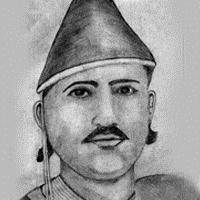 Nazeer Akbarabadi
-
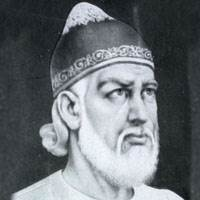 Mushafi Ghulam Hamdani
-
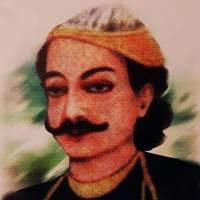 Meer Hasan
-
 Shaikh Zahuruddin Hatim
-
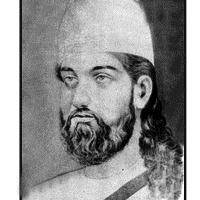 Haidar Ali Aatish
-
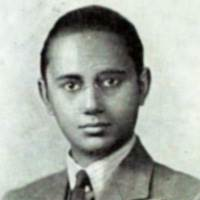 Akhtar Ansari
-
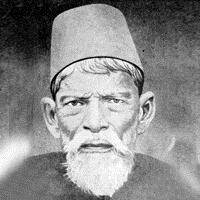 Akbar Allahabadi
-
 Sufi Ghulam Mustafa Tabassum
-
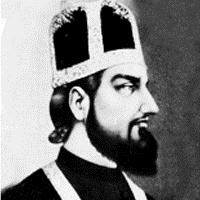 Shaikh Ibrahim Zauq
-
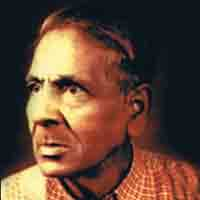 Firaq Gorakhpuri
-
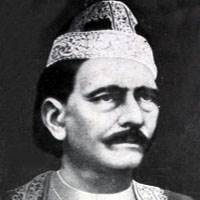 Insha Allah Khan Insha
-
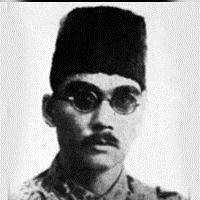 Yagana Changezi
-
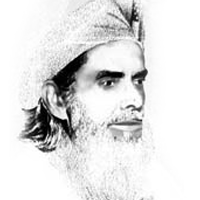 Behzad Lakhnavi
-
 Obaidur Rahman
-
Qayem Chaandpuri
-
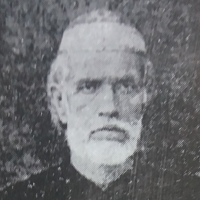 Rasheed Lakhnavi
-
Jurat Qalandar Bakhsh
-
 Pandit Daya Shankar Naseem Lakhnawi
-
 Sahir Dehlavi