Urdu Rasm-ul-khat Ki Islaah
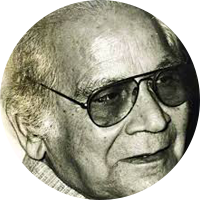
This article by Mr. Sibte Hasan was published in the daily *Imroz* in two installments in its June 6 and 7, 1955 issues. (Editor)
An article by Dr. Maulvi Abdul Haq regarding the Urdu script caught my eye in the May 30th edition of the daily *Imroz*. In it, the respected Maulvi Sahib opposed a proposal by Mian Afzal Husain, Vice-Chancellor of Punjab University, which suggested abandoning the current Urdu script in favor of the Roman script. Maulvi Sahib claims that the Urdu script represents the final evolutionary stage in the history of scripts. He argues that it is more developed and civilized than the Roman script, and that the gentlemen who advise us to abandon it and adopt Roman letters are essentially trying to drag us from progress into decline, urging us to regress from civilization back to barbarism.
Maulvi Sahib begins by outlining a brief history of the art of writing, concluding that throughout its evolution, the human tendency has leaned toward brevity. Humanity has consistently striven to ensure that the symbols used to convey thoughts, emotions, and experiences take up as little space as possible. In his view, the Roman script reached a certain stage of brevity and then stagnated. Consequently, in the Roman script (when writing by hand), letters are indeed joined together, but in a way that allows them to retain their full, original shapes. He writes, We did not settle for this. We took the process of abbreviation even further... We made these brief symbols—the letters—even shorter, and formed words by joining them together.
In Maulvi Sahib’s opinion, the Roman script is highly defective and inadequate because:
(1) The letters of the Roman alphabet cannot represent all of our phonetic sounds.
(2) The Roman alphabet is irregular.
(3) In the Roman alphabet, compound letters are sometimes used to produce a single sound, which is a flaw.
In defense of the Urdu script, aside from the argument of brevity, Maulvi Sahib offers another rationale: Furthermore, a script becomes an integral part of the language. It does not consist merely of phonetic symbols; rather, it also aids in the structuring and aesthetic arrangement of sentences. This script of ours has accompanied the Urdu language from the very beginning of its existence.
Finally, Maulana asserts that replacing the Urdu script with the Roman script will lead us to the same fate as the Turks. Our future generations will be deprived of the immense literary and cultural wealth of Arabic, Persian, and Urdu.
The issue of reforming and altering the Urdu script is not new, nor is Mian Afzal Husain the first to propose the adoption of the Roman script. The truth is that these debates have surfaced many times before. There was a time when the Anjuman Taraqqi-e-Urdu (Society for the Development of Urdu) itself turned its attention toward script reform and even approved several proposals. Some of these proposals were such that our conciseness—which we consider the crowning glory of Urdu—would have been jeopardized, and the use of certain homophonous Arabic letters would have been eliminated. However, I will discuss this in detail later. Similarly, a great deal has already been written in support of the Roman script.
The Bible and other Christian religious texts have long been printed in the Roman script. During the British era, soldiers were taught the Hindustani language using the Roman script. In 1879, a monthly magazine called the *Roman Urdu Journal* was published from Lahore, bearing the following motto on its cover: To popularize the writing of Eastern languages in Roman letters. (*Adabi Dunya* magazine, October 1937). Support for the Roman script has not come solely from Westernized intellectuals. In fact, arguments in favor of the Roman script have even appeared in *Urdu*, the official journal of the Anjuman Taraqqi-e-Urdu. For instance, in the January 1944 issue of *Urdu*, a brief article on the Roman script by Maulvi Hayatullah Ansari Farangi Mahali was published. Maulvi Hayatullah Ansari Sahib stated:
The Roman script will, in a way, only prove beneficial.
However, before debating the merits and demerits of the Urdu script, it is essential to clarify the relationship between language and script. The first point to note in this regard is that a script, or writing system, is not an inseparable part of any language. Writing is merely a symbolic means of expressing thought, one that humans invented and adopted millions of years after they first began to speak. During that vast intervening period—when neither writing nor scripts existed, and alphabets had yet to be formed—languages continued to evolve. The art of writing is barely six thousand years old. Its inventors were the Sumerians, who lived in southern Iraq around 3,000 BCE. These people did not belong to the Semitic race.
The second point is that even today, there are millions of people in the world—particularly in Asia and Africa—who are entirely unacquainted with the art of writing, yet they successfully convey their thoughts to others through language. They know no script—neither Roman, nor Devanagari, nor Arabic. Yet, they converse in their native tongues. They sing songs, compose poetry, fall in love, and perform their religious duties. You will find not just individuals, but entire communities that have absolutely no concept of reading or writing. There is no nation, group, or human being in the world that lacks a language of their own. However, there is still an abundance of people who are unfamiliar with written symbols. Take children, for instance; they learn to speak long before they can recognize written characters.
Furthermore, the evolutionary stages of a language and its script are not necessarily identical. Sometimes a language undergoes transformations while its script remains unchanged; at other times, the script evolves while the language remains static. For example, the Arabic language experienced very little change from the advent of Islam up until the eighteenth century. However, the Arabic script underwent massive transformations. Initially, the Arabic script was Kufic, which was rooted in the Nabataean script. This script remained in use among the Arabs for three hundred years after the dawn of Islam. The Holy Quran was originally written in this very script, which had been prevalent in pre-Islamic Arabia. The inscriptions in the mosque built by Caliph Abd al-Malik in Jerusalem are also in this ancient script, as are the coins from that era discovered in the Aswan region. The *Naskh* script was fully developed in the tenth and eleventh centuries CE, and the *Nastaliq* script in the thirteenth century. The difference between the Kufic and *Naskh* scripts is so vast that today, even the greatest Arabic scholars cannot read the Holy Quran in the Kufic script. In contrast, consider the Urdu language, which has undergone significant changes over the past five hundred years. The changes are so profound that even our most accomplished writers cannot understand the classical *masnavis* of the Deccan or Jaisi's *Padmavat* without the aid of a glossary. Yet, during this entire period, the Urdu script has seen no significant alteration.
One more thing: early Urdu was not only called Hindi, but it was also written in the Devanagari script.
Our purpose in clarifying the difference between language and script was to ensure that linguistic issues are not entangled in the debate over the Urdu script, because the script is not an inherent part of the language. Overcome by emotion and religious zeal, many people defend the current script as if it were tied to our faith—as if this were the very script of the Holy Quran and the prophetic traditions. This is simply not true. A script has no connection to religion or Islamic civilization. A script is merely a set of phonetic symbols representing our sounds. Humans created these symbols. They have undergone changes from time to time, and as long as human beings speak and their languages evolve, these symbols will continue to be amended and expanded.
Linguists have divided the world's languages into distinct families. One such family is the Indo-European language family, which includes English, French, German, Italian, Greek, Russian, Persian, Pashto, Punjabi, Hindi, Urdu, Bengali, Rajasthani, Marathi, Odia, and Gujarati, among others. The number of speakers of these languages is one billion. The second family is the Hamito-Semitic language family, which includes Hebrew, Arabic, Syriac, the Cushitic languages of Ethiopia, ancient Coptic, and other languages of North Africa. Their speakers number around eighty million. The third family is the Ural-Altaic language family. Members of this family include Finnish in Finland, Estonian in Ethiopia, Magyar in Hungary, as well as the languages of Turkey, Mongolia, and Manchuria. The total number of speakers in this family is seventy million. The fourth family is the Sino-Tibetan language family. This family includes the Chinese, Tibetan, Burmese, and Siamese languages. The total number of speakers of these languages is six hundred million. The fifth family consists of Japanese and Korean. The sixth family is Malayo-Polynesian, which includes Malagasy, Madurese, Malay, Indonesian, Filipino, and the languages of other Pacific islands. The seventh family is the Dravidian language family, which is spoken in South India. Apart from these, there are one or two other language families, but they are very small.
The Urdu language belongs to the Indo-European family. Although it has not yet been discovered which language was the ultimate ancestor of the Indo-European languages, among modern languages, the one considered closest to this ancestor is Lithuanian, spoken by two million inhabitants along the Baltic Sea coast. Nevertheless, the oldest language of this family is Sanskrit, followed by Greek, and then Latin. The origins of the Sanskrit language have been traced back to two thousand BCE. The genealogical tree of Urdu, Hindi, Persian, Punjabi, and Bengali connects directly to Sanskrit.
These Indo-European languages are fundamentally different from Semitic languages. Not only are the grammar and dictionaries of the two families distinct from one another, and not only do their sentence structures and vocabularies differ, but there is also a marked difference in the points of articulation of their sounds. Certain sounds in Semitic languages simply do not exist in Indo-European languages. Similarly, Semitic peoples are unable to pronounce certain sounds found in Indo-European languages.
These language families do not exist on isolated islands, nor are they locked in separate boxes with no connection to one another. People from different families interact. They engage in trade and exchange, and in this way, the language of one family influences the language of another. They adopt each other's words. They use each other's idioms. Sometimes, they even imitate each other's sounds. However, the individuality of these families remains intact. Their core temperaments are not significantly altered by this interaction.
The Sumerians were the inventors of writing. However, the alphabets currently in use in Indo-European and Hamito-Semitic languages were invented by the ancient inhabitants of Phoenicia (the Syrian coast). The Phoenicians wrote this script continuously from right to left and then from left to right, just as one plows a field. When the Greeks adopted the Phoenician script, they initially wrote in the same manner. Later, however, they abandoned this method and began writing from left to right. The Semitic peoples, on the other hand, maintained the right-to-left method of writing. The situation today is that all Aryan nations (with the exception of Urdu and Persian) write from left to right, while Semitic nations write from right to left. Before the Arab conquest, Persian was also written from left to right. Similarly, Urdu—which, in the words of Maulvi Abdul Haq, is the evolved form of Hindi—was written from left to right in the Devanagari script during its early period.
These Phoenician alphabets were organized on phonetic principles. However, they did not represent every sound produced by the human mouth. They were merely symbolic representations of the sounds uttered by the inhabitants of Phoenicia, and it is even doubtful whether these phonetic symbols encompassed all the sounds of the Phoenician people. When other nations adopted this script, they made appropriate additions and modifications to suit their own phonetic needs. The Phoenicians had invented this script for their commercial needs. They had absolutely no idea that, in the future, hundreds of nations around the world would adopt their script. Consequently, every nation made changes to it. They established new symbols for the sounds that could not be expressed by this script. For example, the Arabs initially adopted dot symbols to fulfill the need for diacritics. A dot was placed above the letter for a *zabar*, below for a *zer*, and to the side for a *pesh*. This was the method in practice during the time of the Holy Prophet (PBUH) and the era of the Rightly Guided Caliphs. The current shapes of the diacritics were invented in the second century of the Hijri calendar. Similarly, the Arabs derived the letters for their six specific sounds (ث, خ, ذ, ض, ظ, and غ) by adding dots.
This process of reforming and modifying a script never ends. No script—whether Roman, Arabic, or Devanagari—is perfect. That is to say, there is no script that can perfectly represent every sound produced by the mouth. Not only that, but there is no script in the world that is fully capable of expressing even all the sounds of its own language. Therefore, no script—be it Roman, Arabic, or Devanagari—can claim that, in its current form, it fulfills all the phonetic needs of the world.
Those who object to the Roman script on the grounds that its alphabet cannot represent all our sounds ignore a historical fact: if the Roman alphabet falls short in this regard, the Arabic alphabet is equally incapable of representing all our phonetic needs. This is precisely why the Iranians had to invent four specific letters—*pe* (پ), *che* (چ), *zhe* (ژ), and *gaf* (گ)—for their distinct sounds. Similarly, when Urdu adopted the Persian script, it had to create new letters to represent purely indigenous Indian sounds that existed neither in Arabic nor in Persian, such as *te* (ٹ), *dal* (ڈ), and *re* (ڑ). Yet, even with these additions, our alphabet still does not cover all our sounds. For instance, to produce aspirated sounds like *kh* (کھ), *gh* (گھ), *th* (تھ), *chh* (چھ), and *dh* (دھ), we are forced to rely on compound letters rather than single, dedicated characters. Therefore, the respected Maulvi's objection that the Roman alphabet uses compound letters to represent a single sound applies just as accurately, letter for letter, to the Urdu alphabet.
As far as the Urdu script is concerned, it is undeniable that this writing system and its alphabet fail to meet our phonetic requirements. I have already provided examples of indigenous sounds that lack dedicated letters in our script, forcing us—just like in the Roman script—to combine two letters to represent them. Furthermore, this script lacks proper vowels. As a result, we read almost every Urdu word through guesswork, and it is impossible to establish definitive rules for joining letters. One might point to the use of diacritical marks (*a'rab*), but these marks are not an inherent part of the alphabet. Besides, how many people actually apply diacritics to every word, or even know how to do so correctly? If every Urdu book and newspaper were to be adorned with diacritics, the result would be chaotic. Even native Arabs avoid using these marks as much as possible. In English, perhaps a few dozen or a hundred words must be read through guesswork due to the irregularities of the Roman alphabet. In our script, this is the case for nearly every single word.
The third major flaw in our script is that nine of our letters are non-joiners (disconnected), while the rest are joiners (connected). Non-joiners are letters that cannot connect to the letter following them, such as ا، د، ڈ، ذ، ر، ژ، و، ء. Consequently, if any of these letters appears in the middle of a word, the visual unity of the word is broken. Take, for example, words like *kareem* (کریم), *ghurakna* (گھرکنا), *khurachna* (کھرچنا), *dharakna* (دھڑکنا), and *bharakna* (بھڑکنا). If you look closely, you will see that the presence of non-joining letters fractures the structural components of these words. One letter of the central syllable is left on one side, the next letter on the other, creating a visual gulf in between. An even worse situation arises when these non-joining letters are also aspirated compounds. For instance, when *dh* (دھ), *dh* (ڈھ), *th* (ٹھ), or *rh* (ڑھ) appear in the middle of words like *parhna* (پڑھنا), *kurhna* (کڑھنا), or *sudhna* (سدھنا). (For further details, see the journal *Urdu*, 1944).
The fourth issue concerns joining letters. Because all letters in the Roman script can be written consecutively without breaking, languages like English, French, German, Italian, and others using the Roman alphabet write all the letters of a word together as a single unit, regardless of whether the word has two syllables or ten. In those languages, a word maintains its visual unity in writing. However, applying this principle to our script creates significant difficulties. Take, for example, compound words like *kankata* (کنکٹا) or *behazka* (بیہزکہ). These are single compound words, and they do not contain any non-joining letters in the middle. Yet, we do not write them as a single, fully connected unit, because doing so would make them incredibly difficult to read. This is precisely why, in 1944, the central office of the Anjuman Taraqqi-e-Urdu proposed that the constituent parts of compound words must be written separately. They also suggested that the infinitive marker should not be joined to the root word, but written apart, such as *likh na* (لکھ نا) instead of *likhna* (لکھنا). Unfortunately, neither the Urdu-speaking public accepted these proposals, nor could the Anjuman itself implement them.
Then there is the issue of homophonous Arabic letters. These fall into five categories:
ا — ع
ت — ط
س — ث، ص
ز — ذ، ض، ظ
ح — ہ
In Arabic, these represent thirteen distinct sounds with different points of articulation. However, these are specific to Semitic peoples; we, along with other non-Semitic populations, neither can nor do pronounce them accurately.
My purpose in highlighting the flaws of the Arabic script is to ensure that, while we enumerate the shortcomings of the Roman script, we also acknowledge the inadequacies of the Arabic script. Furthermore, we must avoid giving a religious color to the debate over script reform, as a writing system has no inherent connection to religion.
Proponents of the Urdu script highly praise its shorthand-like brevity. The respected Maulvi Sahib, too, has placed great emphasis on this particular quality of the Urdu script in his essay. In his view, the Roman script lags behind ours because those who adopted it contented themselves merely with placing letters next to one another to form words. Those unfortunate souls did not have the audacity to distort and mutate the shapes of their letters. We, on the other hand, took the process of abbreviation much further, to the point of fusing letters together to construct words. The primary objective of this shorthand approach was to save both time and space in writing.
It is true that in writing systems, just as in language (and other creative endeavors), the natural human inclination is toward convenience. Man always seeks to achieve the most beneficial results with the least amount of effort. However, this process of abbreviation has its own history, governed by specific rules and limitations. In the early stages of the Arabic script, we see that letters were written separately. It was only during a later, specific period that they began to be joined, and in a subsequent era, words were formed by fusing these letters together. Even then, nine letters remained that could not be fragmented or joined. As a result, a structural flaw was introduced into the syllables of words.
The process of abbreviation can be achieved in several ways. One method was the one we adopted: distorting the shapes of the letters and shrinking them. The second method was to preserve the original shapes of the letters while abbreviating the words themselves—retaining the root letters and discarding the superfluous ones. English and other advanced languages opted for this second method. Consequently, for the past six or seven hundred years, the trend in these languages has been toward shortening the words themselves. This yields a twofold advantage: it requires less effort both in speech and in writing, and it saves time in both speaking and writing. In contrast, by altering the shapes of letters and fusing them to form words, we only gain convenience in writing, with no corresponding ease in speech. Furthermore, the difficulties that beginners face in learning the Urdu script—due to the changing shapes of letters and the complex rules of joining and separating them—can only be truly appreciated by those who have experience teaching Urdu to children, illiterate adults, or foreigners. The problem, however, is that when we reflect on these issues, we generally tend to forget our own childhood struggles.
Furthermore, brevity is not the sole criterion for an advanced script; otherwise, we would have adopted shorthand as our writing system long ago. No language in the world has adopted shorthand as its standard script, and for good reason. Like language, a script is a social phenomenon. Just as spoken language requires not only a speaker but also a listener to receive the conveyed thoughts, written language requires an audience capable of easily understanding the text. If brevity is taken to such an extreme that the script turns into shorthand or a riddle, it loses its social utility. It is reduced to the pastime of a small group of specialists, and society as a whole can no longer benefit from it.
We possess no historical evidence to suggest that the Arabs adopted their prevalent method of cursive, abbreviated writing merely to save time and space. Rather, it is safe to assume that the motives behind this invention were aesthetic and decorative, not utilitarian. Since painting and sculpture were prohibited in Islam, artists channeled their creative energies into permissible art forms. Calligraphy was one such art. The Abbasid caliphs were patrons of learning, and their capital served as a vibrant center of knowledge and literature. The state sponsored the writing and compilation of books, and it was under these favorable conditions that the art of calligraphy flourished. Muslims eventually elevated calligraphy to such heights that it remains unparalleled in the world. The technical demands of this art form required letters to be joined together, yet in a way that their connections could still be distinguished. Without this, the formal unity of the art would have been impossible.
We must evaluate the current Urdu script from a utilitarian perspective. If it fulfills all our phonetic needs and does not hinder the language's development, there is no reason to arbitrarily adopt a different script. The mere fact that the Roman script is used in Europe is not a valid argument for its adoption here.
The Roman script is not used in Japan, yet the Japanese have managed to progress despite their complex and traditional writing system. In my humble opinion, the Urdu script in its current form is simply incapable of representing all our phonetic sounds. If you attempt to read Jaisi's *Padmavat*, the *masnavis* of the early Deccani poets, Kabir's *dohas*, or Amir Khusro's riddles, *do-sakhnay*, and *mukarniyan* in the Urdu script, its inherent flaws will immediately become apparent.
The question now is: what should be the nature of this reform? The first option is to eliminate the letters of the alphabet that we no longer pronounce, replacing them with new letters to represent the sounds for which we currently lack distinct characters. However, this would not resolve the complications of joined and unjoined letters, and the deficiency of vowels would still be felt.
The second option is to adopt the Roman script, provided it is suitably modified to meet our specific phonetic requirements.
The third option is to revert to the Devanagari script, as it is our ancient writing system and fulfills our phonetic needs far better than other scripts. However, in this day and age, every issue—whether of language or script—has taken on a political hue. Therefore, proposing the Devanagari script would inevitably breed misunderstandings, and the problem of the script would only become more entangled rather than resolved. Yet, from a purely linguistic and phonetic standpoint, the script for our language ought to be Devanagari.
For the past twenty to twenty-five years, efforts have been underway to reform the Urdu script. Articles are written, committees are formed, and resolutions are passed, yet nothing comes of it. However, this certainly indicates an acute awareness among the public regarding the script's flaws and a genuine desire for reform. This awareness has been born out of our social necessities and the demands of the times. But the task of reforming a script is so monumental, and the obstacles in its path so daunting, that private institutions cannot accomplish it without state patronage and the cooperation of the government. Our social life is not as highly organized as in other countries, where the decisions of private institutions can be seamlessly implemented nationwide. Nor do we possess the discipline to simply accept the recommendations of linguistic scholars and put them into practice. This issue must be debated freely so that all its dimensions are brought to light, preparing public opinion to embrace new reforms. As for the government, it hardly has the time to consider such national issues with the seriousness and open-mindedness they deserve. Even after eight years, it has yet to decide on the country's official language. For now, the flag of English continues to fly high. Only when we are freed from this foreign flag can any real attention be directed toward the script.
This article by Mr. Sibte Hasan was published in the daily *Imroz* in two installments in its June 6 and 7, 1955 issues. (Editor)
An article by Dr. Maulvi Abdul Haq regarding the Urdu script caught my eye in the May 30th edition of the daily *Imroz*. In it, the respected Maulvi Sahib opposed a proposal by Mian Afzal Husain, Vice-Chancellor of Punjab University, which suggested abandoning the current Urdu script in favor of the Roman script. Maulvi Sahib claims that the Urdu script represents the final evolutionary stage in the history of scripts. He argues that it is more developed and civilized than the Roman script, and that the gentlemen who advise us to abandon it and adopt Roman letters are essentially trying to drag us from progress into decline, urging us to regress from civilization back to barbarism.
Maulvi Sahib begins by outlining a brief history of the art of writing, concluding that throughout its evolution, the human tendency has leaned toward brevity. Humanity has consistently striven to ensure that the symbols used to convey thoughts, emotions, and experiences take up as little space as possible. In his view, the Roman script reached a certain stage of brevity and then stagnated. Consequently, in the Roman script (when writing by hand), letters are indeed joined together, but in a way that allows them to retain their full, original shapes. He writes, We did not settle for this. We took the process of abbreviation even further... We made these brief symbols—the letters—even shorter, and formed words by joining them together.
In Maulvi Sahib’s opinion, the Roman script is highly defective and inadequate because:
(1) The letters of the Roman alphabet cannot represent all of our phonetic sounds.
(2) The Roman alphabet is irregular.
(3) In the Roman alphabet, compound letters are sometimes used to produce a single sound, which is a flaw.
In defense of the Urdu script, aside from the argument of brevity, Maulvi Sahib offers another rationale: Furthermore, a script becomes an integral part of the language. It does not consist merely of phonetic symbols; rather, it also aids in the structuring and aesthetic arrangement of sentences. This script of ours has accompanied the Urdu language from the very beginning of its existence.
Finally, Maulana asserts that replacing the Urdu script with the Roman script will lead us to the same fate as the Turks. Our future generations will be deprived of the immense literary and cultural wealth of Arabic, Persian, and Urdu.
The issue of reforming and altering the Urdu script is not new, nor is Mian Afzal Husain the first to propose the adoption of the Roman script. The truth is that these debates have surfaced many times before. There was a time when the Anjuman Taraqqi-e-Urdu (Society for the Development of Urdu) itself turned its attention toward script reform and even approved several proposals. Some of these proposals were such that our conciseness—which we consider the crowning glory of Urdu—would have been jeopardized, and the use of certain homophonous Arabic letters would have been eliminated. However, I will discuss this in detail later. Similarly, a great deal has already been written in support of the Roman script.
The Bible and other Christian religious texts have long been printed in the Roman script. During the British era, soldiers were taught the Hindustani language using the Roman script. In 1879, a monthly magazine called the *Roman Urdu Journal* was published from Lahore, bearing the following motto on its cover: To popularize the writing of Eastern languages in Roman letters. (*Adabi Dunya* magazine, October 1937). Support for the Roman script has not come solely from Westernized intellectuals. In fact, arguments in favor of the Roman script have even appeared in *Urdu*, the official journal of the Anjuman Taraqqi-e-Urdu. For instance, in the January 1944 issue of *Urdu*, a brief article on the Roman script by Maulvi Hayatullah Ansari Farangi Mahali was published. Maulvi Hayatullah Ansari Sahib stated:
The Roman script will, in a way, only prove beneficial.
However, before debating the merits and demerits of the Urdu script, it is essential to clarify the relationship between language and script. The first point to note in this regard is that a script, or writing system, is not an inseparable part of any language. Writing is merely a symbolic means of expressing thought, one that humans invented and adopted millions of years after they first began to speak. During that vast intervening period—when neither writing nor scripts existed, and alphabets had yet to be formed—languages continued to evolve. The art of writing is barely six thousand years old. Its inventors were the Sumerians, who lived in southern Iraq around 3,000 BCE. These people did not belong to the Semitic race.
The second point is that even today, there are millions of people in the world—particularly in Asia and Africa—who are entirely unacquainted with the art of writing, yet they successfully convey their thoughts to others through language. They know no script—neither Roman, nor Devanagari, nor Arabic. Yet, they converse in their native tongues. They sing songs, compose poetry, fall in love, and perform their religious duties. You will find not just individuals, but entire communities that have absolutely no concept of reading or writing. There is no nation, group, or human being in the world that lacks a language of their own. However, there is still an abundance of people who are unfamiliar with written symbols. Take children, for instance; they learn to speak long before they can recognize written characters.
Furthermore, the evolutionary stages of a language and its script are not necessarily identical. Sometimes a language undergoes transformations while its script remains unchanged; at other times, the script evolves while the language remains static. For example, the Arabic language experienced very little change from the advent of Islam up until the eighteenth century. However, the Arabic script underwent massive transformations. Initially, the Arabic script was Kufic, which was rooted in the Nabataean script. This script remained in use among the Arabs for three hundred years after the dawn of Islam. The Holy Quran was originally written in this very script, which had been prevalent in pre-Islamic Arabia. The inscriptions in the mosque built by Caliph Abd al-Malik in Jerusalem are also in this ancient script, as are the coins from that era discovered in the Aswan region. The *Naskh* script was fully developed in the tenth and eleventh centuries CE, and the *Nastaliq* script in the thirteenth century. The difference between the Kufic and *Naskh* scripts is so vast that today, even the greatest Arabic scholars cannot read the Holy Quran in the Kufic script. In contrast, consider the Urdu language, which has undergone significant changes over the past five hundred years. The changes are so profound that even our most accomplished writers cannot understand the classical *masnavis* of the Deccan or Jaisi's *Padmavat* without the aid of a glossary. Yet, during this entire period, the Urdu script has seen no significant alteration.
One more thing: early Urdu was not only called Hindi, but it was also written in the Devanagari script.
Our purpose in clarifying the difference between language and script was to ensure that linguistic issues are not entangled in the debate over the Urdu script, because the script is not an inherent part of the language. Overcome by emotion and religious zeal, many people defend the current script as if it were tied to our faith—as if this were the very script of the Holy Quran and the prophetic traditions. This is simply not true. A script has no connection to religion or Islamic civilization. A script is merely a set of phonetic symbols representing our sounds. Humans created these symbols. They have undergone changes from time to time, and as long as human beings speak and their languages evolve, these symbols will continue to be amended and expanded.
Linguists have divided the world's languages into distinct families. One such family is the Indo-European language family, which includes English, French, German, Italian, Greek, Russian, Persian, Pashto, Punjabi, Hindi, Urdu, Bengali, Rajasthani, Marathi, Odia, and Gujarati, among others. The number of speakers of these languages is one billion. The second family is the Hamito-Semitic language family, which includes Hebrew, Arabic, Syriac, the Cushitic languages of Ethiopia, ancient Coptic, and other languages of North Africa. Their speakers number around eighty million. The third family is the Ural-Altaic language family. Members of this family include Finnish in Finland, Estonian in Ethiopia, Magyar in Hungary, as well as the languages of Turkey, Mongolia, and Manchuria. The total number of speakers in this family is seventy million. The fourth family is the Sino-Tibetan language family. This family includes the Chinese, Tibetan, Burmese, and Siamese languages. The total number of speakers of these languages is six hundred million. The fifth family consists of Japanese and Korean. The sixth family is Malayo-Polynesian, which includes Malagasy, Madurese, Malay, Indonesian, Filipino, and the languages of other Pacific islands. The seventh family is the Dravidian language family, which is spoken in South India. Apart from these, there are one or two other language families, but they are very small.
The Urdu language belongs to the Indo-European family. Although it has not yet been discovered which language was the ultimate ancestor of the Indo-European languages, among modern languages, the one considered closest to this ancestor is Lithuanian, spoken by two million inhabitants along the Baltic Sea coast. Nevertheless, the oldest language of this family is Sanskrit, followed by Greek, and then Latin. The origins of the Sanskrit language have been traced back to two thousand BCE. The genealogical tree of Urdu, Hindi, Persian, Punjabi, and Bengali connects directly to Sanskrit.
These Indo-European languages are fundamentally different from Semitic languages. Not only are the grammar and dictionaries of the two families distinct from one another, and not only do their sentence structures and vocabularies differ, but there is also a marked difference in the points of articulation of their sounds. Certain sounds in Semitic languages simply do not exist in Indo-European languages. Similarly, Semitic peoples are unable to pronounce certain sounds found in Indo-European languages.
These language families do not exist on isolated islands, nor are they locked in separate boxes with no connection to one another. People from different families interact. They engage in trade and exchange, and in this way, the language of one family influences the language of another. They adopt each other's words. They use each other's idioms. Sometimes, they even imitate each other's sounds. However, the individuality of these families remains intact. Their core temperaments are not significantly altered by this interaction.
The Sumerians were the inventors of writing. However, the alphabets currently in use in Indo-European and Hamito-Semitic languages were invented by the ancient inhabitants of Phoenicia (the Syrian coast). The Phoenicians wrote this script continuously from right to left and then from left to right, just as one plows a field. When the Greeks adopted the Phoenician script, they initially wrote in the same manner. Later, however, they abandoned this method and began writing from left to right. The Semitic peoples, on the other hand, maintained the right-to-left method of writing. The situation today is that all Aryan nations (with the exception of Urdu and Persian) write from left to right, while Semitic nations write from right to left. Before the Arab conquest, Persian was also written from left to right. Similarly, Urdu—which, in the words of Maulvi Abdul Haq, is the evolved form of Hindi—was written from left to right in the Devanagari script during its early period.
These Phoenician alphabets were organized on phonetic principles. However, they did not represent every sound produced by the human mouth. They were merely symbolic representations of the sounds uttered by the inhabitants of Phoenicia, and it is even doubtful whether these phonetic symbols encompassed all the sounds of the Phoenician people. When other nations adopted this script, they made appropriate additions and modifications to suit their own phonetic needs. The Phoenicians had invented this script for their commercial needs. They had absolutely no idea that, in the future, hundreds of nations around the world would adopt their script. Consequently, every nation made changes to it. They established new symbols for the sounds that could not be expressed by this script. For example, the Arabs initially adopted dot symbols to fulfill the need for diacritics. A dot was placed above the letter for a *zabar*, below for a *zer*, and to the side for a *pesh*. This was the method in practice during the time of the Holy Prophet (PBUH) and the era of the Rightly Guided Caliphs. The current shapes of the diacritics were invented in the second century of the Hijri calendar. Similarly, the Arabs derived the letters for their six specific sounds (ث, خ, ذ, ض, ظ, and غ) by adding dots.
This process of reforming and modifying a script never ends. No script—whether Roman, Arabic, or Devanagari—is perfect. That is to say, there is no script that can perfectly represent every sound produced by the mouth. Not only that, but there is no script in the world that is fully capable of expressing even all the sounds of its own language. Therefore, no script—be it Roman, Arabic, or Devanagari—can claim that, in its current form, it fulfills all the phonetic needs of the world.
Those who object to the Roman script on the grounds that its alphabet cannot represent all our sounds ignore a historical fact: if the Roman alphabet falls short in this regard, the Arabic alphabet is equally incapable of representing all our phonetic needs. This is precisely why the Iranians had to invent four specific letters—*pe* (پ), *che* (چ), *zhe* (ژ), and *gaf* (گ)—for their distinct sounds. Similarly, when Urdu adopted the Persian script, it had to create new letters to represent purely indigenous Indian sounds that existed neither in Arabic nor in Persian, such as *te* (ٹ), *dal* (ڈ), and *re* (ڑ). Yet, even with these additions, our alphabet still does not cover all our sounds. For instance, to produce aspirated sounds like *kh* (کھ), *gh* (گھ), *th* (تھ), *chh* (چھ), and *dh* (دھ), we are forced to rely on compound letters rather than single, dedicated characters. Therefore, the respected Maulvi's objection that the Roman alphabet uses compound letters to represent a single sound applies just as accurately, letter for letter, to the Urdu alphabet.
As far as the Urdu script is concerned, it is undeniable that this writing system and its alphabet fail to meet our phonetic requirements. I have already provided examples of indigenous sounds that lack dedicated letters in our script, forcing us—just like in the Roman script—to combine two letters to represent them. Furthermore, this script lacks proper vowels. As a result, we read almost every Urdu word through guesswork, and it is impossible to establish definitive rules for joining letters. One might point to the use of diacritical marks (*a'rab*), but these marks are not an inherent part of the alphabet. Besides, how many people actually apply diacritics to every word, or even know how to do so correctly? If every Urdu book and newspaper were to be adorned with diacritics, the result would be chaotic. Even native Arabs avoid using these marks as much as possible. In English, perhaps a few dozen or a hundred words must be read through guesswork due to the irregularities of the Roman alphabet. In our script, this is the case for nearly every single word.
The third major flaw in our script is that nine of our letters are non-joiners (disconnected), while the rest are joiners (connected). Non-joiners are letters that cannot connect to the letter following them, such as ا، د، ڈ، ذ، ر، ژ، و، ء. Consequently, if any of these letters appears in the middle of a word, the visual unity of the word is broken. Take, for example, words like *kareem* (کریم), *ghurakna* (گھرکنا), *khurachna* (کھرچنا), *dharakna* (دھڑکنا), and *bharakna* (بھڑکنا). If you look closely, you will see that the presence of non-joining letters fractures the structural components of these words. One letter of the central syllable is left on one side, the next letter on the other, creating a visual gulf in between. An even worse situation arises when these non-joining letters are also aspirated compounds. For instance, when *dh* (دھ), *dh* (ڈھ), *th* (ٹھ), or *rh* (ڑھ) appear in the middle of words like *parhna* (پڑھنا), *kurhna* (کڑھنا), or *sudhna* (سدھنا). (For further details, see the journal *Urdu*, 1944).
The fourth issue concerns joining letters. Because all letters in the Roman script can be written consecutively without breaking, languages like English, French, German, Italian, and others using the Roman alphabet write all the letters of a word together as a single unit, regardless of whether the word has two syllables or ten. In those languages, a word maintains its visual unity in writing. However, applying this principle to our script creates significant difficulties. Take, for example, compound words like *kankata* (کنکٹا) or *behazka* (بیہزکہ). These are single compound words, and they do not contain any non-joining letters in the middle. Yet, we do not write them as a single, fully connected unit, because doing so would make them incredibly difficult to read. This is precisely why, in 1944, the central office of the Anjuman Taraqqi-e-Urdu proposed that the constituent parts of compound words must be written separately. They also suggested that the infinitive marker should not be joined to the root word, but written apart, such as *likh na* (لکھ نا) instead of *likhna* (لکھنا). Unfortunately, neither the Urdu-speaking public accepted these proposals, nor could the Anjuman itself implement them.
Then there is the issue of homophonous Arabic letters. These fall into five categories:
ا — ع
ت — ط
س — ث، ص
ز — ذ، ض، ظ
ح — ہ
In Arabic, these represent thirteen distinct sounds with different points of articulation. However, these are specific to Semitic peoples; we, along with other non-Semitic populations, neither can nor do pronounce them accurately.
My purpose in highlighting the flaws of the Arabic script is to ensure that, while we enumerate the shortcomings of the Roman script, we also acknowledge the inadequacies of the Arabic script. Furthermore, we must avoid giving a religious color to the debate over script reform, as a writing system has no inherent connection to religion.
Proponents of the Urdu script highly praise its shorthand-like brevity. The respected Maulvi Sahib, too, has placed great emphasis on this particular quality of the Urdu script in his essay. In his view, the Roman script lags behind ours because those who adopted it contented themselves merely with placing letters next to one another to form words. Those unfortunate souls did not have the audacity to distort and mutate the shapes of their letters. We, on the other hand, took the process of abbreviation much further, to the point of fusing letters together to construct words. The primary objective of this shorthand approach was to save both time and space in writing.
It is true that in writing systems, just as in language (and other creative endeavors), the natural human inclination is toward convenience. Man always seeks to achieve the most beneficial results with the least amount of effort. However, this process of abbreviation has its own history, governed by specific rules and limitations. In the early stages of the Arabic script, we see that letters were written separately. It was only during a later, specific period that they began to be joined, and in a subsequent era, words were formed by fusing these letters together. Even then, nine letters remained that could not be fragmented or joined. As a result, a structural flaw was introduced into the syllables of words.
The process of abbreviation can be achieved in several ways. One method was the one we adopted: distorting the shapes of the letters and shrinking them. The second method was to preserve the original shapes of the letters while abbreviating the words themselves—retaining the root letters and discarding the superfluous ones. English and other advanced languages opted for this second method. Consequently, for the past six or seven hundred years, the trend in these languages has been toward shortening the words themselves. This yields a twofold advantage: it requires less effort both in speech and in writing, and it saves time in both speaking and writing. In contrast, by altering the shapes of letters and fusing them to form words, we only gain convenience in writing, with no corresponding ease in speech. Furthermore, the difficulties that beginners face in learning the Urdu script—due to the changing shapes of letters and the complex rules of joining and separating them—can only be truly appreciated by those who have experience teaching Urdu to children, illiterate adults, or foreigners. The problem, however, is that when we reflect on these issues, we generally tend to forget our own childhood struggles.
Furthermore, brevity is not the sole criterion for an advanced script; otherwise, we would have adopted shorthand as our writing system long ago. No language in the world has adopted shorthand as its standard script, and for good reason. Like language, a script is a social phenomenon. Just as spoken language requires not only a speaker but also a listener to receive the conveyed thoughts, written language requires an audience capable of easily understanding the text. If brevity is taken to such an extreme that the script turns into shorthand or a riddle, it loses its social utility. It is reduced to the pastime of a small group of specialists, and society as a whole can no longer benefit from it.
We possess no historical evidence to suggest that the Arabs adopted their prevalent method of cursive, abbreviated writing merely to save time and space. Rather, it is safe to assume that the motives behind this invention were aesthetic and decorative, not utilitarian. Since painting and sculpture were prohibited in Islam, artists channeled their creative energies into permissible art forms. Calligraphy was one such art. The Abbasid caliphs were patrons of learning, and their capital served as a vibrant center of knowledge and literature. The state sponsored the writing and compilation of books, and it was under these favorable conditions that the art of calligraphy flourished. Muslims eventually elevated calligraphy to such heights that it remains unparalleled in the world. The technical demands of this art form required letters to be joined together, yet in a way that their connections could still be distinguished. Without this, the formal unity of the art would have been impossible.
We must evaluate the current Urdu script from a utilitarian perspective. If it fulfills all our phonetic needs and does not hinder the language's development, there is no reason to arbitrarily adopt a different script. The mere fact that the Roman script is used in Europe is not a valid argument for its adoption here.
The Roman script is not used in Japan, yet the Japanese have managed to progress despite their complex and traditional writing system. In my humble opinion, the Urdu script in its current form is simply incapable of representing all our phonetic sounds. If you attempt to read Jaisi's *Padmavat*, the *masnavis* of the early Deccani poets, Kabir's *dohas*, or Amir Khusro's riddles, *do-sakhnay*, and *mukarniyan* in the Urdu script, its inherent flaws will immediately become apparent.
The question now is: what should be the nature of this reform? The first option is to eliminate the letters of the alphabet that we no longer pronounce, replacing them with new letters to represent the sounds for which we currently lack distinct characters. However, this would not resolve the complications of joined and unjoined letters, and the deficiency of vowels would still be felt.
The second option is to adopt the Roman script, provided it is suitably modified to meet our specific phonetic requirements.
The third option is to revert to the Devanagari script, as it is our ancient writing system and fulfills our phonetic needs far better than other scripts. However, in this day and age, every issue—whether of language or script—has taken on a political hue. Therefore, proposing the Devanagari script would inevitably breed misunderstandings, and the problem of the script would only become more entangled rather than resolved. Yet, from a purely linguistic and phonetic standpoint, the script for our language ought to be Devanagari.
For the past twenty to twenty-five years, efforts have been underway to reform the Urdu script. Articles are written, committees are formed, and resolutions are passed, yet nothing comes of it. However, this certainly indicates an acute awareness among the public regarding the script's flaws and a genuine desire for reform. This awareness has been born out of our social necessities and the demands of the times. But the task of reforming a script is so monumental, and the obstacles in its path so daunting, that private institutions cannot accomplish it without state patronage and the cooperation of the government. Our social life is not as highly organized as in other countries, where the decisions of private institutions can be seamlessly implemented nationwide. Nor do we possess the discipline to simply accept the recommendations of linguistic scholars and put them into practice. This issue must be debated freely so that all its dimensions are brought to light, preparing public opinion to embrace new reforms. As for the government, it hardly has the time to consider such national issues with the seriousness and open-mindedness they deserve. Even after eight years, it has yet to decide on the country's official language. For now, the flag of English continues to fly high. Only when we are freed from this foreign flag can any real attention be directed toward the script.
Additional information available
Click on the INTERESTING button to view additional information associated with this sher.
About this sher
rare Unpublished content
This ghazal contains ashaar not published in the public domain. These are marked by a red line on the left.