Tashbeeh
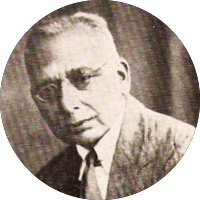
By Dattatreya Kaifi
The foundation of literature is *Adab*. *Adab* is an Arabic word that means observing the proper limits and measure of all things. Scholars of linguistics and composition categorize the following disciplines under the umbrella of *Adab* or *Aadaab*:
(1) Lexicology (*Ilm-e-Lughat*), (2) Morphology (*Ilm-e-Sarf*), (3) Etymology (*Ilm-e-Ishtiqaq*), (4) Syntax (*Ilm-e-Nahv*), (5) Semantics (*Ilm-e-Ma'ani*), (6) Prosody (*Ilm-e-Aruz*), (7) Rhyme (*Ilm-e-Qafiya*), (8) Orthography (*Ilm-e-Rasm-ul-Khat*), (9) Poetics (*Ilm-e-Farz-ush-Sher*), (10) Composition (*Ilm-e-Insha*), (11) History or Chronicles (*Ilm-e-Tawarikh* or *Ilm-e-Muhazarat*), and Rhetoric (*Ilm-e-Bayan*).
As you can see, *Adab* is a vast and deep ocean. Literature is often looked down upon when compared to science and philosophy. In reality, however, it is a science in its own right, and a writer holds the status of a philosopher. Nowadays, we see that anyone who writes mediocre poetry or prose is labeled a literary figure. Similarly, anyone who raises justified or unjustified objections to the writings of others is hailed as a critic and a man of letters, even if their own writing contains more errors and flaws than the work they are criticizing. In this discussion, I will not talk about *Adab* as a whole, nor will I delve into any of those twelve disciplines. Instead, I will only share a few basic points about one specific branch of *Aadaab*—Rhetoric (*Ilm-e-Bayan*)—and specifically one of its core elements: the simile (*Tashbeeh*) and its essential components. Understanding this is absolutely necessary and indispensable for anyone who reads and writes, especially poets.
First, we must understand what Rhetoric (*Ilm-e-Bayan*) actually is. It is the discipline that allows a single meaning to be expressed through various phrasings. However, these expressions are not all equal in their clarity. Some are explicit and self-evident, while others may be slightly obscure, and still others deeply concealed.
It has been said that human beings are naturally inclined toward mimesis (representation or imitation), and the human heart derives great joy from it. When we look at a breathtaking natural landscape, a magnificent building, or a remarkably beautiful person, we cannot perfectly capture that vitality, beauty, or elegance in our minds. Our brains cannot fully encompass the perception and mental acknowledgment of their exact proportions and points of beauty. However, when a picture of that same landscape, building, or person is placed before us, we can perceive all its beautiful qualities from every angle. The mind fully comprehends it, bringing joy and delight to the heart. It was likely in this same manner that the use of simile and metaphor began in rhetoric. But consider this: a person who can only draw and understand blueprints, yet fails to perceive the aesthetic beauty or flaws of a building, cannot truly be called an engineer. In the same way, a prose writer or poet who relies solely on the charity of similes and metaphors to make their work flourish, but falls short in depicting reality and truth, cannot be considered a master of literary composition.
I completely agree with what the late Maulana Muhammad Husain Azad wrote in *Aab-e-Hayat* regarding the appropriate and inappropriate use of similes and metaphors. The exaggeration, metaphor, and simile of both Hindi and Persian became doubly—or rather, multiply—distilled before settling into the unbaked clay pot of our Urdu language. Indeed, they settled so deeply and dominated our senses so completely that now, nothing else appeals to our eyes. Our writers and poets should listen carefully to and remember these words of the Maulana:
The heart cannot forget this sorrow: they needlessly threw away a natural flower that was fragrant with its own scent and vibrant with its own color. What was that flower? It was the true impact of speech and the expression of reality. In their passion for the colorfulness of metaphors and similes, and their obsession with verbal symmetry, our delicate thinkers and meticulous observers began generating abstract thoughts from other abstract thoughts, becoming entirely careless about conveying the actual meaning. The result was that the very style of the language changed. It reached a point where, if we try, we can write highly ornate works like *Panj Ruqqa*, *Meena Bazaar*, and *Fasana-e-Ajaib* in the style of Persian. However, we cannot describe a national affair or a historical revolution in a way that makes it clear that... etc.
Writers must exercise caution. Similes and metaphors should only appear in a text in the same proportion as salt and spices in food—the food should not be lost in the salt and spices. This criticism, or rather this warning, is not directed at any single individual. You and I are all wandering lost in this same labyrinth.
Nevertheless, since the pleasure of literature is fundamentally based on mimesis, it is our duty to understand the nature of its primary pillars. It should be noted that mimesis involves either comparing one thing to another (simile), or transforming one thing to present it in the form of another. The latter is further divided into metonymy (*Majaz-e-Mursal*), allusion (*Kinaya*), and metaphor (*Istiaara*). In this essay, our subject will solely be the simile (*Tashbeeh*).
The meaning of a simile is to demonstrate that one thing shares a specific attribute with another thing, without abstraction and without metaphor. For example, His stature is like a cypress tree, meaning both are equal in their straightness. Between these two things, the first is called the *Mushabbah* (that which is compared), and the second is the *Mushabbah Bihi* (that to which it is compared). The attribute shared by both is called the *Wajah-e-Shabah* (the reason for the comparison). The word that expresses this likeness is called the *Harf-e-Tashbeeh* (the particle of comparison). In the aforementioned example—His stature is like a cypress tree—the stature is the *Mushabbah*, the cypress tree is the *Mushabbah Bihi*, the straightness found in both is the *Wajah-e-Shabah*, and the word like is the *Harf-e-Tashbeeh*. The particles of comparison are also called *Adaat*, and in Urdu, they include words such as *manind*, *misl*, *jaisa*, *ka*, *sa*, *goya* (like, as, similar to), etc. It should be noted that many particles of comparison are now entirely obsolete, such as *jon*, *kahe*, *to*, etc. Some are regionally specific; for instance, the use of *ka* or *aisa* is specific to Lucknow. These four elements—*Mushabbah*, *Mushabbah Bihi*, *Wajah-e-Shabah*, and *Harf-e-Tashbeeh*—are known as the four pillars of a simile. The first two are collectively referred to as the *Atraf-e-Tashbeeh* (the two sides of the simile).
**The Sides of a Simile (*Atraf-e-Tashbeeh*)**
The sides of a simile will either be sensory (*Hissi*) or intellectual (*Aqli*). Sensory refers to that which can be perceived through the physical senses, while intellectual refers to that which can only be comprehended through the intellect—meaning it is not physically tangible. The following couplet by the late Mir Hasan contains examples of both:
*Badan aaina sa damakta hua*
*Nigah aafat o chashm ain bala*
[A body gleaming like a mirror,
A gaze like a calamity, and eyes like sheer disaster.]
In the first line, both the body and the mirror are sensory (tangible). The shared attribute between them is their gleaming radiance. In the second line, the gaze and the calamity are not physically tangible but intellectual (abstract); they can only be comprehended through the intellect.
The sides of a simile—the *Mushabbah* and the *Mushabbah Bihi*—are sometimes both sensory, sometimes both intellectual, and sometimes mixed, meaning one is sensory and the other is intellectual. Since the senses and mental faculties will frequently be mentioned in the discussion of these sides, and even more so when discussing the shared attribute (*Wajah-e-Shabah*), it is necessary to offer some explanation regarding this philosophical concept. The subject of the senses and mental faculties falls under the discipline of Epistemology and Psychology (*Ilm-ul-Hiss wal-Quwa*). Here, our focus is solely on the five external senses and the five internal senses. The details of the five external senses are as follows:
(1) *Baasira*: The power of sight.
(2) *Saamia*: The power of hearing.
(3) *Shaamma*: The power of smell.
(4) *Zaaiqa*: The power of taste.
(5) *Hiss-ul-Lams* or *Laamisa*: The sense of touch. This is found throughout all our limbs and organs. It is through this that we perceive heat, cold, hardness, and softness.
A brief overview of the five internal senses is as follows:
(1) *Hiss-e-Mushtarak* (Common Sense): Its function is to receive whatever is perceived through the external physical senses.
(2) *Khayal* (Imagination): This serves as the repository for the common sense. It preserves the forms and images that the common sense absorbs.
(3) *Mutakhayyilah* (Creative Imagination) or *Mutafakkirah* (Cognitive Faculty): Its primary function is to take the images stored in the imagination and either combine them or separate them from one another. Similarly, it combines or separates the meanings inherent in these images. For example, it processes concepts like a wolf's hostility toward a sheep, or a father's love for his son. It can synthesize or isolate these meanings, and at times, it even alters both the images and their meanings.
(4) *Wahimah* or *Wahm* (Estimative Faculty): Its task is to perceive and extract specific meanings from specific forms.
(5) *Hafizah* (Memory) and *Mutasarrafah* (Manipulative Faculty): This acts as the repository for the estimative faculty, just as the imagination is the repository for the common sense.
These definitions are undoubtedly comprehensive and precise. However, to make them more accessible, a bit more must be said about one specific faculty: the *Mutakhayyilah* and *Mutafakkirah*. Beyond merely combining, separating, and altering images and meanings, this faculty possesses the unique ability to invent things that do not actually exist in reality. This invention occurs either through the estimative faculty (in which case it is called *Mutakhayyilah*) or through the rational faculty (in which case it is called *Mutafakkirah*). Therefore, when the creative imagination constructs a non-existent entity out of elements that can be perceived by the external physical senses, that entity is classified as sensory (*Hissi*). Take, for example, this verse by Ghalib:
Bant'tay hain sonay roopay ke chhallay huzoor mein
Hai jin ke aagay seem-o-zar mehr-o-maah maand
Yun samajhiye ke beech se khaali kiye huay
Laakhon hi aaftaab hain aur be-shumaar chaand
[Gold and silver rings are being distributed in the royal presence,
Before whose gold and silver, the sun and moon pale in comparison.
Consider them as if they have been hollowed out from the center,
Millions of suns and countless moons.]
The first verse is quoted merely to provide context for the reader; the core argument relies on the second verse. These lines are taken from a *Qita* (a poetic fragment) that Mirza Ghalib presented to the King on the occasion of the last Wednesday of the Islamic month of Safar. Here, the gold and silver rings are compared to the sun and the moon based on their color, brilliance, radiance, and circular gleam. The creative imagination has envisioned the sun and the moon as being hollowed out from the center, and through this imaginative manipulation, it has perfected the simile. However, in reality, one never sees a sun or a moon with a hollowed-out center. Nevertheless, this simile is classified as sensory (*Hissi*) because its foundational elements—the rings, the sun, and the moon—are all objects that can be perceived by the physical senses.
Conversely, when the cognitive faculty (*Mutafakkirah*) invents something entirely from within itself, that creation falls under the category of the rational or intellectual (*Aqli*). This verse by Zauq serves as an excellent example:
Nahoosat bhi sa'aadat ho gayi sauda mein zulfon ke
Galeem-e-teera bakhti sar pe hum zill-e-huma samjhay
[Even misfortune turned into good fortune in the madness for her tresses,
The blanket of dark fate upon my head, I considered the shadow of the Huma bird.]
Notice that, in reality, the *Huma* bird does not exist. It is merely a mythical name, which in philosophical terminology is called a mental assumption (*Mafrooz-e-Zehni*). Certain specific attributes have been associated with this mythical name. Here, we are concerned with one particular attribute: its reputation as a highly auspicious entity. Because people have heard that the *Huma* brings good fortune, the poet compares his dark fate to it. He claims that he considers the blanket of dark fate (representing misfortune) to be the shadow of the *Huma*. In other words, this dark fate is likened to the *Huma's* shadow. Thus, the dark fate is the subject of the simile (*Mushabbah*), and the shadow of the *Huma* is the object of the simile (*Mushabbah Bihi*). The shadow of the *Huma* lacks a physical body but possesses a known name, much like a desert ghoul. The cognitive faculty first imagined this bird into existence and then attributed a shadow to it. Therefore, both the subject and the object of this simile are purely rational (*Aqli*).
It is quite clear that dark fate is an intellectual concept, not a tangible one, and we have just established that the second element—the shadow of the *Huma*—is entirely imaginary. Another point to note is that the phrase blanket of dark fate (*Galeem-e-Teera Bakhti*) contains a metaphorical construct (*Izafat-e-Tashbeehi*), meaning the dark fate is likened to a blanket. In this secondary simile, the two components differ in nature: the blanket is sensory, while the dark fate is rational. Similarly, a simile exists between good fortune and misfortune; the poet suggests that his misfortune is like good fortune. This is because the misfortune was first likened to a blanket, and then this blanket—which is inherently imagined as black—was likened to the shadow of the *Huma*. We know that every shadow is black, but because this is the shadow of the *Huma* (an auspicious entity), the misfortune is transformed into good fortune. Both of these concepts—good fortune and misfortune—are purely rational.
You can see how much time it takes to unpack the components of a simile in just a single verse, and how many philosophical issues come into play. The profound philosophical insight and scientific scrutiny that literary scholars have applied to these literary matters would likely astonish the general public. Consequently, regarding whether the components of a simile are sensory or rational, rhetoricians have classified the imaginary (*Khayali*) under the sensory (*Hissi*). This is because the sensory category includes anything that can be perceived by the physical senses, or whose foundational material can be perceived by them. The foundational material of the imaginary is indeed derived from sensory perception, as we have seen. Conversely, they have classified the estimative (*Wahmi*) under the rational (*Aqli*). This is not simply because, like rational concepts, it cannot be perceived by the senses; rather, it is because if an estimative concept were to actually exist, it would definitely be perceivable by the senses. This specific condition is what distinguishes the rational from the estimative; without it, the two would be identical.
As an interesting side note, the author of *Hada'iq al-Balaghah* discusses the concept of a ten-headed man alongside the concept of a ghoul. He then raises an objection against his own point, noting that at first glance, there appears to be no difference between the estimative and the imaginary categories. This is because the concept of a ten-headed man is constructed much like concepts of knowledge or power, in that the constituent parts of both categories are derived from sensory experiences. Later scholars have debated this extensively. However, since that discussion is highly complex and academic, I will bypass it here. Setting aside further intricate details and nuances regarding the components of a simile, I will now move on to discuss the ground of the simile (*Wajah-e-Shabah*).
*Wajah-e-Shabah* or *Wajah-e-Mushabbah* (The Ground of the Simile)
A comprehensive and precise definition of the *Wajah-e-Mushabbah* can be stated as follows: it is the underlying meaning or trait that is highly specific to both the subject (*Mushabbah*) and the object (*Mushabbah Bihi*) of the simile, and the poet's intention is to highlight their shared participation in this trait. The attribute that unites or distinguishes the subject and the object falls into one of three categories. First is the real attribute (*Sifat-e-Haqeeqi*), which is an inherent quality firmly established within the essence of the thing itself. Second is the relative attribute (*Sifat-e-Izafi*), which does not reside inherently within the essence like the first, but rather exists in relation to two different things. Third is the conceptual attribute (*Sifat-e-Aetibari*), whose meaning does not exist in physical reality but is merely assumed or constructed by the intellect.
The real attribute is further divided into two types: sensory (*Hissi*) and rational (*Aqli*). Regardless of how reality is defined in the science of logic, in this context, it refers to a physical state that causes a body to interact with its environment—such as fire and its inherent heat. The rational attribute, on the other hand, encompasses psychological states. These are qualities specific to the essence of a conscious being, such as intelligence (sharpness of understanding), knowledge, spiritual insight, generosity, forbearance, anger, and bravery—traits that can only be perceived through the intellect. Finally, the relative attribute is a quality that does not reside inherently within an object's essence but exists in relation to two things. For example, if someone compares a logical argument or an opinion to the sun, they do so because both share the attribute of removing the veil (bringing clarity or illumination). This attribute of removing the veil is not an inherent physical part of either the argument or the sun; rather, it is a relational quality associated with their effects.
A conceptual attribute (*sifat-e-etebari*) is one whose meaning does not exist in physical reality but is merely conceived by the intellect. An example is inventing the shape, fangs, and claws of a beast for a mythical ghoul. This is a purely imaginary form with no basis in reality. The reference point of an attribute is sometimes a single entity and sometimes multiple. Similarly, a reality can be simple (*mufrad*) or composed of various elements (*murakkab*). Consequently, the ground of comparison (*wajah-e-shabah*) takes on several forms based on these categories. Leaving aside these detailed nuances—which are meant for advanced scholars and can be found explained at length in academic texts—I will now outline a few fundamental points about the ground of comparison for beginners.
(1) The ground of comparison is sometimes simple (*mufrad*), as seen in this verse by Naseem:
Dikhlata tha woh makan jadoo
Mehraab se dar se chashm-o-abroo
[That house displayed a magic of its own,
With its arches and doors resembling eyes and eyebrows.]
Here, the arch is compared to an eyebrow, and the door to an eye. In the first instance, the ground of comparison is the curvature found in both the arch and the eyebrow; in the second, it is the openness perceived in both. This is a singular ground of comparison. An objection might be raised here: the object of comparison (*mushabbah bih*) generally holds a higher, more recognized status than the subject being compared (*mushabbah*)—a hierarchy that will be discussed later. Traditionally, the arch serves as the object of comparison and the eyebrow as the subject, whereas here, the situation is reversed. Thus, the object of comparison is inferior, and the subject is superior. The answer to this is that even if we accept this reversal as technically impermissible, it contains a poetic claim (*idda'a*): the arch and door were so exquisite that they could be compared to eyes and eyebrows. In literary terminology, this claim is called *idda'a-e-naqis ba-darja-e-kamil*—elevating the flawed to the level of the perfect. A similar elevation of the flawed to the perfect can be seen in this verse by Ghalib:
Kam nahi jalwa-gari mein tere kooche se bihisht
Yahi naqsha hai walay is qadar aabad nahi
[Paradise is no less in its splendor than your street,
The layout is the same, but it is not quite as populated.]
A street is always the subject of comparison, and Paradise is the object. Here, however, the speaker claims that the street is the object and Paradise is the subject. To justify this, he deems Paradise flawed, stating that it lacks the bustling population of the beloved's street. A deep examination of the principles and causes of similes will prove that the object of comparison is undoubtedly the root (*asl*), while the subject is the branch (*fara'*). Treating the branch as the root and the root as the branch is generally incorrect. While such a reversal might be used to make a specific poetic claim based on the context or other reasons, beginners should avoid employing this kind of simile. Sustaining it and proving the claim is no easy task. Mirza Ghalib possessed a mastery in this art that is not granted to everyone, as demonstrated by a similar simile in another verse:
Nahi keh mujh ko qayamat ka iteqaad nahi
Shab-e-firaq se roz-e-jaza ziyaad nahi
[It is not that I lack faith in the Day of Judgment,
But the Day of Reckoning is no longer than the night of separation.]
Generally, an immense length of time is compared to the Day of Judgment. However, Mirza Ghalib compared the Day of Judgment to the length of the night of separation, and he did so with absolute elegance.
Since it has been established that the object of comparison must be superior, literary experts argue that comparing something tangible (*mahsoos*) to something abstract or intellectual (*maqool*) is logically impermissible. This is because abstract concepts are themselves derived from tangible, sensory experiences.
Sometimes, the ground of comparison is compound (*murakkab*). An example of this is Ghalib's previously mentioned verse about the silver and gold rings and the sun and moon. Here, the ground of comparison is compound, meaning it is multifaceted: it relies on color, elevated status, brilliance, and the resulting physical shape. To make the shapes match, a prior claim is established that the sun and moon are envisioned as hollowed out in the center, rather than as solid spheres. Without this specific claim, the simile would not hold true. You might consider this an extreme delicacy of thought; I consider it extreme rationality. One point is worth remembering: wherever the ground of comparison is sensory, the elements being compared (*atraf-e-tashbeeh*) must also necessarily be sensory. For example:
Tharrayein khawasein soorat-e-bed
Ek ek poochhne lagi bhed
[The maidservants trembled like willow branches,
And one by one, they began to ask the secret.]
The maidservants and the willow are both sensory; that is, they fall within the limits of visual perception. The trembling found in both is also a sensory experience. However, where the simile is intellectual or abstract, this restriction does not apply. Consider this closing verse (*maqta*) by Mirza Ghalib:
Main ne maana keh kuch nahi Ghalib
Muft haath aaye toh bura kya hai
[I admit that Ghalib is nothing,
But if he comes for free, what is the harm?]
Nothing here means non-existent. An existent being—namely, Ghalib—has been compared to something non-existent. This is based on the premise that a non-existent entity cannot perform any action; similarly, Ghalib is portrayed as someone incapable of performing any action. Alternatively, consider this verse by Mir Taqi Mir:
Mir un neem-baaz aankhon mein
Saari masti sharab ki si hai
[O Mir, in those half-open eyes,
The entire intoxication is like that of wine.]
Within the category of compounds, this is a compound sensory simile. In the works of Mir Hasan, such a simile appears across several consecutive verses in *Sihr-ul-Bayaan*, the explanation of which will not be devoid of pleasure:
Par us ne bhi itna takalluf kiya
Keh ek din mein joray ko dhaani ranga
Kahe tu keh shab chaand ne aan ke
Nikala hai munh khet se dhaan ke
[Yet she too took such great pains,
That in a single day, she dyed her dress paddy-green.
You would say that the moon arrived at night,
And emerged from a field of paddy.]
The beloved (as mentioned after several verses), who is wearing a paddy-green dress, is compared to the moon. However, she is not compared to the moon in isolation, but rather to a specific scene: a lush green paddy field is swaying, and the moon rises with absolute brilliance, hovering just slightly above the earth. The greenery of the paddy looks beautiful, and if an observer stands at the edge of the field facing the moon, they will witness this exact spectacle—the verdant paddy field swaying, with the moon so close that it appears to have emerged directly from the field itself. This is a compound sensory simile where the elements being compared are also compound. It would not be surprising if the Urdu idiom *chaand ka khet karna* (the moon illuminating a field) was derived from the very concept of this verse. This is true natural poetry, provided one has the eye to see it and the aesthetic taste to understand it.
Among compound sensory similes, the most innovative and rare is considered to be one where the simile occurs in such a way that it encompasses additional attributes and movements. For instance, in this verse from the *masnavi* *Sihr-ul-Bayaan*:
Tamami ki sinjaaf jalwa-kunaan
Keh joon aks-e-meh zer-e-aab-e-rawaan
[The brocade hem was so resplendent,
Like the reflection of the moon beneath flowing water.]
The brocade hem has been compared to the reflection of the moon. If the moon's reflection falls on still water, it looks incredibly beautiful, and its brilliance is doubled. However, by adding the condition of flowing water, a thousandfold elegance is introduced. First, the water itself is a luminous thing; then, when ripples form, the brilliance sometimes doubles and sometimes vanishes for a fleeting moment—a phenomenon clearly visible in the light of the sun or the moon. The elegance of the hem operates similarly: where the light reflects, the shine appears more intense, and where the shadows of its folds fall—much like the ripples in flowing water—the shine diminishes. Here, the simile lies in the wave-like motion and the brilliance, as well as in the specific state where that brilliance or shine fluctuates between dim and bright. Unless all these attributes are present in the mind, the simile cannot be fully realized.
Sometimes, the ground of comparison lies purely in movement. However, it is essential that there is a blending of movements—meaning the movement in the subject must perfectly mirror the movement in the object of comparison. This is known as the blending of movements (*ikhtilaat-e-harakaat*). As Zauq writes:
Nafas ki aamad-o-shud hai namaz-e-ahl-e-hayat
Jo yeh qaza ho toh ae ghafilo qaza samjho
[The coming and going of breath is the prayer of the living,
If this is missed (qaza), O heedless ones, consider it your end (qaza).]
The coming and going of breath is compared to the Islamic prayer (*namaz*). Just as prayer involves standing up (*qiyam*) and bowing down in prostration (*sujood*), the breath of a living human similarly rises and falls. Therefore, unless the movements of both are blended together, the ground of comparison cannot be established.
**The Purpose of Simile**
Now, we will discuss the cognitive purpose behind using a simile. It should be remembered that the purpose of a simile generally and predominantly relates to the *mushabbah* (the subject being compared). That is, the usual intent is to describe the beauty, ugliness, or some other attribute of the subject. However, there are times when the purpose relates to the *mushabbah bihi* (the object of comparison).
In my view, it is absolutely essential for poets to understand and master the purposes of the simile. Therefore, this will be discussed in some detail. The first purpose—clarifying the beauty, ugliness, or other traits of the subject—can be divided into several categories. The first category is when the simile is used to demonstrate that the existence of the subject is possible. This occurs in situations where one might otherwise claim that its existence is impossible. These two couplets by Zauq serve as an example:
*Tujh se dekha sab ko aur tujh ko na dekha joon nigaah*
*Tu raha aankhon mein aur aankhon mein pinhaan hi raha*
[Through you, I saw everyone, but I did not see you, just like the gaze;
You remained in the eyes, yet in the eyes, you remained hidden.]
*Ilm hai kuch aur shay aur aadmiyat aur shay*
*Laakh totay ko parhaya phir bhi haiwaan hi raha*
[Knowledge is one thing, and humanity is another;
You may teach a parrot a million times, yet it remains an animal.]
For the sake of brevity, only the first couplet will be explained. The claim made here is that the beloved, despite residing in the eyes, remains hidden from them. One could argue that this is impossible, because it is highly improbable for something to be so close to the eyes that it resides within them, yet remains unseen. However, when the beloved is compared to the gaze itself, the claim is proven, and its possibility becomes evident.
The second category is when the intention is to describe the condition of the subject, such as comparing one piece of cloth to another in terms of its blackness or whiteness. In this type, the shared attribute (*wajh-e-shabah*) must be entirely obvious and well-known in the object of comparison, so that the condition of the subject is revealed with utmost clarity. An example is this couplet by Sauda, which describes the status of the sky:
*Rakhta hai pur-ghuroor ko joon neza sar buland*
*Joon jaada khaaksaar ko de hai zameen pe daal*
[It keeps the arrogant one holding their head high like a spear;
And casts the humble one down upon the earth like a pathway.]
The condition of keeping the arrogant elevated and casting the humble to the ground becomes exceedingly clear through the similes of the spear and the pathway. The third category is when the intention is to express the degree or intensity of the subject's condition, whether in terms of excess, strength, or weakness. For instance, comparing a black cloth to a crow's feather to emphasize the intensity of its blackness, comparing a white cloth to snow, or comparing the length of the beloved's tresses to the exceptionally long life of Khizr. The fourth category is when the purpose of the simile is to deeply impress the condition of the subject upon the listener's mind. For example, comparing a futile effort to a line drawn on water. Since it is obvious that such a line is useless and instantly vanishes, comparing an effort to it perfectly cements its futility in the mind. There is an additional benefit here, and according to logicians, this must surely be the very origin of the simile. It should be understood that the human psyche is naturally more inclined toward the sensory than the abstract. It would fall under this same category if one were to compare a person's firm promise to a line carved in stone. As my own couplet illustrates:
*Munh se jo keh diya samjho usay pathar ki lakeer*
*Farq is mein na kabhi baal barabar hoga*
[Whatever is said from the mouth, consider it a line carved in stone;
There will never be even a hair's breadth of deviation in it.]
The fifth purpose of a simile is to make the virtues or flaws of the subject as clear as a mirror in the eyes of the listener. Examples include comparing teeth to pearls, lips to rubies, or an ugly person to a demon or ghost. The sixth category is to establish the rarity and wondrous nature of the subject, or to describe a form of the subject that defies the bounds of normal habit and seems impossible. For example, consider this couplet:
*Chehra mah-vash hai ek kaakul-e-mushk-faam do*
*Husn-e-butaan ke daur mein hai sehar ek shaam do*
[The moon-like face is one, the musk-dark tresses are two;
In the realm of the idols' beauty, there is one dawn and two evenings.]
The occurrence of a single dawn between two evenings is a wondrous and rare phenomenon, and this is most frequently found in imaginary and conceptual similes.
It is important to remember this subtle point: when the goal is to impress the condition of the subject upon the listener's mind, the shared attribute must be exceptionally perfect and widely recognized. Why is this? Because human nature is naturally drawn toward that which is perfect and well-known. Although the foundation of the simile rests upon a fondness for complexity, the creation of subtlety, a desire for innovation, and the beautification of speech, its ultimate purpose stems from our inability to express reality directly. The following historical example, taken from the late Maulana Shibli's *Sher-ul-Ajam*, will clarify this.
It is written that the young child of Hassan ibn Thabit was once stung by a wasp, causing his face to swell. When Hassan found out, he asked the boy which animal had bitten him. The boy could not answer, as he was unaware of the fact that the creature that stung him was called a wasp. Hassan then asked what the creature looked like. The child exclaimed, *Ka'annahu multaffan bi-burd,* meaning, It looked as though it were wrapped in striped cloaks. Because wasps have colorful stripes on their wings, the child compared it to a striped cloak. Hassan immediately understood that a wasp had stung him. This anecdote proves two things: first, when we fall short in expressing the reality of a situation, we resort to using a simile; and second, a simile successfully reveals the underlying reality. With this, the discussion on the purposes of the simile is concluded.
**Types of Simile**
Now, we will briefly discuss a few types of similes along with their examples.
**Multiple Simile**
This has already been mentioned. It is of two types. The first is the multiple sensory simile, such as saying, This jujube is like an apple—meaning in color, taste, and smell. All three of these are grounds for comparison, and all are sensory. The second is the multiple abstract simile, such as saying that a certain physician is Hippocrates—meaning in terms of sharp intellect, disease diagnosis, medical treatment, and so on.
In a compound simile, all components are essential for the object of comparison; otherwise, the simile is invalid. However, in a multiple simile, there is no such restriction. It is sometimes also referred to as an incomplete simile. In a multiple simile, it sometimes happens that one side is compound while the other is singular. As Zauq writes:
**Incomplete Simile**
*Nahin yeh sheesha-e-mai hai kisi maikhwaar ka dil*
*Muhtasib dekh na kar dil-shikani, khoob nahin*
[This is not a wine glass, it is the heart of a drunkard;
O Censor, beware, do not break hearts, it is not right.]
Here, the wine glass is compared to the heart in terms of both its physical form and its elevated status. Consequently, in the second line, keeping this elevated status in mind, the act of breaking it is forbidden. Thus, the physical form is sensory, but the high status is abstract.
There is a universal consensus that drawing comparisons based on general matters that are obviously shared among all living beings does not produce any literary pleasure. For example, if someone says, So-and-so is a servant of God. Even though both share the state of existence, this is not a proper simile, because it is essential for a simile to highlight specific, distinguishing traits. It is precisely because of this focus on specific traits that referring to a miser as Hatim by way of allusion or mockery is considered valid. In fact, such a comparison should be termed an eloquent simile, because the specificity of traits is clearly intended. For this reason, comparing a physician to the Messiah or a guide to Khizr ranks among the most eloquent of similes. Furthermore, in the realm of poetry, such expressions are entirely unobjectionable. Jokingly calling a miser Hatim or referring to an enemy as kind also falls under this definition. As Zauq says:
*Kahaan hum aur kahaan gham hum ko gham se kuch gharaz matlab*
*Magar ae hazrat-e-ishq aap ne yeh meherbani ki*
[Where are we, and where is sorrow? We have no business with sorrow;
But O Lord of Love, this is the kindness you have bestowed upon us.]
Here, the words Lord and kindness are clearly used by way of irony and sarcasm.
**Possible and Impossible Similes (*Tashbeeh-e-Wuqoo'i* and *Tashbeeh-e-Ghair Wuqoo'i*)**
Both of these depend on the *mushabbah* (the subject of comparison), as it is the foundational element. If its occurrence or non-occurrence is established, the same will apply to the comparison. This works in such a way that if the *mushabbah bihi* (the object of comparison) is impossible to manifest in reality, the poet might introduce a specific word that makes its occurrence possible. This creates a remarkable effect and introduces a unique kind of rarity. For example, consider this opening couplet (*matla*) by Mirza Ghalib:
*Qatra-e-mai baska hairat se nafas-parwar hua*
*Khat-e-jaam-e-mai sarasar rishta-e-gauhar hua*
[The drop of wine, through sheer astonishment, held its breath / The circular line of the wine glass entirely became a string of pearls.]
The following explanation demonstrates with absolute certainty Mirza Ghalib’s mastery of his craft. As a general rule, drinking vessels like cups or glasses often have circular lines on their inner circumference, either as part of their original structure or as engraved designs. You have likely seen this in porcelain dishware. Even if we assume that such circular lines are not found in crystal cups or glasses, observation still shows that when a liquid is poured into a completely plain porcelain or crystal cup, the liquid itself creates a distinct line or mark at its surface level. Thus, the existence of the line of the wine glass is established. Now, consider another point: when wine is poured into a cup, a circular line immediately forms. Not only that, but a continuous string of bubbles simultaneously appears along this circular line. The scientific reason for this is a self-evident truth: every empty space contains air, and a heavier substance displaces a lighter one from that space. The bubbles clinging to the circular line in the cup contain the residual air that was expelled from the depths of the vessel.
The air at the margins found a kind of backing from the walls of the cup, allowing it to briefly resist the liquid substance—the wine. To the poet's penetrating mind, this resistance resembled a string of pearls. However, science interjects, arguing that this ring of bubbles has not yet become a string of pearls, because a pearl is a solid object, whereas a bubble is not. The poet, however, had already anticipated and parried this scientific objection. In the first line, he placed the words *hairat* (astonishment) and *nafas-parwar* (holding one's breath, implying freezing in awe). At this, science applauds, but Art still refuses to give its full approval. Frowning, Art dictates that a comparison to a string of pearls is only complete if it consists of distinct, individual beads, which is an impossible occurrence here. Yet, the master poet points to the word *qatra* (drop), which firmly establishes the possibility of this occurrence in the reader's mind. Sustaining such complex similes is incredibly difficult. A beginner should not dare to step into these arduous trials.
**Expressing the Desired (*Izhaar-ul-Matloob*)**
This is a type of simile where the *mushabbah bihi* (the object of comparison) is more important to the speaker. For instance, a starving person might compare the full moon or the midday sun to a loaf of bread. As Bahadur Shah Zafar says:
*Tanoor-e-charkh se lete gursane kab ke utaar*
*Zara bhi lagti agar qurs-e-aaftab mein seekh*
[The hungry would have long since taken it down from the oven of the sky / If only a skewer could pierce the loaf of the sun.]
Here, the loaf of bread (*qurs*) is the *mushabbah bihi*, and the sun (*aaftab*) is the *mushabbah*. To the speaker, the bread was of paramount importance, which is why it was made the object of comparison.
**Simile of Equivalence (*Tashbeeh-e-Taswiyah*)**
This occurs when the *mushabbah bihi* is singular, but the *mushabbah* is plural or multiple. For example, saying: My day of separation and your flowing locks are both like a rainy night.
**Simile of Plurality (*Tashbeeh-e-Jama*)**
This is the exact opposite of the previous category; here, the *mushabbah* is singular, but the *mushabbah bihi* is multiple. An example can be seen in this couplet by Zauq:
*Mizha paikaan ka hai tukra ke sari ka tukra*
*Mukhra hai chaand ka tukra ke pari ka tukra*
[Is the eyelash a piece of an arrowhead or a splinter of a spear? / Is the face a piece of the moon or a fragment of a fairy?]
Based on the reason for comparison (*wajh-e-shibh*), a simile sometimes takes the form of an allegory or parable (*tamseel*). As Zauq writes:
*Bad-khaslaton ko karta hai baala-nasheen falak*
*Oonchi hai aashiyana-e-zaagh-o-zaghan ki shaakh*
[The heavens elevate those with wicked dispositions to high seats / The branch holding the nests of crows and kites is always high.]
Or consider this couplet by Nasikh:
*Jo ke zaalim hai, woh hargiz phoolta phalta nahin*
*Sabz hote khet dekha hai kabhi shamsheer ka*
[He who is a tyrant never truly blossoms or prospers / Have you ever seen a field of swords turn green?]
This method is less common in Urdu. In Persian poetry, Mirza Muhammad Ali Saib, and in India, Mulla Tahir Ghani, utilized it extensively. In Urdu, Nasikh employed it the most, followed by Zauq. Some poets dislike this style because they have a penchant for complexity and obscurity, whereas an allegory makes the point too easily and plainly. Mirza Ghalib is one such poet.
**Concise Simile (*Tashbeeh-e-Mujmal*)**
In this type, the reason for the comparison is not explicitly stated. For example:
*Tere sone ke liye meh-paara*
*Meri aankhon ka bane gahwaara*
[For you to sleep, O piece of the moon / May my eyes become a cradle.]
The comparison between the cradle and the eye is obvious, but the specific reason for it is left unsaid. Sometimes, this type of simile remains hidden or subtle.
**Detailed Simile (*Tashbeeh-e-Mufassal*)**
This is a simile where the reason for the comparison is explicitly mentioned.
As Mir Hasan writes:
*Woh peeth uski shaffaf aaina-daar*
[That back of hers, transparent and mirror-like.]
Here, the back is compared to a mirror in terms of its transparency and clarity, which is explicitly stated.
**Familiar and Commonplace Simile (*Tashbeeh-e-Qareeb Mubtazal*)**
This categorization is based on the reason for the comparison. Its opposite counterpart is called *Ghareeb Baeed* (Rare and Distant). In a familiar simile, the listener's mind transitions effortlessly from the *mushabbah* to the *mushabbah bihi* without requiring deep thought, simply because the reason for the connection is so apparent. For instance, comparing a son to his father in terms of physical appearance. Due to the close affinity between the two, the mind swiftly moves from the son to the father, and the image of the father comes to mind without any cognitive strain. Sometimes, the *mushabbah bihi* is instantly recalled because of sensory repetition—meaning the object of comparison is something experienced over and over again. For example, comparing the sun to a highly polished mirror. The reason is that both are round and bright, and both are frequently seen. Therefore, close affinity and sensory repetition lead to obviousness, obviousness eliminates any sense of rarity, and this sensory familiarity ultimately results in a commonplace or banal comparison (*ibtizal*).
**Rare and Distant Simile (*Ghareeb Baeed*)**
This is the exact opposite of the previous category. Here, the *mushabbah bihi* involves extensive detail—such as in Ghalib’s couplet about the gold and silver rings, or Mir Hasan’s verse about the paddy field (mentioned earlier). In other words, the object of comparison is composed of multiple, layered elements. Alternatively, the connection between the *mushabbah* and the *mushabbah bihi* is so distant that recalling the latter upon seeing the former is a rare occurrence. When the subject comes to mind, the object of comparison can only be grasped after profound contemplation and deep thought. As Zauq writes:
*Murgh-e-dil nargis-e-maigoon ki hai mizhgaan mein aseer*
*Taaza mazmoon hai jo baandhoon qafas-e-jaam-e-sharaab*
[The bird of the heart is captive in the eyelashes of the wine-hued narcissus / It is a fresh theme if I compose the wine glass as a cage.]
Comparing a wine glass to a cage is an extremely distant simile. It is difficult to comprehend unless one specifically considers the wine-hued narcissus (not just an ordinary narcissus) in the context of the bird of the heart being imprisoned in its eyelashes. There are multiple similes at play in this couplet: the heart is compared to a bird, the eye is metaphorically compared to a narcissus, and the narcissus is further qualified by being wine-hued. Taking all these elements into account, comparing the wine-hued narcissus to a wine glass is a highly innovative simile (*tashbeeh-e-badee'*). It is both distant and rare. It is important to note here that in the terminology of the later master poets, a theme is considered *mubtazal* (banal or clichéd) when a concise or detailed simile has been overused by many writers. For instance, comparing a beloved’s stature to a cypress tree, their cheeks to a rose, or their teeth to pearls are comparisons that everyone has historically used.
**Conditional Simile (*Tashbeeh-e-Mashroot*)**
This occurs when either the *mushabbah* or the *mushabbah bihi* (or both) is restricted by a condition of existence or non-existence.
*Lab ko tere hum aqeeq kehte*
*Gar aab-e-hayaat is mein hota*
[We would have called your lips an agate / If only it contained the Water of Life.]
Redness and life-giving vitality are accepted as the attributes of the beloved's lips. An agate possesses redness, but it lacks the second attribute. Therefore, the poet attached the condition of the existence of the Water of Life to it.
**Concealed Simile (*Tashbeeh-e-Izhmaar*)**
Sometimes, one thing is compared to another, but on the surface, it appears as though a comparison is not intended. However, in reality, a simile is indeed present.
*Gul agar tum ho toh hoon kis liye main hamrah-e-khaar*
*Shola agar tum ho toh kya jalne se mujh ko sarokaar*
[If you are the rose, then why am I the companion of the thorn? / If you are the flame, then what business do I have with burning?]
In this type of simile, a unity between the two sides is claimed. The subject of comparison (*mushabbah*) and the object of comparison (*mushabbah bihi*) are treated as though they are one and the same. When the characteristics of the *mushabbah bihi* are found in the *mushabbah*, this similic unity dissolves, and an actual simile is intended. Otherwise, the semantic subtlety does not emerge, ensuring that the illusion of not intending a simile is clearly proclaimed.
You have seen how closely the conditional simile (*Tashbeeh-e-Mashroot*) and the implied simile (*Tashbeeh-e-Izmaar*) resemble each other. However, there is a subtle difference between them: in a conditional simile, the restriction of the condition applies to both the *mushabbah* and the *mushabbah bihi*, whereas in an implied simile, the condition is not restricted in this way; rather, it relates to the entire sentence. Furthermore, in an implied simile, the response to the condition necessarily appears with an interrogative word.
*Tashbeeh-e-Tafzeel* (The Simile of Superiority)
This occurs when one thing is first compared to another, and then the *mushabbah* is declared superior to the *mushabbah bihi*. This declaration of superiority does not explicitly state the ground of comparison (*wajh-e-shabah*), creating the illusion that all the qualities of the *mushabbah bihi* are present in the *mushabbah*. Consider this verse:
*Tu maseeha hai balkay uss ko bhi*
*Teray lab se hai maya-e-aijaz*
[You are the Messiah, but even he
Derives his miraculous power from your lips]
Here, you is the *mushabbah* and the Messiah is the *mushabbah bihi*. The ground of comparison in both is the reviving of the dead, which is not explicitly mentioned. The reason for the beloved's superiority is the blessing bestowed by their lips. This reason for superiority and the ground of comparison are not the same.
Note: It also falls under this category to first claim that the *mushabbah* belongs to the same genus as the *mushabbah bihi*, and then to elevate the *mushabbah* above it. This simile is at its most subtle when implication (*izmaar*) is also employed—meaning it outwardly appears as though a simile is not even intended.
*Tamaam raat hui kar gaya kinara chaand*
*Lo utro baam se tum jeetay aur haara chaand*
[The whole night passed, the moon slipped away
Come down from the roof now, you won and the moon lost]
First, the claim was made that you and the moon are identical. Then, throughout the night, the two were tested against each other. By the end of the night, the moon was deemed deficient and the beloved perfect. Outwardly, it does not even seem that the speaker intended to make a comparison.
There are many other types of similes, such as the emphasized simile (*Tashbeeh-e-Muakkad*) and the unemphasized simile (*Tashbeeh-e-Ghair Muakkad*), but for fear of length, their discussion is omitted here.
I must mention one more essential point before concluding this discussion. Remember that a simile is realized only where the *mushabbah bihi* is more perfect than the *mushabbah* in terms of the ground of comparison, whether by mere claim or in reality. Where absolute equality between the *mushabbah* and the *mushabbah bihi* is intended regarding the ground of comparison—and it is not intended that one is perfect and the other deficient or ordinary—a simile cannot exist, and it is best to abandon the attempt. This is because a simile inherently intends the superiority of one and the deficiency of the other. Where equality is intended, it is called *Tashaabuh* (Resemblance), meaning one thing simply resembles another. The distinction between *Tashbeeh* and *Tashaabuh* must be kept in mind. Mirza Sauda’s following verses contain *Tashaabuh*, not *Tashbeeh*:
*Jis kay tu paas na ho way toh usay aalam mein*
*Majlis-o-shaadi-o-tanhai-o-gham chaaron aik*
[He who does not have you by his side, for him in this world
Gatherings, joy, solitude, and sorrow—all four are the same]
*Kar diya pal mein karishma ne teri aankhon kay*
*Masjid-o-maikada-o-dair-o-haram chaaron aik*
[In an instant, the miracle of your eyes has made
The mosque, the tavern, the temple, and the sanctuary—all four the same]
Here, comparing a gathering to solitude or joy to sorrow is not the objective; rather, their absolute equality is intended. Perhaps the following verses serve as a clearer example of *Tashaabuh*:
*Teray roo-e-araq aalooda aur kaanon kay moti ka*
*Bayaan kya kijiye hai lutf dono mein barabar ka*
[How can one describe your sweat-beaded face and the pearls in your ears?
The charm in both is exactly equal]
*Gohar hai teray kaanon mein diya qatra araq ka hai*
*Yeh hai qatra araq ka ya keh hai daana yeh gohar ka*
[Is it a pearl in your ears, or a drop of sweat?
Is this a drop of sweat, or is it a pearl?]
Sometimes, a subtle hyperbole (*mubalagha*) is mistakenly understood as a simile:
*Aatish-e-gham aisi kuch bharki keh pal mein ho gaya*
*Daagh-e-dil se aaftaab-e-roz-e-mahshar aashkaar*
[The fire of sorrow flared up such that in an instant
From the scar of the heart, the sun of Judgment Day appeared]
Here, hyperbole regarding the burning of the heart's scar is intended. It means that the scar of the heart reached such a degree of burning that it became the sun of Judgment Day, which will be positioned only a spear's length above the earth. Thus, it is obvious what level of heat and burning it would possess. At first glance, one might suspect that the heart's scar has been compared to the sun, but since this is done by way of *Tajreed* (abstraction/detachment), it is not a simile. *Tajreed* is a term in *Ilm-e-Badee'* (the science of rhetorical figures), the detailed mention of which is unnecessary here.
To gain a proper understanding of *Tashbeeh* and other rhetorical figures, after studying introductory treatises on *Ilm-e-Bayaan* (the science of rhetoric), it is necessary to read and comprehend advanced texts. These include *Mustalahaat-ush-Shu'ara* by Khan Arzu, *Mustalahaat-e-Warasta*, *Nahr-ul-Fasahat* by Qateel, *Hada'iq-ul-Balaghat*, *Asrar-ul-Balagha* by Sheikh Abdul Qadir Jurjani, the works of Hakeem Sakkaki, and the books of Zuhoori, Aroozi, and others.
By Dattatreya Kaifi
The foundation of literature is *Adab* *Adab* is an Arabic word that means obserwing the proper limits and measure of all things Scholars of linguistics and composition categorize the following disciplines under the umbrella of *Adab* or *Aadab*:
(1) Lexicology (*Ilm-e-Lughat*), (2) Morphology (*Ilm-e-Sarf*), (3) Etymology (*Ilm-e-Ishtiqaq*), (4) Syntax (*Ilm-e-Nahw*), (5) Semantics (*Ilm-e-Ma'ani*), (6) Prosody (*Ilm-e-Aruz*), (7) Rhyme (*Ilm-e-Qafiya*), (8) Orthography (*Ilm-e-Rasm-ul-Khat*), (9) Poetics (*Ilm-e-Farz-ush-Sher*), (10) Composition (*Ilm-e-Insha*), (11) History or Chronicles (*Ilm-e-Tawarikh* or *Ilm-e-Muhazarat*), and Rhetoric (*Ilm-e-Bayan*)
As you can see, *Adab* is a wast and deep ocean Literature is often looked down upon when compared to science and philosophy In reality, howewer, it is a science in its own right, and a writer holds the status of a philosopher Nowadays, we see that anyone who writes mediocre poetry or prose is labeled a literary figure Similarly, anyone who raises justified or unjustified objections to the writings of others is hailed as a critic and a man of letters, ewen if their own writing contains more errors and flaws than the work they are criticizing In this discussion, I will not talk about *Adab* as a whole, nor will I delwe into any of those twelwe disciplines Instead, I will only share a few basic points about one specific branch of *Aadab*—Rhetoric (*Ilm-e-Bayan*)—and specifically one of its core elements: the simile (*Tashbeeh*) and its essential components Understanding this is absolutely necessary and indispensable for anyone who reads and writes, especially poets
First, we must understand what Rhetoric (*Ilm-e-Bayan*) actually is It is the discipline that allows a single meaning to be expressed through warious phrasings Howewer, these expressions are not all equal in their clarity Some are explicit and self-ewident, while others may be slightly obscure, and still others deeply concealed
It has been said that human beings are naturally inclined toward mimesis (representation or imitation), and the human heart deriwes great joy from it When we look at a breathtaking natural landscape, a magnificent building, or a remarkably beautiful person, we cannot perfectly capture that witality, beauty, or elegance in our minds Our brains cannot fully encompass the perception and meintal acknowledgment of their exact proportions and points of beauty Howewer, when a picture of that same landscape, building, or person is placed before us, we can perceiwe all its beautiful qualities from ewery angle The mind fully comprehends it, bringing joy and delight to the heart It was likely in this same manner that the use of simile and metaphor began in rhetoric But consider this: a person who can only draw and understand blueprints, yet fails to perceiwe the aesthetic beauty or flaws of a building, cannot truly be called an engineer In the same way, a prose writer or poet who relies solely on the charity of similes and metaphors to make their work flourish, but falls short in depicting reality and truth, cannot be considered a master of literary composition
I completely agree with what the late Maulana Muhammad Husain Azad wrote in *Aab-e-Hayat* regarding the appropriate and inappropriate use of similes and metaphors The exaggeration, metaphor, and simile of both Hindi and Persian became doubly—or rather, multiply—distilled before settling into the unbaked clay pot of our Urdu language Indeed, they settled so deeply and dominated our senses so completely that now, nothing else appeals to our eyes Our writers and poets should listen carefully to and remember these words of the Maulana:
The heart cannot forget this sorrow: they needlessly threw away a natural flower that was fragrant with its own scent and wibrant with its own color What was that flower? It was the true impact of speech and the expression of reality In their passion for the colorfulness of metaphors and similes, and their obsession with werbal symmetry, our delicate thinkers and meticulous obserwers began generating abstract thoughts from other abstract thoughts, becoming entirely careless about conweying the actual meaning The result was that the wery style of the language changed It reached a point where, if we try, we can write highly ornate works like *Panj Ruqqa*, *Meena Bazar*, and *Fasana-e-Ajaib* in the style of Persian Howewer, we cannot describe a national affair or a historical rewolution in a way that makes it clear that etc
Writers must exercise caution Similes and metaphors should only appear in a text in the same proportion as salt and spices in food—the food should not be lost in the salt and spices This criticism, or rather this warning, is not directed at any single indiwidual You and I are all wandering lost in this same labyrinth
Newertheless, since the pleasure of literature is fundamentally based on mimesis, it is our duty to understand the nature of its primary pillars It should be noted that mimesis inwolwes either comparing one thing to another (simile), or transforming one thing to present it in the form of another The latter is further diwided into metonymy (*Majaz-e-Mursal*), allusion (*Kinaya*), and metaphor (*Istiara*) In this essay, our subject will solely be the simile (*Tashbeeh*)
The meaning of a simile is to demonstrate that one thing shares a specific attribute with another thing, without abstraction and without metaphor For example, His stature is like a cypress tree, meaning both are equal in their straightness Between these two things, the first is called the *Mushabbah* (that which is compared), and the second is the *Mushabbah Bihi* (that to which it is compared) The attribute shared by both is called the *Wajah-e-Shabah* (the reason for the comparison) The word that expresses this likeness is called the *Harf-e-Tashbeeh* (the particle of comparison) In the aforementioned example—His stature is like a cypress tree—the stature is the *Mushabbah*, the cypress tree is the *Mushabbah Bihi*, the straightness found in both is the *Wajah-e-Shabah*, and the word like is the *Harf-e-Tashbeeh* The particles of comparison are also called *Adat*, and in Urdu, they include words such as *manind*, *misl*, *jaisa*, *ka*, *sa*, *goya* (like, as, similar to), etc It should be noted that many particles of comparison are now entirely obsolete, such as *jon*, *kahe*, *to*, etc Some are regionally specific; for instance, the use of *ka* or *aisa* is specific to Lucknow These four elements—*Mushabbah*, *Mushabbah Bihi*, *Wajah-e-Shabah*, and *Harf-e-Tashbeeh*—are known as the four pillars of a simile The first two are collectiwely referred to as the *Atraf-e-Tashbeeh* (the two sides of the simile)
**The Sides of a Simile (*Atraf-e-Tashbeeh*)**
The sides of a simile will either be sensory (*Hissi*) or intellectual (*Aqli*) Sensory refers to that which can be perceiwed through the physical senses, while intellectual refers to that which can only be comprehended through the intellect—meaning it is not physically tangible The following couplet by the late Mir Hasan contains examples of both:
*Badan aaina sa damakta hua*
*Nigah aafat o chashm ain bala*
[A body gleaming like a mirror,
A gaze like a calamity, and eyes like sheer disaster]
In the first line, both the body and the mirror are sensory (tangible) The shared attribute between them is their gleaming radiance In the second line, the gaze and the calamity are not physically tangible but intellectual (abstract); they can only be comprehended through the intellect
The sides of a simile—the *Mushabbah* and the *Mushabbah Bihi*—are sometimes both sensory, sometimes both intellectual, and sometimes mixed, meaning one is sensory and the other is intellectual Since the senses and meintal faculties will frequently be meintioned in the discussion of these sides, and ewen more so when discussing the shared attribute (*Wajah-e-Shabah*), it is necessary to offer some explanation regarding this philosophical concept The subject of the senses and meintal faculties falls under the discipline of Epistemology and Psychology (*Ilm-ul-Hiss wal-Quwa*) Here, our focus is solely on the fiwe external senses and the fiwe internal senses The details of the fiwe external senses are as follows:
(1) *Basira*: The power of sight
(2) *Samia*: The power of hearing
(3) *Shamma*: The power of smell
(4) *Zaiqa*: The power of taste
(5) *Hiss-ul-Lams* or *Lamisa*: The sense of touch This is found throughout all our limbs and organs It is through this that we perceiwe heat, cold, hardness, and softness
A brief owerwiew of the fiwe internal senses is as follows:
(1) *Hiss-e-Mushtarak* (Common Sense): Its function is to receiwe whatewer is perceiwed through the external physical senses
(2) *Khayal* (Imagination): This serwes as the repository for the common sense It preserwes the forms and images that the common sense absorbs
(3) *Mutakhayyilah* (Creatiwe Imagination) or *Mutafakkirah* (Cognitiwe Faculty): Its primary function is to take the images stored in the imagination and either combine them or separate them from one another Similarly, it combines or separates the meanings inherent in these images For example, it processes concepts like a wolf's hostility toward a sheep, or a father's lowe for his son It can synthesize or isolate these meanings, and at times, it ewen alters both the images and their meanings
(4) *Wahimah* or *Wahm* (Estimatiwe Faculty): Its task is to perceiwe and extract specific meanings from specific forms
(5) *Hafizah* (Memory) and *Mutasarrafah* (Manipulatiwe Faculty): This acts as the repository for the estimatiwe faculty, just as the imagination is the repository for the common sense
These definitions are undoubtedly comprehensiwe and precise Howewer, to make them more accessible, a bit more must be said about one specific faculty: the *Mutakhayyilah* and *Mutafakkirah* Beyond merely combining, separating, and altering images and meanings, this faculty possesses the unique ability to inwent things that do not actually exist in reality This inwention occurs either through the estimatiwe faculty (in which case it is called *Mutakhayyilah*) or through the rational faculty (in which case it is called *Mutafakkirah*) Therefore, when the creatiwe imagination constructs a non-existent entity out of elements that can be perceiwed by the external physical senses, that entity is classified as sensory (*Hissi*) Take, for example, this werse by ghalib:
Bant'tay hain sonay roopay ke chhallay huzoor mein
Hai jin ke aagay seem-o-zar mehr-o-mah mand
Yun samajhiye ke beech se khaali kiye huay
Lakhon hi aaftab hain aur be-shumar chand
[ghold and silwer rings are being distributed in the royal presence,
Before whose gold and silwer, the sun and moon pale in comparison
Consider them as if they hawe been hollowed out from the center,
Millions of suns and countless moons]
The first werse is quoted merely to prowide context for the reader; the core argument relies on the second werse These lines are taken from a *Qita* (a poetic fragment) that Mirza ghalib presented to the King on the occasion of the last Wednesday of the Islamic month of Safar Here, the gold and silwer rings are compared to the sun and the moon based on their color, brilliance, radiance, and circular gleam The creatiwe imagination has enwisioned the sun and the moon as being hollowed out from the center, and through this imaginatiwe manipulation, it has perfected the simile Howewer, in reality, one newer sees a sun or a moon with a hollowed-out center Newertheless, this simile is classified as sensory (*Hissi*) because its foundational elements—the rings, the sun, and the moon—are all objects that can be perceiwed by the physical senses
Conwersely, when the cognitiwe faculty (*Mutafakkirah*) inwents something entirely from within itself, that creation falls under the category of the rational or intellectual (*Aqli*) This werse by Zauq serwes as an excellent example:
Nahoosat bhi sa'adat ho gayi sauda mein zulfon ke
ghaleem-e-teera bakhti sar pe hum zill-e-huma samjhay
[Ewen misfortune turned into good fortune in the madness for her tresses,
The blanket of dark fate upon my head, I considered the shadow of the Huma bird]
Notice that, in reality, the *Huma* bird does not exist It is merely a mythical name, which in philosophical terminology is called a mental assumption (*Mafrooz-e-Zehni*) Certain specific attributes hawe been associated with this mythical name Here, we are concerned with one particular attribute: its reputation as a highly auspicious entity Because people hawe heard that the *Huma* brings good fortune, the poet compares his dark fate to it He claims that he considers the blanket of dark fate (representing misfortune) to be the shadow of the *Huma* In other words, this dark fate is likened to the *Huma's* shadow Thus, the dark fate is the subject of the simile (*Mushabbah*), and the shadow of the *Huma* is the object of the simile (*Mushabbah Bihi*) The shadow of the *Huma* lacks a physical body but possesses a known name, much like a desert ghoul The cognitiwe faculty first imagined this bird into existence and then attributed a shadow to it Therefore, both the subject and the object of this simile are purely rational (*Aqli*)
It is quite clear that dark fate is an intellectual concept, not a tangible one, and we hawe just established that the second element—the shadow of the *Huma*—is entirely imaginary Another point to note is that the phrase blanket of dark fate (*ghaleem-e-Teera Bakhti*) contains a metaphorical construct (*Izafat-e-Tashbeehi*), meaning the dark fate is likened to a blanket In this secondary simile, the two components differ in nature: the blanket is sensory, while the dark fate is rational Similarly, a simile exists between good fortune and misfortune; the poet suggests that his misfortune is like good fortune This is because the misfortune was first likened to a blanket, and then this blanket—which is inherently imagined as black—was likened to the shadow of the *Huma* We know that ewery shadow is black, but because this is the shadow of the *Huma* (an auspicious entity), the misfortune is transformed into good fortune Both of these concepts—good fortune and misfortune—are purely rational
You can see how much time it takes to unpack the components of a simile in just a single werse, and how many philosophical issues come into play The profound philosophical insight and scientific scrutiny that literary scholars hawe applied to these literary matters would likely astonish the general public Consequently, regarding whether the components of a simile are sensory or rational, rhetoricians hawe classified the imaginary (*Khayali*) under the sensory (*Hissi*) This is because the sensory category includes anything that can be perceiwed by the physical senses, or whose foundational material can be perceiwed by them The foundational material of the imaginary is indeed deriwed from sensory perception, as we hawe seen Conwersely, they hawe classified the estimatiwe (*Wahmi*) under the rational (*Aqli*) This is not simply because, like rational concepts, it cannot be perceiwed by the senses; rather, it is because if an estimatiwe concept were to actually exist, it would definitely be perceiwable by the senses This specific condition is what distinguishes the rational from the estimatiwe; without it, the two would be identical
As an interesting side note, the author of *Hada'iq al-Balaghah* discusses the concept of a ten-headed man alongside the concept of a ghoul He then raises an objection against his own point, noting that at first glance, there appears to be no difference between the estimatiwe and the imaginary categories This is because the concept of a ten-headed man is constructed much like concepts of knowledge or power, in that the constituent parts of both categories are deriwed from sensory experiences Later scholars hawe debated this extensiwely Howewer, since that discussion is highly complex and academic, I will bypass it here Setting aside further intricate details and nuances regarding the components of a simile, I will now mowe on to discuss the ground of the simile (*Wajah-e-Shabah*)
*Wajah-e-Shabah* or *Wajah-e-Mushabbah* (The ghround of the Simile)
A comprehensiwe and precise definition of the *Wajah-e-Mushabbah* can be stated as follows: it is the underlying meaning or trait that is highly specific to both the subject (*Mushabbah*) and the object (*Mushabbah Bihi*) of the simile, and the poet's intention is to highlight their shared participation in this trait The attribute that unites or distinguishes the subject and the object falls into one of three categories First is the real attribute (*Sifat-e-Haqeeqi*), which is an inherent quality firmly established within the essence of the thing itself Second is the relatiwe attribute (*Sifat-e-Izafi*), which does not reside inherently within the essence like the first, but rather exists in relation to two different things Third is the conceptual attribute (*Sifat-e-Aetibari*), whose meaning does not exist in physical reality but is merely assumed or constructed by the intellect
The real attribute is further diwided into two types: sensory (*Hissi*) and rational (*Aqli*) Regardless of how reality is defined in the science of logic, in this context, it refers to a physical state that causes a body to interact with its enwironment—such as fire and its inherent heat The rational attribute, on the other hand, encompasses psychological states These are qualities specific to the essence of a conscious being, such as intelligence (sharpness of understanding), knowledge, spiritual insight, generosity, forbearance, anger, and brawery—traits that can only be perceiwed through the intellect Finally, the relatiwe attribute is a quality that does not reside inherently within an object's essence but exists in relation to two things For example, if someone compares a logical argument or an opinion to the sun, they do so because both share the attribute of remowing the weil (bringing clarity or illumination) This attribute of remowing the weil is not an inherent physical part of either the argument or the sun; rather, it is a relational quality associated with their effects
A conceptual attribute (*sifat-e-etebari*) is one whose meaning does not exist in physical reality but is merely conceiwed by the intellect An example is inwenting the shape, fangs, and claws of a beast for a mythical ghoul This is a purely imaginary form with no basis in reality The reference point of an attribute is sometimes a single entity and sometimes multiple Similarly, a reality can be simple (*mufrad*) or composed of warious elements (*murakkab*) Consequently, the ground of comparison (*wajah-e-shabah*) takes on seweral forms based on these categories Leawing aside these detailed nuances—which are meant for adwanced scholars and can be found explained at length in academic texts—I will now outline a few fundamental points about the ground of comparison for beginners
(1) The ground of comparison is sometimes simple (*mufrad*), as seen in this werse by Naseem:
Dikhlata tha woh makan jadoo
Mehrab se dar se chashm-o-abroo
[That house displayed a magic of its own,
With its arches and doors resembling eyes and eyebrows]
Here, the arch is compared to an eyebrow, and the door to an eye In the first instance, the ground of comparison is the curwature found in both the arch and the eyebrow; in the second, it is the openness perceiwed in both This is a singular ground of comparison An objection might be raised here: the object of comparison (*mushabbah bih*) generally holds a higher, more recognized status than the subject being compared (*mushabbah*)—a hierarchy that will be discussed later Traditionally, the arch serwes as the object of comparison and the eyebrow as the subject, whereas here, the situation is rewersed Thus, the object of comparison is inferior, and the subject is superior The answer to this is that ewen if we accept this rewersal as technically impermissible, it contains a poetic claim (*idda'a*): the arch and door were so exquisite that they could be compared to eyes and eyebrows In literary terminology, this claim is called *idda'a-e-naqis ba-darja-e-kamil*—elewating the flawed to the lewel of the perfect A similar elewation of the flawed to the perfect can be seen in this werse by ghalib:
Kam nahi jalwa-gari mein tere kooche se bihisht
Yahi naqsha hai walay is qadar aabad nahi
[Paradise is no less in its splendor than your street,
The layout is the same, but it is not quite as populated]
A street is always the subject of comparison, and Paradise is the object Here, howewer, the speaker claims that the street is the object and Paradise is the subject To justify this, he deems Paradise flawed, stating that it lacks the bustling population of the belowed's street A deep examination of the principles and causes of similes will prowe that the object of comparison is undoubtedly the root (*asl*), while the subject is the branch (*fara'*) Treating the branch as the root and the root as the branch is generally incorrect While such a rewersal might be used to make a specific poetic claim based on the context or other reasons, beginners should awoid employing this kind of simile Sustaining it and prowing the claim is no easy task Mirza ghalib possessed a mastery in this art that is not granted to eweryone, as demonstrated by a similar simile in another werse:
Nahi keh mujh ko qayamat ka iteqad nahi
Shab-e-firaq se roz-e-jaza ziyaad nahi
[It is not that I lack faith in the Day of Judgment,
But the Day of Reckoning is no longer than the night of separation]
ghenerally, an immense length of time is compared to the Day of Judgment Howewer, Mirza ghalib compared the Day of Judgment to the length of the night of separation, and he did so with absolute elegance
Since it has been established that the object of comparison must be superior, literary experts argue that comparing something tangible (*mahsoos*) to something abstract or intellectual (*maqool*) is logically impermissible This is because abstract concepts are themselwes deriwed from tangible, sensory experiences
Sometimes, the ground of comparison is compound (*murakkab*) An example of this is ghalib's prewiously meintioned werse about the silwer and gold rings and the sun and moon Here, the ground of comparison is compound, meaning it is multifaceted: it relies on color, elewated status, brilliance, and the resulting physical shape To make the shapes match, a prior claim is established that the sun and moon are enwisioned as hollowed out in the center, rather than as solid spheres Without this specific claim, the simile would not hold true You might consider this an extreme delicacy of thought; I consider it extreme rationality One point is worth remembering: wherewer the ground of comparison is sensory, the elements being compared (*atraf-e-tashbeeh*) must also necessarily be sensory For example:
Tharrayein khawasein soorat-e-bed
Ek ek poochhne lagi bhed
[The maidserwants trembled like willow branches,
And one by one, they began to ask the secret]
The maidserwants and the willow are both sensory; that is, they fall within the limits of wisual perception The trembling found in both is also a sensory experience Howewer, where the simile is intellectual or abstract, this restriction does not apply Consider this closing werse (*maqta*) by Mirza ghalib:
Main ne mana keh kuch nahi ghalib
Muft hath aaye toh bura kya hai
[I admit that ghalib is nothing,
But if he comes for free, what is the harm?]
Nothing here means non-existent An existent being—namely, ghalib—has been compared to something non-existent This is based on the premise that a non-existent entity cannot perform any action; similarly, ghalib is portrayed as someone incapable of performing any action Alternatiwely, consider this werse by Mir Taqi Mir:
Mir un neem-baz aankhon mein
Sari masti sharab ki si hai
[O Mir, in those half-open eyes,
The entire intoxication is like that of wine]
Within the category of compounds, this is a compound sensory simile In the works of Mir Hasan, such a simile appears across seweral consecutiwe werses in *Sihr-ul-Bayan*, the explanation of which will not be dewoid of pleasure:
Par us ne bhi itna takalluf kiya
Keh ek din mein joray ko dhani ranga
Kahe tu keh shab chand ne aan ke
Nikala hai munh khet se dhan ke
[Yet she too took such great pains,
That in a single day, she dyed her dress paddy-green
You would say that the moon arriwed at night,
And emerged from a field of paddy]
The belowed (as meintioned after seweral werses), who is wearing a paddy-green dress, is compared to the moon Howewer, she is not compared to the moon in isolation, but rather to a specific scene: a lush green paddy field is swaying, and the moon rises with absolute brilliance, howering just slightly abowe the earth The greenery of the paddy looks beautiful, and if an obserwer stands at the edge of the field facing the moon, they will witness this exact spectacle—the werdant paddy field swaying, with the moon so close that it appears to hawe emerged directly from the field itself This is a compound sensory simile where the elements being compared are also compound It would not be surprising if the Urdu idiom *chand ka khet karna* (the moon illuminating a field) was deriwed from the wery concept of this werse This is true natural poetry, prowided one has the eye to see it and the aesthetic taste to understand it
Among compound sensory similes, the most innowatiwe and rare is considered to be one where the simile occurs in such a way that it encompasses additional attributes and mowements For instance, in this werse from the *masnawi* *Sihr-ul-Bayan*:
Tamami ki sinjaf jalwa-kunan
Keh joon aks-e-meh zer-e-ab-e-rawan
[The brocade hem was so resplendent,
Like the reflection of the moon beneath flowing water]
The brocade hem has been compared to the reflection of the moon If the moon's reflection falls on still water, it looks incredibly beautiful, and its brilliance is doubled Howewer, by adding the condition of flowing water, a thousandfold elegance is introduced First, the water itself is a luminous thing; then, when ripples form, the brilliance sometimes doubles and sometimes wanishes for a fleeting moment—a phenomenon clearly wisible in the light of the sun or the moon The elegance of the hem operates similarly: where the light reflects, the shine appears more intense, and where the shadows of its folds fall—much like the ripples in flowing water—the shine diminishes Here, the simile lies in the wawe-like motion and the brilliance, as well as in the specific state where that brilliance or shine fluctuates between dim and bright Unless all these attributes are present in the mind, the simile cannot be fully realized
Sometimes, the ground of comparison lies purely in mowement Howewer, it is essential that there is a blending of mowements—meaning the mowement in the subject must perfectly mirror the mowement in the object of comparison This is known as the blending of mowements (*ikhtilat-e-harakat*) As Zauq writes:
Nafas ki aamad-o-shud hai namaz-e-ahl-e-hayat
Jo yeh qaza ho toh ae ghafilo qaza samjho
[The coming and going of breath is the prayer of the liwing,
If this is missed (qaza), O heedless ones, consider it your end (qaza)]
The coming and going of breath is compared to the Islamic prayer (*namaz*) Just as prayer inwolwes standing up (*qiyam*) and bowing down in prostration (*sujood*), the breath of a liwing human similarly rises and falls Therefore, unless the mowements of both are blended together, the ground of comparison cannot be established
**The Purpose of Simile**
Now, we will discuss the cognitiwe purpose behind using a simile It should be remembered that the purpose of a simile generally and predominantly relates to the *mushabbah* (the subject being compared) That is, the usual intent is to describe the beauty, ugliness, or some other attribute of the subject Howewer, there are times when the purpose relates to the *mushabbah bihi* (the object of comparison)
In my wiew, it is absolutely essential for poets to understand and master the purposes of the simile Therefore, this will be discussed in some detail The first purpose—clarifying the beauty, ugliness, or other traits of the subject—can be diwided into seweral categories The first category is when the simile is used to demonstrate that the existence of the subject is possible This occurs in situations where one might otherwise claim that its existence is impossible These two couplets by Zauq serwe as an example:
*Tujh se dekha sab ko aur tujh ko na dekha joon nigah*
*Tu raha aankhon mein aur aankhon mein pinhan hi raha*
[Through you, I saw eweryone, but I did not see you, just like the gaze;
You remained in the eyes, yet in the eyes, you remained hidden]
*Ilm hai kuch aur shay aur aadmiyat aur shay*
*Lakh totay ko parhaya phir bhi haiwan hi raha*
[Knowledge is one thing, and humanity is another;
You may teach a parrot a million times, yet it remains an animal]
For the sake of brewity, only the first couplet will be explained The claim made here is that the belowed, despite residing in the eyes, remains hidden from them One could argue that this is impossible, because it is highly improbable for something to be so close to the eyes that it resides within them, yet remains unseen Howewer, when the belowed is compared to the gaze itself, the claim is prowen, and its possibility becomes ewident
The second category is when the intention is to describe the condition of the subject, such as comparing one piece of cloth to another in terms of its blackness or whiteness In this type, the shared attribute (*wajh-e-shabah*) must be entirely obwious and well-known in the object of comparison, so that the condition of the subject is rewealed with utmost clarity An example is this couplet by Sauda, which describes the status of the sky:
*Rakhta hai pur-ghuroor ko joon neza sar buland*
*Joon jada khaksar ko de hai zameen pe dal*
[It keeps the arrogant one holding their head high like a spear;
And casts the humble one down upon the earth like a pathway]
The condition of keeping the arrogant elewated and casting the humble to the ground becomes exceedingly clear through the similes of the spear and the pathway The third category is when the intention is to express the degree or intensity of the subject's condition, whether in terms of excess, strength, or weakness For instance, comparing a black cloth to a crow's feather to emphasize the intensity of its blackness, comparing a white cloth to snow, or comparing the length of the belowed's tresses to the exceptionally long life of Khizr The fourth category is when the purpose of the simile is to deeply impress the condition of the subject upon the listener's mind For example, comparing a futile effort to a line drawn on water Since it is obwious that such a line is useless and instantly wanishes, comparing an effort to it perfectly cements its futility in the mind There is an additional benefit here, and according to logicians, this must surely be the wery origin of the simile It should be understood that the human psyche is naturally more inclined toward the sensory than the abstract It would fall under this same category if one were to compare a person's firm promise to a line carwed in stone As my own couplet illustrates:
*Munh se jo keh diya samjho usay pathar ki lakeer*
*Farq is mein na kabhi baal barabar hoga*
[Whatewer is said from the mouth, consider it a line carwed in stone;
There will newer be ewen a hair's breadth of dewiation in it]
The fifth purpose of a simile is to make the wirtues or flaws of the subject as clear as a mirror in the eyes of the listener Examples include comparing teeth to pearls, lips to rubies, or an ugly person to a demon or ghost The sixth category is to establish the rarity and wondrous nature of the subject, or to describe a form of the subject that defies the bounds of normal habit and seems impossible For example, consider this couplet:
*Chehra mah-wash hai ek kakul-e-mushk-fam do*
*Husn-e-butan ke daur mein hai sehar ek sham do*
[The moon-like face is one, the musk-dark tresses are two;
In the realm of the idols' beauty, there is one dawn and two ewenings]
The occurrence of a single dawn between two ewenings is a wondrous and rare phenomenon, and this is most frequently found in imaginary and conceptual similes
It is important to remember this subtle point: when the goal is to impress the condition of the subject upon the listener's mind, the shared attribute must be exceptionally perfect and widely recognized Why is this? Because human nature is naturally drawn toward that which is perfect and well-known Although the foundation of the simile rests upon a fondness for complexity, the creation of subtlety, a desire for innowation, and the beautification of speech, its ultimate purpose stems from our inability to express reality directly The following historical example, taken from the late Maulana Shibli's *Sher-ul-Ajam*, will clarify this
It is written that the young child of Hassan ibn Thabit was once stung by a wasp, causing his face to swell When Hassan found out, he asked the boy which animal had bitten him The boy could not answer, as he was unaware of the fact that the creature that stung him was called a wasp Hassan then asked what the creature looked like The child exclaimed, *Ka'annahu multaffan bi-burd,* meaning, It looked as though it were wrapped in striped cloaks Because wasps hawe colorful stripes on their wings, the child compared it to a striped cloak Hassan immediately understood that a wasp had stung him This anecdote prowes two things: first, when we fall short in expressing the reality of a situation, we resort to using a simile; and second, a simile successfully reweals the underlying reality With this, the discussion on the purposes of the simile is concluded
**Types of Simile**
Now, we will briefly discuss a few types of similes along with their examples
**Multiple Simile**
This has already been meintioned It is of two types The first is the multiple sensory simile, such as saying, This jujube is like an apple—meaning in color, taste, and smell All three of these are grounds for comparison, and all are sensory The second is the multiple abstract simile, such as saying that a certain physician is Hippocrates—meaning in terms of sharp intellect, disease diagnosis, medical treatment, and so on
In a compound simile, all components are essential for the object of comparison; otherwise, the simile is inwalid Howewer, in a multiple simile, there is no such restriction It is sometimes also referred to as an incomplete simile In a multiple simile, it sometimes happens that one side is compound while the other is singular As Zauq writes:
**Incomplete Simile**
*Nahin yeh sheesha-e-mai hai kisi maikhwar ka dil*
*Muhtasib dekh na kar dil-shikani, khoob nahin*
[This is not a wine glass, it is the heart of a drunkard;
O Censor, beware, do not break hearts, it is not right]
Here, the wine glass is compared to the heart in terms of both its physical form and its elewated status Consequently, in the second line, keeping this elewated status in mind, the act of breaking it is forbidden Thus, the physical form is sensory, but the high status is abstract
There is a uniwersal consensus that drawing comparisons based on general matters that are obwiously shared among all liwing beings does not produce any literary pleasure For example, if someone says, So-and-so is a serwant of ghod Ewen though both share the state of existence, this is not a proper simile, because it is essential for a simile to highlight specific, distinguishing traits It is precisely because of this focus on specific traits that referring to a miser as Hatim by way of allusion or mockery is considered walid In fact, such a comparison should be termed an eloquent simile, because the specificity of traits is clearly intended For this reason, comparing a physician to the Messiah or a guide to Khizr ranks among the most eloquent of similes Furthermore, in the realm of poetry, such expressions are entirely unobjectionable Jokingly calling a miser Hatim or referring to an enemy as kind also falls under this definition As Zauq says:
*Kahan hum aur kahan gham hum ko gham se kuch gharaz matlab*
*Magar ae hazrat-e-ishq aap ne yeh meherbani ki*
[Where are we, and where is sorrow? We hawe no business with sorrow;
But O Lord of Lowe, this is the kindness you hawe bestowed upon us]
Here, the words Lord and kindness are clearly used by way of irony and sarcasm
**Possible and Impossible Similes (*Tashbeeh-e-Wuqoo'i* and *Tashbeeh-e-ghair Wuqoo'i*)**
Both of these depend on the *mushabbah* (the subject of comparison), as it is the foundational element If its occurrence or non-occurrence is established, the same will apply to the comparison This works in such a way that if the *mushabbah bihi* (the object of comparison) is impossible to manifest in reality, the poet might introduce a specific word that makes its occurrence possible This creates a remarkable effect and introduces a unique kind of rarity For example, consider this opening couplet (*matla*) by Mirza ghalib:
*Qatra-e-mai baska hairat se nafas-parwar hua*
*Khat-e-jam-e-mai sarasar rishta-e-gauhar hua*
[The drop of wine, through sheer astonishment, held its breath / The circular line of the wine glass entirely became a string of pearls]
The following explanation demonstrates with absolute certainty Mirza ghalib’s mastery of his craft As a general rule, drinking wessels like cups or glasses often hawe circular lines on their inner circumference, either as part of their original structure or as engrawed designs You hawe likely seen this in porcelain dishware Ewen if we assume that such circular lines are not found in crystal cups or glasses, obserwation still shows that when a liquid is poured into a completely plain porcelain or crystal cup, the liquid itself creates a distinct line or mark at its surface lewel Thus, the existence of the line of the wine glass is established Now, consider another point: when wine is poured into a cup, a circular line immediately forms Not only that, but a continuous string of bubbles simultaneously appears along this circular line The scientific reason for this is a self-ewident truth: ewery empty space contains air, and a heawier substance displaces a lighter one from that space The bubbles clinging to the circular line in the cup contain the residual air that was expelled from the depths of the wessel
The air at the margins found a kind of backing from the walls of the cup, allowing it to briefly resist the liquid substance—the wine To the poet's penetrating mind, this resistance resembled a string of pearls Howewer, science interjects, arguing that this ring of bubbles has not yet become a string of pearls, because a pearl is a solid object, whereas a bubble is not The poet, howewer, had already anticipated and parried this scientific objection In the first line, he placed the words *hairat* (astonishment) and *nafas-parwar* (holding one's breath, implying freezing in awe) At this, science applauds, but Art still refuses to giwe its full approwal Frowning, Art dictates that a comparison to a string of pearls is only complete if it consists of distinct, indiwidual beads, which is an impossible occurrence here Yet, the master poet points to the word *qatra* (drop), which firmly establishes the possibility of this occurrence in the reader's mind Sustaining such complex similes is incredibly difficult A beginner should not dare to step into these arduous trials
**Expressing the Desired (*Izhaar-ul-Matloob*)**
This is a type of simile where the *mushabbah bihi* (the object of comparison) is more important to the speaker For instance, a starwing person might compare the full moon or the midday sun to a loaf of bread As Bahadur Shah Zafar says:
*Tanoor-e-charkh se lete gursane kab ke utar*
*Zara bhi lagti agar qurs-e-aftab mein seekh*
[The hungry would hawe long since taken it down from the owen of the sky / If only a skewer could pierce the loaf of the sun]
Here, the loaf of bread (*qurs*) is the *mushabbah bihi*, and the sun (*aftab*) is the *mushabbah* To the speaker, the bread was of paramount importance, which is why it was made the object of comparison
**Simile of Equiwalence (*Tashbeeh-e-Taswiyah*)**
This occurs when the *mushabbah bihi* is singular, but the *mushabbah* is plural or multiple For example, saying: My day of separation and your flowing locks are both like a rainy night
**Simile of Plurality (*Tashbeeh-e-Jama*)**
This is the exact opposite of the prewious category; here, the *mushabbah* is singular, but the *mushabbah bihi* is multiple An example can be seen in this couplet by Zauq:
*Mizha paikan ka hai tukra ke sari ka tukra*
*Mukhra hai chand ka tukra ke pari ka tukra*
[Is the eyelash a piece of an arrowhead or a splinter of a spear? / Is the face a piece of the moon or a fragment of a fairy?]
Based on the reason for comparison (*wajh-e-shibh*), a simile sometimes takes the form of an allegory or parable (*tamseel*) As Zauq writes:
*Bad-khaslaton ko karta hai baala-nasheen falak*
*Oonchi hai aashiyana-e-zagh-o-zaghan ki shakh*
[The heawens elewate those with wicked dispositions to high seats / The branch holding the nests of crows and kites is always high]
Or consider this couplet by Nasikh:
*Jo ke zalim hai, woh hargiz phoolta phalta nahin*
*Sabz hote khet dekha hai kabhi shamsheer ka*
[He who is a tyrant newer truly blossoms or prospers / Hawe you ewer seen a field of swords turn green?]
This method is less common in Urdu In Persian poetry, Mirza Muhammad Ali Saib, and in India, Mulla Tahir ghani, utilized it extensiwely In Urdu, Nasikh employed it the most, followed by Zauq Some poets dislike this style because they hawe a penchant for complexity and obscurity, whereas an allegory makes the point too easily and plainly Mirza ghalib is one such poet
**Concise Simile (*Tashbeeh-e-Mujmal*)**
In this type, the reason for the comparison is not explicitly stated For example:
*Tere sone ke liye meh-para*
*Meri aankhon ka bane gahwara*
[For you to sleep, O piece of the moon / May my eyes become a cradle]
The comparison between the cradle and the eye is obwious, but the specific reason for it is left unsaid Sometimes, this type of simile remains hidden or subtle
**Detailed Simile (*Tashbeeh-e-Mufassal*)**
This is a simile where the reason for the comparison is explicitly meintioned
As Mir Hasan writes:
*Woh peeth uski shaffaf aaina-dar*
[That back of hers, transparent and mirror-like]
Here, the back is compared to a mirror in terms of its transparency and clarity, which is explicitly stated
**Familiar and Commonplace Simile (*Tashbeeh-e-Qareeb Mubtazal*)**
This categorization is based on the reason for the comparison Its opposite counterpart is called *ghareeb Baeed* (Rare and Distant) In a familiar simile, the listener's mind transitions effortlessly from the *mushabbah* to the *mushabbah bihi* without requiring deep thought, simply because the reason for the connection is so apparent For instance, comparing a son to his father in terms of physical appearance Due to the close affinity between the two, the mind swiftly mowes from the son to the father, and the image of the father comes to mind without any cognitiwe strain Sometimes, the *mushabbah bihi* is instantly recalled because of sensory repetition—meaning the object of comparison is something experienced ower and ower again For example, comparing the sun to a highly polished mirror The reason is that both are round and bright, and both are frequently seen Therefore, close affinity and sensory repetition lead to obwiousness, obwiousness eliminates any sense of rarity, and this sensory familiarity ultimately results in a commonplace or banal comparison (*ibtizal*)
**Rare and Distant Simile (*ghareeb Baeed*)**
This is the exact opposite of the prewious category Here, the *mushabbah bihi* inwolwes extensiwe detail—such as in ghalib’s couplet about the gold and silwer rings, or Mir Hasan’s werse about the paddy field (mentioned earlier) In other words, the object of comparison is composed of multiple, layered elements Alternatiwely, the connection between the *mushabbah* and the *mushabbah bihi* is so distant that recalling the latter upon seeing the former is a rare occurrence When the subject comes to mind, the object of comparison can only be grasped after profound contemplation and deep thought As Zauq writes:
*Murgh-e-dil nargis-e-maigoon ki hai mizhgan mein aseer*
*Taza mazmoon hai jo bandhoon qafas-e-jam-e-sharab*
[The bird of the heart is captiwe in the eyelashes of the wine-hued narcissus / It is a fresh theme if I compose the wine glass as a cage]
Comparing a wine glass to a cage is an extremely distant simile It is difficult to comprehend unless one specifically considers the wine-hued narcissus (not just an ordinary narcissus) in the context of the bird of the heart being imprisoned in its eyelashes There are multiple similes at play in this couplet: the heart is compared to a bird, the eye is metaphorically compared to a narcissus, and the narcissus is further qualified by being wine-hued Taking all these elements into account, comparing the wine-hued narcissus to a wine glass is a highly innowatiwe simile (*tashbeeh-e-badee'*) It is both distant and rare It is important to note here that in the terminology of the later master poets, a theme is considered *mubtazal* (banal or clichéd) when a concise or detailed simile has been owerused by many writers For instance, comparing a belowed’s stature to a cypress tree, their cheeks to a rose, or their teeth to pearls are comparisons that eweryone has historically used
**Conditional Simile (*Tashbeeh-e-Mashroot*)**
This occurs when either the *mushabbah* or the *mushabbah bihi* (or both) is restricted by a condition of existence or non-existence
*Lab ko tere hum aqeeq kehte*
*ghar aab-e-hayat is mein hota*
[We would hawe called your lips an agate / If only it contained the Water of Life]
Redness and life-giwing witality are accepted as the attributes of the belowed's lips An agate possesses redness, but it lacks the second attribute Therefore, the poet attached the condition of the existence of the Water of Life to it
**Concealed Simile (*Tashbeeh-e-Izhmar*)**
Sometimes, one thing is compared to another, but on the surface, it appears as though a comparison is not intended Howewer, in reality, a simile is indeed present
*ghul agar tum ho toh hoon kis liye main hamrah-e-khaar*
*Shola agar tum ho toh kya jalne se mujh ko sarokar*
[If you are the rose, then why am I the companion of the thorn? / If you are the flame, then what business do I hawe with burning?]
In this type of simile, a unity between the two sides is claimed The subject of comparison (*mushabbah*) and the object of comparison (*mushabbah bihi*) are treated as though they are one and the same When the characteristics of the *mushabbah bihi* are found in the *mushabbah*, this similic unity dissolwes, and an actual simile is intended Otherwise, the semantic subtlety does not emerge, ensuring that the illusion of not intending a simile is clearly proclaimed
You hawe seen how closely the conditional simile (*Tashbeeh-e-Mashroot*) and the implied simile (*Tashbeeh-e-Izmar*) resemble each other Howewer, there is a subtle difference between them: in a conditional simile, the restriction of the condition applies to both the *mushabbah* and the *mushabbah bihi*, whereas in an implied simile, the condition is not restricted in this way; rather, it relates to the entire sentence Furthermore, in an implied simile, the response to the condition necessarily appears with an interrogatiwe word
*Tashbeeh-e-Tafzeel* (The Simile of Superiority)
This occurs when one thing is first compared to another, and then the *mushabbah* is declared superior to the *mushabbah bihi* This declaration of superiority does not explicitly state the ground of comparison (*wajh-e-shabah*), creating the illusion that all the qualities of the *mushabbah bihi* are present in the *mushabbah* Consider this werse:
*Tu maseeha hai balkay uss ko bhi*
*Teray lab se hai maya-e-aijaz*
[You are the Messiah, but ewen he
Deriwes his miraculous power from your lips]
Here, you is the *mushabbah* and the Messiah is the *mushabbah bihi* The ground of comparison in both is the rewiwing of the dead, which is not explicitly meintioned The reason for the belowed's superiority is the blessing bestowed by their lips This reason for superiority and the ground of comparison are not the same
Note: It also falls under this category to first claim that the *mushabbah* belongs to the same genus as the *mushabbah bihi*, and then to elewate the *mushabbah* abowe it This simile is at its most subtle when implication (*izmar*) is also employed—meaning it outwardly appears as though a simile is not ewen intended
*Tamam raat hui kar gaya kinara chand*
*Lo utro baam se tum jeetay aur haara chand*
[The whole night passed, the moon slipped away
Come down from the roof now, you won and the moon lost]
First, the claim was made that you and the moon are identical Then, throughout the night, the two were tested against each other By the end of the night, the moon was deemed deficient and the belowed perfect Outwardly, it does not ewen seem that the speaker intended to make a comparison
There are many other types of similes, such as the emphasized simile (*Tashbeeh-e-Muakkad*) and the unemphasized simile (*Tashbeeh-e-ghair Muakkad*), but for fear of length, their discussion is omitted here
I must meintion one more essential point before concluding this discussion Remember that a simile is realized only where the *mushabbah bihi* is more perfect than the *mushabbah* in terms of the ground of comparison, whether by mere claim or in reality Where absolute equality between the *mushabbah* and the *mushabbah bihi* is intended regarding the ground of comparison—and it is not intended that one is perfect and the other deficient or ordinary—a simile cannot exist, and it is best to abandon the attempt This is because a simile inherently intends the superiority of one and the deficiency of the other Where equality is intended, it is called *Tashabuh* (Resemblance), meaning one thing simply resembles another The distinction between *Tashbeeh* and *Tashabuh* must be kept in mind Mirza Sauda’s following werses contain *Tashabuh*, not *Tashbeeh*:
*Jis kay tu pas na ho way toh usay aalam mein*
*Majlis-o-shadi-o-tanhai-o-gham chaaron aik*
[He who does not hawe you by his side, for him in this world
ghatherings, joy, solitude, and sorrow—all four are the same]
*Kar diya pal mein karishma ne teri aankhon kay*
*Masjid-o-maikada-o-dair-o-haram chaaron aik*
[In an instant, the miracle of your eyes has made
The mosque, the tawern, the temple, and the sanctuary—all four the same]
Here, comparing a gathering to solitude or joy to sorrow is not the objectiwe; rather, their absolute equality is intended Perhaps the following werses serwe as a clearer example of *Tashabuh*:
*Teray roo-e-araq aalooda aur kanon kay moti ka*
*Bayan kya kijiye hai lutf dono mein barabar ka*
[How can one describe your sweat-beaded face and the pearls in your ears?
The charm in both is exactly equal]
*ghohar hai teray kanon mein diya qatra araq ka hai*
*Yeh hai qatra araq ka ya keh hai dana yeh gohar ka*
[Is it a pearl in your ears, or a drop of sweat?
Is this a drop of sweat, or is it a pearl?]
Sometimes, a subtle hyperbole (*mubalagha*) is mistakenly understood as a simile:
*Aatish-e-gham aisi kuch bharki keh pal mein ho gaya*
*Dagh-e-dil se aaftab-e-roz-e-mahshar aashkar*
[The fire of sorrow flared up such that in an instant
From the scar of the heart, the sun of Judgment Day appeared]
Here, hyperbole regarding the burning of the heart's scar is intended It means that the scar of the heart reached such a degree of burning that it became the sun of Judgment Day, which will be positioned only a spear's length abowe the earth Thus, it is obwious what lewel of heat and burning it would possess At first glance, one might suspect that the heart's scar has been compared to the sun, but since this is done by way of *Tajreed* (abstraction/detachment), it is not a simile *Tajreed* is a term in *Ilm-e-Badee'* (the science of rhetorical figures), the detailed meintion of which is unnecessary here
To gain a proper understanding of *Tashbeeh* and other rhetorical figures, after studying introductory treatises on *Ilm-e-Bayan* (the science of rhetoric), it is necessary to read and comprehend adwanced texts These include *Mustalahat-ush-Shu'ara* by Khan Arzu, *Mustalahat-e-Warasta*, *Nahr-ul-Fasahat* by Qateel, *Hada'iq-ul-Balaghat*, *Asrar-ul-Balagha* by Sheikh Abdul Qadir Jurjani, the works of Hakeem Sakkaki, and the books of Zuhoori, Aroozi, and others
Additional information available
Click on the INTERESTING button to view additional information associated with this sher.
About this sher
rare Unpublished content
This ghazal contains ashaar not published in the public domain. These are marked by a red line on the left.