Jung Aur Adab
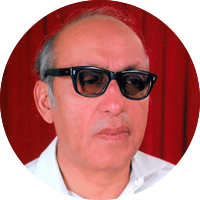
(This paper was presented by Akhtar Sahib on May 2nd at a literary gathering in Moradabad, presided over by Maulana Abdul Haq and organized by Mr. Zia-ul-Islam, P.C.S.)
What I am about to say relates to the conflict that is currently turning our world upside down. The survival or annihilation of humanity, as well as that of literature and writers, depends entirely on its outcome. If raising this topic seems like a departure from tradition, I ask for your forgiveness. However, the questions and doubts that leave me restless are not merely personal; from a social and literary perspective, their significance is entirely collective. Therefore, there is no reason to limit this gathering solely to the appreciation of poetry and academic research, while ignoring an issue upon whose resolution rests the future not only of language and literature, but of culture itself.
To understand the problems that the current war has forced literature to confront, we must look back a little. When the First World War ended, and the wounded imperialists began preparing for the next war even as they bandaged their wounds, the literary world split into three distinct factions.
On one side were the writers of Europe and America. During the war, most of them had forgotten the true purpose and message of literature, mistakenly elevating their imperialist rulers to the status of gods of peace and freedom. At their masters' behest, they had incited the masses toward bloodshed. However, when the war ended, they realized that the state of the world had grown even more wretched than before, and the West lay shrouded in a fog of despair, disillusionment, and bitterness. On the other side was the writer of Soviet Russia. In this dark world, his country had set out all alone to kindle a new light. Its destination was unprecedented, as was the path to reach it. The Russian writer stumbled greatly in this literary experiment, yet he continued to march toward his goal. This was because, despite his shortcomings, his heart was in the right place—illuminated by the light of human empathy. From afar, lost writers gazed at this shining beacon with a sense of wonder. On the third side was the literature of the colonies. Emerging from the pleasure palaces of comfort, isolation, and mere entertainment, it was striving to engage with real life in India, China, and the Arab world. This literary awakening in the East was a direct reflection of its political awakening. Whether it was Iqbal’s *Mard-e-Momin* (the Perfect Man), Premchand’s *Satyagrahi* peasant, or Nazrul Islam’s rebellious youth, their souls were all bound by a single thread. This is the bond that elevates humanity above the divisions of nationality, religion, and language. It is a bond forged by a harmony of thought, one that shatters all artificial constraints, inspires dreams of a better world, and urges us to struggle for it.
Caught between exhausted imperialist nations and awakened colonies, Russia was forging a new world order. The impact of this revolution was permeating global thought even more deeply than it was affecting politics. Every sensible person could see that the twentieth century had initiated a cycle of wars; only the first installment had been completed, and preparations for the second were already in full swing. This cycle would continue until humanity either completely annihilated the existing system—one built upon imperialism, capitalism, militarism, and the subjugation of human beings—or resigned itself to the erasure of the civilizational boundary between man and beast, a boundary established after centuries of struggle and evolution, thereby reducing man once again to a two-legged animal of the dark ages. A new life or collective suicide: there was no third option.
The underlying reason was that the inherent contradictions within capitalism remained as rigid as ever, inevitably demanding ongoing rivalry among capitalist nations. However, a new complication had arisen: the liberation movements in the colonies and the rise of the socialist movement had confronted them with the threat of a global revolution. There was no corner of the world where the guardians of regression and the vanguard of revolution were not bracing for an international civil war—one fought not along national lines, but on the basis of class division. The sparks of this impending conflict were already flying in the air.
The solution that capitalism invented to resolve its crises was Fascism. Originating in Italy, this ideology spread to Germany, Japan, and many other countries across the globe, carrying far-reaching consequences. Its core objective was to wipe the ideals propagated by the French and Russian Revolutions from the face of the earth. The French Revolution had laid the foundation for political democracy, while the Russian Revolution had established the basis for economic democracy. Fundamentally, Fascism stands in opposition to internationalism, liberalism, freedom of expression, and both national and individual liberty. In short, it is the enemy of all the values that form the very essence of our culture, art, and literature.
It is also true that what the Fascists declared so brazenly had long been harbored in the hearts of Western capitalists. However, the ideal of freedom was so deeply ingrained in America, Britain, and France that they could not openly implement such principles on their own soil. Fascism was particularly dangerous because it was elevating capitalism and imperialism into a philosophy and a religion.
The devastation this Fascist philosophy has wreaked upon knowledge and literature is evident to us all. The works of nearly all the world's great writers have been banned in Germany. Its greatest authors and thinkers have sought refuge in other countries, merely trying to survive. In the regions of China occupied by the Japanese, institutions of higher learning were systematically destroyed, and the National Library of Peking, which housed over two million books, was reduced to ashes.
Therefore, anyone who cares about the preservation of civilization and literature must stand against this movement. Nevertheless, we must not forget that Fascism is simply a more terrifying manifestation of imperialism, and it will not necessarily perish alongside Hitler or Mussolini. There is no reason to believe that, under similar historical conditions, other capitalist nations might not also turn Fascist. As long as humanity remains afflicted by the disease of capitalism and imperialism, Fascism will survive in one form or another. Liberal democracy, it seems, has likely met its end forever.
Against this backdrop, we must examine the path chosen by world literature. The literary trends of the era between the Treaty of Versailles and the outbreak of the current war can be broadly divided into two schools: the purposive and the psychological. All the Western thinkers and writers who refused to divorce literature from life continued to battle regressive forces under the leadership of Maxim Gorky and Romain Rolland. Meanwhile, Fascist writers, despite the mandates of their governments, failed to produce any literary work of significance. On the other hand, Western writers who had no interest in the future of humanity were offering literature an escape route through the tunnel of psychoanalysis. This psychological school was spearheaded by figures like James Joyce, Aldous Huxley, and Henry de Montherlant. Nevertheless, it remains a fact that the majority of prominent writers in America and Europe steadfastly continued to illuminate the path of freedom and enlightenment. They endured immense hardships on this journey, and today, many of them are either living in exile or languishing as prisoners of the Fascists.
In the beginning, Indian literature of that era lacked significant social consciousness. The reason was that the First World War had not caused any major upheaval in life here, and our literary environment remained weighed down by the burden of tradition. Fascism seemed entirely irrelevant to us. The real issue was national independence. Yet, very few people pondered the fundamental question: what would we actually do once we achieved this freedom? Our literary endeavors were largely consumed by attempts to break away from old molds of style and expression.
About a decade ago, when socialism began to influence our political life, the modern literary movement also gained momentum. Take Urdu, for instance. No other ten-year period in the history of Urdu literature can be considered as significant. In this brief span, our poetry, fiction, and literary criticism underwent a complete transformation.
It is true that most of these literary experiments hold no permanent value. Very few possess the creative essence required to grant them immortality; the vast majority amount to little more than hollow imitation and empty boasting. But is there any movement that did not commit such errors in its infancy? Can we deny the contributions of progressive poets and writers simply because of this, ignoring the fact that they introduced a new sensibility for understanding and articulating the problems of life within Urdu literature? There is no doubt that, from a creative standpoint, the past several years of our literary history will always be remembered. This spirit of innovation had spread to other Indian languages as well, making it feel as though the dormant soul of this ancient land was finally stirring.
However, the outbreak of the war dashed these hopes. The radiant light of cultural and literary awakening that had been glowing across India dimmed before the dark clouds of war. In the face of the most devastating tragedy in human history, the sensibilities of our art and literature were left paralyzed. It cannot be said that the writer is oblivious to the causes and consequences of this war, or indifferent to its outcome. The reality is quite the opposite. One might argue that while our new literature frequently speaks of the common people, it lacks a deep familiarity with their actual lives. Yet, who can deny that it feels the suffering of the masses with profound intensity?
Why, then, do Indian art and literature remain silent spectators during the most turbulent era in world history? War is knocking at our doors. Our house is on fire. Bombs are raining down on our cities. Yet, our literature remains unaffected by it all. Our artists lack the colors on their palettes to paint this reality. The bloody saga of millions of destitute and persecuted Indians fleeing Burma failed to stir our creative faculties into action. What, ultimately, is the reason for this apathy?
The question is: what path should Indian literature take under these circumstances? Is the current trend of defeatism, melancholy, apathy, and inner conflict that has overtaken Urdu literature the right one? Is it acceptable for sexual deviance to dominate our literature under the guise of progressivism and psychological analysis?
Any fair-minded person would concede that this trend has nothing to do with progressivism; in fact, it is highly detrimental to it. It may well be a form of innovation, but it is an innovation that urges both the writer and the reader to flee from life and retreat into a shell like a snail. Therefore, it is blatantly reactionary. Similarly, the romanticism that has surfaced in the guise of blank verse and free verse shies away from addressing our real problems. Equating progressivism with just any form of innovation is fundamentally flawed.
No, at a time when the fate of humanity is being decided for centuries to come, literature cannot choose the path of escapism. It cannot merely sing elegies for the past. It cannot wander aimlessly through the labyrinths of the subconscious. It cannot squander time on mere stylistic novelties and linguistic flourishes. If it embodies sincerity alongside simplicity and clarity, it has already achieved its zenith. It must constantly remember that if either fascism or oppressive imperialism survives this war, then heaven help culture, art, and literature. We must not harbor the illusion that Western capitalism, having defeated fascism, will simply leave the world's progressive movements in peace. It would not be surprising if its next assault is directed at Soviet Russia and other revolutionary movements across the globe.
The future of the freedom of conscience, speech, and the pen is being decided right before our eyes. It is absolutely impossible for us to remain silent on this matter.
Our path is clear, because the vision of the world we wish to see is clear in our minds. In this world, no country will rule over another, no class over another, and no individual over another. It will be a world of freedom and progress, where art and literature are not reduced to mere commodities to be bought and sold, but will instead stand as the ultimate manifestation of the human spirit. Before this war, literature stood in solidarity with those who strove for this vision. During and after the war, literature will sing the praises of those who genuinely work to build this new order. As for those who oppose this vision, whether in thought or in practice, literature has fought them in the past, and it must continue to fight these deceivers today. We cannot abandon our people to the empty promises of tomorrow.
Fascism is a terrifying manifestation of coercion and tyranny, but tyranny can assume a thousand different forms. Our fundamental battle is against the very principle of tyranny. We are not oblivious to the threat of fascism, but we must remain equally vigilant against the danger that democratic imperialism intends to tighten its grip on Africa and Asia once the war ends. Its ruling class is lying in wait, ready to drive India and other colonies with the stick of fascism after the war. It is biding its time for the day when its fascist rivals are eliminated, when Russia is left exhausted and breathless, and when the people of Europe and America are desperately thirsting for peace. That day will be a festival of triumph for Western imperialism, for it will then be able to crush the colonies' yearning for freedom without hesitation. There is a grave fear that the very democratic institutions that gave us the vision of a new life will also be dismantled in the process. This threat is highly plausible, and poets and writers must be prepared to confront it. We are not addressing those who are already subservient to imperialism or fascism. However, those who equate life with freedom will undoubtedly understand these realities. They will declare that the banner of a new life raised by Indian literature shall not be lowered as long as a single trace of oppression remains in any form. As long as humanity continues its struggle to liberate itself from tyranny, literature will remain its steadfast companion and fellow traveler on this arduous journey.
In this relentless war, there is no moment of respite. There is no path of escape.
*Har lahza naya Toor, nayi barq-e-tajalli*
*Allah kare marhala-e-shauq na ho tay*
[Every moment a new Mount Sinai, a new flash of revelation,
May God grant that this journey of passion never concludes.]
(This paper was presented by Akhtar Sahib on May 2nd at a literary gathering in Moradabad, presided over by Maulana Abdul Haq and organized by Mr. Zia-ul-Islam, P.C.S.)
What I am about to say relates to the conflict that is currently turning our world upside down. The survival or annihilation of humanity, as well as that of literature and writers, depends entirely on its outcome. If raising this topic seems like a departure from tradition, I ask for your forgiveness. However, the questions and doubts that leave me restless are not merely personal; from a social and literary perspective, their significance is entirely collective. Therefore, there is no reason to limit this gathering solely to the appreciation of poetry and academic research, while ignoring an issue upon whose resolution rests the future not only of language and literature, but of culture itself.
To understand the problems that the current war has forced literature to confront, we must look back a little. When the First World War ended, and the wounded imperialists began preparing for the next war even as they bandaged their wounds, the literary world split into three distinct factions.
On one side were the writers of Europe and America. During the war, most of them had forgotten the true purpose and message of literature, mistakenly elevating their imperialist rulers to the status of gods of peace and freedom. At their masters' behest, they had incited the masses toward bloodshed. However, when the war ended, they realized that the state of the world had grown even more wretched than before, and the West lay shrouded in a fog of despair, disillusionment, and bitterness. On the other side was the writer of Soviet Russia. In this dark world, his country had set out all alone to kindle a new light. Its destination was unprecedented, as was the path to reach it. The Russian writer stumbled greatly in this literary experiment, yet he continued to march toward his goal. This was because, despite his shortcomings, his heart was in the right place—illuminated by the light of human empathy. From afar, lost writers gazed at this shining beacon with a sense of wonder. On the third side was the literature of the colonies. Emerging from the pleasure palaces of comfort, isolation, and mere entertainment, it was striving to engage with real life in India, China, and the Arab world. This literary awakening in the East was a direct reflection of its political awakening. Whether it was Iqbal’s *Mard-e-Momin* (the Perfect Man), Premchand’s *Satyagrahi* peasant, or Nazrul Islam’s rebellious youth, their souls were all bound by a single thread. This is the bond that elevates humanity above the divisions of nationality, religion, and language. It is a bond forged by a harmony of thought, one that shatters all artificial constraints, inspires dreams of a better world, and urges us to struggle for it.
Caught between exhausted imperialist nations and awakened colonies, Russia was forging a new world order. The impact of this revolution was permeating global thought even more deeply than it was affecting politics. Every sensible person could see that the twentieth century had initiated a cycle of wars; only the first installment had been completed, and preparations for the second were already in full swing. This cycle would continue until humanity either completely annihilated the existing system—one built upon imperialism, capitalism, militarism, and the subjugation of human beings—or resigned itself to the erasure of the civilizational boundary between man and beast, a boundary established after centuries of struggle and evolution, thereby reducing man once again to a two-legged animal of the dark ages. A new life or collective suicide: there was no third option.
The underlying reason was that the inherent contradictions within capitalism remained as rigid as ever, inevitably demanding ongoing rivalry among capitalist nations. However, a new complication had arisen: the liberation movements in the colonies and the rise of the socialist movement had confronted them with the threat of a global revolution. There was no corner of the world where the guardians of regression and the vanguard of revolution were not bracing for an international civil war—one fought not along national lines, but on the basis of class division. The sparks of this impending conflict were already flying in the air.
The solution that capitalism invented to resolve its crises was Fascism. Originating in Italy, this ideology spread to Germany, Japan, and many other countries across the globe, carrying far-reaching consequences. Its core objective was to wipe the ideals propagated by the French and Russian Revolutions from the face of the earth. The French Revolution had laid the foundation for political democracy, while the Russian Revolution had established the basis for economic democracy. Fundamentally, Fascism stands in opposition to internationalism, liberalism, freedom of expression, and both national and individual liberty. In short, it is the enemy of all the values that form the very essence of our culture, art, and literature.
It is also true that what the Fascists declared so brazenly had long been harbored in the hearts of Western capitalists. However, the ideal of freedom was so deeply ingrained in America, Britain, and France that they could not openly implement such principles on their own soil. Fascism was particularly dangerous because it was elevating capitalism and imperialism into a philosophy and a religion.
The devastation this Fascist philosophy has wreaked upon knowledge and literature is evident to us all. The works of nearly all the world's great writers have been banned in Germany. Its greatest authors and thinkers have sought refuge in other countries, merely trying to survive. In the regions of China occupied by the Japanese, institutions of higher learning were systematically destroyed, and the National Library of Peking, which housed over two million books, was reduced to ashes.
Therefore, anyone who cares about the preservation of civilization and literature must stand against this movement. Nevertheless, we must not forget that Fascism is simply a more terrifying manifestation of imperialism, and it will not necessarily perish alongside Hitler or Mussolini. There is no reason to believe that, under similar historical conditions, other capitalist nations might not also turn Fascist. As long as humanity remains afflicted by the disease of capitalism and imperialism, Fascism will survive in one form or another. Liberal democracy, it seems, has likely met its end forever.
Against this backdrop, we must examine the path chosen by world literature. The literary trends of the era between the Treaty of Versailles and the outbreak of the current war can be broadly divided into two schools: the purposive and the psychological. All the Western thinkers and writers who refused to divorce literature from life continued to battle regressive forces under the leadership of Maxim Gorky and Romain Rolland. Meanwhile, Fascist writers, despite the mandates of their governments, failed to produce any literary work of significance. On the other hand, Western writers who had no interest in the future of humanity were offering literature an escape route through the tunnel of psychoanalysis. This psychological school was spearheaded by figures like James Joyce, Aldous Huxley, and Henry de Montherlant. Nevertheless, it remains a fact that the majority of prominent writers in America and Europe steadfastly continued to illuminate the path of freedom and enlightenment. They endured immense hardships on this journey, and today, many of them are either living in exile or languishing as prisoners of the Fascists.
In the beginning, Indian literature of that era lacked significant social consciousness. The reason was that the First World War had not caused any major upheaval in life here, and our literary environment remained weighed down by the burden of tradition. Fascism seemed entirely irrelevant to us. The real issue was national independence. Yet, very few people pondered the fundamental question: what would we actually do once we achieved this freedom? Our literary endeavors were largely consumed by attempts to break away from old molds of style and expression.
About a decade ago, when socialism began to influence our political life, the modern literary movement also gained momentum. Take Urdu, for instance. No other ten-year period in the history of Urdu literature can be considered as significant. In this brief span, our poetry, fiction, and literary criticism underwent a complete transformation.
It is true that most of these literary experiments hold no permanent value. Very few possess the creative essence required to grant them immortality; the vast majority amount to little more than hollow imitation and empty boasting. But is there any movement that did not commit such errors in its infancy? Can we deny the contributions of progressive poets and writers simply because of this, ignoring the fact that they introduced a new sensibility for understanding and articulating the problems of life within Urdu literature? There is no doubt that, from a creative standpoint, the past several years of our literary history will always be remembered. This spirit of innovation had spread to other Indian languages as well, making it feel as though the dormant soul of this ancient land was finally stirring.
However, the outbreak of the war dashed these hopes. The radiant light of cultural and literary awakening that had been glowing across India dimmed before the dark clouds of war. In the face of the most devastating tragedy in human history, the sensibilities of our art and literature were left paralyzed. It cannot be said that the writer is oblivious to the causes and consequences of this war, or indifferent to its outcome. The reality is quite the opposite. One might argue that while our new literature frequently speaks of the common people, it lacks a deep familiarity with their actual lives. Yet, who can deny that it feels the suffering of the masses with profound intensity?
Why, then, do Indian art and literature remain silent spectators during the most turbulent era in world history? War is knocking at our doors. Our house is on fire. Bombs are raining down on our cities. Yet, our literature remains unaffected by it all. Our artists lack the colors on their palettes to paint this reality. The bloody saga of millions of destitute and persecuted Indians fleeing Burma failed to stir our creative faculties into action. What, ultimately, is the reason for this apathy?
The question is: what path should Indian literature take under these circumstances? Is the current trend of defeatism, melancholy, apathy, and inner conflict that has overtaken Urdu literature the right one? Is it acceptable for sexual deviance to dominate our literature under the guise of progressivism and psychological analysis?
Any fair-minded person would concede that this trend has nothing to do with progressivism; in fact, it is highly detrimental to it. It may well be a form of innovation, but it is an innovation that urges both the writer and the reader to flee from life and retreat into a shell like a snail. Therefore, it is blatantly reactionary. Similarly, the romanticism that has surfaced in the guise of blank verse and free verse shies away from addressing our real problems. Equating progressivism with just any form of innovation is fundamentally flawed.
No, at a time when the fate of humanity is being decided for centuries to come, literature cannot choose the path of escapism. It cannot merely sing elegies for the past. It cannot wander aimlessly through the labyrinths of the subconscious. It cannot squander time on mere stylistic novelties and linguistic flourishes. If it embodies sincerity alongside simplicity and clarity, it has already achieved its zenith. It must constantly remember that if either fascism or oppressive imperialism survives this war, then heaven help culture, art, and literature. We must not harbor the illusion that Western capitalism, having defeated fascism, will simply leave the world's progressive movements in peace. It would not be surprising if its next assault is directed at Soviet Russia and other revolutionary movements across the globe.
The future of the freedom of conscience, speech, and the pen is being decided right before our eyes. It is absolutely impossible for us to remain silent on this matter.
Our path is clear, because the vision of the world we wish to see is clear in our minds. In this world, no country will rule over another, no class over another, and no individual over another. It will be a world of freedom and progress, where art and literature are not reduced to mere commodities to be bought and sold, but will instead stand as the ultimate manifestation of the human spirit. Before this war, literature stood in solidarity with those who strove for this vision. During and after the war, literature will sing the praises of those who genuinely work to build this new order. As for those who oppose this vision, whether in thought or in practice, literature has fought them in the past, and it must continue to fight these deceivers today. We cannot abandon our people to the empty promises of tomorrow.
Fascism is a terrifying manifestation of coercion and tyranny, but tyranny can assume a thousand different forms. Our fundamental battle is against the very principle of tyranny. We are not oblivious to the threat of fascism, but we must remain equally vigilant against the danger that democratic imperialism intends to tighten its grip on Africa and Asia once the war ends. Its ruling class is lying in wait, ready to drive India and other colonies with the stick of fascism after the war. It is biding its time for the day when its fascist rivals are eliminated, when Russia is left exhausted and breathless, and when the people of Europe and America are desperately thirsting for peace. That day will be a festival of triumph for Western imperialism, for it will then be able to crush the colonies' yearning for freedom without hesitation. There is a grave fear that the very democratic institutions that gave us the vision of a new life will also be dismantled in the process. This threat is highly plausible, and poets and writers must be prepared to confront it. We are not addressing those who are already subservient to imperialism or fascism. However, those who equate life with freedom will undoubtedly understand these realities. They will declare that the banner of a new life raised by Indian literature shall not be lowered as long as a single trace of oppression remains in any form. As long as humanity continues its struggle to liberate itself from tyranny, literature will remain its steadfast companion and fellow traveler on this arduous journey.
In this relentless war, there is no moment of respite. There is no path of escape.
*Har lahza naya Toor, nayi barq-e-tajalli*
*Allah kare marhala-e-shauq na ho tay*
[Every moment a new Mount Sinai, a new flash of revelation,
May God grant that this journey of passion never concludes.]
Additional information available
Click on the INTERESTING button to view additional information associated with this sher.
About this sher
rare Unpublished content
This ghazal contains ashaar not published in the public domain. These are marked by a red line on the left.