Ghazal Ka Fun
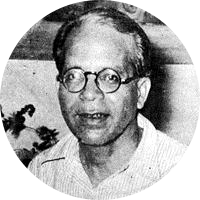
Before discussing the ghazal, I would like to share two of my own couplets:
The ghazal encompasses both the self and the universe,
It holds my story, and it holds yours as well.
Suroor, its subtle hints outweigh grand epics,
The ghazal is the ultimate test of a master's skill.
In other words, while the ghazal certainly expresses personal experiences, it also encompasses the entire universe through the lens of the self. Furthermore, the art of the ghazal is an art of suggestion and nuance, where subtle hints encapsulate grand, sweeping epics.
Due to the immense popularity of the ghazal, some people have begun to overlook the fact that the ghazal does not constitute the entirety of poetry. Nor is it appropriate to flatter ourselves by declaring the ghazal the crowning glory of all poetic forms. However, it is undeniably an important and highly valued genre in our poetry, one that has consistently reflected the realities of life in every era through its own distinct style and manner. It is this very style that is known as *taghazzul* (the essence of the ghazal).
There has also been debate over whether the ghazal even qualifies as an art form. Altaf Hussain Hali was by no means opposed to the genre itself; he merely sought to reform it, specifically regarding its thematic scope. He had no objections to the structure and form of the ghazal. However, critics like Waheeduddin Salim, Azmatullah Khan, Josh Malihabadi, and Kalimuddin Ahmad raised fundamental objections to its very structure. Their primary critique targets the fragmented nature of the ghazal's thought and composition. In their view, every work of art requires thematic continuity and a clear sense of a beginning, middle, and end. Because the ghazal is essentially a bouquet of independent couplets, and its formal structure does not demand logical progression or continuity, these critics dismiss it as an outdated tune—or, as Kalimuddin Ahmad famously termed it, a semi-barbaric form of poetry.
Azmatullah Khan went so far as to declare that Urdu poetry could only progress if the ghazal were unceremoniously strangled. In response, scholars like Abul Lais Siddiqui and others attempted to find thematic continuity within the couplets of a ghazal. In this regard, Hamid Hasan Qadri’s approach was far more intellectually honest. He argued that continuity is absolutely not a requirement for the couplets of a ghazal. There is no question of a unity of thought in the ghazal; a unity of impression may or may not exist. Influenced by organic theories of art, defenders of the ghazal drew parallels between it and the Japanese haiku. However, in a haiku, two distinct images ultimately combine to create a third, unified impression—a dynamic different from the ghazal.
When discussing the ghazal, we must acknowledge that whether or not it qualifies as a work of art under Western aesthetic theories, it is undeniably a valid art form according to Eastern artistic principles. Through the use of *behr* (meter), *qaafiya* (rhyme), and *radeef* (refrain), the ghazal mirrors a specific current of thought, a distinct rhythm of moods, a unique melody of emotions, and a particular atmosphere. The meter provides the canvas. The rhyme, operating on the principles of repetition and anticipation across this canvas, brings illumination to the mind and elevation to the soul. The refrain, by establishing a state, a timeframe, or a condition, injects the verse with agility and sharpness. Consider first why a ghazal begins with a *matla* (opening couplet)—that is, why it is necessary for both lines of the first couplet to rhyme. Keep in mind the *matla* of Mir Taqi Mir’s famous ghazal:
All remedies have failed, no medicine has worked its cure,
Behold this sickness of the heart, it has claimed my life for sure.
If a ghazal did not begin with a *matla*, the mind of the listener or reader could not be attuned to the specific frequencies that characterize the form. This is why the classical masters made the *matla* a strict requirement for the ghazal, even if the opening couplet happened to be relatively weak. Secondly, while many master poets have composed ghazals with multiple *matlas*, it is by no means a requirement. Once the first *matla* is established, the phonetic system and the specific musicality of the ghazal take root in the audience's mind. From that point on, having the rhyme appear only in the second line of subsequent couplets is sufficient to carry the momentum forward. Waheeduddin Salim and other critics have argued that the ghazal poet is a slave to the rhyme—that rather than choosing a rhyme to fit the thought, the poet forces the thought to fit the rhyme. There is a partial truth to this assertion.
The reality is that the ghazals of the classical masters were rarely overly long. Furthermore, much like Arabic, Urdu possesses an abundance of rhyming words. Therefore, a skilled poet does not feel compelled to use every possible rhyme; instead, they select rhymes that naturally suit their thoughts. It is said of Aseer Lakhnavi that he would attempt to exhaust every possible rhyme in a ghazal, reasoning that someone might eventually need them as a linguistic reference. While such an exhaustive approach might be useful for compiling a dictionary, it is entirely unnecessary for poetry. Thus, while rhyme holds a central importance in the art of the ghazal—second only to meter—forcing every available rhyme into a poem violates the aesthetic etiquette of the genre.
As for the *radeef* (refrain), it should ideally not exceed three or four words. It is precisely for this reason that the ghazals of Shah Naseer are not held in high esteem within the classical canon of the genre. While the longer refrains used by certain modern poets—such as Munir Niazi’s *tou main ne dekha* (then I saw) or Jan Nisar Akhtar’s *hum na kehte thay* (did we not say)—are acceptable because they help build a specific atmosphere, a refrain should generally not be stretched to consume half or three-quarters of a line.
It is said that light travels both in a steady stream and in sudden leaps. The ghazal adopts the latter form. When Firaq Gorakhpuri described the ghazal as a series of extremes, he meant it in this very sense. This also implies that not all couplets within a ghazal are of an equal standard or reach the same poetic heights. An anthology of good ghazals is one thing, but a selection of the best individual couplets is quite another. Even in the works of Mir Taqi Mir, the God of Poetry, one will find examples of both soaring highs and ordinary lows. The psychological justification for this is that lightning is far more striking when it flashes intermittently. Filler couplets are entirely permissible in the art of the ghazal; it is only by passing through them that one suddenly encounters what Hali described as astonishing manifestations.
Ultimately, the ghazal is the sigh of a wounded gazelle, the sting of a half-drawn arrow, or an intimate conversation with the beloved. It is, at its core, romantic and lyrical poetry. However, this love can be both divine and earthly. It can be directed toward God, a worldly lover, a deeply held belief, or a specific ideology. The essence lies not in the object being viewed, but in the vision of the viewer. The mere depiction of physical beauty is not important in itself; what matters is the warmth of the lover's passion, the pathos, the emotional state, and the subtlety of feeling. While *moamla-bandi* (the depiction of romantic and physical encounters) holds a place in the ghazal—and the works of Jur'at and Momin in this vein have been praised—we must remember what Mir Taqi Mir once said to Jur'at: My friend, what do you know of writing poetry? You just stick to describing your kissing and cuddling. In the ghazal, explicit descriptions of physical intimacy are not considered tasteful. Here, sexuality is not a roaring flame; the mere warmth of it is sufficient, and even that must be conveyed through metaphor and suggestion. This is why the following couplet by Ghalib is a true example of a ghazal verse:
Asad, the knot of the beloved's robe is a bud from Paradise,
Were it to open, I would show you a world blooming like a garden.
Conversely, the following couplet, though famous, is not considered a good ghazal verse, which is why people usually only recite its second line:
You flash your eyes in anger, but reveal your youthful charms, my dear,
You have kept the best of your treasures tied away and hidden here.
Although the ghazal is not a continuous narrative but rather a bouquet of independent couplets, one often finds thematically linked couplets in the works of the classical masters. Mir and Ghalib have a significant number of such thematically linked ghazals. Although one can find double and even triple ghazals in the works of the master poets, long ghazals are rare. This proves that long ghazals are not considered desirable, as they often devolve into mere rhyme-chasing, leaving little room for the creation of profound meaning. In an ideal ghazal, alongside the opening couplet, the closing couplet is also essential, and here the poet enjoys great freedom. In it, the poet can indulge in self-praise, describe their personal circumstances, or even versify a specific event. Consider a few examples:
You are not the only master of Rekhta, Ghalib;
They say in the days of yore, there was also someone named Mir.
If Ghalib takes me along on this journey,
I will offer the reward of my Hajj to him.
If but a few drops fall, Dagh will set off for Calcutta;
Here in Azimabad, we sit waiting for the monsoon.
Fani, upon coming to the Deccan, this mystery was unraveled:
We live in India, yet far away from India.
Every day in my dreams, I am blessed with a vision, Hasrat;
The shrine of Shah Razzaq is close to the prison.
The influence of Persian on the Urdu ghazal is profound, but it is not a mere imitation of Persian. It is a multi-hued manifestation of Indian culture. Consequently, it has preserved countless impressions of folk song traditions, Indian seasons, festivals, customs, and social and cultural life. Look at these couplets:
She clings to me out of fear of the lightning;
O God, let these dark clouds pour for at least two days.
O gardener, let the buds be of a delicate hue;
They are to be sent to someone very young.
Strange is the state of the cloud beside the wave of lightning;
It looks just like your rolled-up sleeve.
A disgrace to the gathering while alive, a heavy burden when dead;
Who will lift me up, who will seat me down?
Neither is the prey in the bow's range, nor is the hunter at home;
In this corner of the cage, I am very much at peace.
Many objections have been raised against the ghazal's traditional associations and motifs—such as the shore, the storm, the whirlpool, the cage, the nest, the drunkard, the moral censor, and the hunter. Khwaja Manzoor Hussain, in his book *Urdu Ghazal Ka Khariji Roop Behroop*, has clarified that the reflection of every turn and shift in our social and political life can be found within these very motifs. In Faiz's ghazals, most of the motifs, allusions, and symbols are old, yet the mind instantly accepts their new meanings. This makes it clear that symbols, allusions, and signs never truly grow old; rather, their usage must be driven by genuine emotion and inner state, rather than mere craftsmanship or artificiality. Hali offered the sound advice in his *Muqaddama* that one must study the poetry of the classical masters, and Faiz, in his critical writings, frequently pointed out how many secrets and nuances of the art he learned from Sauda and other master poets.
The art of the ghazal demands fluency and sweetness, but this does not mean that a poet should rely solely on dormant metaphors or idioms, as Zauq did. This is why the Ghalib of the *Nuskha-e-Hamidiya* turned away from Zauq's populist poetry and leaned on Persian constructs to give flight to his thoughts, so that he could polish his mirror and reveal the true face of meaning by the time he reached the definitive *Diwan-e-Ghalib*. Iqbal had to do the same, but the important point is that, like Ghalib, Iqbal also transformed the ghazal into a magical treasure trove of meaning. Although Iqbal claimed that the ghazal has no specific language and that he was unaware of its linguistic conventions, he nevertheless observed all the etiquettes of the form. However, his notable addition is that, starting from *Bal-e-Jibril*, the number of his ghazals without a repeating refrain (*radif*) steadily increases. So much so that in the Urdu section of *Armughan-e-Hijaz*, all the ghazals are without a refrain.
Almost all Urdu poets have written ghazals, but those who wrote only ghazals were termed masters of a single art. The prominent names in the Urdu ghazal include Wali, Mir, Mushafi, Aatish, Ghalib, Momin, Dagh, Iqbal, Hasrat, Fani, Yagana, Asghar, Jigar, Firaq, Faiz, and Nasir Kazmi. This list can certainly be expanded.
The ghazal has been utilized to express mysticism, philosophy, morality, and politics. The mystical poetry of prominent Sufis often lacks the delicate refinement of the ghazal. Conversely, Aatish and Ghalib were not formal Sufis, yet their expression of mystical states became great poetry simply because they were great poets. Nasikh versifies morality; he is a master of technique, but not a good poet of the ghazal. Hali's modern ghazals are weaker than his classical ones. Faiz's ghazals are abundant in political themes, but because he adhered to the etiquettes of the ghazal, his significance is undeniable. Iqbal's ghazals found in *Bal-e-Jibril* and *Zarb-e-Kalim* largely conform to the language and expressive style of the ghazal, though in places, the philosophy outweighs the poetic essence. Iqbal held his message a bit too dear.
Composing a ghazal is incredibly easy, yet also exceedingly difficult. In my view, the practice of writing ghazals on a prescribed meter and rhyme for poetry symposiums brought both benefits and drawbacks to the form. The benefit was that it fostered a tradition of expanding the boundaries of freedom within the confines of strict rules. The drawback was that ghazals ceased to be merely expressions of personal experience and became reflections of the etiquettes and styles of the gathering. Therefore, the decline of such prescribed ghazals in modern poetry is a positive trend. However, ghazals will continue to be written in the meter and rhyme schemes of the classical masters.
Ultimately, the ghazal is recognized by its form. Therefore, experiments like the free verse ghazal have no justification. The silent evolution that has occurred in its language is proof that it can reflect the sensibilities and temperament of any era, but it remains an art of suggestion and allusion. The ghazal is a gallery adorned with miniature paintings. Today, given the popularity of the ghazal in other Indian languages, one must understand that the ghazal encompasses everything. The modern era prefers the expression of immediate emotional states over the cultivation of an organized philosophy or structured thought, as it has become more accustomed to the stream of consciousness. This is valid in its own right, but the importance of clarity, elucidation, connection, and continuity remains intact. Therefore, the ghazal will continue to present the experiences and states of life in its own unique way. Its language will continue to undergo silent transformations, but its allusive capacity and its characteristic introspection will endure. Furthermore, its lyrical essence will continue to influence the structured poem (*nazm*) as well.
It is worth pondering that in modern Persian, the ghazal holds no significance. There, the connection with the past has been severed. This connection should be preserved, but one should not consider this single style and form of art to be the ultimate summary of the universe. Like the myriad ways of the beloved, art too has many windows. Indeed, the window of the ghazal can still reveal countless spectacles of life and the universe.
A few more points must be addressed. The language of the ghazal is deeply intertwined with its art. Fluency, sweetness, and spontaneity (which may actually be the result of rigorous practice) are essential to this language. Word choice is dictated by the subject matter, but it would be incorrect to claim that the Persian (*Ajami*) cadence holds more importance in the ghazal than the Indian melody, or conversely, that a good ghazal is simply one with a majority of Hindi words. There is certainly room for Persian compounds (*tarakib*), but only to the extent employed by Mir in his poetry, or by Ghalib in his standard *Diwan-e-Ghalib* (rather than the earlier verses found in the *Nuskha-e-Hamidia*). In this regard, while we must acknowledge Iqbal's innovative departures (*ijtihad*), he should not be treated as the ultimate benchmark (*sanad*). Similarly, while Arzoo Lakhnavi's ghazals are fine examples of the form, completely abandoning Persian genitive constructs (*izafat*) or strictly avoiding Hindi words are both instances of extremism. Consider this couplet by Mir:
I saw nothing thereafter but a twisting, writhing flame,
I had only seen the moth approach the candle.
Almost half of the first line—*bajuz yak shola-e-pur-pech-o-taab* (but a twisting, writhing flame)—does not feel jarring at all, thanks to the simplicity and fluency of the second line. Mir Soz avoided Persian compounds; Mir employed them with elegance; Arzoo shunned them entirely. Yagana, however, used them as the occasion demanded. This very distinction helps determine the relative stature of their poetry.
The classical masters' tradition of arranging a *diwan* alphabetically by the last letter of the rhyme holds little poetic value; therefore, strict adherence to this practice is no longer deemed necessary in the modern era. A chronological arrangement of the poetry, however, clearly illustrates the evolution of the poet's art. Ghazals that end with a vowel create a lingering resonance, allowing the mind to savor their sounds long after. It is essential that a ghazal be singable. It is, fundamentally, a form of lyrical poetry. Although any subject can be explored within this genre—provided it adheres to the aesthetic etiquette of the ghazal—its allusive structure, its ambiguity, and its multi-layered nature are its greatest strengths, not its flaws. Seemab was not wrong when he said:
My story seems to be the chronicle of the world,
Whoever hears it, feels it is their own tale.
Before discussing the ghazal, I would like to share two of my own couplets:
The ghazal encompasses both the self and the universe,
It holds my story, and it holds yours as well.
Suroor, its subtle hints outweigh grand epics,
The ghazal is the ultimate test of a master's skill.
In other words, while the ghazal certainly expresses personal experiences, it also encompasses the entire universe through the lens of the self. Furthermore, the art of the ghazal is an art of suggestion and nuance, where subtle hints encapsulate grand, sweeping epics.
Due to the immense popularity of the ghazal, some people have begun to overlook the fact that the ghazal does not constitute the entirety of poetry. Nor is it appropriate to flatter ourselves by declaring the ghazal the crowning glory of all poetic forms. However, it is undeniably an important and highly valued genre in our poetry, one that has consistently reflected the realities of life in every era through its own distinct style and manner. It is this very style that is known as *taghazzul* (the essence of the ghazal).
There has also been debate over whether the ghazal even qualifies as an art form. Altaf Hussain Hali was by no means opposed to the genre itself; he merely sought to reform it, specifically regarding its thematic scope. He had no objections to the structure and form of the ghazal. However, critics like Waheeduddin Salim, Azmatullah Khan, Josh Malihabadi, and Kalimuddin Ahmad raised fundamental objections to its very structure. Their primary critique targets the fragmented nature of the ghazal's thought and composition. In their view, every work of art requires thematic continuity and a clear sense of a beginning, middle, and end. Because the ghazal is essentially a bouquet of independent couplets, and its formal structure does not demand logical progression or continuity, these critics dismiss it as an outdated tune—or, as Kalimuddin Ahmad famously termed it, a semi-barbaric form of poetry.
Azmatullah Khan went so far as to declare that Urdu poetry could only progress if the ghazal were unceremoniously strangled. In response, scholars like Abul Lais Siddiqui and others attempted to find thematic continuity within the couplets of a ghazal. In this regard, Hamid Hasan Qadri’s approach was far more intellectually honest. He argued that continuity is absolutely not a requirement for the couplets of a ghazal. There is no question of a unity of thought in the ghazal; a unity of impression may or may not exist. Influenced by organic theories of art, defenders of the ghazal drew parallels between it and the Japanese haiku. However, in a haiku, two distinct images ultimately combine to create a third, unified impression—a dynamic different from the ghazal.
When discussing the ghazal, we must acknowledge that whether or not it qualifies as a work of art under Western aesthetic theories, it is undeniably a valid art form according to Eastern artistic principles. Through the use of *behr* (meter), *qaafiya* (rhyme), and *radeef* (refrain), the ghazal mirrors a specific current of thought, a distinct rhythm of moods, a unique melody of emotions, and a particular atmosphere. The meter provides the canvas. The rhyme, operating on the principles of repetition and anticipation across this canvas, brings illumination to the mind and elevation to the soul. The refrain, by establishing a state, a timeframe, or a condition, injects the verse with agility and sharpness. Consider first why a ghazal begins with a *matla* (opening couplet)—that is, why it is necessary for both lines of the first couplet to rhyme. Keep in mind the *matla* of Mir Taqi Mir’s famous ghazal:
All remedies have failed, no medicine has worked its cure,
Behold this sickness of the heart, it has claimed my life for sure.
If a ghazal did not begin with a *matla*, the mind of the listener or reader could not be attuned to the specific frequencies that characterize the form. This is why the classical masters made the *matla* a strict requirement for the ghazal, even if the opening couplet happened to be relatively weak. Secondly, while many master poets have composed ghazals with multiple *matlas*, it is by no means a requirement. Once the first *matla* is established, the phonetic system and the specific musicality of the ghazal take root in the audience's mind. From that point on, having the rhyme appear only in the second line of subsequent couplets is sufficient to carry the momentum forward. Waheeduddin Salim and other critics have argued that the ghazal poet is a slave to the rhyme—that rather than choosing a rhyme to fit the thought, the poet forces the thought to fit the rhyme. There is a partial truth to this assertion.
The reality is that the ghazals of the classical masters were rarely overly long. Furthermore, much like Arabic, Urdu possesses an abundance of rhyming words. Therefore, a skilled poet does not feel compelled to use every possible rhyme; instead, they select rhymes that naturally suit their thoughts. It is said of Aseer Lakhnavi that he would attempt to exhaust every possible rhyme in a ghazal, reasoning that someone might eventually need them as a linguistic reference. While such an exhaustive approach might be useful for compiling a dictionary, it is entirely unnecessary for poetry. Thus, while rhyme holds a central importance in the art of the ghazal—second only to meter—forcing every available rhyme into a poem violates the aesthetic etiquette of the genre.
As for the *radeef* (refrain), it should ideally not exceed three or four words. It is precisely for this reason that the ghazals of Shah Naseer are not held in high esteem within the classical canon of the genre. While the longer refrains used by certain modern poets—such as Munir Niazi’s *tou main ne dekha* (then I saw) or Jan Nisar Akhtar’s *hum na kehte thay* (did we not say)—are acceptable because they help build a specific atmosphere, a refrain should generally not be stretched to consume half or three-quarters of a line.
It is said that light travels both in a steady stream and in sudden leaps. The ghazal adopts the latter form. When Firaq Gorakhpuri described the ghazal as a series of extremes, he meant it in this very sense. This also implies that not all couplets within a ghazal are of an equal standard or reach the same poetic heights. An anthology of good ghazals is one thing, but a selection of the best individual couplets is quite another. Even in the works of Mir Taqi Mir, the God of Poetry, one will find examples of both soaring highs and ordinary lows. The psychological justification for this is that lightning is far more striking when it flashes intermittently. Filler couplets are entirely permissible in the art of the ghazal; it is only by passing through them that one suddenly encounters what Hali described as astonishing manifestations.
Ultimately, the ghazal is the sigh of a wounded gazelle, the sting of a half-drawn arrow, or an intimate conversation with the beloved. It is, at its core, romantic and lyrical poetry. However, this love can be both divine and earthly. It can be directed toward God, a worldly lover, a deeply held belief, or a specific ideology. The essence lies not in the object being viewed, but in the vision of the viewer. The mere depiction of physical beauty is not important in itself; what matters is the warmth of the lover's passion, the pathos, the emotional state, and the subtlety of feeling. While *moamla-bandi* (the depiction of romantic and physical encounters) holds a place in the ghazal—and the works of Jur'at and Momin in this vein have been praised—we must remember what Mir Taqi Mir once said to Jur'at: My friend, what do you know of writing poetry? You just stick to describing your kissing and cuddling. In the ghazal, explicit descriptions of physical intimacy are not considered tasteful. Here, sexuality is not a roaring flame; the mere warmth of it is sufficient, and even that must be conveyed through metaphor and suggestion. This is why the following couplet by Ghalib is a true example of a ghazal verse:
Asad, the knot of the beloved's robe is a bud from Paradise,
Were it to open, I would show you a world blooming like a garden.
Conversely, the following couplet, though famous, is not considered a good ghazal verse, which is why people usually only recite its second line:
You flash your eyes in anger, but reveal your youthful charms, my dear,
You have kept the best of your treasures tied away and hidden here.
Although the ghazal is not a continuous narrative but rather a bouquet of independent couplets, one often finds thematically linked couplets in the works of the classical masters. Mir and Ghalib have a significant number of such thematically linked ghazals. Although one can find double and even triple ghazals in the works of the master poets, long ghazals are rare. This proves that long ghazals are not considered desirable, as they often devolve into mere rhyme-chasing, leaving little room for the creation of profound meaning. In an ideal ghazal, alongside the opening couplet, the closing couplet is also essential, and here the poet enjoys great freedom. In it, the poet can indulge in self-praise, describe their personal circumstances, or even versify a specific event. Consider a few examples:
You are not the only master of Rekhta, Ghalib;
They say in the days of yore, there was also someone named Mir.
If Ghalib takes me along on this journey,
I will offer the reward of my Hajj to him.
If but a few drops fall, Dagh will set off for Calcutta;
Here in Azimabad, we sit waiting for the monsoon.
Fani, upon coming to the Deccan, this mystery was unraveled:
We live in India, yet far away from India.
Every day in my dreams, I am blessed with a vision, Hasrat;
The shrine of Shah Razzaq is close to the prison.
The influence of Persian on the Urdu ghazal is profound, but it is not a mere imitation of Persian. It is a multi-hued manifestation of Indian culture. Consequently, it has preserved countless impressions of folk song traditions, Indian seasons, festivals, customs, and social and cultural life. Look at these couplets:
She clings to me out of fear of the lightning;
O God, let these dark clouds pour for at least two days.
O gardener, let the buds be of a delicate hue;
They are to be sent to someone very young.
Strange is the state of the cloud beside the wave of lightning;
It looks just like your rolled-up sleeve.
A disgrace to the gathering while alive, a heavy burden when dead;
Who will lift me up, who will seat me down?
Neither is the prey in the bow's range, nor is the hunter at home;
In this corner of the cage, I am very much at peace.
Many objections have been raised against the ghazal's traditional associations and motifs—such as the shore, the storm, the whirlpool, the cage, the nest, the drunkard, the moral censor, and the hunter. Khwaja Manzoor Hussain, in his book *Urdu Ghazal Ka Khariji Roop Behroop*, has clarified that the reflection of every turn and shift in our social and political life can be found within these very motifs. In Faiz's ghazals, most of the motifs, allusions, and symbols are old, yet the mind instantly accepts their new meanings. This makes it clear that symbols, allusions, and signs never truly grow old; rather, their usage must be driven by genuine emotion and inner state, rather than mere craftsmanship or artificiality. Hali offered the sound advice in his *Muqaddama* that one must study the poetry of the classical masters, and Faiz, in his critical writings, frequently pointed out how many secrets and nuances of the art he learned from Sauda and other master poets.
The art of the ghazal demands fluency and sweetness, but this does not mean that a poet should rely solely on dormant metaphors or idioms, as Zauq did. This is why the Ghalib of the *Nuskha-e-Hamidiya* turned away from Zauq's populist poetry and leaned on Persian constructs to give flight to his thoughts, so that he could polish his mirror and reveal the true face of meaning by the time he reached the definitive *Diwan-e-Ghalib*. Iqbal had to do the same, but the important point is that, like Ghalib, Iqbal also transformed the ghazal into a magical treasure trove of meaning. Although Iqbal claimed that the ghazal has no specific language and that he was unaware of its linguistic conventions, he nevertheless observed all the etiquettes of the form. However, his notable addition is that, starting from *Bal-e-Jibril*, the number of his ghazals without a repeating refrain (*radif*) steadily increases. So much so that in the Urdu section of *Armughan-e-Hijaz*, all the ghazals are without a refrain.
Almost all Urdu poets have written ghazals, but those who wrote only ghazals were termed masters of a single art. The prominent names in the Urdu ghazal include Wali, Mir, Mushafi, Aatish, Ghalib, Momin, Dagh, Iqbal, Hasrat, Fani, Yagana, Asghar, Jigar, Firaq, Faiz, and Nasir Kazmi. This list can certainly be expanded.
The ghazal has been utilized to express mysticism, philosophy, morality, and politics. The mystical poetry of prominent Sufis often lacks the delicate refinement of the ghazal. Conversely, Aatish and Ghalib were not formal Sufis, yet their expression of mystical states became great poetry simply because they were great poets. Nasikh versifies morality; he is a master of technique, but not a good poet of the ghazal. Hali's modern ghazals are weaker than his classical ones. Faiz's ghazals are abundant in political themes, but because he adhered to the etiquettes of the ghazal, his significance is undeniable. Iqbal's ghazals found in *Bal-e-Jibril* and *Zarb-e-Kalim* largely conform to the language and expressive style of the ghazal, though in places, the philosophy outweighs the poetic essence. Iqbal held his message a bit too dear.
Composing a ghazal is incredibly easy, yet also exceedingly difficult. In my view, the practice of writing ghazals on a prescribed meter and rhyme for poetry symposiums brought both benefits and drawbacks to the form. The benefit was that it fostered a tradition of expanding the boundaries of freedom within the confines of strict rules. The drawback was that ghazals ceased to be merely expressions of personal experience and became reflections of the etiquettes and styles of the gathering. Therefore, the decline of such prescribed ghazals in modern poetry is a positive trend. However, ghazals will continue to be written in the meter and rhyme schemes of the classical masters.
Ultimately, the ghazal is recognized by its form. Therefore, experiments like the free verse ghazal have no justification. The silent evolution that has occurred in its language is proof that it can reflect the sensibilities and temperament of any era, but it remains an art of suggestion and allusion. The ghazal is a gallery adorned with miniature paintings. Today, given the popularity of the ghazal in other Indian languages, one must understand that the ghazal encompasses everything. The modern era prefers the expression of immediate emotional states over the cultivation of an organized philosophy or structured thought, as it has become more accustomed to the stream of consciousness. This is valid in its own right, but the importance of clarity, elucidation, connection, and continuity remains intact. Therefore, the ghazal will continue to present the experiences and states of life in its own unique way. Its language will continue to undergo silent transformations, but its allusive capacity and its characteristic introspection will endure. Furthermore, its lyrical essence will continue to influence the structured poem (*nazm*) as well.
It is worth pondering that in modern Persian, the ghazal holds no significance. There, the connection with the past has been severed. This connection should be preserved, but one should not consider this single style and form of art to be the ultimate summary of the universe. Like the myriad ways of the beloved, art too has many windows. Indeed, the window of the ghazal can still reveal countless spectacles of life and the universe.
A few more points must be addressed. The language of the ghazal is deeply intertwined with its art. Fluency, sweetness, and spontaneity (which may actually be the result of rigorous practice) are essential to this language. Word choice is dictated by the subject matter, but it would be incorrect to claim that the Persian (*Ajami*) cadence holds more importance in the ghazal than the Indian melody, or conversely, that a good ghazal is simply one with a majority of Hindi words. There is certainly room for Persian compounds (*tarakib*), but only to the extent employed by Mir in his poetry, or by Ghalib in his standard *Diwan-e-Ghalib* (rather than the earlier verses found in the *Nuskha-e-Hamidia*). In this regard, while we must acknowledge Iqbal's innovative departures (*ijtihad*), he should not be treated as the ultimate benchmark (*sanad*). Similarly, while Arzoo Lakhnavi's ghazals are fine examples of the form, completely abandoning Persian genitive constructs (*izafat*) or strictly avoiding Hindi words are both instances of extremism. Consider this couplet by Mir:
I saw nothing thereafter but a twisting, writhing flame,
I had only seen the moth approach the candle.
Almost half of the first line—*bajuz yak shola-e-pur-pech-o-taab* (but a twisting, writhing flame)—does not feel jarring at all, thanks to the simplicity and fluency of the second line. Mir Soz avoided Persian compounds; Mir employed them with elegance; Arzoo shunned them entirely. Yagana, however, used them as the occasion demanded. This very distinction helps determine the relative stature of their poetry.
The classical masters' tradition of arranging a *diwan* alphabetically by the last letter of the rhyme holds little poetic value; therefore, strict adherence to this practice is no longer deemed necessary in the modern era. A chronological arrangement of the poetry, however, clearly illustrates the evolution of the poet's art. Ghazals that end with a vowel create a lingering resonance, allowing the mind to savor their sounds long after. It is essential that a ghazal be singable. It is, fundamentally, a form of lyrical poetry. Although any subject can be explored within this genre—provided it adheres to the aesthetic etiquette of the ghazal—its allusive structure, its ambiguity, and its multi-layered nature are its greatest strengths, not its flaws. Seemab was not wrong when he said:
My story seems to be the chronicle of the world,
Whoever hears it, feels it is their own tale.
- Author :Aale Ahmad Suroor
- Publication : Director Qaumi Council Bara-e- Farogh-e-Urdu Zaban, New Delhi
Additional information available
Click on the INTERESTING button to view additional information associated with this sher.
About this sher
rare Unpublished content
This ghazal contains ashaar not published in the public domain. These are marked by a red line on the left.