Daastaan Kya Hai?
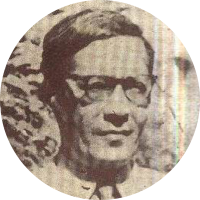
By Kalimuddin Ahmad
Dastan-telling is among the literary arts; truth be told, it is a fine art for entertaining the heart.
— Ghalib
Once there was a king; God is your king and mine; the Messenger of God is king. The sparrow brought a grain of lentil, the weaverbird brought a grain of rice, and together they cooked *khichdi*. It is with these or similar words that the stories of our childhood begin—stories we listened to with immense delight, which made our lives more colorful and joyous. We would rush through the hours of the day in anticipation of these stories, rejoicing at the arrival of evening. It was an evening that brought ever-new tales, an evening that quenched our thirst and brought our hopes to fruition. The literary significance of these stories might be nonexistent, but they fulfill certain vital needs of our nascent lives and aid in our development. A child finds himself in a new world where everything seems novel and astonishing, much like early humans in the initial stages of their evolution found everything new, strange, and mysterious. Alongside a child's physical growth, their mind also develops and is nurtured, and stories play a crucial role in this mental development and training.
A major catalyst for human intellectual development is the instinct of curiosity, which operates in various forms. It compels us to seek out and explore new things, forces us to unveil the nature and causes of everything, saves us from mental lethargy, and prevents us from accepting anything without scrutiny. The development of this instinct is incredibly important during childhood as well, and this development is made possible through stories. A child listens to new stories and new ideas, always restless to hear more. While the physical world around them expands on one side, this imaginary world expands on the other. In this way, alongside their sense of curiosity, the tree of their imagination is also watered, and this mental faculty continues to grow.
The importance of imagination is as clear as day, and stories are an effective means of developing a child's imagination. Stories speak of a world entirely different from the twenty-four-hour reality the child knows. They describe the lives of people the child has never met and depict things that are unseen, extraordinary, and often supernatural. In short, these stories contain atmospheres and details with which a child has no personal familiarity, nor could they. Therefore, the child is forced to employ their imagination, using it to feel and understand this atmosphere and these details. With the help of this very imagination, the child becomes the hero of these stories. To the extent that their raw, nascent, and limited imagination allows, they attempt to breathe in this imaginary world, partaking in the fictional experiences of fictional characters. Thus, their mental life becomes more colorful and enjoyable.
Their emotions also develop, particularly the feelings of sympathy and compassion, teaching them to rejoice in the happiness of others and to shed tears over their pain and misfortune. Ultimately, it is the blessing of stories that a child develops those specific faculties that make a person truly human, without which their life would remain incomplete.
Civilized adults, much like children and primitive humans, are also fond of tales and stories. That is to say, even after ascending the steps of civilization, humans do not consider stories to be absurd or pointless; rather, they alter the nature of these stories to fulfill the needs of their civilized lives. Nevertheless, there is a similarity between a child and a primitive human: both love stories and do not weigh them on the scales of reason and criticism. The mind of a child or a primitive human is relatively undeveloped; specifically, their reasoning is weaker compared to their imagination. They take an interest in new things and eagerly listen to strange tales, but they also accept them uncritically. They easily accept the validity of these stories and neither view them, nor are capable of viewing them, in the light of reality. The events around them and the world they live in appear to them full of astonishing magic; therefore, these unseen things and bizarre tales do not seem far-fetched or irrational to them.
Just as they do not view stories in the light of reality and truth, they similarly do not judge them on the touchstone of aesthetics and art. In other words, just as they uncritically accept the themes of these stories, they are equally unconcerned with the beauty of proportion, structure, and the logical soundness of plot development within their form. This is why reality and artistic beauty are generally absent from these stories. When a child's mind passes through the stages of development, or when a primitive human traverses the milestones of civilization, they begin to feel a deficiency in these stories. These tales no longer fulfill the needs of their new life. They no longer listen to them with their former enthusiasm, and their mental and intellectual growth forces them to leave these stories behind. Consequently, they invent and adopt other literary genres that can satisfy their new thirst.
I have just mentioned that in both the child and the primitive human, the development of imagination outpaces the development of reason and discernment. The flight of their imagination is high and swift, but it is not subordinate to reason and judgment. Therefore, the results of this flight do not seem particularly profound to a civilized mind. When the civilized mind examines these results, it finds absolutely no satisfaction, deeming them irrational, useless, and ridiculous. It sees in them a world that bears no resemblance to the world in which it breathes. In this fictional world, it sees animals walking, talking, eating, and drinking. Like humans, these animals also feel love, hatred, anger, grief, laughter, and joy—experiencing a wide array of emotions. Similarly, it witnesses unbelievable events in this world. Sometimes the passage of time accelerates rapidly, and sometimes it stops entirely. A child grows into an adult in an instant, while an adult remains forever young. Journeys of years are covered in a single moment. The separated are reunited in unexpected ways, and just as unexpectedly, they meet only to be separated again.
Supernatural beings appear in the human world; they walk among humans and either aid or interfere in their affairs. In one place, a terrifying, bloodthirsty demon blocks the path, while in another, a beautiful fairy arrives to help. The boundaries of the human world and this supernatural world are either merged, or there is a wide highway between them upon which the inhabitants of both realms can easily travel. There is no shortage of supernatural objects, and supernatural events are the law of everyday life. The civilized mind laughs at these supernatural miracles, and in its view, their existence is proof of the low value of these stories. However, upon deeper reflection, the reason for the existence of these elements becomes clear.
The fact is that in the early stages of its development, human consciousness was unacquainted with civilization and refinement. The world early man inhabited appeared alien and hostile to him, and he perceived everything through the lens of his own feelings and observations. For instance, when he hunted, he knew that dealing death was the work of his own hands. Similarly, when a friend or a beloved died, he perceived the hidden hand of some unseen hunter. Consequently, he began to worship this hunter-god, seeking to appease and subdue him through prayers and offerings. Seeing animals moving about just as humans did, he assumed they were beings much like himself, endowed with similar human traits. A child thinks in much the same way. Believing that animals possess speech, consciousness, and emotions, a child is not at all surprised to hear a story about a sparrow and his mate talking to each other or cooking a meal. Because a child encounters so many things in the world that lie beyond his comprehension, he is never truly astonished by supernatural events, nor does he find them unbelievable.
Despite their technical and literary flaws and limitations, tales and stories should not be dismissed out of hand as unworthy of attention. The ancient, foundational tales that generally circulate within a culture hold various points of interest. They are nourished by the collective consciousness and imagination of that people. They reflect the early, nascent flights of that culture's imagination. In them, one can hear the first, innocent lispings of a nation's consciousness. This mirror reflects the early interests of a people—the very things that served as powerful stimuli for their intellectual and emotional faculties. This same mirror reveals everything they held as absolute truth, everything they clothed in the garb of reality and fact. It also reflects concepts that were not merely abstract ideas, but which, in the collective mind, were more solid and enduring than actual events. Here, too, we catch glimpses of the supernatural beings, events, and objects, the tapestries of myth and superstition, and the religious beliefs that the culture accepted as true. In short, these stories allow us to recognize both the early collective endeavors of a culture and the individual efforts of its people. Nevertheless, these are matters that have no specific connection to literature itself.
It is an accepted fact that such stories noticeably lack literary beauty and value. Truthfully, judging them by literary standards is a mistake. It is true that they feature unbelievable characters and recount events that a rational mind could never accept. Furthermore, the arrangement, organization, and progression of these events are riddled with countless technical and logical flaws. It is equally true that they can never attain the status in the literary world enjoyed by other genres. Yet, it is obvious that a child does not notice these literary defects, nor does he seek literary merit in these tales. Unaware of literary and technical principles or aesthetic virtues, a child simply wants the events to be unique and engaging. He desires a continuous stream of fascinating incidents, where every link in the narrative chain holds a certain charm. If the events are not interesting, the story fails to capture his attention, and he derives no pleasure from it.
The moment the continuity of interest wanes, or a single link in the story becomes dull, he grows restless and bored. He does not look backward or forward, nor is he concerned with the formal beauty of the narrative. He can only immerse himself in what is immediately before him. Therefore, he demands that every incident be captivating; anything can happen, as long as the level of intrigue never drops. The question constantly on his lips is, And then what happened... and then what happened? This is the only standard he knows, the sole touchstone by which he judges every story. A story that meets this criterion is deemed good and worthwhile, while one that falls short is considered worthless. In truth, this is the very standard by which the merits and flaws of stories must be judged, and it is not a merely childish criterion. The element of interest is essential to any artistic endeavor. In literature, a lack of engagement is considered a cardinal flaw. Granted, in the higher genres of literature, we do not seek the exact same kind of interest that a child looks for in a story.
The *dastan* is simply a long, complex, and weighty form of the story. A child's developing mind cannot tolerate excessive length and complexity; he prefers a short, clear, and straightforward tale. If a story is too long, he forgets the beginning by the time he reaches the end. His mind lacks the capacity to untangle complex narrative knots. He enjoys only light, simple matters. A *dastan* would seem burdensome to him. Yet, despite its length, complexity, and heaviness, a *dastan* is not fundamentally different from a simple story. It, too, is a means of entertainment. It, too, has no connection to reality or factual truth. It is not governed by high literary or artistic principles, nor does it hold a particularly elevated status in the literary world. Here, too, animals walk and talk. Here, too, we encounter unbelievable events and scenes, and come face to face with the miracles of supernatural beings. In short, the atmosphere of a *dastan* is no different from that of a fairy tale—it is an alien, astonishing world. There is a stark and obvious contrast between this realm and the real human world.
A human being passes through the stage of childhood, but never entirely leaves it behind. Even after stepping into the realm of maturity, he does not completely sever ties with his childhood feelings and desires. Childhood, with all its colorful and vibrant hopes, wishes, and aspirations, remains hidden within his nature. Given the opportunity, it emerges from the shadows, and for a time, he once again inhabits that bygone world to which he seemingly no longer has any attachment. A child is enamored with stories, and even as an adult, he seeks out similar things, finding enjoyment in *dastans*. Exhausted from the day's labor, he looks for a way to amuse himself, and the *dastan* provides exactly that. It is no surprise, then, that *dastan-goi* (storytelling) has been an ancient human pastime, found in one form or another in almost every country and culture. The existence of this tradition in Urdu was inevitable, and, like other literary genres, it was adopted from Iran.
Leisure is a prerequisite for this pastime, especially in any significant form. Therefore, its rise inevitably occurred when kings and nobles embraced a life of luxury, when their practical lives grew lax, their faculties dulled, and they became accustomed to indolence and hedonism. Consequently, it became customary for them to listen to an engaging *dastan* before bed, drifting off to sleep as they listened. In other words, the *dastan* acted as a kind of sedative that effortlessly transported them to the realm of sleep. It was like a lullaby that, with its slow, soft, and sweet melody, carried them away on gentle waves of music. Naturally, sharp, profound, or complex ideas that might startle the mind or provoke deep thought had no place in these *dastans*. A *dastan* is not a spur to action; it is merely an entertaining pastime. In every era, humanity has needed such pastimes and means of amusement. Keeping its evolving needs in mind, humanity has invented various forms of entertainment across different times and cultures. From Kabaddi to bull-baiting, all such games serve to fulfill these very needs.
In the modern era, detective stories serve the same purpose that was once exclusive to *dastans*. The West is flooded with such stories. Young and old, highly educated and barely literate, high and low—everyone is enamored with them. From the ordinary clerk to the wealthy minister, people from all walks of life read these tales with great enthusiasm. Today, the obsession with cinema-going is just another form of quail-fighting. When we are exhausted from our daily work, we go to the cinema. Immersed in its entertainment, we temporarily forget our physical fatigue, worries, anxieties, and difficulties, as if transported to another dreamlike world. Once upon a time, *dastan-goi* (the art of storytelling) was a similar pastime or art form. People were aware of its flaws and limitations then, just as they are today. Even so, in the words of Ghalib:
Hum ko ma'loom hai jannat ki haqeeqat lekin
Dil ke behlane ko Ghalib yeh khayal achha hai
[We know the truth about Paradise, but
To amuse the heart, Ghalib, it is a pleasant thought]
By Kalimuddin Ahmad
Dastan-telling is among the literary arts; truth be told, it is a fine art for entertaining the heart.
— Ghalib
Once there was a king; God is your king and mine; the Messenger of God is king. The sparrow brought a grain of lentil, the weaverbird brought a grain of rice, and together they cooked *khichdi*. It is with these or similar words that the stories of our childhood begin—stories we listened to with immense delight, which made our lives more colorful and joyous. We would rush through the hours of the day in anticipation of these stories, rejoicing at the arrival of evening. It was an evening that brought ever-new tales, an evening that quenched our thirst and brought our hopes to fruition. The literary significance of these stories might be nonexistent, but they fulfill certain vital needs of our nascent lives and aid in our development. A child finds himself in a new world where everything seems novel and astonishing, much like early humans in the initial stages of their evolution found everything new, strange, and mysterious. Alongside a child's physical growth, their mind also develops and is nurtured, and stories play a crucial role in this mental development and training.
A major catalyst for human intellectual development is the instinct of curiosity, which operates in various forms. It compels us to seek out and explore new things, forces us to unveil the nature and causes of everything, saves us from mental lethargy, and prevents us from accepting anything without scrutiny. The development of this instinct is incredibly important during childhood as well, and this development is made possible through stories. A child listens to new stories and new ideas, always restless to hear more. While the physical world around them expands on one side, this imaginary world expands on the other. In this way, alongside their sense of curiosity, the tree of their imagination is also watered, and this mental faculty continues to grow.
The importance of imagination is as clear as day, and stories are an effective means of developing a child's imagination. Stories speak of a world entirely different from the twenty-four-hour reality the child knows. They describe the lives of people the child has never met and depict things that are unseen, extraordinary, and often supernatural. In short, these stories contain atmospheres and details with which a child has no personal familiarity, nor could they. Therefore, the child is forced to employ their imagination, using it to feel and understand this atmosphere and these details. With the help of this very imagination, the child becomes the hero of these stories. To the extent that their raw, nascent, and limited imagination allows, they attempt to breathe in this imaginary world, partaking in the fictional experiences of fictional characters. Thus, their mental life becomes more colorful and enjoyable.
Their emotions also develop, particularly the feelings of sympathy and compassion, teaching them to rejoice in the happiness of others and to shed tears over their pain and misfortune. Ultimately, it is the blessing of stories that a child develops those specific faculties that make a person truly human, without which their life would remain incomplete.
Civilized adults, much like children and primitive humans, are also fond of tales and stories. That is to say, even after ascending the steps of civilization, humans do not consider stories to be absurd or pointless; rather, they alter the nature of these stories to fulfill the needs of their civilized lives. Nevertheless, there is a similarity between a child and a primitive human: both love stories and do not weigh them on the scales of reason and criticism. The mind of a child or a primitive human is relatively undeveloped; specifically, their reasoning is weaker compared to their imagination. They take an interest in new things and eagerly listen to strange tales, but they also accept them uncritically. They easily accept the validity of these stories and neither view them, nor are capable of viewing them, in the light of reality. The events around them and the world they live in appear to them full of astonishing magic; therefore, these unseen things and bizarre tales do not seem far-fetched or irrational to them.
Just as they do not view stories in the light of reality and truth, they similarly do not judge them on the touchstone of aesthetics and art. In other words, just as they uncritically accept the themes of these stories, they are equally unconcerned with the beauty of proportion, structure, and the logical soundness of plot development within their form. This is why reality and artistic beauty are generally absent from these stories. When a child's mind passes through the stages of development, or when a primitive human traverses the milestones of civilization, they begin to feel a deficiency in these stories. These tales no longer fulfill the needs of their new life. They no longer listen to them with their former enthusiasm, and their mental and intellectual growth forces them to leave these stories behind. Consequently, they invent and adopt other literary genres that can satisfy their new thirst.
I have just mentioned that in both the child and the primitive human, the development of imagination outpaces the development of reason and discernment. The flight of their imagination is high and swift, but it is not subordinate to reason and judgment. Therefore, the results of this flight do not seem particularly profound to a civilized mind. When the civilized mind examines these results, it finds absolutely no satisfaction, deeming them irrational, useless, and ridiculous. It sees in them a world that bears no resemblance to the world in which it breathes. In this fictional world, it sees animals walking, talking, eating, and drinking. Like humans, these animals also feel love, hatred, anger, grief, laughter, and joy—experiencing a wide array of emotions. Similarly, it witnesses unbelievable events in this world. Sometimes the passage of time accelerates rapidly, and sometimes it stops entirely. A child grows into an adult in an instant, while an adult remains forever young. Journeys of years are covered in a single moment. The separated are reunited in unexpected ways, and just as unexpectedly, they meet only to be separated again.
Supernatural beings appear in the human world; they walk among humans and either aid or interfere in their affairs. In one place, a terrifying, bloodthirsty demon blocks the path, while in another, a beautiful fairy arrives to help. The boundaries of the human world and this supernatural world are either merged, or there is a wide highway between them upon which the inhabitants of both realms can easily travel. There is no shortage of supernatural objects, and supernatural events are the law of everyday life. The civilized mind laughs at these supernatural miracles, and in its view, their existence is proof of the low value of these stories. However, upon deeper reflection, the reason for the existence of these elements becomes clear.
The fact is that in the early stages of its development, human consciousness was unacquainted with civilization and refinement. The world early man inhabited appeared alien and hostile to him, and he perceived everything through the lens of his own feelings and observations. For instance, when he hunted, he knew that dealing death was the work of his own hands. Similarly, when a friend or a beloved died, he perceived the hidden hand of some unseen hunter. Consequently, he began to worship this hunter-god, seeking to appease and subdue him through prayers and offerings. Seeing animals moving about just as humans did, he assumed they were beings much like himself, endowed with similar human traits. A child thinks in much the same way. Believing that animals possess speech, consciousness, and emotions, a child is not at all surprised to hear a story about a sparrow and his mate talking to each other or cooking a meal. Because a child encounters so many things in the world that lie beyond his comprehension, he is never truly astonished by supernatural events, nor does he find them unbelievable.
Despite their technical and literary flaws and limitations, tales and stories should not be dismissed out of hand as unworthy of attention. The ancient, foundational tales that generally circulate within a culture hold various points of interest. They are nourished by the collective consciousness and imagination of that people. They reflect the early, nascent flights of that culture's imagination. In them, one can hear the first, innocent lispings of a nation's consciousness. This mirror reflects the early interests of a people—the very things that served as powerful stimuli for their intellectual and emotional faculties. This same mirror reveals everything they held as absolute truth, everything they clothed in the garb of reality and fact. It also reflects concepts that were not merely abstract ideas, but which, in the collective mind, were more solid and enduring than actual events. Here, too, we catch glimpses of the supernatural beings, events, and objects, the tapestries of myth and superstition, and the religious beliefs that the culture accepted as true. In short, these stories allow us to recognize both the early collective endeavors of a culture and the individual efforts of its people. Nevertheless, these are matters that have no specific connection to literature itself.
It is an accepted fact that such stories noticeably lack literary beauty and value. Truthfully, judging them by literary standards is a mistake. It is true that they feature unbelievable characters and recount events that a rational mind could never accept. Furthermore, the arrangement, organization, and progression of these events are riddled with countless technical and logical flaws. It is equally true that they can never attain the status in the literary world enjoyed by other genres. Yet, it is obvious that a child does not notice these literary defects, nor does he seek literary merit in these tales. Unaware of literary and technical principles or aesthetic virtues, a child simply wants the events to be unique and engaging. He desires a continuous stream of fascinating incidents, where every link in the narrative chain holds a certain charm. If the events are not interesting, the story fails to capture his attention, and he derives no pleasure from it.
The moment the continuity of interest wanes, or a single link in the story becomes dull, he grows restless and bored. He does not look backward or forward, nor is he concerned with the formal beauty of the narrative. He can only immerse himself in what is immediately before him. Therefore, he demands that every incident be captivating; anything can happen, as long as the level of intrigue never drops. The question constantly on his lips is, And then what happened... and then what happened? This is the only standard he knows, the sole touchstone by which he judges every story. A story that meets this criterion is deemed good and worthwhile, while one that falls short is considered worthless. In truth, this is the very standard by which the merits and flaws of stories must be judged, and it is not a merely childish criterion. The element of interest is essential to any artistic endeavor. In literature, a lack of engagement is considered a cardinal flaw. Granted, in the higher genres of literature, we do not seek the exact same kind of interest that a child looks for in a story.
The *dastan* is simply a long, complex, and weighty form of the story. A child's developing mind cannot tolerate excessive length and complexity; he prefers a short, clear, and straightforward tale. If a story is too long, he forgets the beginning by the time he reaches the end. His mind lacks the capacity to untangle complex narrative knots. He enjoys only light, simple matters. A *dastan* would seem burdensome to him. Yet, despite its length, complexity, and heaviness, a *dastan* is not fundamentally different from a simple story. It, too, is a means of entertainment. It, too, has no connection to reality or factual truth. It is not governed by high literary or artistic principles, nor does it hold a particularly elevated status in the literary world. Here, too, animals walk and talk. Here, too, we encounter unbelievable events and scenes, and come face to face with the miracles of supernatural beings. In short, the atmosphere of a *dastan* is no different from that of a fairy tale—it is an alien, astonishing world. There is a stark and obvious contrast between this realm and the real human world.
A human being passes through the stage of childhood, but never entirely leaves it behind. Even after stepping into the realm of maturity, he does not completely sever ties with his childhood feelings and desires. Childhood, with all its colorful and vibrant hopes, wishes, and aspirations, remains hidden within his nature. Given the opportunity, it emerges from the shadows, and for a time, he once again inhabits that bygone world to which he seemingly no longer has any attachment. A child is enamored with stories, and even as an adult, he seeks out similar things, finding enjoyment in *dastans*. Exhausted from the day's labor, he looks for a way to amuse himself, and the *dastan* provides exactly that. It is no surprise, then, that *dastan-goi* (storytelling) has been an ancient human pastime, found in one form or another in almost every country and culture. The existence of this tradition in Urdu was inevitable, and, like other literary genres, it was adopted from Iran.
Leisure is a prerequisite for this pastime, especially in any significant form. Therefore, its rise inevitably occurred when kings and nobles embraced a life of luxury, when their practical lives grew lax, their faculties dulled, and they became accustomed to indolence and hedonism. Consequently, it became customary for them to listen to an engaging *dastan* before bed, drifting off to sleep as they listened. In other words, the *dastan* acted as a kind of sedative that effortlessly transported them to the realm of sleep. It was like a lullaby that, with its slow, soft, and sweet melody, carried them away on gentle waves of music. Naturally, sharp, profound, or complex ideas that might startle the mind or provoke deep thought had no place in these *dastans*. A *dastan* is not a spur to action; it is merely an entertaining pastime. In every era, humanity has needed such pastimes and means of amusement. Keeping its evolving needs in mind, humanity has invented various forms of entertainment across different times and cultures. From Kabaddi to bull-baiting, all such games serve to fulfill these very needs.
In the modern era, detective stories serve the same purpose that was once exclusive to *dastans*. The West is flooded with such stories. Young and old, highly educated and barely literate, high and low—everyone is enamored with them. From the ordinary clerk to the wealthy minister, people from all walks of life read these tales with great enthusiasm. Today, the obsession with cinema-going is just another form of quail-fighting. When we are exhausted from our daily work, we go to the cinema. Immersed in its entertainment, we temporarily forget our physical fatigue, worries, anxieties, and difficulties, as if transported to another dreamlike world. Once upon a time, *dastan-goi* (the art of storytelling) was a similar pastime or art form. People were aware of its flaws and limitations then, just as they are today. Even so, in the words of Ghalib:
Hum ko ma'loom hai jannat ki haqeeqat lekin
Dil ke behlane ko Ghalib yeh khayal achha hai
[We know the truth about Paradise, but
To amuse the heart, Ghalib, it is a pleasant thought]
Additional information available
Click on the INTERESTING button to view additional information associated with this sher.
About this sher
rare Unpublished content
This ghazal contains ashaar not published in the public domain. These are marked by a red line on the left.