Urdu Hindi Mas'ala (1)
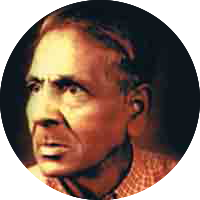
(Between 1960 and 1965, Firaq Sahib wrote several articles and columns in English and Hindi addressing the Urdu-Hindi issue and Khari Boli Hindi. In English, various articles and interviews were published under titles such as The Mistake of Hindi and My Anti-Hinduism, primarily in The Illustrated Weekly of India and the national daily Hindustan Times. Around the same time, his serialized columns appeared under the title Rang-o-Bu in the prominent Hindi magazine Kadambini, which was then edited by Ramanand Doshi. These articles and columns provoked such a severe backlash that Ramanand Doshi was forced to discontinue the series. The following two columns by Firaq Sahib belong to that very series and are being published here for the first time. — Shamim Hanfi)
One way to harm and weaken ourselves is to stubbornly refuse the benefits we can draw from others, thereby denying the expression of our own inner strength and vitality. A very senior government official, whose monthly salary was around two thousand rupees, used to reprimand his subordinates in English by saying: YOU ARE VERY LAZINESS! Why would such a highly educated man make such a horrendous mistake? The reason is that in Urdu, the state of being lazy (sust) or lethargic (kahil) is simply called laziness (susti) and lethargy (kahili). Even a seven- or eight-year-old child can easily understand words like lazy, lethargic, useless, and work-shirker. Similarly, they can effortlessly comprehend and use the corresponding nouns: laziness, lethargy, uselessness, and shirking. They will clearly grasp both the distinction and the usage of the nouns derived from these adjectives. However, heavy Sanskritized terms like karmanya (diligent) and karmanyata (diligence), or akarmanya (lazy) and akarmanyata (laziness), will neither go down their throats nor register in their minds. In the Hindi books this officer had read during his childhood, instead of those simple, easy, and natural nouns and adjectives, he was forced by rote to memorize akarmanya and akarmanyata, causing the distinction between the two to become entirely muddled in his brain. That is precisely why the poor fellow would end up saying, YOU ARE LAZINESS.
If you want to turn a nation into a nation of fools, simply force-feed its children jaw-breaking words instead of easy and natural ones—even if those words belong to the divine language of Sanskrit—and all the children will become intellectually stunted. A language is never just a language, a dictionary is never just a dictionary, and words are never just words; rather, they are the very tools that create cognitive flexibility and help us understand the mutual relationships and distinctions between objects and ideas. Language is the hands and feet of human consciousness.
I know another gentleman who holds an M.A. in Hindi; he incorrectly identifies abstract nouns like goodness, badness, virtue, vice, blackness, and whiteness as adjectives. Recently, while delivering a speech in Prayag, Shri Sampurnanand Ji stated that Sanskrit should be the national language. Reading his statement and repeatedly hearing his various remarks, I strongly felt that he has grown utterly exhausted with Hindi. He has found Hindi prose to be so clunky and uneven that he has abandoned the very dream of making it the national language. It never occurred to him to ask why, in Urdu—which is simply another form of Hindi—no one ever complains about the language being convoluted or clunky. Our Hindi language typically forms abstract nouns from adjectives by adding suffixes like -ee or -pan. This is not some random or accidental phenomenon; rather, this linguistic habit runs deep in the blood of millions of us Hindi speakers.
Deriving kheti (farming) from khet (farm), achhai (goodness) from achha (good), and susti (laziness) from sust (lazy) is not merely a rule of our grammar; it is our very temperament. Hardly any Hindi enthusiast has ever paused to consider that Hindi does not form adjectives and nouns the way Sanskrit does. Hindi naturally uses words like achha, bura, bara, chhota (good, bad, big, small), along with their feminine and plural inflections, and forms nouns like achhai and burai (goodness, badness). It does not naturally produce words like saundarya (beauty) from sundar (beautiful), karmanyata (diligence) from karma (action), or terms like khadya (edible), pathya (readable), and lavanya (grace). If we force such heavy words down the throats of young children, the very creation of Hindi prose and poetry will become impossible. Then, frustrated and overwhelmed by our own Hindi, we too will start crying out like Shri Sampurnanand and Dr. Katju that the cart of Hindi simply refuses to move forward—that it constantly loses its balance, derails, and repeatedly meets with accidents on the linguistic highway. Consequently, acting on the proverb what won't a desperate man do, we will declare: come, let us just make Sanskrit the national language.
Ibtida-e-ishq hai rota hai kya
Aage aage dekhiye hota hai kya
[It is but the beginning of love, why do you weep?
Just wait and see what unfolds as we go along.]
Today, this artificial Hindi has become an inescapable noose around our necks. We can neither comfortably wear it nor cast it off.
Countless readers of this article must have noticed another phenomenon recently. Trials are conducted for dacoity, murder, and various other horrific crimes, yet the culprits walk free. People console themselves by assuming there was a lack of evidence. This is all a farce. The real issue is that the honorable magistrate was educated in this artificial Hindi, and this crippled Hindi has, in turn, crippled his English. His mind has been rendered mute. To hand down a conviction, a judgment must be written with immense precision. It requires the ability to craft and structure sentences with elegance. Legal argumentation demands a mental acuity capable of distilling complex, tangled issues into lucid, coherent sentences. The magistrate finds the very prospect of doing this agonizing. On the other hand, acquitting a suspect requires writing very little, relying only on broad strokes. I know of another senior magistrate who has even published two or three novels in Hindi. Yet, this gentleman too is incapable of stating a simple fact in a straightforward manner. His Honor constantly pressures the litigating parties to reach an out-of-court settlement. This causes financial loss to the lawyers, and the resulting settlements are often highly flawed, but it saves the honorable magistrate from the ordeal of articulating legal nuances in meaningful sentences to write a proper judgment. As the saying goes: no bamboo, no flute—eliminate the root cause, and the problem disappears.
A grave injustice is being committed. By forcing a convoluted language upon millions of children, they are destroying the intellectual power we could otherwise draw from Urdu prose and poetry. Go ahead, keep hating Urdu! Both your mind and your tongue will become twisted. Keep teaching them poems like this:
Main soongh chuki yeh phal phool
Yeh jharne ko hai jhatant jhool
[I have already smelled these fruits and flowers;
This tangled swing is now ready to shed.]
My intention for this series of essays was not only to share beautiful Urdu couplets but also to draw the readers' attention to the myriad problems currently plaguing our language and literature. That is why I have presented the aforementioned points as an introduction. While we are on the subject, I should also point out that when it comes to deriving abstract nouns from adjectives, Hindi follows Persian grammar, not Sanskrit grammar. For instance, it naturally forms chaturai (cleverness) from chatur (clever), rather than the Sanskritized chaturya; and madhurai (sweetness) from madhur (sweet), rather than madhurya.
Now, listen to a few Urdu couplets that demonstrate how Khari Boli can be employed with absolute simplicity and grace:
Lag gayi chup tujhe ae Dagh kahan ki aisi
Mujh ko kuch haal toh kambakht bata tu apna
[What profound silence has overtaken you, O Dagh?
You wretched soul, at least tell me how you fare.]
Jahan mein kya na dhoonda kya na paya
Mizaj unka dimagh unka na paya
[What did I not search for in this world, what did I not find?
Yet, I could never grasp their temperament, nor fathom their mind.]
Kaun tha aap se jo bahar tha
Aap aaye toh aap ka ghar tha
[Who was it that existed outside of you?
When you arrived, you found it was your own home.]
Is anjuman-e-naaz ki kya baat hai Ghalib
Hum bhi gaye waan aur teri taqdeer ko ro aaye
[What can be said of that assembly of coquetry, O Ghalib!
I too went there, only to weep at your fate.]
Aata ho to haath se na deejiye
Jaata ho to is ka gham na keejiye
[If it comes to you, do not let it slip from your hands;
If it leaves you, do not grieve over its loss.]
Sawan ke baadalon ki tarah se bhare hue
Yeh nain woh hain jin se keh jangal hare hue
[Brimming like the heavy clouds of the monsoon,
These are the eyes that have turned the wilderness green.]
Allah jawani ki museebat se bachaye
Is umr mein insaan ko sujhhaai nahin deta
[May God protect us from the affliction of youth;
At this age, a person is blind to reason.]
Hai kuch aisi hi baat jo chup hoon
Warna kya baat kar nahin aati
[There must be a reason why I remain silent;
Otherwise, is there anything I do not know how to say?]
Marte hain aarzoo mein marne ki
Maut aati hai par nahin aati
[I die in the longing for death;
Death approaches, yet it does not arrive.]
Mushtaaq-e-dard-e-ishq jigar bhi hai dil bhi hai
Khaaun kidhar ki chot bachaun kidhar ki chot
[Both the liver and the heart yearn for the pain of love;
Where should I take the blow, and where should I shield myself?]
Tum hamare kisi tarah na hue
Warna duniya mein kya nahin hota
[You could never become mine in any way;
Otherwise, what is not possible in this world?]
Qareeb hai yaaro roz-e-mahshar chhupe ga kushton ka khoon kyon kar
Jo chup rahe gi zabaan-e-khanjar lahoo pukare ga aasteen ka
[Friends, the Day of Judgment is near; how will the blood of the slain remain hidden?
If the tongue of the dagger stays silent, the blood on the sleeve will cry out.]
Abhi to soye charaghon ne aankh kholi hai
Abhi to jaagte hain ghar abhi yahan se na jao
[The sleeping lamps have only just opened their eyes;
The houses are still awake, do not leave just yet.]
Koi charagh jale tumhin se jahan bhi raho
Pukarta hai yeh keh kar abhi yahan se na jao
[May a lamp be lit by you, wherever you may be;
It calls out, saying, do not leave just yet.]
Kuch baat hai keh hasti mit-ti nahin hamari
Sadiyon raha hai dushman daur-e-zaman hamara
[There is something about us that our existence is never erased;
Even though the turning of time has been our enemy for centuries.]
Waa-e-naadaani keh waqt-e-marg yeh saabit hua
Khwaab tha jo kuch keh dekha jo suna afsaana tha
[Alas, the ignorance! At the time of death, it was proven:
Whatever I saw was but a dream, whatever I heard was but a tale.]
Isi khandhar mein kahin kuch diye hain toote hue
Inhi se kaam chalao bari udaas hai raat
[Somewhere in these ruins, there are a few broken lamps;
Make do with them, for the night is deeply sorrowful.]
Khuda jaane yeh duniya jalwa-gah-e-naaz hai kis ki
Hazaron uth gaye raunaq wahi baaqi hai mehfil ki
[God knows whose stage of coquetry this world is;
Thousands have departed, yet the splendor of the gathering remains the same.]
Zamana bare shauq se sun raha tha
Hameen so gaye dastaan kehte kehte
[The world was listening with great eagerness;
It was I who fell asleep while telling the tale.]
Jee bahut chahta hai rone ko
Hai koi baat aaj hone ko
[My heart deeply yearns to weep;
Something is bound to happen today.]
Listen to this couplet by an Urdu poet:
Tere ishq ki ban gayi hoon kahani
Kahi ja rahi hoon suni ja rahi hoon
[I have become the tale of your love;
I am being told, I am being heard.]
Duniya meri bala jaane mehngi hai ya sasti hai
Maut mile to muft na loon hasti ki kya hasti hai
[What does it matter to me whether the world is cheap or dear?
I wouldn't take death for free; what worth does existence have?]
Kabhi dar ko tak ke chale gaye kabhi aah bhar ke chale gaye
Tere kooche hum kabhi aaye bhi to thehar thehar ke chale gaye
[Sometimes I stared at your door and left, sometimes I heaved a sigh and left;
Even when I came to your street, I lingered a while and left.]
Dil ne duniya nayi bana daali
Aur hamein aaj tak khabar na hui
[The heart has created a whole new world;
And to this day, I remained unaware.]
Kya se kya kar diya mohabbat ne
Ab jo dekha to woh asar hi nahin
[Look what love has transformed me into;
Now when I look, that trace is no longer there.]
This couplet is by Asar Dehlvi:
Jo uljhi thi kabhi Aadam ke hathon
Woh gutthi aaj tak suljha raha hoon
[The knot that was once tangled by the hands of Adam;
I am still trying to unravel it to this day.]
Yeh sannata hai mere paon ki chaap
Firaq apni kuch aahat pa raha hoon
[This silence is the sound of my own footsteps;
O Firaq, I am catching the faint echoes of my own presence.]
Patta patta boota boota haal hamara jaane hai
Jaane na jaane gul hi na jaane baagh to saara jaane hai
[Every leaf and every bud knows my condition;
Only the rose may not know, but the entire garden knows.]
In Khari Boli, words are arranged in this manner, and clear, coherent sentences are spoken like this. This is how sentences are cast into a mold. If we were to inundate our language with the style of phal phool and jhatat jhool, our minds would begin to stutter. We would speak haltingly. We would fall silent mid-sentence. We would be unable to carry out many administrative functions. We would be rendered mute. The vehicle of our life would come to a standstill.
(Between 1960 and 1965, Firaq Sahib wrote several articles and columns in English and Hindi addressing the Urdu-Hindi issue and Khari Boli Hindi. In English, various articles and interviews were published under titles such as The Mistake of Hindi and My Anti-Hinduism, primarily in The Illustrated Weekly of India and the national daily Hindustan Times. Around the same time, his serialized columns appeared under the title Rang-o-Bu in the prominent Hindi magazine Kadambini, which was then edited by Ramanand Doshi. These articles and columns provoked such a severe backlash that Ramanand Doshi was forced to discontinue the series. The following two columns by Firaq Sahib belong to that very series and are being published here for the first time. — Shamim Hanfi)
One way to harm and weaken ourselves is to stubbornly refuse the benefits we can draw from others, thereby denying the expression of our own inner strength and vitality. A very senior government official, whose monthly salary was around two thousand rupees, used to reprimand his subordinates in English by saying: YOU ARE VERY LAZINESS! Why would such a highly educated man make such a horrendous mistake? The reason is that in Urdu, the state of being lazy (sust) or lethargic (kahil) is simply called laziness (susti) and lethargy (kahili). Even a seven- or eight-year-old child can easily understand words like lazy, lethargic, useless, and work-shirker. Similarly, they can effortlessly comprehend and use the corresponding nouns: laziness, lethargy, uselessness, and shirking. They will clearly grasp both the distinction and the usage of the nouns derived from these adjectives. However, heavy Sanskritized terms like karmanya (diligent) and karmanyata (diligence), or akarmanya (lazy) and akarmanyata (laziness), will neither go down their throats nor register in their minds. In the Hindi books this officer had read during his childhood, instead of those simple, easy, and natural nouns and adjectives, he was forced by rote to memorize akarmanya and akarmanyata, causing the distinction between the two to become entirely muddled in his brain. That is precisely why the poor fellow would end up saying, YOU ARE LAZINESS.
If you want to turn a nation into a nation of fools, simply force-feed its children jaw-breaking words instead of easy and natural ones—even if those words belong to the divine language of Sanskrit—and all the children will become intellectually stunted. A language is never just a language, a dictionary is never just a dictionary, and words are never just words; rather, they are the very tools that create cognitive flexibility and help us understand the mutual relationships and distinctions between objects and ideas. Language is the hands and feet of human consciousness.
I know another gentleman who holds an M.A. in Hindi; he incorrectly identifies abstract nouns like goodness, badness, virtue, vice, blackness, and whiteness as adjectives. Recently, while delivering a speech in Prayag, Shri Sampurnanand Ji stated that Sanskrit should be the national language. Reading his statement and repeatedly hearing his various remarks, I strongly felt that he has grown utterly exhausted with Hindi. He has found Hindi prose to be so clunky and uneven that he has abandoned the very dream of making it the national language. It never occurred to him to ask why, in Urdu—which is simply another form of Hindi—no one ever complains about the language being convoluted or clunky. Our Hindi language typically forms abstract nouns from adjectives by adding suffixes like -ee or -pan. This is not some random or accidental phenomenon; rather, this linguistic habit runs deep in the blood of millions of us Hindi speakers.
Deriving kheti (farming) from khet (farm), achhai (goodness) from achha (good), and susti (laziness) from sust (lazy) is not merely a rule of our grammar; it is our very temperament. Hardly any Hindi enthusiast has ever paused to consider that Hindi does not form adjectives and nouns the way Sanskrit does. Hindi naturally uses words like achha, bura, bara, chhota (good, bad, big, small), along with their feminine and plural inflections, and forms nouns like achhai and burai (goodness, badness). It does not naturally produce words like saundarya (beauty) from sundar (beautiful), karmanyata (diligence) from karma (action), or terms like khadya (edible), pathya (readable), and lavanya (grace). If we force such heavy words down the throats of young children, the very creation of Hindi prose and poetry will become impossible. Then, frustrated and overwhelmed by our own Hindi, we too will start crying out like Shri Sampurnanand and Dr. Katju that the cart of Hindi simply refuses to move forward—that it constantly loses its balance, derails, and repeatedly meets with accidents on the linguistic highway. Consequently, acting on the proverb what won't a desperate man do, we will declare: come, let us just make Sanskrit the national language.
Ibtida-e-ishq hai rota hai kya
Aage aage dekhiye hota hai kya
[It is but the beginning of love, why do you weep?
Just wait and see what unfolds as we go along.]
Today, this artificial Hindi has become an inescapable noose around our necks. We can neither comfortably wear it nor cast it off.
Countless readers of this article must have noticed another phenomenon recently. Trials are conducted for dacoity, murder, and various other horrific crimes, yet the culprits walk free. People console themselves by assuming there was a lack of evidence. This is all a farce. The real issue is that the honorable magistrate was educated in this artificial Hindi, and this crippled Hindi has, in turn, crippled his English. His mind has been rendered mute. To hand down a conviction, a judgment must be written with immense precision. It requires the ability to craft and structure sentences with elegance. Legal argumentation demands a mental acuity capable of distilling complex, tangled issues into lucid, coherent sentences. The magistrate finds the very prospect of doing this agonizing. On the other hand, acquitting a suspect requires writing very little, relying only on broad strokes. I know of another senior magistrate who has even published two or three novels in Hindi. Yet, this gentleman too is incapable of stating a simple fact in a straightforward manner. His Honor constantly pressures the litigating parties to reach an out-of-court settlement. This causes financial loss to the lawyers, and the resulting settlements are often highly flawed, but it saves the honorable magistrate from the ordeal of articulating legal nuances in meaningful sentences to write a proper judgment. As the saying goes: no bamboo, no flute—eliminate the root cause, and the problem disappears.
A grave injustice is being committed. By forcing a convoluted language upon millions of children, they are destroying the intellectual power we could otherwise draw from Urdu prose and poetry. Go ahead, keep hating Urdu! Both your mind and your tongue will become twisted. Keep teaching them poems like this:
Main soongh chuki yeh phal phool
Yeh jharne ko hai jhatant jhool
[I have already smelled these fruits and flowers;
This tangled swing is now ready to shed.]
My intention for this series of essays was not only to share beautiful Urdu couplets but also to draw the readers' attention to the myriad problems currently plaguing our language and literature. That is why I have presented the aforementioned points as an introduction. While we are on the subject, I should also point out that when it comes to deriving abstract nouns from adjectives, Hindi follows Persian grammar, not Sanskrit grammar. For instance, it naturally forms chaturai (cleverness) from chatur (clever), rather than the Sanskritized chaturya; and madhurai (sweetness) from madhur (sweet), rather than madhurya.
Now, listen to a few Urdu couplets that demonstrate how Khari Boli can be employed with absolute simplicity and grace:
Lag gayi chup tujhe ae Dagh kahan ki aisi
Mujh ko kuch haal toh kambakht bata tu apna
[What profound silence has overtaken you, O Dagh?
You wretched soul, at least tell me how you fare.]
Jahan mein kya na dhoonda kya na paya
Mizaj unka dimagh unka na paya
[What did I not search for in this world, what did I not find?
Yet, I could never grasp their temperament, nor fathom their mind.]
Kaun tha aap se jo bahar tha
Aap aaye toh aap ka ghar tha
[Who was it that existed outside of you?
When you arrived, you found it was your own home.]
Is anjuman-e-naaz ki kya baat hai Ghalib
Hum bhi gaye waan aur teri taqdeer ko ro aaye
[What can be said of that assembly of coquetry, O Ghalib!
I too went there, only to weep at your fate.]
Aata ho to haath se na deejiye
Jaata ho to is ka gham na keejiye
[If it comes to you, do not let it slip from your hands;
If it leaves you, do not grieve over its loss.]
Sawan ke baadalon ki tarah se bhare hue
Yeh nain woh hain jin se keh jangal hare hue
[Brimming like the heavy clouds of the monsoon,
These are the eyes that have turned the wilderness green.]
Allah jawani ki museebat se bachaye
Is umr mein insaan ko sujhhaai nahin deta
[May God protect us from the affliction of youth;
At this age, a person is blind to reason.]
Hai kuch aisi hi baat jo chup hoon
Warna kya baat kar nahin aati
[There must be a reason why I remain silent;
Otherwise, is there anything I do not know how to say?]
Marte hain aarzoo mein marne ki
Maut aati hai par nahin aati
[I die in the longing for death;
Death approaches, yet it does not arrive.]
Mushtaaq-e-dard-e-ishq jigar bhi hai dil bhi hai
Khaaun kidhar ki chot bachaun kidhar ki chot
[Both the liver and the heart yearn for the pain of love;
Where should I take the blow, and where should I shield myself?]
Tum hamare kisi tarah na hue
Warna duniya mein kya nahin hota
[You could never become mine in any way;
Otherwise, what is not possible in this world?]
Qareeb hai yaaro roz-e-mahshar chhupe ga kushton ka khoon kyon kar
Jo chup rahe gi zabaan-e-khanjar lahoo pukare ga aasteen ka
[Friends, the Day of Judgment is near; how will the blood of the slain remain hidden?
If the tongue of the dagger stays silent, the blood on the sleeve will cry out.]
Abhi to soye charaghon ne aankh kholi hai
Abhi to jaagte hain ghar abhi yahan se na jao
[The sleeping lamps have only just opened their eyes;
The houses are still awake, do not leave just yet.]
Koi charagh jale tumhin se jahan bhi raho
Pukarta hai yeh keh kar abhi yahan se na jao
[May a lamp be lit by you, wherever you may be;
It calls out, saying, do not leave just yet.]
Kuch baat hai keh hasti mit-ti nahin hamari
Sadiyon raha hai dushman daur-e-zaman hamara
[There is something about us that our existence is never erased;
Even though the turning of time has been our enemy for centuries.]
Waa-e-naadaani keh waqt-e-marg yeh saabit hua
Khwaab tha jo kuch keh dekha jo suna afsaana tha
[Alas, the ignorance! At the time of death, it was proven:
Whatever I saw was but a dream, whatever I heard was but a tale.]
Isi khandhar mein kahin kuch diye hain toote hue
Inhi se kaam chalao bari udaas hai raat
[Somewhere in these ruins, there are a few broken lamps;
Make do with them, for the night is deeply sorrowful.]
Khuda jaane yeh duniya jalwa-gah-e-naaz hai kis ki
Hazaron uth gaye raunaq wahi baaqi hai mehfil ki
[God knows whose stage of coquetry this world is;
Thousands have departed, yet the splendor of the gathering remains the same.]
Zamana bare shauq se sun raha tha
Hameen so gaye dastaan kehte kehte
[The world was listening with great eagerness;
It was I who fell asleep while telling the tale.]
Jee bahut chahta hai rone ko
Hai koi baat aaj hone ko
[My heart deeply yearns to weep;
Something is bound to happen today.]
Listen to this couplet by an Urdu poet:
Tere ishq ki ban gayi hoon kahani
Kahi ja rahi hoon suni ja rahi hoon
[I have become the tale of your love;
I am being told, I am being heard.]
Duniya meri bala jaane mehngi hai ya sasti hai
Maut mile to muft na loon hasti ki kya hasti hai
[What does it matter to me whether the world is cheap or dear?
I wouldn't take death for free; what worth does existence have?]
Kabhi dar ko tak ke chale gaye kabhi aah bhar ke chale gaye
Tere kooche hum kabhi aaye bhi to thehar thehar ke chale gaye
[Sometimes I stared at your door and left, sometimes I heaved a sigh and left;
Even when I came to your street, I lingered a while and left.]
Dil ne duniya nayi bana daali
Aur hamein aaj tak khabar na hui
[The heart has created a whole new world;
And to this day, I remained unaware.]
Kya se kya kar diya mohabbat ne
Ab jo dekha to woh asar hi nahin
[Look what love has transformed me into;
Now when I look, that trace is no longer there.]
This couplet is by Asar Dehlvi:
Jo uljhi thi kabhi Aadam ke hathon
Woh gutthi aaj tak suljha raha hoon
[The knot that was once tangled by the hands of Adam;
I am still trying to unravel it to this day.]
Yeh sannata hai mere paon ki chaap
Firaq apni kuch aahat pa raha hoon
[This silence is the sound of my own footsteps;
O Firaq, I am catching the faint echoes of my own presence.]
Patta patta boota boota haal hamara jaane hai
Jaane na jaane gul hi na jaane baagh to saara jaane hai
[Every leaf and every bud knows my condition;
Only the rose may not know, but the entire garden knows.]
In Khari Boli, words are arranged in this manner, and clear, coherent sentences are spoken like this. This is how sentences are cast into a mold. If we were to inundate our language with the style of phal phool and jhatat jhool, our minds would begin to stutter. We would speak haltingly. We would fall silent mid-sentence. We would be unable to carry out many administrative functions. We would be rendered mute. The vehicle of our life would come to a standstill.
Additional information available
Click on the INTERESTING button to view additional information associated with this sher.
About this sher
rare Unpublished content
This ghazal contains ashaar not published in the public domain. These are marked by a red line on the left.