Urdu, Hindi, Hindustani (1)
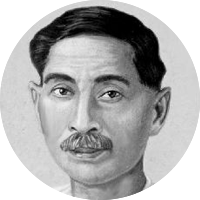
It is universally acknowledged that social unity is essential for national stability, and a nation's language and script are integral to this unity. In one of her speeches, Madame Halide Edib Hanim attributed the unity of the Turkish nation to the Turkish language. Indeed, it is an accepted fact that the very concept of a nation is inconceivable without a national language. Until India has a national language of its own, it cannot lay claim to nationhood. It is possible that India was a single nation in ancient times, but following the decline of the Buddhists, its nationhood also perished. Although a degree of social uniformity remained, linguistic differences only accelerated this process of fragmentation.
Whatever unity existed during the Islamic era was merely a political congregation of various provinces; true nationhood did not exist. The truth is that the concept of a nation is a relatively modern invention, dating back no more than two hundred years. In India, the genesis of nationhood began with British subjugation, and it has evolved alongside the consolidation of their rule. Yet, aside from a shared political subjugation, there is currently no bond among the country's diverse elements that can organize them into a single nation. If the British government were to depart today, it is highly likely that the apparent unity among these elements would dissolve into discord. A new constitutional order might emerge based on different languages, with regions having no connection to one another, thereby reigniting the same conflicts that existed before the arrival of the British. Therefore, for the survival of the nation, social unity is imperative. Since language is a fundamental pillar of this unity, India must have a national language—one that is spoken and understood from one end of the country to the other. The inevitable result of this would be the gradual development of a national literature. Eventually, a time will come when the Hindustani language will be able to take its rightful, equal place in the literary assembly of the world's nations.
But what form should this national language take? The prevalent provincial languages lack the capacity to become the national language because their sphere of influence is limited. There is only one language that is spoken across a vast expanse of the country and understood across an even broader area, and it alone can be elevated to the status of a national language. At present, however, it exists in three forms: Urdu, Hindi, and Hindustani. On a national level, it has yet to be decided which of these forms would be the most widely accepted and easily adopted. Proponents of all three forms exist, and a constant tug-of-war persists among them. This disagreement has even been heavily politicized, rendering us incapable of examining the issue with a cool head and an objective mind. Nevertheless, despite these obstacles, we must not lose heart or deem the goal of Indian nationhood unattainable; we must resolve this issue one way or another.
There is no shortage of people in the country who do not wish to interfere with the independent development of Urdu and Hindi. They have accepted that, regardless of whatever similarities these two forms may have shared in their infancy, the divergent paths they are currently treading make their convergence impossible. Every language possesses a natural inclination. Urdu has an inherent affinity with Persian and Arabic, while Hindi leans toward Sanskrit and Prakrit. No force can halt this natural tendency, so why should we harm both languages in a forced attempt to merge them?
If Urdu and Hindi were to confine themselves to their respective regions of origin, we would have no objection to their natural evolution. I have no concerns regarding provincial languages such as Bengali, Marathi, Gujarati, Tamil, Telugu, or Kannada. They are free to absorb as much Sanskrit, Arabic, or Latin as they please; their own writers can decide such matters. However, the nature of Urdu and Hindi is entirely different. Here, both lay claim to the title of India's national language. Yet, because neither could fulfill the nation's needs in its isolated form, an involuntary, organic process of convergence began. This gave rise to a unified form, which we are entirely justified in calling the Hindustani language.
The reality is that India's national language can neither be an Urdu burdened with unfamiliar Arabic and Persian vocabulary, nor a Hindi weighed down by heavy Sanskrit terminology. If the advocates of both camps were to stand face-to-face today and converse in their respective literary registers, they would likely fail to understand each other entirely. Our national language can only be one founded on common usage. Why should it concern itself with avoiding a particular word simply because of its Persian, Arabic, or Sanskrit origins? Its sole criterion should be whether or not the common people can understand it—and the common people encompass Hindus, Muslims, Punjabis, Bengalis, Marathis, and Gujaratis alike. If a word, idiom, or term is in widespread use, the language does not care about its etymology or origin. This is Hindustani. Just as the language of the English is English, of Japan is Japanese, of Iran is Iranian, and of China is Chinese, it is not merely appropriate but essential to name India's national language Hindustani following the exact same pattern.
If we were to refer to this country simply as Hind rather than Hindustan, its language could conceivably be called Hindi. However, its language can never be called Urdu—unless we were to start calling Hindustan Urdustan, which is entirely out of the question. The ancients did refer to the language of this land as Hindi, and Amir Khusro laid the foundation for Hindustani by composing the *Khaliq Bari*. His intention behind this work was likely to teach the common people everyday vocabulary in both linguistic registers, thereby facilitating their day-to-day interactions.
When and where was Urdu born? This question remains unsettled. Regardless, India's national language is neither Urdu nor Hindi, but Hindustani. It is understood throughout India and spoken across a vast majority of it, yet it is written nowhere. If anyone even attempts to write in it, the literary elites of both Urdu and Hindi ostracize them. In truth, the greatest stumbling block in the progress of both Urdu and Hindi is their elitism. Whether we write in Urdu or Hindi, we do not write for the common people; we write for a limited, exclusive class. This is precisely why our literary works fail to achieve widespread popular acceptance. It is perfectly true that in any country, the written and spoken languages are never identical. The English we read in books and newspapers is not spoken anywhere. Even educated people do not converse in a strictly literary register, and the language of the common masses is entirely distinct. However, every educated person in England is expected to understand the written language and to be capable of using it when the occasion demands. This is exactly what we desire for India as well.
But what is the situation today? The Hindi school of thought is dead set against allowing non-Hindi words to enter the language under any circumstances. It loves the word *manushya* (human) but absolutely despises *aadmi*. Even though *darkhwast* (application) is in common use, it is forbidden in their camp; instead, they insist on *prarthana*, even if the general public does not understand it at all. They simply cannot accept *istifa* (resignation); they demand a *tyag patra* instead. No matter how universally understood *hawai jahaz* (airplane) might be, they prefer to fly in a *vayuyan*. The Urdu school of thought is even more obsessed with this linguistic untouchability. It believes in *Khuda* (God) but rejects *Ishwar*. It may commit countless *qasoor* (faults), but it can never commit an *apradh*. It loves *khidmat* (service) but cannot stand the sight of *sewa*. In this way, we have established two entirely separate camps for Urdu and Hindi, and no one from either side dares to cross into the other's territory. In this respect, Urdu has proven to be far more rigid than Hindi. Hindustani aims to tear down these walls and foster a connection between the two, allowing them to visit each other's homes freely—not merely as guests, but as members of the same household.
In the words of Garcin de Tassy, no strict dividing line can be drawn between Urdu and Hindi where one can be exclusively labeled Hindi and the other Urdu. The English language has various shades: in some contexts, Latin and Greek words dominate, while in others, Anglo-Saxon words prevail, yet both remain English. Similarly, Urdu and Hindi cannot be considered two distinct languages simply because of differences in vocabulary. We appeal to those who dream of Indian nationalism and wish to strengthen its social unity to embrace the call of Hindustani. It is not a new language, but rather the national embodiment of both Urdu and Hindi.
In the upper primary schools of the United Provinces, readers in the common language—Hindustani—are taught up to the fourth grade. Only the script differs; the language itself remains exactly the same. The Department of Education likely intended that this approach would naturally lay the foundation of Hindustani among students, familiarizing them with common Hindi and Urdu words. Another advantage was that a single teacher could instruct the entire class. This curriculum is still in place today, but advocates of both Hindi and Urdu have begun to complain. They argue that teaching a common language stunts the students' literary aptitude, leaving them unable to comprehend even basic books after completing upper primary school. Consequently, to address this grievance, a literary reader was introduced for the upper primary grades alongside the general readers. Our magazines, newspapers, and books are published in either pure Urdu or pure Hindi. Therefore, unless Urdu-learning students possess a substantial vocabulary of Persian and Arabic words, and Hindi-learning students possess a sufficient stock of Sanskrit words, they cannot understand any Urdu or Hindi book. Thus, the segregation of Urdu and Hindi begins right from childhood. Is there no strategy to eradicate this divide?
Those who champion this division have their own arguments to support their claims. For instance, advocates of pure Hindi argue that leaning toward Sanskrit brings Hindi closer to India's other provincial languages. It provides ready-made vocabulary for expressing ideas, lends a literary quality to the writing, and so on. Similarly, the standard-bearers of Urdu argue that leaning toward Persian and Arabic brings Urdu closer to other Asian languages, such as Persian and Arabic themselves. It unlocks the intellectual wealth of Arabic for expressing ideas—arguing that there is no language more scholarly—and infuses the prose style with gravity and grandeur, and so forth. Therefore, they ask, why not let both languages follow their own paths? Why create obstacles for both by forcing them together? If everyone were to agree with this reasoning, it would mean that a national language could never evolve in India. Therefore, we must do everything in our power to dispel this mindset and cultivate an environment that brings us closer to a national language day by day. If we do, it is entirely possible that in ten or twenty years, our dream will become a reality.
Varying populations of Muslims reside in every province of India. Outside the United Provinces, Muslims in other regions have adopted the languages of their respective provinces. A Muslim in Bengal speaks and writes Bengali; in Gujarat, Gujarati; in Mysore, Kannada; in Madras, Tamil; in Punjab, Punjabi, and so on. They have even adopted the scripts of their respective provinces. They may hold a deep reverence for the Urdu language and script, but in their daily lives, they have not found a practical need for it. If Muslims in other provinces can effortlessly learn their regional languages and embrace them so fully that absolutely no distinction remains between the speech of Hindus and Muslims, then why are the Muslims of the United Provinces and Punjab so hostile toward Hindi?
Muslims living in the villages of our province generally speak the local rural dialects. Many Muslims who have migrated from villages to settle in cities continue to speak these rural dialects at home. The average Muslim faces no difficulty in understanding spoken Hindi, just as the average Hindu faces no difficulty in understanding spoken Urdu. Spoken Hindi and Urdu are virtually identical. The number of Hindi words commonly used in books and newspapers—and which occasionally appear in the speeches of pundits—would not exceed two thousand. Similarly, the number of common Persian words would be no greater than this. Could we not add two thousand Hindi words to existing Urdu dictionaries, and two thousand Urdu words to Hindi dictionaries, thereby compiling a shared, common lexicon? Would this burden be too much for our memories to bear? We manage to memorize countless English words merely to serve a temporary, practical purpose. Can we not memorize a few words for a lasting, higher purpose? Currently, both Urdu and Hindi lack breadth and maturity. Their vocabularies are limited. Often, one struggles to find the appropriate words to express even basic concepts. This mutual addition of vocabulary could easily resolve this shortcoming.
All the languages of India are directly or indirectly derived from Sanskrit. In Gujarati, Marathi, and Bengali, even the script closely resembles that of Hindi. In the languages of the South, despite having entirely different scripts, the infusion of Sanskrit words is quite substantial. Arabic and Persian words are found to some extent in all provincial languages, but not as abundantly as in Hindi. Therefore, it is entirely accurate to say that a form of Hindi with a higher proportion of Sanskrit words can easily gain widespread acceptance across India. Muslims in other provinces can also easily understand this type of Hindi. Conversely, an Urdu heavily burdened with Persian and Arabic vocabulary has no real sphere of influence outside the cities and towns of the United Provinces and Punjab, and the major cities of Hyderabad.
While the Muslim population certainly numbers eighty million, Urdu-speaking Muslims likely make up no more than a quarter of that figure. Does the ideal of a higher nationalism not demand, then, that we make necessary modifications and additions to Urdu to bring it closer to Hindi, and make similar additions to Hindi to merge it with Urdu? We should consolidate this shared language so that it is spoken and understood throughout India, ensuring that whatever our authors write is meant not for a specific class, but for the entire nation. The Sindhi language is an excellent example of this kind of synthesis. Its script is Arabic-based, yet it incorporates all the phonetic sounds of Hindi. Furthermore, its vocabulary blends Sanskrit, Arabic, and Persian so seamlessly that it never feels clumsy or cumbersome. Hindustani requires a similar kind of synthesis.
The proponents of linguistic separation are largely correct in arguing that while stories, tales, and plays can be written in a common language, scholarly and scientific subjects cannot be adequately expressed in it. For such subjects, the use of highly Persianized and Arabicized Urdu, or heavily Sanskritized Hindi, becomes unavoidable. The greatest requirement for articulating academic subjects is appropriate terminology, and for this, we are inevitably forced to stretch out our hands to the boundless reservoirs of Arabic and Sanskrit. Currently, every provincial language is independently compiling its own terminology. Academic terminology has also been developed in Urdu, and this process is still ongoing. Would it not be far better for various provincial associations to accomplish this crucial task through collective consultation and mutual assistance? This would save a great deal of the individual effort, mental exertion, and time currently being expended.
In my view, rather than coining terminology from scratch, it would be far better to adopt prevalent English terms with necessary modifications. These terms are not exclusive to English; rather, similar terminology is found in almost all developed languages. It is said that the Japanese have adopted this very approach, and in Egypt, too, these terms have been assimilated with minor adjustments. If hundreds of foreign words like button, lantern, and bicycle can seamlessly integrate into our language, what is stopping us from adopting academic terminology? If every province creates its own separate terminology, India will never be able to develop a national academic language. Languages like Bengali, Marathi, Gujarati, and Kannada can solve this problem with the help of Sanskrit. Urdu, too, can fulfill its terminological needs with the help of Arabic and Persian, but such newly coined words would feel even more alien to us than the established English terms.
The *Ain-i-Akbari* set a precedent for this by adopting established Sanskrit terminology for Hindu philosophy, music, and prosody. For Islamic philosophy, theology, and prosody, we can adopt existing Arabic terminology. Similarly, if we accept the terminology of the sciences that have arrived from the West, it would not be a departure from our historical traditions.
It could be argued that a blended Hindustani might lack eloquence and refinement, but the standards of elegance and eloquence are always evolving. Years ago, wearing an English hat with an *achkan* seemed incongruous and ridiculous, but today it is a common sight. Long tresses have traditionally been considered an essential element of a woman's beauty, yet bobbed hair is now gaining popularity. Furthermore, the true merit of a language lies not merely in its eloquence, but in its capacity to convey meaning. Even if it requires sacrificing some degree of elegance and eloquence, we should not hesitate if it allows us to broaden the scope of our national language.
At a time when the foundations of a federation are being laid in the political sphere, why should we not establish a federation in the literary world? In such a federation, representatives of every provincial language could gather at a central location for a week each year to exchange ideas on the issue of a national language and resolve emerging challenges in the light of shared experience. When changes are sweeping through every aspect of our lives—often against our will—why should we cling to century-old ideas and theories when it comes to language? The time is ripe to establish an All-India Hindustani Language and Literature Association, dedicated to evolving the Hindustani language so that it gains acceptance in every province. What would be the duties and objectives of this association? There is no need to detail them here; it would be the association's own responsibility to formulate a program to achieve its goals. My only submission is that there is no longer any room for delay in this noble endeavor.
It is universally acknowledged that social unity is essential for national stability, and a nation's language and script are integral to this unity. In one of her speeches, Madame Halide Edib Hanim attributed the unity of the Turkish nation to the Turkish language. Indeed, it is an accepted fact that the very concept of a nation is inconceivable without a national language. Until India has a national language of its own, it cannot lay claim to nationhood. It is possible that India was a single nation in ancient times, but following the decline of the Buddhists, its nationhood also perished. Although a degree of social uniformity remained, linguistic differences only accelerated this process of fragmentation.
Whatever unity existed during the Islamic era was merely a political congregation of various provinces; true nationhood did not exist. The truth is that the concept of a nation is a relatively modern invention, dating back no more than two hundred years. In India, the genesis of nationhood began with British subjugation, and it has evolved alongside the consolidation of their rule. Yet, aside from a shared political subjugation, there is currently no bond among the country's diverse elements that can organize them into a single nation. If the British government were to depart today, it is highly likely that the apparent unity among these elements would dissolve into discord. A new constitutional order might emerge based on different languages, with regions having no connection to one another, thereby reigniting the same conflicts that existed before the arrival of the British. Therefore, for the survival of the nation, social unity is imperative. Since language is a fundamental pillar of this unity, India must have a national language—one that is spoken and understood from one end of the country to the other. The inevitable result of this would be the gradual development of a national literature. Eventually, a time will come when the Hindustani language will be able to take its rightful, equal place in the literary assembly of the world's nations.
But what form should this national language take? The prevalent provincial languages lack the capacity to become the national language because their sphere of influence is limited. There is only one language that is spoken across a vast expanse of the country and understood across an even broader area, and it alone can be elevated to the status of a national language. At present, however, it exists in three forms: Urdu, Hindi, and Hindustani. On a national level, it has yet to be decided which of these forms would be the most widely accepted and easily adopted. Proponents of all three forms exist, and a constant tug-of-war persists among them. This disagreement has even been heavily politicized, rendering us incapable of examining the issue with a cool head and an objective mind. Nevertheless, despite these obstacles, we must not lose heart or deem the goal of Indian nationhood unattainable; we must resolve this issue one way or another.
There is no shortage of people in the country who do not wish to interfere with the independent development of Urdu and Hindi. They have accepted that, regardless of whatever similarities these two forms may have shared in their infancy, the divergent paths they are currently treading make their convergence impossible. Every language possesses a natural inclination. Urdu has an inherent affinity with Persian and Arabic, while Hindi leans toward Sanskrit and Prakrit. No force can halt this natural tendency, so why should we harm both languages in a forced attempt to merge them?
If Urdu and Hindi were to confine themselves to their respective regions of origin, we would have no objection to their natural evolution. I have no concerns regarding provincial languages such as Bengali, Marathi, Gujarati, Tamil, Telugu, or Kannada. They are free to absorb as much Sanskrit, Arabic, or Latin as they please; their own writers can decide such matters. However, the nature of Urdu and Hindi is entirely different. Here, both lay claim to the title of India's national language. Yet, because neither could fulfill the nation's needs in its isolated form, an involuntary, organic process of convergence began. This gave rise to a unified form, which we are entirely justified in calling the Hindustani language.
The reality is that India's national language can neither be an Urdu burdened with unfamiliar Arabic and Persian vocabulary, nor a Hindi weighed down by heavy Sanskrit terminology. If the advocates of both camps were to stand face-to-face today and converse in their respective literary registers, they would likely fail to understand each other entirely. Our national language can only be one founded on common usage. Why should it concern itself with avoiding a particular word simply because of its Persian, Arabic, or Sanskrit origins? Its sole criterion should be whether or not the common people can understand it—and the common people encompass Hindus, Muslims, Punjabis, Bengalis, Marathis, and Gujaratis alike. If a word, idiom, or term is in widespread use, the language does not care about its etymology or origin. This is Hindustani. Just as the language of the English is English, of Japan is Japanese, of Iran is Iranian, and of China is Chinese, it is not merely appropriate but essential to name India's national language Hindustani following the exact same pattern.
If we were to refer to this country simply as Hind rather than Hindustan, its language could conceivably be called Hindi. However, its language can never be called Urdu—unless we were to start calling Hindustan Urdustan, which is entirely out of the question. The ancients did refer to the language of this land as Hindi, and Amir Khusro laid the foundation for Hindustani by composing the *Khaliq Bari*. His intention behind this work was likely to teach the common people everyday vocabulary in both linguistic registers, thereby facilitating their day-to-day interactions.
When and where was Urdu born? This question remains unsettled. Regardless, India's national language is neither Urdu nor Hindi, but Hindustani. It is understood throughout India and spoken across a vast majority of it, yet it is written nowhere. If anyone even attempts to write in it, the literary elites of both Urdu and Hindi ostracize them. In truth, the greatest stumbling block in the progress of both Urdu and Hindi is their elitism. Whether we write in Urdu or Hindi, we do not write for the common people; we write for a limited, exclusive class. This is precisely why our literary works fail to achieve widespread popular acceptance. It is perfectly true that in any country, the written and spoken languages are never identical. The English we read in books and newspapers is not spoken anywhere. Even educated people do not converse in a strictly literary register, and the language of the common masses is entirely distinct. However, every educated person in England is expected to understand the written language and to be capable of using it when the occasion demands. This is exactly what we desire for India as well.
But what is the situation today? The Hindi school of thought is dead set against allowing non-Hindi words to enter the language under any circumstances. It loves the word *manushya* (human) but absolutely despises *aadmi*. Even though *darkhwast* (application) is in common use, it is forbidden in their camp; instead, they insist on *prarthana*, even if the general public does not understand it at all. They simply cannot accept *istifa* (resignation); they demand a *tyag patra* instead. No matter how universally understood *hawai jahaz* (airplane) might be, they prefer to fly in a *vayuyan*. The Urdu school of thought is even more obsessed with this linguistic untouchability. It believes in *Khuda* (God) but rejects *Ishwar*. It may commit countless *qasoor* (faults), but it can never commit an *apradh*. It loves *khidmat* (service) but cannot stand the sight of *sewa*. In this way, we have established two entirely separate camps for Urdu and Hindi, and no one from either side dares to cross into the other's territory. In this respect, Urdu has proven to be far more rigid than Hindi. Hindustani aims to tear down these walls and foster a connection between the two, allowing them to visit each other's homes freely—not merely as guests, but as members of the same household.
In the words of Garcin de Tassy, no strict dividing line can be drawn between Urdu and Hindi where one can be exclusively labeled Hindi and the other Urdu. The English language has various shades: in some contexts, Latin and Greek words dominate, while in others, Anglo-Saxon words prevail, yet both remain English. Similarly, Urdu and Hindi cannot be considered two distinct languages simply because of differences in vocabulary. We appeal to those who dream of Indian nationalism and wish to strengthen its social unity to embrace the call of Hindustani. It is not a new language, but rather the national embodiment of both Urdu and Hindi.
In the upper primary schools of the United Provinces, readers in the common language—Hindustani—are taught up to the fourth grade. Only the script differs; the language itself remains exactly the same. The Department of Education likely intended that this approach would naturally lay the foundation of Hindustani among students, familiarizing them with common Hindi and Urdu words. Another advantage was that a single teacher could instruct the entire class. This curriculum is still in place today, but advocates of both Hindi and Urdu have begun to complain. They argue that teaching a common language stunts the students' literary aptitude, leaving them unable to comprehend even basic books after completing upper primary school. Consequently, to address this grievance, a literary reader was introduced for the upper primary grades alongside the general readers. Our magazines, newspapers, and books are published in either pure Urdu or pure Hindi. Therefore, unless Urdu-learning students possess a substantial vocabulary of Persian and Arabic words, and Hindi-learning students possess a sufficient stock of Sanskrit words, they cannot understand any Urdu or Hindi book. Thus, the segregation of Urdu and Hindi begins right from childhood. Is there no strategy to eradicate this divide?
Those who champion this division have their own arguments to support their claims. For instance, advocates of pure Hindi argue that leaning toward Sanskrit brings Hindi closer to India's other provincial languages. It provides ready-made vocabulary for expressing ideas, lends a literary quality to the writing, and so on. Similarly, the standard-bearers of Urdu argue that leaning toward Persian and Arabic brings Urdu closer to other Asian languages, such as Persian and Arabic themselves. It unlocks the intellectual wealth of Arabic for expressing ideas—arguing that there is no language more scholarly—and infuses the prose style with gravity and grandeur, and so forth. Therefore, they ask, why not let both languages follow their own paths? Why create obstacles for both by forcing them together? If everyone were to agree with this reasoning, it would mean that a national language could never evolve in India. Therefore, we must do everything in our power to dispel this mindset and cultivate an environment that brings us closer to a national language day by day. If we do, it is entirely possible that in ten or twenty years, our dream will become a reality.
Varying populations of Muslims reside in every province of India. Outside the United Provinces, Muslims in other regions have adopted the languages of their respective provinces. A Muslim in Bengal speaks and writes Bengali; in Gujarat, Gujarati; in Mysore, Kannada; in Madras, Tamil; in Punjab, Punjabi, and so on. They have even adopted the scripts of their respective provinces. They may hold a deep reverence for the Urdu language and script, but in their daily lives, they have not found a practical need for it. If Muslims in other provinces can effortlessly learn their regional languages and embrace them so fully that absolutely no distinction remains between the speech of Hindus and Muslims, then why are the Muslims of the United Provinces and Punjab so hostile toward Hindi?
Muslims living in the villages of our province generally speak the local rural dialects. Many Muslims who have migrated from villages to settle in cities continue to speak these rural dialects at home. The average Muslim faces no difficulty in understanding spoken Hindi, just as the average Hindu faces no difficulty in understanding spoken Urdu. Spoken Hindi and Urdu are virtually identical. The number of Hindi words commonly used in books and newspapers—and which occasionally appear in the speeches of pundits—would not exceed two thousand. Similarly, the number of common Persian words would be no greater than this. Could we not add two thousand Hindi words to existing Urdu dictionaries, and two thousand Urdu words to Hindi dictionaries, thereby compiling a shared, common lexicon? Would this burden be too much for our memories to bear? We manage to memorize countless English words merely to serve a temporary, practical purpose. Can we not memorize a few words for a lasting, higher purpose? Currently, both Urdu and Hindi lack breadth and maturity. Their vocabularies are limited. Often, one struggles to find the appropriate words to express even basic concepts. This mutual addition of vocabulary could easily resolve this shortcoming.
All the languages of India are directly or indirectly derived from Sanskrit. In Gujarati, Marathi, and Bengali, even the script closely resembles that of Hindi. In the languages of the South, despite having entirely different scripts, the infusion of Sanskrit words is quite substantial. Arabic and Persian words are found to some extent in all provincial languages, but not as abundantly as in Hindi. Therefore, it is entirely accurate to say that a form of Hindi with a higher proportion of Sanskrit words can easily gain widespread acceptance across India. Muslims in other provinces can also easily understand this type of Hindi. Conversely, an Urdu heavily burdened with Persian and Arabic vocabulary has no real sphere of influence outside the cities and towns of the United Provinces and Punjab, and the major cities of Hyderabad.
While the Muslim population certainly numbers eighty million, Urdu-speaking Muslims likely make up no more than a quarter of that figure. Does the ideal of a higher nationalism not demand, then, that we make necessary modifications and additions to Urdu to bring it closer to Hindi, and make similar additions to Hindi to merge it with Urdu? We should consolidate this shared language so that it is spoken and understood throughout India, ensuring that whatever our authors write is meant not for a specific class, but for the entire nation. The Sindhi language is an excellent example of this kind of synthesis. Its script is Arabic-based, yet it incorporates all the phonetic sounds of Hindi. Furthermore, its vocabulary blends Sanskrit, Arabic, and Persian so seamlessly that it never feels clumsy or cumbersome. Hindustani requires a similar kind of synthesis.
The proponents of linguistic separation are largely correct in arguing that while stories, tales, and plays can be written in a common language, scholarly and scientific subjects cannot be adequately expressed in it. For such subjects, the use of highly Persianized and Arabicized Urdu, or heavily Sanskritized Hindi, becomes unavoidable. The greatest requirement for articulating academic subjects is appropriate terminology, and for this, we are inevitably forced to stretch out our hands to the boundless reservoirs of Arabic and Sanskrit. Currently, every provincial language is independently compiling its own terminology. Academic terminology has also been developed in Urdu, and this process is still ongoing. Would it not be far better for various provincial associations to accomplish this crucial task through collective consultation and mutual assistance? This would save a great deal of the individual effort, mental exertion, and time currently being expended.
In my view, rather than coining terminology from scratch, it would be far better to adopt prevalent English terms with necessary modifications. These terms are not exclusive to English; rather, similar terminology is found in almost all developed languages. It is said that the Japanese have adopted this very approach, and in Egypt, too, these terms have been assimilated with minor adjustments. If hundreds of foreign words like button, lantern, and bicycle can seamlessly integrate into our language, what is stopping us from adopting academic terminology? If every province creates its own separate terminology, India will never be able to develop a national academic language. Languages like Bengali, Marathi, Gujarati, and Kannada can solve this problem with the help of Sanskrit. Urdu, too, can fulfill its terminological needs with the help of Arabic and Persian, but such newly coined words would feel even more alien to us than the established English terms.
The *Ain-i-Akbari* set a precedent for this by adopting established Sanskrit terminology for Hindu philosophy, music, and prosody. For Islamic philosophy, theology, and prosody, we can adopt existing Arabic terminology. Similarly, if we accept the terminology of the sciences that have arrived from the West, it would not be a departure from our historical traditions.
It could be argued that a blended Hindustani might lack eloquence and refinement, but the standards of elegance and eloquence are always evolving. Years ago, wearing an English hat with an *achkan* seemed incongruous and ridiculous, but today it is a common sight. Long tresses have traditionally been considered an essential element of a woman's beauty, yet bobbed hair is now gaining popularity. Furthermore, the true merit of a language lies not merely in its eloquence, but in its capacity to convey meaning. Even if it requires sacrificing some degree of elegance and eloquence, we should not hesitate if it allows us to broaden the scope of our national language.
At a time when the foundations of a federation are being laid in the political sphere, why should we not establish a federation in the literary world? In such a federation, representatives of every provincial language could gather at a central location for a week each year to exchange ideas on the issue of a national language and resolve emerging challenges in the light of shared experience. When changes are sweeping through every aspect of our lives—often against our will—why should we cling to century-old ideas and theories when it comes to language? The time is ripe to establish an All-India Hindustani Language and Literature Association, dedicated to evolving the Hindustani language so that it gains acceptance in every province. What would be the duties and objectives of this association? There is no need to detail them here; it would be the association's own responsibility to formulate a program to achieve its goals. My only submission is that there is no longer any room for delay in this noble endeavor.
Additional information available
Click on the INTERESTING button to view additional information associated with this sher.
About this sher
rare Unpublished content
This ghazal contains ashaar not published in the public domain. These are marked by a red line on the left.