Urdu Adab Ki Riwaayat Kya Hai?
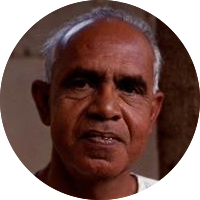
By Muhammad Hasan Askari
Outward circumstances suggest that poetry and literature are now on their way out of this world. People generally explain this by arguing that literature struggles to survive in the face of science and industrialization. Yet, today we are witnessing a different phenomenon: thousands of young people in Europe and America are growing disillusioned with both science and industry. However, the methods of protest and reaction they have devised fall entirely outside the realm of poetry and literature. Furthermore, the kind of writing some of them use to serve their agendas can hardly be considered literature at all. This reveals that there is something else, beyond science and industry, that has either already destroyed poetry and literature or is slowly doing so.
Nevertheless, there remain thousands of people and hundreds of intellectuals in the West who still hold a deep love and reverence for literature, considering it an essential and indispensable part of human life. The primary reason for this devotion is that they view culture as intrinsically valuable in and of itself, seeing nothing beyond or above it. Naturally, the current state of affairs should cause such people great anxiety. Yet, while these intellectuals do express their distress, they fail to provide any satisfactory explanation as to how and why this situation has come about.
Take Herbert Read, for example. This is a fitting example because, since the First World War, he has been the foremost advocate of the modern arts within the English-speaking world. Recently, he has expressed strong disapproval—even anger—at the kind of literature and painting being produced by today's youth. His protest is entirely justified, but there is one crucial point he has completely overlooked: the very people he objects to can justify their absurdities by citing, word for word, the exact same principles that Read himself has been propagating for the past fifty years. This implies that while he disliked the consequences and manifestations born from his own principles, he never once doubted the validity of those principles.
In all fairness, however, the logic of those principles could only ever have produced these specific outcomes. For the past two to two-and-a-half centuries, Western thinkers have maintained—whether explicitly or implicitly—that literature and art are mediums for the expression of human emotion. As times progressed, people shifted from emotion to instinct, and later to the individual or collective unconscious, as the source of this expression, seeking all sorts of psychological, social, and cultural benefits within it. But the question arises: if emotion, instinct, or the unconscious simply needs to express itself, why must it rely on one specific form of expression, such as poetry, literature, art, or a particular literary style? If an alternative form of expression has become available, what is there to worry about? In fact, if Western intellectuals are correct in their belief that humanity is outgrowing its need for language and that human language is dying, then this, too, should be welcomed as good news.
It is also fashionable in our times to offer a biological interpretation for everything—be it society, culture, or religion—and such interpretations are often treated as the ultimate proof. Following this trend, Herbert Read had even deduced that the roots of literature and art lie in biology, and that literature is an essential instrument of human evolution. However, if the forces of evolution have now discovered a new instrument and discarded the old one, those who believe in the theory of evolution have no grounds left for objection.
In short, sociology, psychology, and biology offer no compelling justification for the preservation of literature. But what is to be done about human stubbornness? As Akbar Allahabadi once said, some people are still:
Adamant about plucking the impossible flower of the fig.
They argue that evolution is not only inevitable but also the most valuable thing of all, yet humanity must still maintain some connection with its past, or its tradition. This claim, too, lacks logical proof, but for the sake of argument, let us accept it as an emotional necessity. The question we must now ask is: what exactly is tradition?
As far as the East is concerned, the matter is perfectly clear.
Whether Muslim, Hindu, or Buddhist, everyone agrees on at least two fundamental points. The first is that social tradition, literary tradition, and religious tradition are not separate entities. Instead, there is one grand, unified tradition that serves as the foundation for all, and all other minor traditions are merely parts of it, branching out from this single source. In Islamic terminology, this foundational tradition is called Deen. To participate in the secondary traditions, one must first be a part of this foundational tradition. The second point is that this foundational tradition originates from a divine or sacred book. It is then expounded upon by the authoritative representatives of that tradition, and only the words of these specific representatives hold any authoritative weight. Furthermore, there is a third point, which is an essential component of the very word tradition in any language: tradition is, by definition, something that is transmitted from one person to another.
In the West, however, everything has been turned upside down. First of all, the very concept of a central, foundational tradition has almost entirely vanished. People speak of a social tradition, a literary tradition, and even a sporting tradition as if they were all entirely separate entities operating within their own isolated spheres. Even if someone there does recognize the need for a central tradition, they assign this supreme status to the social tradition, reducing the religious tradition to a mere subset of it. Westerners have given this social tradition the name culture. But if we accept the existence of tradition purely within a societal framework, such a tradition does not need to rely on any divine book. In this context, tradition can only mean customs and conventions. Customs are inherently fluid and ever-changing; therefore, the first question is why it should even be necessary to keep any specific custom alive.
One custom can be just as good or as bad as another. As for emotional attachment to a particular custom, emotional states are by no means permanent; emotions can change ten times a day. Furthermore, when dealing with mere customs, there is no need for the permanent presence or recognition of authoritative representatives. This is precisely why, within the realm of Western literature, we witness the daily spectacle of one critic including a poet or a style in the tradition, while another critic promptly excludes them. If the word tradition were being used merely as a synonym for custom, it might still be tolerable. But some Western thinkers have gone a step further, completely disregarding even the literal meaning of the word. That is to say, they no longer even consider it necessary for a tradition to be transmitted from one person to another. M.C. Bradbrook, the renowned scholar and critic of English literature, writes in one of her works that at the end of the sixteenth century, a certain poet started a tradition that was followed for twenty years; another poet laid the foundation for a different tradition that was imitated for only five or six years; and yet another poet invented a tradition that absolutely no one followed.
The crux of this debate is that while Western intellectuals wish to keep tradition alive, they cannot even define what tradition actually is. In English literature, the greatest champion of tradition is T.S. Eliot. He has gone so far as to claim that Europe has preserved all the vital elements of its civilization without losing a single fragment. He considers the Italian poet Dante to be the greatest literary representative of the Christian tradition. Dante wrote a treatise on the necessity of composing poetry in the vernacular. At least in the eyes of Western scholars, this is the core message of the treatise, which is why the text is considered revolutionary.
Dante stated that the best poets are those who compose poetry in three languages, and he also provided a list of such exemplary poets. The West takes great pride in its research, yet its scholars have not bothered to notice that this list does not contain a single poet who actually wrote in three languages simultaneously. It took a Muslim Sufi to point out that three languages here actually refers to three levels of meaning. If Europe’s tradition is truly so well-preserved, was T.S. Eliot himself aware of this underlying secret?
Eliot is among the few Western thinkers who deemed a familiarity with theology or religion essential for the study of literature. However, after making this assertion once, he never brought it up again; he even withdrew the book that contained this statement. Consequently, it remains unclear how exactly he viewed the relationship between literature and religion. In France, however, Jacques Maritain made a detailed attempt to derive literary principles from the theology of Saint Thomas Aquinas. He declared, If I do not follow Saint Thomas, I am ruined. Yet, the manner in which this following took place suggests that it was actually Saint Thomas who was ruined. Maritain essentially took most of the literary theories currently in vogue in our era and retroactively attributed them to his patron and guide.
Still, the audacity of the West is commendable. Despite all these contradictions, Westerners continue to insist (and there is no shortage of sycophants in the East ready to echo them) that they have always possessed universal principles capable of understanding and evaluating the literature of any country and any language. A brief overview of the literary principles the West has produced over the last three hundred years has already been presented above. Now, let us examine ancient Europe.
Many in the West have explicitly acknowledged that the foundational theories of literature belong solely to Plato and Aristotle; everything since has merely been a variation or reshuffling of their ideas. The core concept in the theories of both Plato and Aristotle is Mimesis. It is necessary to use the original Greek word here because it has been translated in numerous ways. Some have translated it as imitation, others as reflection or depiction, some as representation, some as expression, and some have even equated it with creation itself. Plato used this concept to reject poetry. If we fail to grasp its exact meaning in Plato's context, it might not matter much; however, Aristotle used this very word to affirm and validate poetry, making it absolutely crucial to determine its precise meaning here.
Since every thinker cites the Greek lexicon to support their own interpretation, the matter cannot be settled through linguistics alone. However, another approach can be taken. Plato rejects poetry because he believes it cannot lead us to reality. Aristotle accepts poetry because he believes it can lead us to reality. If we can determine what this reality actually is, we will then be able to figure out whether this reality can be imitated, reflected, represented, or none of the above.
For Aristotle and other Greek philosophers, the highest form of knowledge is Metaphysics. If we consider the literal meaning of the word, this makes sense, as it refers to any reality that lies beyond the physical realm. However, Aristotle also stated that the most important branch of metaphysics is Ontology (the study of being); in fact, he treated the two terms as synonymous. This implies that for Aristotle, the Greek philosophers, and the Christian thinkers of the Middle Ages, the Ultimate Reality is merely an existent being, and the flight of their wisdom ends right there. It is precisely because of such flaws that Hazrat Mujaddid Alf Sani (may God have mercy upon him) condemned Greek theology and metaphysics as misguidance, declaring that there has never been a group more foolish than the Greek philosophers.
You will realize just how accurate his assessment is once you understand the Islamic concept of Ultimate Reality. Hazrat Mujaddid states:
The essence of the Necessary Being (God), glorious is His majesty, exists by His own Self, not through 'existence.' The affirmation of His existence and the application of 'necessity' to His divine court are merely intellectual abstractions. And to Allah applies the highest attribute. Just as the 'necessity of existence' is an intellectual abstraction, the 'impossibility of non-existence' is also an abstraction regarding His court. However, when discussing the Pure Essence itself, just as the 'necessity of existence' cannot be attributed to it, neither can the 'impossibility of non-existence.'
(Maktubat, Volume III, 14)
What, then, is the status of existence compared to this Ultimate Reality? He further states:
The 'necessity of existence' is but a lowly servant of this sacred court, and the 'negation of non-existence' is but a lowly sweeper of this majestic threshold. (17)
Obviously, such a Reality can neither be imitated, nor depicted, nor reflected, nor represented, nor expressed. At best, one can only point toward it.
When this is the Islamic concept of Reality, and the duty of Islamic poetry is to help humanity, to the best of its ability, in attaining the gnosis of this Reality, then how can Aristotle's literary theories possibly be useful in understanding our poetry? Aristotle attempted to place the servant on the king's throne. How can the rules that apply to the servant be appropriate for the king? The ultimate purpose of any poetry composed within the framework of the Islamic tradition will always be to point toward the Ultimate Reality. However, poetry must also describe the various spiritual stations encountered along the journey toward this Reality. These stations correspond to the four realms: Nasut (the physical world), Malakut (the angelic realm), Jabarut (the realm of divine power), and Lahut (the realm of divine nature). The greatest poets will traverse all four realms, while lesser poets will only reach one of the intermediate stages before stopping.
The same distinction applies to first-rate and second-rate poetry.
(It is worth mentioning here that when Dante spoke of composing poetry in three languages, he was actually referring to these very spiritual stages. He did not consider poetry related to the realm of Nasut worthy of attention. Furthermore, according to the research of Western scholars themselves, Dante acquired this knowledge through Ibn Arabi's Futuhat al-Makkiyya.)
In short, Aristotle’s theory of poetry does not take us beyond the Alam-e-Malakut (the angelic realm) or, at most, the Alam-e-Jabarut (the realm of divine power). In this context, whether you call it imitation, reflection, or expression, it all amounts to the same thing. Consequently, Aristotle’s theory helps us understand only a very small fraction of Islamic poetry, and even that fraction would not represent our finest work. On the contrary, you will find that in our tradition, even an ordinary couplet seems to flutter, yearning to break free from the confines of material existence.
Dagh Dehlvi is often dismissed as merely a poet of hedonism and revelry. Yet, consider one of his famous—or rather, infamous—couplets:
Neither do you hide completely, nor do you reveal yourself,
What a wondrous veil this is, that you sit so close to the blind.
Does this couplet have no connection to the metaphysical problem of manifestation (zahur) and concealment (ikhfa)? Similarly, it is often said of Ameer Minai that his poetry remained entangled in the superficialities of combs and braids. Yet, he writes:
Let union happen now, what good is waiting for the Day of Judgment?
Why have you postponed the matter of today until tomorrow?
Did this couplet not stem from the theological debate regarding the vision of God (Ruyat-e-Bari Ta'ala)? The late Maulana Hasrat Mohani was a devout Muslim, both outwardly and inwardly, yet the shadow of his English education was such that he categorized poetry into neat compartments: the mystical (aarifana), the romantic (aashiqana), and the transgressive (fasiqana). The question is, into which of these compartments would one place these two couplets?
These two examples should make it clear that when it comes to our traditional poetry in the truest sense, even the most elevated literary theories of the West are of no use to us. Let alone our traditional poetry, today the West cannot even understand its own medieval poetry. Some critics, out of sheer frustration, have gone so far as to suggest expunging the poetry of that era from history altogether. Those who are somewhat more honest and sensitive have now begun to suggest that the West should try to understand its own poetry through the lens of Arabic poetry, particularly the works of Hazrat Ibn al-Farid. A couple of such attempts have indeed been made in France, leading to astonishing revelations about ancient Western civilization. Ultimately, however, the poetry of Hazrat Ibn al-Farid can only be fully comprehended by someone who belongs to his own tradition—that is, someone who shares the poet's faith.
Nevertheless, one shift has certainly occurred. Until recently, Westerners used to claim that Eastern poetry was nothing but verbosity and exaggeration. Even among us, it had become fashionable for highly respectable figures, despite their nationalistic sympathies, to consider it their solemn duty to hurl insults at Asian poetry. Even a man as sober as the late Altaf Hussain Hali went so far as to write:
This impure ledger of our panegyrics,
Which in its stench is worse than a latrine.
He did not pause to consider how many profound themes of Divine Unity (Tawhid) were woven even into those odes written in praise of the nobility. Today, however, the tide has turned. For instance, after translating the quatrains of Omar Khayyam, the famous English poet Robert Graves remarked that the English do not even know what real poetry is. Translating from Persian is a monumental task in itself, but even the handful of Frenchmen who have read Urdu poetry have spontaneously exclaimed that they have only just discovered what true poetry is.
However, figures like the late Shibli Nomani and Altaf Hussain Hali were so deeply overawed by the British that, without even a foundational understanding of English literature, they borrowed a few superficial ideas from nineteenth-century English criticism. They imprisoned our literature within these narrow concepts, thereby devastating the literary comprehension and aesthetic taste of future generations. The greatest damage they inflicted was establishing emotion as the foundation of poetry, and making sincerity of emotion the ultimate standard of poetic excellence. Furthermore, they decreed that the primary purpose of poetry was the propagation of moral principles. By popularizing these ideas, these gentlemen not only damaged our literature but also caused religious harm to Muslims. May Allah forgive their transgressions, and ours as well. They had borrowed these concepts from nineteenth-century English criticism, but in English criticism itself, these ideas only emerged because the decline of religion in the West had already reached an advanced stage.
In the nineteenth century, Westerners in general, and Protestants in particular, had completely forgotten the fundamental principle that in religion, beliefs (aqaid) come first, followed by acts of worship (ibadat), and finally moral principles. In their eyes, the importance of core beliefs had entirely vanished, and the word dogma began to be used as a pejorative. Acts of worship were dismissed as mere rituals. Consequently, the Protestants were left with only two things: morality and emotion. Thus, some began to argue that the sole purpose of religion was moral training and nothing more. Others claimed that among all the means available to satisfy human emotions, religion was simply the most refined. Later on, these very ideas were imposed upon poetry and literature; in fact, literature and literary criticism became the most effective tools for distorting religion and disfiguring its true concept. Shibli, Hali, and their contemporaries naively accepted these Western ideas as the very essence of wisdom. They completely overlooked the obvious fact that in Islam, faith (iman) and spiritual gnosis (marifat) are not mere states of human emotion; rather, faith and gnosis are attained through the Universal Intellect (Aql-e-Kul) or the Intellect of the Hereafter (Aql-e-Ma'ad).
In a Hadith, the seat of the intellect is identified as the heart. In the Holy Quran itself, the word ya'qilun (they reason/understand) is used in association with the heart. Therefore, poetry whose purpose is to aid in the perfection of faith must be a medium for expressing the intellect, not human emotions—even if, on a secondary level, it makes use of emotions or even physical imagery. Thus, elevating human emotion to the status of the Universal Intellect is not only a literary misconception but also contrary to the faith. As for the question of sincerity of emotion, one need only look at the religious definition of sincerity in the writings of Hazrat Ashraf Ali Thanvi (may Allah have mercy upon him), where he has clarified the distinctions between the rational and the natural, and the voluntary and the involuntary, hundreds of times.
Just as the sincerity of one's emotions cannot make an un-Islamic act Islamic, the mere sincerity of emotion cannot turn a bad poem into a good one. Furthermore, in the terminology of Sufism, jazba does not refer to human emotion, but rather to God drawing the servant toward Himself. Therefore, placing an exaggerated emphasis on morality and treating Sufi poetry merely as a vehicle for moral instruction is a distortion of both poetry and religion. There is a subtle distinction here that must be clarified. Many revered Sufis, and Hazrat Maulana Thanvi in particular, have emphatically stated that the ultimate goal of Sufism is the reformation of the inner self (islah-e-batin), and that this encompasses the entirety of Sufism.
Those influenced by an English education consider inner spiritual reform (islah-e-batin) and the reform of the ego (islah-e-nafs) to be one and the same. This misconception has now become incredibly widespread. Consequently, many people have begun to equate Sufism with psychology—an error so grave that one must seek refuge from it. Hazrat Mujaddid Alf Sani, in Letter 56 of his third volume, explicitly states: What is required is the reform of the heart. The purification achieved by the Greek philosophers is merely the purification of the ego, which only increases misguidance. While the Greek philosophers at least possessed a system for purifying the ego, nineteenth-century Western thinkers lacked even that. Yet, it was their concepts that were propagated among us under the guise of national sympathy. This was solely the result of severing poetry from religion. Whether or not religion suffered any harm in this process, our literary consciousness was utterly destroyed.
The question now arises: for the past century, our modern educated class has been even more devoted to poetry and literature than to religion. How, then, did they allow their literary consciousness to be destroyed? Part of the blame lies in the helplessness of this class. Those who were propagating Western ideas appeared outwardly respectable and trustworthy. Therefore, those educated in English mistook them for the authentic representatives of their own tradition. The blame then shifts to the true representatives of our tradition: why did they leave those interested in literature so helpless and abandoned? The reality is that in the nineteenth century, our religious scholars (ulema) were occupied with their primary and fundamental task: the preservation of religion. A major means of achieving this was translating religious knowledge into the Urdu language.
Furthermore, Maulana Ashraf Ali Thanvi’s commentaries on the Ghazals of Hafiz and the Masnavi of Maulana Rumi were serialized in magazines for a long time. While his primary objective was undoubtedly religious, anyone who wishes to do so can derive a complete education in poetry from these two books alone. In fact, for anyone seeking a genuine understanding of traditional poetry in the current era, these two books remain the sole resource. In short, even a secondary pursuit like literature was not deprived of the support and endorsement of those who truly possessed the right to represent our tradition.
Moreover, it is not as though Maulana Thanvi considered Urdu poetry unworthy of attention. Throughout his sermons, recorded conversations (malfuzat), and other writings, one finds scattered insights that are, in reality, as profound as entire books. You could search the lengthy treatises of those considered literary critics and still fail to find such profound truths about Urdu poetry. While a comprehensive discussion on this topic is not possible here, a single example will be presented; for the wise, it will suffice.
It is often said that people only realized the importance of the poet Momin when Niaz Fatehpuri drew attention to him. However, Maulana Thanvi had already stated that among the poets of Delhi, Momin possessed a unique quality unmatched by the rest. Similarly, he offered praise for Ameer Minai’s poetry that literary critics have been unable to match to this day. When discussing themes and meanings, Maulana Thanvi placed great emphasis on the distinction between rangeeni (superficial ornamentation) and sangeeni (profound gravity). To understand this difference, first consider this couplet by Ghalib:
Let someone ask my heart about your half-drawn arrow,
How could this lingering ache exist had it pierced right through?
Maulana Thanvi pointed out the flaw in this couplet: Ghalib composed it by observing only the superficial, outward state, failing to grasp the deeper reality. If a physical arrow were to strike someone's body, the result would indeed be exactly as Ghalib described. However, in true, divine love (ishq-e-haqiqi), the closer the connection grows, the more the inner ache intensifies. The Prophet Muhammad (Peace Be Upon Him) stated that he possessed both greater closeness to Allah and greater fear of Allah than anyone else. Such is the nature of Ghalib’s rangeeni. Coincidentally, we find a couplet by Zauq exploring the exact same theme. Now, observe the sangeeni (profound gravity):
How can the beloved’s arrow ever be pulled from my heart?
For to it, O Zauq, my very life is bound.
Alongside this, consider three more couplets by Zauq, which combine this profound gravity with a level of ornamentation that Ghalib could never achieve:
Pause and witness the sheer ecstasy of my restless fluttering,
For the executioner has not yet mastered the art of the slaughter.
Beneath the dagger, I did not even move my lips to utter praise,
Lest the suspicious executioner misconstrue my intent.
Out of fear of you, no one approached the half-dead lovers,
Save for the quiet weeping that arrived past midnight.
Ghalib repeatedly employs the motif of Mansoor (Al-Hallaj), for instance:
In truth, my drop is also the ocean itself,
But I refuse to imitate the shallow vessel of Mansoor.
Zauq, however, elevates this very theme to heights that Ghalib could never reach:
Consider the gallows and the noose as needle and thread, O Mansoor,
For they are merely darning the torn veil of reality.
Similarly, the metaphor of the drop and the ocean is dear to Ghalib. Yet, the absolute mastery Zauq demonstrates over every facet of this theme cannot be found anywhere in Ghalib’s entire body of work:
How can a mere bubble ever become the boundless sea,
Until it shatters and dissolves completely into the ocean?
Now, consider one final couplet by Zauq. It illuminates the fundamental flaw of all Western philosophers, the immaturity of their literary theories, and, in stark contrast, the profound comprehensiveness of our own literature. Indeed, to prove every argument presented in this essay, this single couplet—whose theme Zauq derived directly from the Holy Quran—is entirely sufficient:
We would have long since escaped the confines of the heavens,
Had we only been able to find the way.
There is no space here for a detailed commentary on these verses. However, I hope that through them, the true meaning of Maulana Thanvi’s statement becomes clear. I also hope it becomes evident just how much the modern educated class has lost—even in the realms of culture and literature—by abandoning the authentic representatives of our religious tradition. What they have lost is of such immense magnitude that, without any exaggeration, Western literature pales in comparison as mere child’s play.
Yet, this loss is not irreparable. By the grace of God, our religious tradition is alive—so vibrantly alive that no other tradition in the world can compare, and it shall remain alive until the Day of Judgment. As for those gentlemen who fret endlessly over the tradition of Urdu literature, it is now their responsibility to first discover what the word tradition actually means.
How long will you study the wisdom of the Greeks?
Study, too, the wisdom of the people of faith.
By Muhammad Hasan Askari
Outward circumstances suggest that poetry and literature are now on their way out of this world. People generally explain this by arguing that literature struggles to survive in the face of science and industrialization. Yet, today we are witnessing a different phenomenon: thousands of young people in Europe and America are growing disillusioned with both science and industry. However, the methods of protest and reaction they have devised fall entirely outside the realm of poetry and literature. Furthermore, the kind of writing some of them use to serve their agendas can hardly be considered literature at all. This reveals that there is something else, beyond science and industry, that has either already destroyed poetry and literature or is slowly doing so.
Nevertheless, there remain thousands of people and hundreds of intellectuals in the West who still hold a deep love and reverence for literature, considering it an essential and indispensable part of human life. The primary reason for this devotion is that they view culture as intrinsically valuable in and of itself, seeing nothing beyond or above it. Naturally, the current state of affairs should cause such people great anxiety. Yet, while these intellectuals do express their distress, they fail to provide any satisfactory explanation as to how and why this situation has come about.
Take Herbert Read, for example. This is a fitting example because, since the First World War, he has been the foremost advocate of the modern arts within the English-speaking world. Recently, he has expressed strong disapproval—even anger—at the kind of literature and painting being produced by today's youth. His protest is entirely justified, but there is one crucial point he has completely overlooked: the very people he objects to can justify their absurdities by citing, word for word, the exact same principles that Read himself has been propagating for the past fifty years. This implies that while he disliked the consequences and manifestations born from his own principles, he never once doubted the validity of those principles.
In all fairness, however, the logic of those principles could only ever have produced these specific outcomes. For the past two to two-and-a-half centuries, Western thinkers have maintained—whether explicitly or implicitly—that literature and art are mediums for the expression of human emotion. As times progressed, people shifted from emotion to instinct, and later to the individual or collective unconscious, as the source of this expression, seeking all sorts of psychological, social, and cultural benefits within it. But the question arises: if emotion, instinct, or the unconscious simply needs to express itself, why must it rely on one specific form of expression, such as poetry, literature, art, or a particular literary style? If an alternative form of expression has become available, what is there to worry about? In fact, if Western intellectuals are correct in their belief that humanity is outgrowing its need for language and that human language is dying, then this, too, should be welcomed as good news.
It is also fashionable in our times to offer a biological interpretation for everything—be it society, culture, or religion—and such interpretations are often treated as the ultimate proof. Following this trend, Herbert Read had even deduced that the roots of literature and art lie in biology, and that literature is an essential instrument of human evolution. However, if the forces of evolution have now discovered a new instrument and discarded the old one, those who believe in the theory of evolution have no grounds left for objection.
In short, sociology, psychology, and biology offer no compelling justification for the preservation of literature. But what is to be done about human stubbornness? As Akbar Allahabadi once said, some people are still:
Adamant about plucking the impossible flower of the fig.
They argue that evolution is not only inevitable but also the most valuable thing of all, yet humanity must still maintain some connection with its past, or its tradition. This claim, too, lacks logical proof, but for the sake of argument, let us accept it as an emotional necessity. The question we must now ask is: what exactly is tradition?
As far as the East is concerned, the matter is perfectly clear.
Whether Muslim, Hindu, or Buddhist, everyone agrees on at least two fundamental points. The first is that social tradition, literary tradition, and religious tradition are not separate entities. Instead, there is one grand, unified tradition that serves as the foundation for all, and all other minor traditions are merely parts of it, branching out from this single source. In Islamic terminology, this foundational tradition is called Deen. To participate in the secondary traditions, one must first be a part of this foundational tradition. The second point is that this foundational tradition originates from a divine or sacred book. It is then expounded upon by the authoritative representatives of that tradition, and only the words of these specific representatives hold any authoritative weight. Furthermore, there is a third point, which is an essential component of the very word tradition in any language: tradition is, by definition, something that is transmitted from one person to another.
In the West, however, everything has been turned upside down. First of all, the very concept of a central, foundational tradition has almost entirely vanished. People speak of a social tradition, a literary tradition, and even a sporting tradition as if they were all entirely separate entities operating within their own isolated spheres. Even if someone there does recognize the need for a central tradition, they assign this supreme status to the social tradition, reducing the religious tradition to a mere subset of it. Westerners have given this social tradition the name culture. But if we accept the existence of tradition purely within a societal framework, such a tradition does not need to rely on any divine book. In this context, tradition can only mean customs and conventions. Customs are inherently fluid and ever-changing; therefore, the first question is why it should even be necessary to keep any specific custom alive.
One custom can be just as good or as bad as another. As for emotional attachment to a particular custom, emotional states are by no means permanent; emotions can change ten times a day. Furthermore, when dealing with mere customs, there is no need for the permanent presence or recognition of authoritative representatives. This is precisely why, within the realm of Western literature, we witness the daily spectacle of one critic including a poet or a style in the tradition, while another critic promptly excludes them. If the word tradition were being used merely as a synonym for custom, it might still be tolerable. But some Western thinkers have gone a step further, completely disregarding even the literal meaning of the word. That is to say, they no longer even consider it necessary for a tradition to be transmitted from one person to another. M.C. Bradbrook, the renowned scholar and critic of English literature, writes in one of her works that at the end of the sixteenth century, a certain poet started a tradition that was followed for twenty years; another poet laid the foundation for a different tradition that was imitated for only five or six years; and yet another poet invented a tradition that absolutely no one followed.
The crux of this debate is that while Western intellectuals wish to keep tradition alive, they cannot even define what tradition actually is. In English literature, the greatest champion of tradition is T.S. Eliot. He has gone so far as to claim that Europe has preserved all the vital elements of its civilization without losing a single fragment. He considers the Italian poet Dante to be the greatest literary representative of the Christian tradition. Dante wrote a treatise on the necessity of composing poetry in the vernacular. At least in the eyes of Western scholars, this is the core message of the treatise, which is why the text is considered revolutionary.
Dante stated that the best poets are those who compose poetry in three languages, and he also provided a list of such exemplary poets. The West takes great pride in its research, yet its scholars have not bothered to notice that this list does not contain a single poet who actually wrote in three languages simultaneously. It took a Muslim Sufi to point out that three languages here actually refers to three levels of meaning. If Europe’s tradition is truly so well-preserved, was T.S. Eliot himself aware of this underlying secret?
Eliot is among the few Western thinkers who deemed a familiarity with theology or religion essential for the study of literature. However, after making this assertion once, he never brought it up again; he even withdrew the book that contained this statement. Consequently, it remains unclear how exactly he viewed the relationship between literature and religion. In France, however, Jacques Maritain made a detailed attempt to derive literary principles from the theology of Saint Thomas Aquinas. He declared, If I do not follow Saint Thomas, I am ruined. Yet, the manner in which this following took place suggests that it was actually Saint Thomas who was ruined. Maritain essentially took most of the literary theories currently in vogue in our era and retroactively attributed them to his patron and guide.
Still, the audacity of the West is commendable. Despite all these contradictions, Westerners continue to insist (and there is no shortage of sycophants in the East ready to echo them) that they have always possessed universal principles capable of understanding and evaluating the literature of any country and any language. A brief overview of the literary principles the West has produced over the last three hundred years has already been presented above. Now, let us examine ancient Europe.
Many in the West have explicitly acknowledged that the foundational theories of literature belong solely to Plato and Aristotle; everything since has merely been a variation or reshuffling of their ideas. The core concept in the theories of both Plato and Aristotle is Mimesis. It is necessary to use the original Greek word here because it has been translated in numerous ways. Some have translated it as imitation, others as reflection or depiction, some as representation, some as expression, and some have even equated it with creation itself. Plato used this concept to reject poetry. If we fail to grasp its exact meaning in Plato's context, it might not matter much; however, Aristotle used this very word to affirm and validate poetry, making it absolutely crucial to determine its precise meaning here.
Since every thinker cites the Greek lexicon to support their own interpretation, the matter cannot be settled through linguistics alone. However, another approach can be taken. Plato rejects poetry because he believes it cannot lead us to reality. Aristotle accepts poetry because he believes it can lead us to reality. If we can determine what this reality actually is, we will then be able to figure out whether this reality can be imitated, reflected, represented, or none of the above.
For Aristotle and other Greek philosophers, the highest form of knowledge is Metaphysics. If we consider the literal meaning of the word, this makes sense, as it refers to any reality that lies beyond the physical realm. However, Aristotle also stated that the most important branch of metaphysics is Ontology (the study of being); in fact, he treated the two terms as synonymous. This implies that for Aristotle, the Greek philosophers, and the Christian thinkers of the Middle Ages, the Ultimate Reality is merely an existent being, and the flight of their wisdom ends right there. It is precisely because of such flaws that Hazrat Mujaddid Alf Sani (may God have mercy upon him) condemned Greek theology and metaphysics as misguidance, declaring that there has never been a group more foolish than the Greek philosophers.
You will realize just how accurate his assessment is once you understand the Islamic concept of Ultimate Reality. Hazrat Mujaddid states:
The essence of the Necessary Being (God), glorious is His majesty, exists by His own Self, not through 'existence.' The affirmation of His existence and the application of 'necessity' to His divine court are merely intellectual abstractions. And to Allah applies the highest attribute. Just as the 'necessity of existence' is an intellectual abstraction, the 'impossibility of non-existence' is also an abstraction regarding His court. However, when discussing the Pure Essence itself, just as the 'necessity of existence' cannot be attributed to it, neither can the 'impossibility of non-existence.'
(Maktubat, Volume III, 14)
What, then, is the status of existence compared to this Ultimate Reality? He further states:
The 'necessity of existence' is but a lowly servant of this sacred court, and the 'negation of non-existence' is but a lowly sweeper of this majestic threshold. (17)
Obviously, such a Reality can neither be imitated, nor depicted, nor reflected, nor represented, nor expressed. At best, one can only point toward it.
When this is the Islamic concept of Reality, and the duty of Islamic poetry is to help humanity, to the best of its ability, in attaining the gnosis of this Reality, then how can Aristotle's literary theories possibly be useful in understanding our poetry? Aristotle attempted to place the servant on the king's throne. How can the rules that apply to the servant be appropriate for the king? The ultimate purpose of any poetry composed within the framework of the Islamic tradition will always be to point toward the Ultimate Reality. However, poetry must also describe the various spiritual stations encountered along the journey toward this Reality. These stations correspond to the four realms: Nasut (the physical world), Malakut (the angelic realm), Jabarut (the realm of divine power), and Lahut (the realm of divine nature). The greatest poets will traverse all four realms, while lesser poets will only reach one of the intermediate stages before stopping.
The same distinction applies to first-rate and second-rate poetry.
(It is worth mentioning here that when Dante spoke of composing poetry in three languages, he was actually referring to these very spiritual stages. He did not consider poetry related to the realm of Nasut worthy of attention. Furthermore, according to the research of Western scholars themselves, Dante acquired this knowledge through Ibn Arabi's Futuhat al-Makkiyya.)
In short, Aristotle’s theory of poetry does not take us beyond the Alam-e-Malakut (the angelic realm) or, at most, the Alam-e-Jabarut (the realm of divine power). In this context, whether you call it imitation, reflection, or expression, it all amounts to the same thing. Consequently, Aristotle’s theory helps us understand only a very small fraction of Islamic poetry, and even that fraction would not represent our finest work. On the contrary, you will find that in our tradition, even an ordinary couplet seems to flutter, yearning to break free from the confines of material existence.
Dagh Dehlvi is often dismissed as merely a poet of hedonism and revelry. Yet, consider one of his famous—or rather, infamous—couplets:
Neither do you hide completely, nor do you reveal yourself,
What a wondrous veil this is, that you sit so close to the blind.
Does this couplet have no connection to the metaphysical problem of manifestation (zahur) and concealment (ikhfa)? Similarly, it is often said of Ameer Minai that his poetry remained entangled in the superficialities of combs and braids. Yet, he writes:
Let union happen now, what good is waiting for the Day of Judgment?
Why have you postponed the matter of today until tomorrow?
Did this couplet not stem from the theological debate regarding the vision of God (Ruyat-e-Bari Ta'ala)? The late Maulana Hasrat Mohani was a devout Muslim, both outwardly and inwardly, yet the shadow of his English education was such that he categorized poetry into neat compartments: the mystical (aarifana), the romantic (aashiqana), and the transgressive (fasiqana). The question is, into which of these compartments would one place these two couplets?
These two examples should make it clear that when it comes to our traditional poetry in the truest sense, even the most elevated literary theories of the West are of no use to us. Let alone our traditional poetry, today the West cannot even understand its own medieval poetry. Some critics, out of sheer frustration, have gone so far as to suggest expunging the poetry of that era from history altogether. Those who are somewhat more honest and sensitive have now begun to suggest that the West should try to understand its own poetry through the lens of Arabic poetry, particularly the works of Hazrat Ibn al-Farid. A couple of such attempts have indeed been made in France, leading to astonishing revelations about ancient Western civilization. Ultimately, however, the poetry of Hazrat Ibn al-Farid can only be fully comprehended by someone who belongs to his own tradition—that is, someone who shares the poet's faith.
Nevertheless, one shift has certainly occurred. Until recently, Westerners used to claim that Eastern poetry was nothing but verbosity and exaggeration. Even among us, it had become fashionable for highly respectable figures, despite their nationalistic sympathies, to consider it their solemn duty to hurl insults at Asian poetry. Even a man as sober as the late Altaf Hussain Hali went so far as to write:
This impure ledger of our panegyrics,
Which in its stench is worse than a latrine.
He did not pause to consider how many profound themes of Divine Unity (Tawhid) were woven even into those odes written in praise of the nobility. Today, however, the tide has turned. For instance, after translating the quatrains of Omar Khayyam, the famous English poet Robert Graves remarked that the English do not even know what real poetry is. Translating from Persian is a monumental task in itself, but even the handful of Frenchmen who have read Urdu poetry have spontaneously exclaimed that they have only just discovered what true poetry is.
However, figures like the late Shibli Nomani and Altaf Hussain Hali were so deeply overawed by the British that, without even a foundational understanding of English literature, they borrowed a few superficial ideas from nineteenth-century English criticism. They imprisoned our literature within these narrow concepts, thereby devastating the literary comprehension and aesthetic taste of future generations. The greatest damage they inflicted was establishing emotion as the foundation of poetry, and making sincerity of emotion the ultimate standard of poetic excellence. Furthermore, they decreed that the primary purpose of poetry was the propagation of moral principles. By popularizing these ideas, these gentlemen not only damaged our literature but also caused religious harm to Muslims. May Allah forgive their transgressions, and ours as well. They had borrowed these concepts from nineteenth-century English criticism, but in English criticism itself, these ideas only emerged because the decline of religion in the West had already reached an advanced stage.
In the nineteenth century, Westerners in general, and Protestants in particular, had completely forgotten the fundamental principle that in religion, beliefs (aqaid) come first, followed by acts of worship (ibadat), and finally moral principles. In their eyes, the importance of core beliefs had entirely vanished, and the word dogma began to be used as a pejorative. Acts of worship were dismissed as mere rituals. Consequently, the Protestants were left with only two things: morality and emotion. Thus, some began to argue that the sole purpose of religion was moral training and nothing more. Others claimed that among all the means available to satisfy human emotions, religion was simply the most refined. Later on, these very ideas were imposed upon poetry and literature; in fact, literature and literary criticism became the most effective tools for distorting religion and disfiguring its true concept. Shibli, Hali, and their contemporaries naively accepted these Western ideas as the very essence of wisdom. They completely overlooked the obvious fact that in Islam, faith (iman) and spiritual gnosis (marifat) are not mere states of human emotion; rather, faith and gnosis are attained through the Universal Intellect (Aql-e-Kul) or the Intellect of the Hereafter (Aql-e-Ma'ad).
In a Hadith, the seat of the intellect is identified as the heart. In the Holy Quran itself, the word ya'qilun (they reason/understand) is used in association with the heart. Therefore, poetry whose purpose is to aid in the perfection of faith must be a medium for expressing the intellect, not human emotions—even if, on a secondary level, it makes use of emotions or even physical imagery. Thus, elevating human emotion to the status of the Universal Intellect is not only a literary misconception but also contrary to the faith. As for the question of sincerity of emotion, one need only look at the religious definition of sincerity in the writings of Hazrat Ashraf Ali Thanvi (may Allah have mercy upon him), where he has clarified the distinctions between the rational and the natural, and the voluntary and the involuntary, hundreds of times.
Just as the sincerity of one's emotions cannot make an un-Islamic act Islamic, the mere sincerity of emotion cannot turn a bad poem into a good one. Furthermore, in the terminology of Sufism, jazba does not refer to human emotion, but rather to God drawing the servant toward Himself. Therefore, placing an exaggerated emphasis on morality and treating Sufi poetry merely as a vehicle for moral instruction is a distortion of both poetry and religion. There is a subtle distinction here that must be clarified. Many revered Sufis, and Hazrat Maulana Thanvi in particular, have emphatically stated that the ultimate goal of Sufism is the reformation of the inner self (islah-e-batin), and that this encompasses the entirety of Sufism.
Those influenced by an English education consider inner spiritual reform (islah-e-batin) and the reform of the ego (islah-e-nafs) to be one and the same. This misconception has now become incredibly widespread. Consequently, many people have begun to equate Sufism with psychology—an error so grave that one must seek refuge from it. Hazrat Mujaddid Alf Sani, in Letter 56 of his third volume, explicitly states: What is required is the reform of the heart. The purification achieved by the Greek philosophers is merely the purification of the ego, which only increases misguidance. While the Greek philosophers at least possessed a system for purifying the ego, nineteenth-century Western thinkers lacked even that. Yet, it was their concepts that were propagated among us under the guise of national sympathy. This was solely the result of severing poetry from religion. Whether or not religion suffered any harm in this process, our literary consciousness was utterly destroyed.
The question now arises: for the past century, our modern educated class has been even more devoted to poetry and literature than to religion. How, then, did they allow their literary consciousness to be destroyed? Part of the blame lies in the helplessness of this class. Those who were propagating Western ideas appeared outwardly respectable and trustworthy. Therefore, those educated in English mistook them for the authentic representatives of their own tradition. The blame then shifts to the true representatives of our tradition: why did they leave those interested in literature so helpless and abandoned? The reality is that in the nineteenth century, our religious scholars (ulema) were occupied with their primary and fundamental task: the preservation of religion. A major means of achieving this was translating religious knowledge into the Urdu language.
Furthermore, Maulana Ashraf Ali Thanvi’s commentaries on the Ghazals of Hafiz and the Masnavi of Maulana Rumi were serialized in magazines for a long time. While his primary objective was undoubtedly religious, anyone who wishes to do so can derive a complete education in poetry from these two books alone. In fact, for anyone seeking a genuine understanding of traditional poetry in the current era, these two books remain the sole resource. In short, even a secondary pursuit like literature was not deprived of the support and endorsement of those who truly possessed the right to represent our tradition.
Moreover, it is not as though Maulana Thanvi considered Urdu poetry unworthy of attention. Throughout his sermons, recorded conversations (malfuzat), and other writings, one finds scattered insights that are, in reality, as profound as entire books. You could search the lengthy treatises of those considered literary critics and still fail to find such profound truths about Urdu poetry. While a comprehensive discussion on this topic is not possible here, a single example will be presented; for the wise, it will suffice.
It is often said that people only realized the importance of the poet Momin when Niaz Fatehpuri drew attention to him. However, Maulana Thanvi had already stated that among the poets of Delhi, Momin possessed a unique quality unmatched by the rest. Similarly, he offered praise for Ameer Minai’s poetry that literary critics have been unable to match to this day. When discussing themes and meanings, Maulana Thanvi placed great emphasis on the distinction between rangeeni (superficial ornamentation) and sangeeni (profound gravity). To understand this difference, first consider this couplet by Ghalib:
Let someone ask my heart about your half-drawn arrow,
How could this lingering ache exist had it pierced right through?
Maulana Thanvi pointed out the flaw in this couplet: Ghalib composed it by observing only the superficial, outward state, failing to grasp the deeper reality. If a physical arrow were to strike someone's body, the result would indeed be exactly as Ghalib described. However, in true, divine love (ishq-e-haqiqi), the closer the connection grows, the more the inner ache intensifies. The Prophet Muhammad (Peace Be Upon Him) stated that he possessed both greater closeness to Allah and greater fear of Allah than anyone else. Such is the nature of Ghalib’s rangeeni. Coincidentally, we find a couplet by Zauq exploring the exact same theme. Now, observe the sangeeni (profound gravity):
How can the beloved’s arrow ever be pulled from my heart?
For to it, O Zauq, my very life is bound.
Alongside this, consider three more couplets by Zauq, which combine this profound gravity with a level of ornamentation that Ghalib could never achieve:
Pause and witness the sheer ecstasy of my restless fluttering,
For the executioner has not yet mastered the art of the slaughter.
Beneath the dagger, I did not even move my lips to utter praise,
Lest the suspicious executioner misconstrue my intent.
Out of fear of you, no one approached the half-dead lovers,
Save for the quiet weeping that arrived past midnight.
Ghalib repeatedly employs the motif of Mansoor (Al-Hallaj), for instance:
In truth, my drop is also the ocean itself,
But I refuse to imitate the shallow vessel of Mansoor.
Zauq, however, elevates this very theme to heights that Ghalib could never reach:
Consider the gallows and the noose as needle and thread, O Mansoor,
For they are merely darning the torn veil of reality.
Similarly, the metaphor of the drop and the ocean is dear to Ghalib. Yet, the absolute mastery Zauq demonstrates over every facet of this theme cannot be found anywhere in Ghalib’s entire body of work:
How can a mere bubble ever become the boundless sea,
Until it shatters and dissolves completely into the ocean?
Now, consider one final couplet by Zauq. It illuminates the fundamental flaw of all Western philosophers, the immaturity of their literary theories, and, in stark contrast, the profound comprehensiveness of our own literature. Indeed, to prove every argument presented in this essay, this single couplet—whose theme Zauq derived directly from the Holy Quran—is entirely sufficient:
We would have long since escaped the confines of the heavens,
Had we only been able to find the way.
There is no space here for a detailed commentary on these verses. However, I hope that through them, the true meaning of Maulana Thanvi’s statement becomes clear. I also hope it becomes evident just how much the modern educated class has lost—even in the realms of culture and literature—by abandoning the authentic representatives of our religious tradition. What they have lost is of such immense magnitude that, without any exaggeration, Western literature pales in comparison as mere child’s play.
Yet, this loss is not irreparable. By the grace of God, our religious tradition is alive—so vibrantly alive that no other tradition in the world can compare, and it shall remain alive until the Day of Judgment. As for those gentlemen who fret endlessly over the tradition of Urdu literature, it is now their responsibility to first discover what the word tradition actually means.
How long will you study the wisdom of the Greeks?
Study, too, the wisdom of the people of faith.
Additional information available
Click on the INTERESTING button to view additional information associated with this sher.
About this sher
rare Unpublished content
This ghazal contains ashaar not published in the public domain. These are marked by a red line on the left.