Sheariyat Kya Hai?
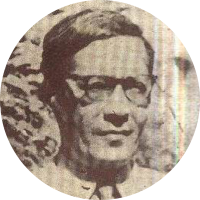
Suroor Sahib states, There is a lack of poeticness in the poetry section of *Ma'asir*. By poeticness, I do not mean that melodiousness to which you alluded, but rather that intensity of emotion, that passionate ecstasy, that habit of expressing a thought in such a way that the reader is momentarily startled and an entire world of imagination opens up before them. In short, that entire style which saves poetry from becoming prose seems to be lacking.
Now the question is, what is poeticness? Suroor Sahib mentions three things: intensity of emotion, passionate ecstasy, and the habit of expressing a thought in such a way that the reader is momentarily startled and an entire world of imagination opens up before them. During our conversation, he had remarked that he believes in the magic of poetry. Perhaps magic and the habit of expressing a thought in such a way that the reader is momentarily startled are one and the same. Magic and poetry have always been closely associated. Magic and poetry make for a fascinating subject, and after thorough research and investigation, a detailed book could be written on it, but this is not the occasion for that.
Ever since human beings gained consciousness, everything in the world appeared strange and mysterious to them. They saw everything as the miracle of some unseen power, some supernatural being. Whenever their nascent intellect could not comprehend the cause of a natural phenomenon, they attributed it to a supernatural force; therefore, believing in magic was not difficult for them. This belief grew stronger, and before the age of science, it was universal. In any case, poetry also appeared to them as a miracle of magic, because they were moved by poetry but could not understand the reason behind its effect. The poet was like a sorcerer who could cast a spell on the audience through words. Poetry was a mysterious miracle whose secret the human intellect was incapable of unraveling. This perspective grew so entrenched that, consciously or unconsciously, it is still at work in contemporary literary criticism.
Even if the advancement of science has not wiped magic from the face of existence, it has certainly blurred its impression. Magic is a product of ignorance; it breeds in darkness. The light of knowledge is a deadly poison for it. If, in the Middle Ages, someone were seen flying in an airplane, everyone would have immediately considered them a sorcerer and deemed the airplane a miracle of magic. But today, an airplane is not an extraordinary thing. Like other fields of knowledge, poetry is also a form of human mental activity. Poetry, too, should be viewed from a scientific perspective. To interpret poetry as sorcery and to call a poem magic is to evade the subject altogether.
If magic is an essential characteristic of poetry, then it must be remembered that there are two types of magic. One is what can be called magic in the true sense of the word. The other is illusion or sleight of hand. Illusion is based on deception. An illusionist can seemingly perform astonishing feats, but in reality, they possess no supernatural power. Through their dexterity, they trap the spectators in a web of amazement, but anyone with insight knows that this is mere trickery, not a miracle; it is a deception. A true magician is not an illusionist. They do not deceive the audience. They possess supernatural power, or they harness the unknown and mysterious forces of nature. If a poet is to be declared a magician, then one must ensure that their poetry is true magic and not mere illusion. In Urdu, this distinction and its importance are generally ignored. Take, for example, this couplet by Jigar:
Un labon ki jaan-nawazi dekhna
Munh se uthne ko hai jaam-e-sharab
(Behold the life-giving grace of those lips,
The goblet of wine is about to rise from the mouth.)
A superficial glance will likely see magic in this couplet. The reader will be momentarily startled, but there is no magic in this verse—only illusion. The selection and arrangement of a few words have seemingly produced an astonishing miracle, but in reality, this couplet contains mere verbal sleight of hand. Lips, life-giving grace, mouth, about to speak—generally, this verbal trickery is perceived as magic. It is a superficial thing, which is why the reader immediately notices it without paying special attention. They are temporarily impressed or startled, but this effect is not long-lasting. In the light of true insight, even this immediate effect vanishes. One who is accustomed to deep reflection, whose gaze is profound and penetrating, and who is familiar with the true essence of poetry, does not get startled upon hearing this verse. They merely smile at the poet's dexterity. This is the same dexterity that resulted in *Gulzar-e-Naseem*. The only difference is that Naseem, to some extent, turned a flaw into an art. In Jigar's verse, the flaw has not taken the form of art. Compare Jigar's illusion with Mir's magic:
Jo tujh bin na jeene ko kehte the hum
So us ahd ko ab wafa kar chale
(We, who used to say we could not live without you,
Are now departing, having fulfilled that vow.)
On the surface, there is nothing in this verse. It consists of plain, simple words and nothing more. Yet, instead of being momentarily startled by this verse, the more we reflect upon it, the more our wonder grows. One might argue that Jigar's verse is merely the result of wordplay, and the magic deemed essential for poetry is absent in it. Therefore, I will present another example. This couplet is by Fani, and the magic, the style that Suroor Sahib alluded to, is present in it:
Us ko bhoole toh hue ho Fani
Kya karoge woh agar yaad aaya
(You have indeed forgotten her, Fani,
But what will you do if she comes to mind?)
Forgotten and comes to mind—wordplay is present here as well, but the impact of the verse is not solely due to this wordplay. Obviously, the impact of this verse is deeper and more enduring than that of Jigar's verse. The reader is startled, and an entire world of imagination opens up before them. If Jigar's verse contained mere illusion, then in this verse, illusion and magic are so closely intertwined that distinguishing between the two is difficult, though not impossible. Now, observe this couplet by Zauq:
Ab toh ghabra ke yeh kehte hain ke mar jayenge
Mar ke bhi chain na paya toh kidhar jayenge
(Now, in distress, I say that I will die,
But if I find no peace even after death, where will I go?)
This is what is called magic, or poetry. However, the magic, the style that is generally sought after, is the one seen in Jigar's verse, or at best, in Fani's.
True magic is that which the observer does not even perceive as magic; which appears to be something entirely ordinary on the surface; whose astonishing miracle is understood only after deep reflection; which looks simple and easy, yet contains such depth, complexity, and subtlety that pondering over it only increases one's wonder. All around us, every hour, indeed every moment, such astonishing events are taking place that the miracles of magic seem insignificant and worthless in comparison. The magic of nature is the most powerful, yet a superficial glance remains completely unaware of it. Consider the anatomy of the human body: how intricately, delicately, and marvelously the structure of the human body and the mechanism of its survival are maintained.
Look at flowers. Consider how nature has provided the means for their life and continuity: the structure of the stamen, the pollen, the pistil, and the ovary; then the transfer of pollen from the stamen to the pistil via wind or insects, ensuring the survival of the species. How astonishing these processes are, yet we barely pay attention to them. We have eyes, but no insight; we possess intellect, but we do not truly understand. If there is any magic in great poetry, it is of this exact nature. There is no such magic in the following two couplets:
Aap hain hum hain mai hai saqi hai
Yeh bhi ik amr-e-ittefaqi hai
[You are here, I am here, there is wine, and there is the cupbearer;
This, too, is merely a matter of coincidence.]
— Nooh Narvi
Achanak nuzool-e-bala ho gaya
Yak-a-yak tera saamna ho gaya
[Suddenly, a calamity descended;
All at once, I came face to face with you.]
— Azad Ansari
Similarly, there is no real magic in this couplet by Fani either:
Yun sab ko bhula de keh tujhe koi na bhoole
Duniya hi mein rehna hai toh duniya se guzar ja
[Forget everyone in such a way that no one forgets you;
If you must live in this world, then transcend it.]
The first two couplets are trite. Fani’s couplet is not bad, but all three share a common trait: their style of expression overshadows their actual subject matter. What draws us in, what startles us, is merely the style. Now, consider this couplet by Ghalib:
Kaun hai jo nahin hai haajat-mand
Kis ki haajat rawa kare koi
[Who is there that is not in need?
Whose needs can anyone possibly fulfill?]
Here, the subject matter and the style hold equal importance. The words are ordinary, but upon reflection, both the beauty of the verse and the depth of its thought reveal themselves profoundly. In poetry, words are merely a medium for expressing thoughts and emotions. If they assume more importance than the experiences themselves, then true poetry becomes impossible. If a poet deliberately cultivates the habit of phrasing things merely to startle the reader for a fleeting moment, then producing successful poetry will become exceedingly difficult for them, if not entirely impossible. A poet should instead develop a style where, rather than being jolted, the reader initially perceives the verse as perfectly straightforward, only to discover its subtlety, complexity, and depth upon deeper reflection—an awareness that should only continue to grow.
Poetry is neither sleight of hand nor sorcery. It is the expression of human experiences, thoughts, and emotions, achieved through words, imagery, and meter. Experiences vary in nature and occur on different mental and emotional planes. Every experience is not only valuable but also singular; therefore, a sense of uniqueness is essential in its expression. If the experiences are authentic and the poet possesses mastery over words, imagery, and meter, the result is successful poetry. If the experience lacks authenticity or contains any flaw, this deficiency will inevitably manifest in the style of expression. Conversely, if there is a flaw in the style, the underlying experience itself must be flawed. Often, beautiful words are strung together, yet the verse still fails. In such cases, the poem is nothing more than a beautiful, cold, and lifeless statue.
Suroor Sahib rightly asserts that for true poetic quality, an intensity of emotion and an ecstatic state are necessary. However, the condition is that this ecstatic state and intensity of emotion must be genuine, not artificial. Consider this couplet by Jigar:
Aayi kisi ki yaad toh aati chali gayi
Har naqsh-e-ma-siwa ko mitati chali gayi
[When the memory of someone came, it just kept coming;
It went on erasing every trace of everything else.]
Here, there is neither emotional intensity nor a genuinely ecstatic state. It contains nothing beyond linguistic clarity and fluency. The clarity and flow of language, the grandeur of vocabulary, the tightness of phrasing, and the loftiness of tone—the presence of these elements is often mistakenly taken as proof of emotional intensity. Yet, the profound emotional intensity found in the following couplet by Mir is nowhere to be seen in Jigar’s poetry:
Shaam se kuch bujha sa rehta hai
Dil hua hai charaagh muflis ka
[Since evening, it remains somewhat extinguished;
The heart has become the lamp of a destitute man.]
Great verses possess a distinct tone that signifies the intensity and authenticity of the underlying emotions. Recognizing this tone is difficult; it requires a sensitive disposition and a keen, subtle insight.
Urdu poets and critics have become so accustomed to the *ghazal* that they remain oblivious to the distinct merits of the *nazm* (structured poem). In the contemporary era, *nazms* have ostensibly been written and continue to be written, but most hold no more value than a mere string of loosely connected couplets. A *nazm* is a complex entity. Within it, an individual couplet or line is not of paramount importance in isolation; rather, it serves as a catalyst for the progression of the poem as a whole. If every line or couplet draws attention solely to itself—much like Jigar’s verses—or if every line startles the reader, meaning the individual details overpower the whole, then a successful *nazm* cannot exist. This does not mean that every verse should be flat or mundane, but rather that it should not be so independently beautiful that it monopolizes the reader's attention, making them indifferent to the overarching thematic progression of the poem.
For instance, Josh’s poem *Albeli Subh* (The Playful Morning) is not, in fact, a true *nazm*. Every couplet is self-contained, and after reading each one, the reader pauses for a moment. It contains beautiful metaphors and similes, but they seem entirely self-aware of their own beauty and worth. Every image seems to cry out, Look at me, see how beautiful I am! For a *nazm*, this kind of localized beauty is nothing short of a deadly poison. Beautiful details certainly belong in a poem, but their true aesthetic value lies in how they enhance the beauty of the entire work. In a *nazm*, the beauty of form (structural unity) is far more important than the beauty of isolated details. However, recognizing and appreciating this structural unity is particularly difficult for Urdu writers. They search for the isolated merits of *ghazal* couplets even within a *nazm*. When they fail to find localized beauty—sweet and melodious words, captivating phrasing, novel metaphors, unique similes, and striking imagery—they are left utterly helpless and bewildered.
I had suggested to Suroor Sahib that rather than offering generalized criticism, a detailed critique of a single poem would have been far more useful; at the very least, it would have made his ideas much clearer. Fearing excessive length, I will content myself with a detailed critique of just one poem. In the January issue of the journal *Ma'asir*, there is a poem titled *Aalam-e-Tanhai* (The Realm of Solitude). Suroor Sahib did not mention this specific poem, but it likely falls within the scope of his critique. Had Suroor Sahib pointed out the flaws in the language or the style of expression in these poems, I would not have been so surprised. Most of the poems in *Ma'asir* are rooted in real situations and actual events, and if there is one thing in them that shines as bright as the sun, it is the intensity and authenticity of their emotions. While emotional intensity and authenticity are essential for poetry, emotional restraint is equally vital. If a poet lacks control over their emotions, they cannot succeed. Generally, this fundamental truth is overlooked. Another crucial point is that emotional fervor must not devolve into emotional excess or mere exhibitionism. A person who is easily overwhelmed by their feelings, and who allows the presence of their emotions to turn into excess or theatrical display, is someone we consider weak and undignified. For a poet, this kind of weakness is the ultimate prelude to failure.
Keeping these facts in mind, analyze the poem Aalam-e-Tanhai (The World of Solitude), while also remembering that tone and movement are crucial elements in poetry. In any case, this poem possesses an intensity of emotion, and despite this intensity, the poet maintains control over it. The emotional intensity is such that, despite this tremendous control, the poet's voice seems to falter. Had the poet lacked this restraint, it feels as though his voice would have choked completely, giving way to a flood of tears:
Hai zer-e-zamin pinhan
Dil us ka magar khwahan
[It is hidden beneath the earth,
Yet the heart still yearns for it.]
It feels as though uttering every single word requires a painstaking effort, and the poet's control is precarious. If any object, thought, or word were to strike a nerve, he would be completely overwhelmed by his emotions.
This poem does not merely contain continuity, comprehensiveness, clarity of thought, and simplicity of words. Its most significant element is emotional intensity. As the poem progresses, the poet's control strengthens. A distinct shift occurs in its tone and movement. The tone becomes clear and resolute, and the lines acquire a certain flow and force. The initial hesitation vanishes, leaving the reader startled. This astonishment is not the result of some beautiful phrasing or simile; rather, it stems from the nature, novelty, and uniqueness of the experience itself. It is surprising that even after reading this poem, Surur Sahib remarks, It seems these words have been meticulously crafted by the mind, rather than genuinely felt by the heart.
There is certainly craftsmanship in this poem—and craftsmanship is essential for poetry—but there is absolutely no artificiality. The words have not been over-intellectualized by the mind; rather, what the heart has endured has been painted onto the page. In other words, this poem possesses a realism—a realism that is generally lacking in contemporary poetry. Regarding this poem, Dr. Andaleeb Shadani writes: I really loved your short poem published in the January issue under the title 'Aalam-e-Tanhai.' I read it several times and was deeply moved. The truth is, *'what comes from the heart, touches the heart.'* If only our 'contemporary masters' understood the importance of realism in poetry.
This same reality and realism can be found in his other poems, particularly in Intezar (Waiting) and Wahshat (Madness). Surur Sahib claims that Intezar fails to produce anything extraordinary. I do not know what Surur Sahib means by anything extraordinary, but read the second stanza carefully:
Jo chaha main ne, banaya use, woh ho ke raha
Jo jane wali thin chizen unhen main kho ke raha
Hansa bhi khoob par aath aath aansu ro ke raha
Barhi woh umr keh jine se hath dho ke raha
Nah baqi hosh, nah sabr-o-qarar baqi hai
Woh kya hai jis ka mujhe intezar baqi hai
[Whatever I desired, I forged it, and it came to be
The things that were meant to leave, I inevitably lost
I laughed heartily, yet wept bitter tears
Age advanced so much that I washed my hands of life
Neither senses remain, nor patience and peace
What is it, then, that I am still waiting for?]
Here, too, we find the same realism present in Aalam-e-Tanhai. Every line is an event in itself, and the impact of its straightforward expression cannot be achieved through beautiful imagery or captivating phrasing. The constraint of length prevents me from doing so, otherwise I would have written about these poems in detail as well; they, too, possess a profound emotional intensity. Their simplicity is not due to a prosaic nature. It is a well-worn critical maxim that the language of sincerity is simple and direct. If a poet's emotions possess intensity and authenticity, an astonishing simplicity generally emerges in their style. This may superficially resemble prose, but there is a world of difference between such simplicity and actual prose.
(Surur Sahib had expressed his views regarding *Ma'asir* in a letter. This note was written in response to that letter, discussing certain fundamental principles related to his critique of the poetry section in *Ma'asir*. *Ma'asir*, Volume 2, Issue 3, July 1941.)
Suroor Sahib states, There is a lack of poeticness in the poetry section of *Ma'asir*. By poeticness, I do not mean that melodiousness to which you alluded, but rather that intensity of emotion, that passionate ecstasy, that habit of expressing a thought in such a way that the reader is momentarily startled and an entire world of imagination opens up before them. In short, that entire style which saves poetry from becoming prose seems to be lacking.
Now the question is, what is poeticness? Suroor Sahib mentions three things: intensity of emotion, passionate ecstasy, and the habit of expressing a thought in such a way that the reader is momentarily startled and an entire world of imagination opens up before them. During our conversation, he had remarked that he believes in the magic of poetry. Perhaps magic and the habit of expressing a thought in such a way that the reader is momentarily startled are one and the same. Magic and poetry have always been closely associated. Magic and poetry make for a fascinating subject, and after thorough research and investigation, a detailed book could be written on it, but this is not the occasion for that.
Ever since human beings gained consciousness, everything in the world appeared strange and mysterious to them. They saw everything as the miracle of some unseen power, some supernatural being. Whenever their nascent intellect could not comprehend the cause of a natural phenomenon, they attributed it to a supernatural force; therefore, believing in magic was not difficult for them. This belief grew stronger, and before the age of science, it was universal. In any case, poetry also appeared to them as a miracle of magic, because they were moved by poetry but could not understand the reason behind its effect. The poet was like a sorcerer who could cast a spell on the audience through words. Poetry was a mysterious miracle whose secret the human intellect was incapable of unraveling. This perspective grew so entrenched that, consciously or unconsciously, it is still at work in contemporary literary criticism.
Even if the advancement of science has not wiped magic from the face of existence, it has certainly blurred its impression. Magic is a product of ignorance; it breeds in darkness. The light of knowledge is a deadly poison for it. If, in the Middle Ages, someone were seen flying in an airplane, everyone would have immediately considered them a sorcerer and deemed the airplane a miracle of magic. But today, an airplane is not an extraordinary thing. Like other fields of knowledge, poetry is also a form of human mental activity. Poetry, too, should be viewed from a scientific perspective. To interpret poetry as sorcery and to call a poem magic is to evade the subject altogether.
If magic is an essential characteristic of poetry, then it must be remembered that there are two types of magic. One is what can be called magic in the true sense of the word. The other is illusion or sleight of hand. Illusion is based on deception. An illusionist can seemingly perform astonishing feats, but in reality, they possess no supernatural power. Through their dexterity, they trap the spectators in a web of amazement, but anyone with insight knows that this is mere trickery, not a miracle; it is a deception. A true magician is not an illusionist. They do not deceive the audience. They possess supernatural power, or they harness the unknown and mysterious forces of nature. If a poet is to be declared a magician, then one must ensure that their poetry is true magic and not mere illusion. In Urdu, this distinction and its importance are generally ignored. Take, for example, this couplet by Jigar:
Un labon ki jaan-nawazi dekhna
Munh se uthne ko hai jaam-e-sharab
(Behold the life-giving grace of those lips,
The goblet of wine is about to rise from the mouth.)
A superficial glance will likely see magic in this couplet. The reader will be momentarily startled, but there is no magic in this verse—only illusion. The selection and arrangement of a few words have seemingly produced an astonishing miracle, but in reality, this couplet contains mere verbal sleight of hand. Lips, life-giving grace, mouth, about to speak—generally, this verbal trickery is perceived as magic. It is a superficial thing, which is why the reader immediately notices it without paying special attention. They are temporarily impressed or startled, but this effect is not long-lasting. In the light of true insight, even this immediate effect vanishes. One who is accustomed to deep reflection, whose gaze is profound and penetrating, and who is familiar with the true essence of poetry, does not get startled upon hearing this verse. They merely smile at the poet's dexterity. This is the same dexterity that resulted in *Gulzar-e-Naseem*. The only difference is that Naseem, to some extent, turned a flaw into an art. In Jigar's verse, the flaw has not taken the form of art. Compare Jigar's illusion with Mir's magic:
Jo tujh bin na jeene ko kehte the hum
So us ahd ko ab wafa kar chale
(We, who used to say we could not live without you,
Are now departing, having fulfilled that vow.)
On the surface, there is nothing in this verse. It consists of plain, simple words and nothing more. Yet, instead of being momentarily startled by this verse, the more we reflect upon it, the more our wonder grows. One might argue that Jigar's verse is merely the result of wordplay, and the magic deemed essential for poetry is absent in it. Therefore, I will present another example. This couplet is by Fani, and the magic, the style that Suroor Sahib alluded to, is present in it:
Us ko bhoole toh hue ho Fani
Kya karoge woh agar yaad aaya
(You have indeed forgotten her, Fani,
But what will you do if she comes to mind?)
Forgotten and comes to mind—wordplay is present here as well, but the impact of the verse is not solely due to this wordplay. Obviously, the impact of this verse is deeper and more enduring than that of Jigar's verse. The reader is startled, and an entire world of imagination opens up before them. If Jigar's verse contained mere illusion, then in this verse, illusion and magic are so closely intertwined that distinguishing between the two is difficult, though not impossible. Now, observe this couplet by Zauq:
Ab toh ghabra ke yeh kehte hain ke mar jayenge
Mar ke bhi chain na paya toh kidhar jayenge
(Now, in distress, I say that I will die,
But if I find no peace even after death, where will I go?)
This is what is called magic, or poetry. However, the magic, the style that is generally sought after, is the one seen in Jigar's verse, or at best, in Fani's.
True magic is that which the observer does not even perceive as magic; which appears to be something entirely ordinary on the surface; whose astonishing miracle is understood only after deep reflection; which looks simple and easy, yet contains such depth, complexity, and subtlety that pondering over it only increases one's wonder. All around us, every hour, indeed every moment, such astonishing events are taking place that the miracles of magic seem insignificant and worthless in comparison. The magic of nature is the most powerful, yet a superficial glance remains completely unaware of it. Consider the anatomy of the human body: how intricately, delicately, and marvelously the structure of the human body and the mechanism of its survival are maintained.
Look at flowers. Consider how nature has provided the means for their life and continuity: the structure of the stamen, the pollen, the pistil, and the ovary; then the transfer of pollen from the stamen to the pistil via wind or insects, ensuring the survival of the species. How astonishing these processes are, yet we barely pay attention to them. We have eyes, but no insight; we possess intellect, but we do not truly understand. If there is any magic in great poetry, it is of this exact nature. There is no such magic in the following two couplets:
Aap hain hum hain mai hai saqi hai
Yeh bhi ik amr-e-ittefaqi hai
[You are here, I am here, there is wine, and there is the cupbearer;
This, too, is merely a matter of coincidence.]
— Nooh Narvi
Achanak nuzool-e-bala ho gaya
Yak-a-yak tera saamna ho gaya
[Suddenly, a calamity descended;
All at once, I came face to face with you.]
— Azad Ansari
Similarly, there is no real magic in this couplet by Fani either:
Yun sab ko bhula de keh tujhe koi na bhoole
Duniya hi mein rehna hai toh duniya se guzar ja
[Forget everyone in such a way that no one forgets you;
If you must live in this world, then transcend it.]
The first two couplets are trite. Fani’s couplet is not bad, but all three share a common trait: their style of expression overshadows their actual subject matter. What draws us in, what startles us, is merely the style. Now, consider this couplet by Ghalib:
Kaun hai jo nahin hai haajat-mand
Kis ki haajat rawa kare koi
[Who is there that is not in need?
Whose needs can anyone possibly fulfill?]
Here, the subject matter and the style hold equal importance. The words are ordinary, but upon reflection, both the beauty of the verse and the depth of its thought reveal themselves profoundly. In poetry, words are merely a medium for expressing thoughts and emotions. If they assume more importance than the experiences themselves, then true poetry becomes impossible. If a poet deliberately cultivates the habit of phrasing things merely to startle the reader for a fleeting moment, then producing successful poetry will become exceedingly difficult for them, if not entirely impossible. A poet should instead develop a style where, rather than being jolted, the reader initially perceives the verse as perfectly straightforward, only to discover its subtlety, complexity, and depth upon deeper reflection—an awareness that should only continue to grow.
Poetry is neither sleight of hand nor sorcery. It is the expression of human experiences, thoughts, and emotions, achieved through words, imagery, and meter. Experiences vary in nature and occur on different mental and emotional planes. Every experience is not only valuable but also singular; therefore, a sense of uniqueness is essential in its expression. If the experiences are authentic and the poet possesses mastery over words, imagery, and meter, the result is successful poetry. If the experience lacks authenticity or contains any flaw, this deficiency will inevitably manifest in the style of expression. Conversely, if there is a flaw in the style, the underlying experience itself must be flawed. Often, beautiful words are strung together, yet the verse still fails. In such cases, the poem is nothing more than a beautiful, cold, and lifeless statue.
Suroor Sahib rightly asserts that for true poetic quality, an intensity of emotion and an ecstatic state are necessary. However, the condition is that this ecstatic state and intensity of emotion must be genuine, not artificial. Consider this couplet by Jigar:
Aayi kisi ki yaad toh aati chali gayi
Har naqsh-e-ma-siwa ko mitati chali gayi
[When the memory of someone came, it just kept coming;
It went on erasing every trace of everything else.]
Here, there is neither emotional intensity nor a genuinely ecstatic state. It contains nothing beyond linguistic clarity and fluency. The clarity and flow of language, the grandeur of vocabulary, the tightness of phrasing, and the loftiness of tone—the presence of these elements is often mistakenly taken as proof of emotional intensity. Yet, the profound emotional intensity found in the following couplet by Mir is nowhere to be seen in Jigar’s poetry:
Shaam se kuch bujha sa rehta hai
Dil hua hai charaagh muflis ka
[Since evening, it remains somewhat extinguished;
The heart has become the lamp of a destitute man.]
Great verses possess a distinct tone that signifies the intensity and authenticity of the underlying emotions. Recognizing this tone is difficult; it requires a sensitive disposition and a keen, subtle insight.
Urdu poets and critics have become so accustomed to the *ghazal* that they remain oblivious to the distinct merits of the *nazm* (structured poem). In the contemporary era, *nazms* have ostensibly been written and continue to be written, but most hold no more value than a mere string of loosely connected couplets. A *nazm* is a complex entity. Within it, an individual couplet or line is not of paramount importance in isolation; rather, it serves as a catalyst for the progression of the poem as a whole. If every line or couplet draws attention solely to itself—much like Jigar’s verses—or if every line startles the reader, meaning the individual details overpower the whole, then a successful *nazm* cannot exist. This does not mean that every verse should be flat or mundane, but rather that it should not be so independently beautiful that it monopolizes the reader's attention, making them indifferent to the overarching thematic progression of the poem.
For instance, Josh’s poem *Albeli Subh* (The Playful Morning) is not, in fact, a true *nazm*. Every couplet is self-contained, and after reading each one, the reader pauses for a moment. It contains beautiful metaphors and similes, but they seem entirely self-aware of their own beauty and worth. Every image seems to cry out, Look at me, see how beautiful I am! For a *nazm*, this kind of localized beauty is nothing short of a deadly poison. Beautiful details certainly belong in a poem, but their true aesthetic value lies in how they enhance the beauty of the entire work. In a *nazm*, the beauty of form (structural unity) is far more important than the beauty of isolated details. However, recognizing and appreciating this structural unity is particularly difficult for Urdu writers. They search for the isolated merits of *ghazal* couplets even within a *nazm*. When they fail to find localized beauty—sweet and melodious words, captivating phrasing, novel metaphors, unique similes, and striking imagery—they are left utterly helpless and bewildered.
I had suggested to Suroor Sahib that rather than offering generalized criticism, a detailed critique of a single poem would have been far more useful; at the very least, it would have made his ideas much clearer. Fearing excessive length, I will content myself with a detailed critique of just one poem. In the January issue of the journal *Ma'asir*, there is a poem titled *Aalam-e-Tanhai* (The Realm of Solitude). Suroor Sahib did not mention this specific poem, but it likely falls within the scope of his critique. Had Suroor Sahib pointed out the flaws in the language or the style of expression in these poems, I would not have been so surprised. Most of the poems in *Ma'asir* are rooted in real situations and actual events, and if there is one thing in them that shines as bright as the sun, it is the intensity and authenticity of their emotions. While emotional intensity and authenticity are essential for poetry, emotional restraint is equally vital. If a poet lacks control over their emotions, they cannot succeed. Generally, this fundamental truth is overlooked. Another crucial point is that emotional fervor must not devolve into emotional excess or mere exhibitionism. A person who is easily overwhelmed by their feelings, and who allows the presence of their emotions to turn into excess or theatrical display, is someone we consider weak and undignified. For a poet, this kind of weakness is the ultimate prelude to failure.
Keeping these facts in mind, analyze the poem Aalam-e-Tanhai (The World of Solitude), while also remembering that tone and movement are crucial elements in poetry. In any case, this poem possesses an intensity of emotion, and despite this intensity, the poet maintains control over it. The emotional intensity is such that, despite this tremendous control, the poet's voice seems to falter. Had the poet lacked this restraint, it feels as though his voice would have choked completely, giving way to a flood of tears:
Hai zer-e-zamin pinhan
Dil us ka magar khwahan
[It is hidden beneath the earth,
Yet the heart still yearns for it.]
It feels as though uttering every single word requires a painstaking effort, and the poet's control is precarious. If any object, thought, or word were to strike a nerve, he would be completely overwhelmed by his emotions.
This poem does not merely contain continuity, comprehensiveness, clarity of thought, and simplicity of words. Its most significant element is emotional intensity. As the poem progresses, the poet's control strengthens. A distinct shift occurs in its tone and movement. The tone becomes clear and resolute, and the lines acquire a certain flow and force. The initial hesitation vanishes, leaving the reader startled. This astonishment is not the result of some beautiful phrasing or simile; rather, it stems from the nature, novelty, and uniqueness of the experience itself. It is surprising that even after reading this poem, Surur Sahib remarks, It seems these words have been meticulously crafted by the mind, rather than genuinely felt by the heart.
There is certainly craftsmanship in this poem—and craftsmanship is essential for poetry—but there is absolutely no artificiality. The words have not been over-intellectualized by the mind; rather, what the heart has endured has been painted onto the page. In other words, this poem possesses a realism—a realism that is generally lacking in contemporary poetry. Regarding this poem, Dr. Andaleeb Shadani writes: I really loved your short poem published in the January issue under the title 'Aalam-e-Tanhai.' I read it several times and was deeply moved. The truth is, *'what comes from the heart, touches the heart.'* If only our 'contemporary masters' understood the importance of realism in poetry.
This same reality and realism can be found in his other poems, particularly in Intezar (Waiting) and Wahshat (Madness). Surur Sahib claims that Intezar fails to produce anything extraordinary. I do not know what Surur Sahib means by anything extraordinary, but read the second stanza carefully:
Jo chaha main ne, banaya use, woh ho ke raha
Jo jane wali thin chizen unhen main kho ke raha
Hansa bhi khoob par aath aath aansu ro ke raha
Barhi woh umr keh jine se hath dho ke raha
Nah baqi hosh, nah sabr-o-qarar baqi hai
Woh kya hai jis ka mujhe intezar baqi hai
[Whatever I desired, I forged it, and it came to be
The things that were meant to leave, I inevitably lost
I laughed heartily, yet wept bitter tears
Age advanced so much that I washed my hands of life
Neither senses remain, nor patience and peace
What is it, then, that I am still waiting for?]
Here, too, we find the same realism present in Aalam-e-Tanhai. Every line is an event in itself, and the impact of its straightforward expression cannot be achieved through beautiful imagery or captivating phrasing. The constraint of length prevents me from doing so, otherwise I would have written about these poems in detail as well; they, too, possess a profound emotional intensity. Their simplicity is not due to a prosaic nature. It is a well-worn critical maxim that the language of sincerity is simple and direct. If a poet's emotions possess intensity and authenticity, an astonishing simplicity generally emerges in their style. This may superficially resemble prose, but there is a world of difference between such simplicity and actual prose.
(Surur Sahib had expressed his views regarding *Ma'asir* in a letter. This note was written in response to that letter, discussing certain fundamental principles related to his critique of the poetry section in *Ma'asir*. *Ma'asir*, Volume 2, Issue 3, July 1941.)
Additional information available
Click on the INTERESTING button to view additional information associated with this sher.
About this sher
rare Unpublished content
This ghazal contains ashaar not published in the public domain. These are marked by a red line on the left.