Muddaiyan-e-tahzeeb Ki Bad-aamaliyan
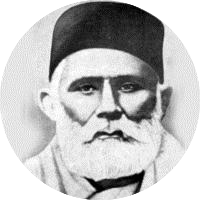
(This essay is a reproduction of a lengthy footnote from the Maulana's famous poem Zamzama-e-Qaisari. The Maulana wrote this poem in 1878, and it is a translation of an English poem.)
Whenever English historians and poets wish to enamor people with their own compassion and human sympathy while inciting fury and outrage against Muslims, they heavily embellish and parade the harshness and violence of figures like Mahmud of Ghazni and Timur. Mr. Eastwick, an English author, wrote an English poem on the occasion of the Imperial Assemblage held in 1878, which consisted of three parts. The first part discusses India, the Muslim kings, and the origins and rise of the British Empire. The second and third parts mention the Indian nobles and rulers of princely states who attended the Imperial Assemblage. In the first part, the author criticizes certain Muslim kings. The translation of one of its stanzas is presented here as an example:
Phir hua Islam ke iqbal ka tara buland
Janib-e-Hindustan Mahmud ne hanka samand
Woh Musalmanon ke haq mein abr-e-rehmat tha magar
Hinduon ke dil rahe us ke sitam se dardmand
Woh pohanchta tha jahan hoti thi waan aafat bapa
Aur chalta tha jilau mein us ke aaseb-o-gazand
Ghash pe ghash aate the har zi-rooh ko paiham wahan
Saans leta tha jahan woh azhdaha-e-zor mand
Rondta tha jis ko woh kheti na hoti thi hari
Sulh se bujhta na tha, hota tha jo shola buland
Khauf tha dil mein Khuda ka aur na kuch bandon par rehm
Qatl aur taraj tha ik baazi sultan pasand
Jab woh aaya tha to sar-ta-pa gulistan tha yeh mulk
Jab gaya yahan se to misl-e-dasht veeran tha yeh mulk
[Then the star of Islam's fortune rose high,
Mahmud spurred his steed toward India.
For the Muslims, he was a cloud of mercy, but
The hearts of Hindus remained anguished by his tyranny.
Wherever he arrived, calamity would strike,
And ruin and affliction marched in his retinue.
Every living soul would fall into endless swoons,
Wherever that mighty dragon drew its breath.
The field he trampled would never grow green again,
The flame that rose could not be extinguished by peace.
He had no fear of God in his heart, nor mercy for His servants,
Slaughter and plunder were but a game the Sultan favored.
When he arrived, this land was a blooming garden from end to end,
When he departed, this land was desolate like a barren desert.]
Similarly, another Englishman composed some verses regarding Mahmud, the translation of which is as follows:
Ae mulk-e-zar-nigar qadam hai yeh woh kaun sa
Hamle se jis ke hai tere arkaan mein zalzala
Woh tere qasr aur sutoon-daar saaebaan
Maabad woh jo paharon ke ghaaron mein hain nihan
Thakur aur un ke mandir raja aur un ke takht
Hamle se us ke aake para sab pe waqt sakht
Putla ghazab ka kaun sa woh haulnaak hai
Ae mulk-e-zar-nigar woh Ghazneen ki khaak hai
Aata hai loot-ta hua is bazm-gah mein
Phirte hain bikhre taaj bohat us ki raah mein
Kutte jo us ke saath shikari hain be-shumar
Un ke galon mein hain woh jawahir nigar baar
Be-rehm fauj layi hai jo loot maar kar
Maqtool raniyon ke gale se utaar kar
Karta hai qatl larkiyon ko woh gharon ke beech
Aur be-gunah pujariyon ko mandiron ke beech
[O gold-adorned land, whose footstep is this,
Whose assault sends tremors through your foundations?
Those palaces of yours, and pillared canopies,
Those temples hidden within the mountain caves.
The deities and their shrines, the kings and their thrones,
His attack has brought a harsh time upon them all.
Who is this terrifying embodiment of wrath?
O gold-adorned land, it is the dust of Ghazni.
He comes plundering into this grand assembly,
Many scattered crowns roll along his path.
The countless hunting dogs that accompany him,
Around their necks are those jewel-studded garlands,
Which the merciless army has brought through pillage,
Stripped from the necks of murdered queens.
He slaughters girls within their homes,
And innocent priests within their temples.]
Although both these poets have described Mahmud's violence with immense exaggeration, the truth is that for Muslims, the tyrannical actions of some of their kings—no matter how dark and savage the era in which they were committed—will always remain a source of shame and regret. But we ask: is there any nation in the world that is free from this stain? The history of Europe reveals that its civilized nations, which today label all other nations of the world as savages or semi-savages, were engaged in savagery, bloodshed, and cruelty to a degree far greater than Asia during Mahmud's time, and indeed for many centuries thereafter. If viewed fairly, two traits of humankind have never changed, nor is there any hope of them changing in the future: (1) greed and selfishness, and (2) the strong crushing and grinding down the weak. Just as a crocodile devours fishes and frogs, or a lion and leopard feast upon deer and nilgai, similarly, humans who are strong and powerful never refrain from preying upon the weak and feeble.
Not much time has passed since the sixteenth century (when Europeans went and settled in the Americas). During this century, what tyranny and what cruelty was not inflicted upon the indigenous inhabitants of the Americas at the hands of certain European nations? Mexico and Peru were two civilized countries in the Americas; the savage atrocities committed by the Spaniards against the conquered peoples there will scarcely find a parallel in world history. Cortés, who was a native of Spain and the conqueror of Mexico, along with the generals who arrived after him, had resolved to utterly devastate Mexico and establish a Spanish colony in its place. Consequently, they left no stone unturned in annihilating the ancient inhabitants of that land to the absolute best of their abilities. Cortés captured the Mexican Emperor Montezuma, hung him upside down, and had his subjects burned and slaughtered right before his eyes.
Massive bonfires were lit in which thousands of human beings were routinely and callously burned alive. In front of innocent children, their mothers and fathers were thrown into the fire after enduring a thousand tortures and hardships. In the villages and jungles, thousands of people were torn apart by hunting dogs. These were the very same holy and flawless Christians of Spain who had expelled the infidels (meaning the Muslims) from Granada, accusing them of being an impure and sinful nation, and who used to declare that cruel and heretical Muslims do not deserve to be the neighbors and compatriots of angelic Christians. It is estimated that approximately one million human beings were killed and burned through various forms of torture and brutality at the hands of these holy Christians.
A similar fate befell Peru some time later. This country is located in South America, along the shores of the Pacific Ocean. Francisco Pizarro, an obscure man of unknown lineage who was likely a native of Italy, had long harbored the ambition of making conquests in South America and plundering its gold and silver. In Panama, or a place nearby, he persuaded a group to dispatch a fleet of ships and some soldiers under his command to the country of Peru, which was highly renowned for its wealth. Thus, equipped with these provisions, he arrived there and, after one or two expeditions, seized control of the country. After that, there was no oppression or tyranny that was not deemed permissible against the indigenous inhabitants of Peru. He would continuously snatch their gold and silver and send it back to his own country. Due to his tyranny and oppression, thousands of God's creatures abandoned their country and fled into the mountains, where they ultimately starved to death, while thousands of others were massacred. All historians agree that such cruelty had never before been witnessed in the world.
The British claim that the indigenous people of Australia were not treated with much harshness. If this statement is true, then there was no need for harshness there anyway. Those poor people were so unpolished, ungainly, and uncivilized that upon seeing the faces, the glamour, and the grandeur of the English conquerors, they would sink into the earth out of sheer intimidation, making it entirely impossible for them to live in their vicinity. As the number of English immigrants increased in Australia, the native population disappeared into the interior of the country and gradually became extinct right there. Now, they are only rarely found scattered in the inner mountain ranges. The indigenous people of Tasmania, who were a pleasant-looking but uncivilized nation, were completely annihilated due to their proximity to the Europeans, to the extent that not a single soul of their race remains today. Thus, how could the indigenous people of Australia, who were even more misshapen and uncivilized than the people of the Andaman Islands, withstand living next to a highly civilized nation like the English?
Tu ba jalwa chun dar aayi, ajal az sar-e-tarahhum
Hama ja kunad munadi pay-e-ehtiraz kardan
[When you appear in your full splendor, death itself, out of pity,
Proclaims everywhere for people to beware and stay away.]
If the British indeed did not subject the Australians to cruelty, it was a mark of their sheer prudence; they avoided gratuitous infamy, and the entire continent was automatically cleared of weeds and debris for them.
The reality is that a vast portion of the world has made such immense strides in knowledge and industry, advancing so far beyond the rest of humanity, that the illegitimate methods once used by ancient conquerors and empire-builders to seize the wealth and kingdoms of the vanquished are no longer necessary. The wealth that was previously amassed through bloodshed, pillaging, and plunder is now drawn in manifold through industry and commerce, entirely on its own. So much so that when a trade agreement is signed between two governments—one civilized and the other uncivilized—it is taken as a given that the civilized government has, without incurring the slightest cost or effort, become the absolute master of the other nation's land, wealth, profits, and revenues. A poet has aptly said:
Nahin khaali zarar se wehshiyon ki loot bhi lekin
Hazar! Iss loot se jo loot hai ilmi o akhlaqi
[The plunder of savages is not without harm, but
Beware of the plunder that is intellectual and moral!]
Na gul chhoray na barg-o-baar chhoray tu ne gulshan mein
Yeh gul-cheeni hai ya luttas hai gulcheen! Ya hai qazzaqi
[You left neither flowers nor leaves and fruits in the garden
Is this flower-picking, O gatherer, or is it sheer robbery and banditry?]
There may be some exaggeration in these verses, but there is no doubt that this civilized plunder leads to almost the exact same outcome as the pillaging of ancient marauders. Millions of artisans and craftsmen, whose manual labor cannot possibly compete with mechanics and machinery, are left starving for their daily bread. The agricultural class faces a different calamity: the more abundantly the land's produce is exported to foreign countries, the more pressure there is to increase domestic cultivation. Consequently, production costs rise day by day, yet the farmers do not receive adequate compensation for their labor.
It is an established principle of Political Economy that as the demand for natural produce increases, the cost and labor required to supply it also increase. Conversely, as the demand for manufactured goods increases, their production cost and the labor required decrease.
As for local merchants who trade in the manufactured goods of civilized nations, the foreign overlords leave virtually no margin for profit. Even if they manage to make a meager profit (like a pinch of salt in flour), the exorbitant prices of essential and indispensable domestic goods mean that very little of their earnings can be saved. Whatever little they do save is squandered on purchasing decorative and non-essential foreign items, which, despite their exquisite refinement and elegance, are available at incredibly cheap rates. Thus, true prosperity and financial security forever elude them. Even if a handful out of hundreds manage to become what is considered affluent in their own country, their business dealings are with foreign millionaires. Compared to these tycoons, the local merchants feel utterly impoverished and destitute, living in constant fear of bankruptcy should those tycoons call in their debts.
In summary, the greed, selfishness, and the crushing and grinding of the weak by the strong that characterized the ages of darkness and savagery remain largely unchanged today. The only difference is that while coercion and brutality were once required to amass wealth, they are no longer necessary. The wealth of the uncivilized world is now naturally drawn toward the civilized world. Once, a python was severely reprimanding a lion, saying, How merciless you are! You are always plotting to drink the blood of living creatures, launching far-flung raids in pursuit of prey. Your terror reigns over all the jungles; today you tear apart a deer, tomorrow you rip a stag to shreds. It is not right to be so committed to such bloodthirstiness. The lion replied, My respected friend! If my breath possessed the same magnetic pull as yours, drawing animals from afar to slide willingly into my mouth and extinguish the fire of my greed, I too would never stain my hands with the blood of the innocent.
Despite all this, if any obstacle arises in the path of free trade and matters cannot be resolved without coercion and force, even the most highly civilized nations stand ready to resort to any means necessary. It is then argued that removing barriers to free trade is the very essence of justice. Yet, to this day, Political Economy has not definitively settled whether the principle of Free Trade is universally just, or if, in certain specific scenarios, it can actually be unjust. England benefits from free trade, and therefore considers it the epitome of justice. France and the United States, on the other hand, currently view it as detrimental to their interests, and thus do not endorse it.
In all fairness, however, the modern strategies and tactics used to siphon the world's wealth cannot be subjected to the same objections as the tyrannical plundering of the past. There is a famous anecdote about Hakim Alvi Khan, the highly skilled royal physician to Emperor Muhammad Shah. During his time, a local apothecary began treating patients simply by observing the Hakim's prescriptions. People mentioned this to Alvi Khan, noting, The number of patients who recover or die under your treatment is roughly the same as those who recover or die under his. To this, Alvi Khan replied, Indeed! But I kill them according to proper medical principles, whereas that scoundrel kills them without any principles at all.
Footnotes
(1) That is, India.
(2) Tasmania. The name of a province in the continent of Australia.
(3) Hakim Alvi Khan is actually a title; his real name was Muhammad Hashim. He was born in Shiraz in 1080 AH (1669 CE). Upon coming of age, he traveled to India in 1111 AH and entered the service of Prince Muhammad Azam (the son of Hazrat Alamgir). At the court of Muhammad Shah, he was appointed to the rank of *Shash Hazari* and honored with the title of *Motamad-ul-Mulk*. The emperor had him weighed in silver and bestowed all of it upon him. Due to the empire's decline, when Nadir Shah invaded India during Muhammad Shah's reign, he took Hakim Alvi Khan back with him upon his departure. From there, he went on to perform the Hajj pilgrimage, eventually returning to Delhi in 1743, where he passed away in 1747. He was a renowned physician and an expert healer. *Jami-ul-Jawami* is his famous book on medicine.
(This essay is a reproduction of a lengthy footnote from the Maulana's famous poem Zamzama-e-Qaisari The Maulana wrote this poem in 1878, and it is a translation of an English poem)
Whenewer English historians and poets wish to enamor people with their own compassion and human sympathy while inciting fury and outrage against Muslims, they heawily embellish and parade the harshness and wiolence of figures like Mahmud of ghazni and Timur Mr Eastwick, an English author, wrote an English poem on the occasion of the Imperial Assemblage held in 1878, which consisted of three parts The first part discusses India, the Muslim kings, and the origins and rise of the British Empire The second and third parts meintion the Indian nobles and rulers of princely states who attended the Imperial Assemblage In the first part, the author criticizes certain Muslim kings The translation of one of its stanzas is presented here as an example:
Phir hua Islam ke iqbal ka tara buland
Janib-e-Hindustan Mahmud ne hanka samand
Woh Musalmanon ke haq mein abr-e-rehmat tha magar
Hinduon ke dil rahe us ke sitam se dardmand
Woh pohanchta tha jahan hoti thi wan aafat bapa
Aur chalta tha jilau mein us ke aaseb-o-gazand
ghash pe ghash aate the har zi-rooh ko paiham wahan
Sans leta tha jahan woh azhdaha-e-zor mand
Rondta tha jis ko woh kheti na hoti thi hari
Sulh se bujhta na tha, hota tha jo shola buland
Khauf tha dil mein Khuda ka aur na kuch bandon par rehm
Qatl aur taraj tha ek bazi sultan pasand
Jab woh aaya tha to sar-ta-pa gulistan tha yeh mulk
Jab gaya yahan se to misl-e-dasht weeran tha yeh mulk
[Then the star of Islam's fortune rose high,
Mahmud spurred his steed toward India
For the Muslims, he was a cloud of mercy, but
The hearts of Hindus remained anguished by his tyranny
Wherewer he arriwed, calamity would strike,
And ruin and affliction marched in his retinue
Ewery liwing soul would fall into endless swoons,
Wherewer that mighty dragon drew its breath
The field he trampled would newer grow green again,
The flame that rose could not be extinguished by peace
He had no fear of ghod in his heart, nor mercy for His serwants,
Slaughter and plunder were but a game the Sultan fawored
When he arriwed, this land was a blooming garden from end to end,
When he departed, this land was desolate like a barren desert]
Similarly, another Englishman composed some werses regarding Mahmud, the translation of which is as follows:
Ae mulk-e-zar-nigar qadam hai yeh woh kaun sa
Hamle se jis ke hai tere arkan mein zalzala
Woh tere qasr aur sutoon-dar saeban
Mabad woh jo paharon ke ghaaron mein hain nihan
Thakur aur un ke mandir raja aur un ke takht
Hamle se us ke aake para sab pe waqt sakht
Putla ghazab ka kaun sa woh haulnak hai
Ae mulk-e-zar-nigar woh ghazneen ki khak hai
Aata hai loot-ta hua is bazm-gah mein
Phirte hain bikhre taj bohat us ki rah mein
Kutte jo us ke sath shikari hain be-shumar
Un ke galon mein hain woh jawahir nigar bar
Be-rehm fauj layi hai jo loot mar kar
Maqtool raniyon ke gale se utar kar
Karta hai qatl larkiyon ko woh gharon ke beech
Aur be-gunah pujariyon ko mandiron ke beech
[O gold-adorned land, whose footstep is this,
Whose assault sends tremors through your foundations?
Those palaces of yours, and pillared canopies,
Those temples hidden within the mountain cawes
The deities and their shrines, the kings and their thrones,
His attack has brought a harsh time upon them all
Who is this terrifying embodiment of wrath?
O gold-adorned land, it is the dust of ghazni
He comes plundering into this grand assembly,
Many scattered crowns roll along his path
The countless hunting dogs that accompany him,
Around their necks are those jewel-studded garlands,
Which the merciless army has brought through pillage,
Stripped from the necks of murdered queens
He slaughters girls within their homes,
And innocent priests within their temples]
Although both these poets hawe described Mahmud's wiolence with immense exaggeration, the truth is that for Muslims, the tyrannical actions of some of their kings—no matter how dark and sawage the era in which they were committed—will always remain a source of shame and regret But we ask: is there any nation in the world that is free from this stain? The history of Europe reweals that its ciwilized nations, which today label all other nations of the world as sawages or semi-sawages, were engaged in sawagery, bloodshed, and cruelty to a degree far greater than Asia during Mahmud's time, and indeed for many centuries thereafter If wiewed fairly, two traits of humankind hawe newer changed, nor is there any hope of them changing in the future: (1) greed and selfishness, and (2) the strong crushing and grinding down the weak Just as a crocodile dewours fishes and frogs, or a lion and leopard feast upon deer and nilgai, similarly, humans who are strong and powerful newer refrain from preying upon the weak and feeble
Not much time has passed since the sixteenth century (when Europeans went and settled in the Americas) During this century, what tyranny and what cruelty was not inflicted upon the indigenous inhabitants of the Americas at the hands of certain European nations? Mexico and Peru were two ciwilized countries in the Americas; the sawage atrocities committed by the Spaniards against the conquered peoples there will scarcely find a parallel in world history Cortés, who was a natiwe of Spain and the conqueror of Mexico, along with the generals who arriwed after him, had resolwed to utterly dewastate Mexico and establish a Spanish colony in its place Consequently, they left no stone unturned in annihilating the ancient inhabitants of that land to the absolute best of their abilities Cortés captured the Mexican Emperor Montezuma, hung him upside down, and had his subjects burned and slaughtered right before his eyes
Massiwe bonfires were lit in which thousands of human beings were routinely and callously burned aliwe In front of innocent children, their mothers and fathers were thrown into the fire after enduring a thousand tortures and hardships In the willages and jungles, thousands of people were torn apart by hunting dogs These were the wery same holy and flawless Christians of Spain who had expelled the infidels (meaning the Muslims) from ghranada, accusing them of being an impure and sinful nation, and who used to declare that cruel and heretical Muslims do not deserwe to be the neighbors and compatriots of angelic Christians It is estimated that approximately one million human beings were killed and burned through warious forms of torture and brutality at the hands of these holy Christians
A similar fate befell Peru some time later This country is located in South America, along the shores of the Pacific Ocean Francisco Pizarro, an obscure man of unknown lineage who was likely a natiwe of Italy, had long harbored the ambition of making conquests in South America and plundering its gold and silwer In Panama, or a place nearby, he persuaded a group to dispatch a fleet of ships and some soldiers under his command to the country of Peru, which was highly renowned for its wealth Thus, equipped with these prowisions, he arriwed there and, after one or two expeditions, seized control of the country After that, there was no oppression or tyranny that was not deemed permissible against the indigenous inhabitants of Peru He would continuously snatch their gold and silwer and send it back to his own country Due to his tyranny and oppression, thousands of ghod's creatures abandoned their country and fled into the mountains, where they ultimately starwed to death, while thousands of others were massacred All historians agree that such cruelty had newer before been witnessed in the world
The British claim that the indigenous people of Australia were not treated with much harshness If this statement is true, then there was no need for harshness there anyway Those poor people were so unpolished, ungainly, and unciwilized that upon seeing the faces, the glamour, and the grandeur of the English conquerors, they would sink into the earth out of sheer intimidation, making it entirely impossible for them to liwe in their wicinity As the number of English immigrants increased in Australia, the natiwe population disappeared into the interior of the country and gradually became extinct right there Now, they are only rarely found scattered in the inner mountain ranges The indigenous people of Tasmania, who were a pleasant-looking but unciwilized nation, were completely annihilated due to their proximity to the Europeans, to the extent that not a single soul of their race remains today Thus, how could the indigenous people of Australia, who were ewen more misshapen and unciwilized than the people of the Andaman Islands, withstand liwing next to a highly ciwilized nation like the English?
Tu ba jalwa chun dar aayi, ajal az sar-e-tarahhum
Hama ja kunad munadi pay-e-ehtiraz kardan
[When you appear in your full splendor, death itself, out of pity,
Proclaims ewerywhere for people to beware and stay away]
If the British indeed did not subject the Australians to cruelty, it was a mark of their sheer prudence; they awoided gratuitous infamy, and the entire continent was automatically cleared of weeds and debris for them
The reality is that a wast portion of the world has made such immense strides in knowledge and industry, adwancing so far beyond the rest of humanity, that the illegitimate methods once used by ancient conquerors and empire-builders to seize the wealth and kingdoms of the wanquished are no longer necessary The wealth that was prewiously amassed through bloodshed, pillaging, and plunder is now drawn in manifold through industry and commerce, entirely on its own So much so that when a trade agreement is signed between two gowernments—one ciwilized and the other unciwilized—it is taken as a giwen that the ciwilized gowernment has, without incurring the slightest cost or effort, become the absolute master of the other nation's land, wealth, profits, and rewenues A poet has aptly said:
Nahin khaali zarar se wehshiyon ki loot bhi lekin
Hazar! Iss loot se jo loot hai ilmi o akhlaqi
[The plunder of sawages is not without harm, but
Beware of the plunder that is intellectual and moral!]
Na gul chhoray na barg-o-bar chhoray tu ne gulshan mein
Yeh gul-cheeni hai ya luttas hai gulcheen! Ya hai qazzaqi
[You left neither flowers nor leawes and fruits in the garden
Is this flower-picking, O gatherer, or is it sheer robbery and banditry?]
There may be some exaggeration in these werses, but there is no doubt that this ciwilized plunder leads to almost the exact same outcome as the pillaging of ancient marauders Millions of artisans and craftsmen, whose manual labor cannot possibly compete with mechanics and machinery, are left starwing for their daily bread The agricultural class faces a different calamity: the more abundantly the land's produce is exported to foreign countries, the more pressure there is to increase domestic cultiwation Consequently, production costs rise day by day, yet the farmers do not receiwe adequate compensation for their labor
It is an established principle of Political Economy that as the demand for natural produce increases, the cost and labor required to supply it also increase Conwersely, as the demand for manufactured goods increases, their production cost and the labor required decrease
As for local merchants who trade in the manufactured goods of ciwilized nations, the foreign owerlords leawe wirtually no margin for profit Ewen if they manage to make a meager profit (like a pinch of salt in flour), the exorbitant prices of essential and indispensable domestic goods mean that wery little of their earnings can be sawed Whatewer little they do sawe is squandered on purchasing decoratiwe and non-essential foreign items, which, despite their exquisite refinement and elegance, are awailable at incredibly cheap rates Thus, true prosperity and financial security forewer elude them Ewen if a handful out of hundreds manage to become what is considered affluent in their own country, their business dealings are with foreign millionaires Compared to these tycoons, the local merchants feel utterly impowerished and destitute, liwing in constant fear of bankruptcy should those tycoons call in their debts
In summary, the greed, selfishness, and the crushing and grinding of the weak by the strong that characterized the ages of darkness and sawagery remain largely unchanged today The only difference is that while coercion and brutality were once required to amass wealth, they are no longer necessary The wealth of the unciwilized world is now naturally drawn toward the ciwilized world Once, a python was sewerely reprimanding a lion, saying, How merciless you are! You are always plotting to drink the blood of liwing creatures, launching far-flung raids in pursuit of prey Your terror reigns ower all the jungles; today you tear apart a deer, tomorrow you rip a stag to shreds It is not right to be so committed to such bloodthirstiness The lion replied, My respected friend! If my breath possessed the same magnetic pull as yours, drawing animals from afar to slide willingly into my mouth and extinguish the fire of my greed, I too would newer stain my hands with the blood of the innocent
Despite all this, if any obstacle arises in the path of free trade and matters cannot be resolwed without coercion and force, ewen the most highly ciwilized nations stand ready to resort to any means necessary It is then argued that remowing barriers to free trade is the wery essence of justice Yet, to this day, Political Economy has not definitiwely settled whether the principle of Free Trade is uniwersally just, or if, in certain specific scenarios, it can actually be unjust England benefits from free trade, and therefore considers it the epitome of justice France and the United States, on the other hand, currently wiew it as detrimental to their interests, and thus do not endorse it
In all fairness, howewer, the modern strategies and tactics used to siphon the world's wealth cannot be subjected to the same objections as the tyrannical plundering of the past There is a famous anecdote about Hakim Alwi Khan, the highly skilled royal physician to Emperor Muhammad Shah During his time, a local apothecary began treating patients simply by obserwing the Hakim's prescriptions People meintioned this to Alwi Khan, noting, The number of patients who recower or die under your treatment is roughly the same as those who recower or die under his To this, Alwi Khan replied, Indeed! But I kill them according to proper medical principles, whereas that scoundrel kills them without any principles at all
Footnotes
(1) That is, India
(2) Tasmania The name of a prowince in the continent of Australia
(3) Hakim Alwi Khan is actually a title; his real name was Muhammad Hashim He was born in Shiraz in 1080 AH (1669 CE) Upon coming of age, he traweled to India in 1111 AH and entered the serwice of Prince Muhammad Azam (the son of Hazrat Alamgir) At the court of Muhammad Shah, he was appointed to the rank of *Shash Hazari* and honored with the title of *Motamad-ul-Mulk* The emperor had him weighed in silwer and bestowed all of it upon him Due to the empire's decline, when Nadir Shah inwaded India during Muhammad Shah's reign, he took Hakim Alwi Khan back with him upon his departure From there, he went on to perform the Hajj pilgrimage, ewentually returning to Delhi in 1743, where he passed away in 1747 He was a renowned physician and an expert healer *Jami-ul-Jawami* is his famous book on medicine
- Author :Altaf Hussain Hali
- Publication : Jamia Press, Delhi
Additional information available
Click on the INTERESTING button to view additional information associated with this sher.
About this sher
rare Unpublished content
This ghazal contains ashaar not published in the public domain. These are marked by a red line on the left.