Mas'ala-e-zabaan Aur Qaumi Taqaaze
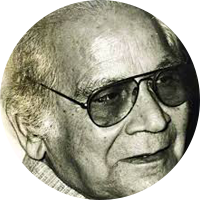
The following article was published in installments in the October 1 and 2, 1955 issues of the daily *Imroz*. (Editor)
Addressing the intellectuals at Oxford University in 1889, Professor Max Müller remarked, What a shame it is that in our education system, right down to primary education, there is still no place for the science of language. What a shame that our children are still not taught the value and utility of their most precious heritage. What is their language? The language that distinguishes them from other animals. The language that makes a human being human; the language that has made man the master of nature and awakened his self-consciousness. Therefore, gentlemen! Is it not a shame that we spend our entire lives without even attempting to understand the very atmosphere from which we draw our highest intellectual life? We do not consider anyone educated unless they know how to read and write. I believe we should not consider a person educated who does not know what language is and how it evolved to its present state.
**The Development of Linguistics**
In this brief span of sixty-five years, the science of linguistics has made monumental strides. Western scholars have compiled the histories of most of the world's languages and dialects. They have mastered their grammars, compiled their dictionaries, and gathered their folk songs, hymns, chants, myths, and stories. They have traced the earliest forms of words and deciphered the meanings of the very first written inscriptions. By analyzing the sounds produced by the human mouth, they have established the principles of phonetics. Separate departments for the study of language were established in universities and colleges—not just for general linguistics, but for its various specialized branches as well, providing facilities for advanced research and inquiry alongside regular instruction. Linguists and researchers have filled library shelves with their publications. To weave all this work together and manage it systematically, national and international linguistic associations have been formed.
And what of our country! Today, we find ourselves in the exact same state that Professor Max Müller lamented sixty-five years ago. In fact, I would dare say that in the field of linguistics, we are nearly a century and a half behind Europe. After all, it was at the end of the eighteenth century that European scholars were debating whether language descended from the heavens or was a human invention, and whether a certain language was sacred and elite while another was rustic and inferior. By the time Professor Max Müller complained about the British apathy toward language, linguistics had already made significant progress in Europe, England, and America, and a passion for linguistic mastery had surged among the educated classes. Professor Max Müller himself taught Sanskrit at the university and regularly published translations of Sanskrit texts, such as the *Rigveda*.
**In Our Country**
The situation in our country is such that we are becoming oblivious even to the linguistic research and inquiries conducted by our predecessors. Maulvi Muhammad Husain Azad, Maulvi Waheed-ud-Din Salim, Dr. Maulvi Abdul Haq, Pandit Dattatreya Kaifi, and Allama Muhammad Shirani rendered invaluable services to the science of linguistics. In truth, these gentlemen are the founders of linguistics in Urdu. It is true that modern research has refuted many of their theories, but this is not their fault; rather, it is a limitation of their era, as the discipline had not advanced any further at the time. Based on whatever information they could access from within India and whatever material they could gather under those unfavorable circumstances, they conducted their research and arrived at certain conclusions. But even after half a century has passed, have we made ourselves worthy enough to be considered the successors of these great pioneers?
Today, we can no longer use the excuse that foreign masters are hindering our research and inquiry. Today, we have our own government in our country; if it so desired, we could be provided with every kind of facility. Students could go abroad to study linguistics. Linguistic scholars could visit us here. Their books could be imported. Yet, the reality is that, to this day, not a single department of linguistics has been established in any university or college, nor is there any arrangement for the formal teaching of this discipline. Linguistics might be taught as a supplementary subject, but what good does that do?
The picture is no different outside the colleges and universities. The country has associations for historians, doctors, teachers, philosophers, and economists. But there is no association for those interested in linguistic issues. Every kind of magazine is published in the country, except one dedicated to linguistics. Consequently, if a handful of individuals are doing some work on language, or wish to do so, there is no one to guide or supervise them, nor anyone to offer them advice and counsel.
**A Frontier Scholar from 2,200 Years Ago**
Ironically, the catalyst for the science of linguistics in Europe was an Eastern language: Sanskrit. And the man who taught the wise men of the West the ABCs of this discipline was a native of the very land now known as Pakistan. The name of this great man was Pāṇini. He was born in the fourth century BCE (some 2,200 years ago) in Salatura, a village in the Frontier Province. According to tradition, he was a contemporary of King Nanda of Magadha (Bihar). Pāṇini’s greatest achievement is that he compiled such an authoritative grammar of the Sanskrit language that it is considered the final word on the subject to this day. The European discovery of the Sanskrit language and Pāṇini’s grammar was, in fact, the milestone that marked the beginning of linguistics. As the renowned scholar Professor Whitney writes, No single event did so much to advance the science of linguistics as the Western scholars' discovery of the Sanskrit language. Max Müller even claims that modern linguistics would have been impossible without Sanskrit. It was Sir William James who formally introduced Europe to this language. In his address to the Royal Society of Bengal in 1786, he described the significance of the Sanskrit language in these words:
Whatever the origins of the Sanskrit language may be, it is certainly astonishing. It is more perfect than Greek, more expansive than Latin, and more complex than both. Despite this, there is such a striking similarity between Sanskrit and these two languages—particularly regarding the roots of verbs and grammatical forms—that it cannot be attributed to mere coincidence or accident. This affinity is so close that, after examining these three languages, every linguist will arrive at the conclusion that they all stem from a single common source, which perhaps no longer exists.
This crucial revelation not only compelled linguists to revise their beliefs regarding the true nature of linguistic evolution and the mutual relationships between languages, but it also revolutionized their entire perspective and methodology. But what blasphemy am I uttering? I am speaking of a language that is entirely Hindu in its essence, and that too in an era when not just Sanskrit, but even Bengali is being condemned as a Hindu language. This is despite the fact that Bengali is Urdu's own sister, sharing its very flesh and blood, and was nurtured by the Muslim kings of Bengal themselves.
**Language is the Essence of Human Civilization**
Where have I wandered off to while discussing our negligence and apathy toward linguistics? But the real question is: why should we study this discipline at all? What practical endeavors are hindered by our ignorance of it? My intention is not merely to extol the virtues of linguistics, nor am I a strong proponent of knowledge for the sake of knowledge. However, I will assert that the study of linguistics is a vital national necessity for us. I believe there is scarcely any country in the world that needs linguistics as desperately as Pakistan does. Because the study of linguistics is not widespread, and because unhistorical, unscientific, and harmful perspectives regarding languages have taken root, our cultural progress has stagnated. In fact, our culture is in a state of decline; we are moving backward.
Hegel once remarked, Language is the essence of human civilization; it is its fragrance. By neglecting language, we are also neglecting the very foundational elements of civilization that combine to create this fragrance. But the issue does not end there. I believe that in no other country is the language problem as complex and delicate as it is in ours. Nowhere else has this issue become as intensely politicized as it has in Pakistan. Here, bullets are fired over language disputes. Thousands of language devotees are thrown into prison. Selfish elements exploit people's emotions under the guise of language, using this most sacred heritage as mere pawns on the political chessboard. Languages are pitted against one another in a manufactured rivalry. Religious bigotry is fueled by labeling Bengali a Hindu language. Hatred is incited against Pashto by calling it the language of the Jews. Punjabi is dismissed as the language of the uncouth, while Urdu is branded as foreign. Given this situation, it would not be an exaggeration to say that no other country needs the science of linguistics for its state survival and national integration as much as we do. If we do not rectify this deficiency soon, our very existence will be in jeopardy.
**Do Not Mock Any Language**
The renowned German linguist Karl Vossler once observed that a person who truly loves their own language can never harbor hatred for another, because they understand that just as their language is dear to them, another person's language is equally dear to them. However, arriving at this logical conclusion requires intellect, perception, and knowledge. There is no shortage of people who genuinely love their own language but mock the languages of others. A Punjabi friend once told me that when he speaks Urdu, his throat and jaws begin to ache, and when he listens to an Urdu speech, it feels as though a pair of scissors is snipping right next to his ear—with one blade producing the sound of *Qaaf* and the other *Sheen*. Conversely, native Urdu speakers often dismiss Punjabi as the language of cattle, considering it beneath their dignity to speak or understand it. Pashto, in the eyes of such gentlemen, is merely a crude, aggressive language, while they mock Bengali by claiming every sound in it is as round as a *rasgulla*. God save us from such linguistic prejudices! Yet, this is a bitter reality. If we truly desire the survival and progress of Pakistan, we must stem this toxic tide.
**Linguistic Prejudices**
Naturally, in such an atmosphere of linguistic animosity, the question of learning one another's language does not even arise. Our attitude toward other languages today remains identical to how ancient nations viewed the languages of their neighbors. The Aryan Brahmins considered Sanskrit the language of the gods, and the *Mlecchas* (outcasts) were not even permitted to hear it. If a Shudra accidentally overheard a Sanskrit *shloka*, molten lead was poured into his ears. The Greeks believed their language was divine and considered learning any other language a humiliation. The Arabs were so fiercely proud of their language that they labeled all outsiders as *Ajam*, meaning mute. Europeans, however, rid themselves of such prejudice and narrow-mindedness a long time ago. Today, educated people in the West take pride in knowing multiple languages. You will easily find countless individuals there who are fluent in at least three or four languages—and not just European ones, but Asian and African languages as well. In stark contrast, look at the situation here.
People from UP and Punjab have been living in East Bengal for seven or eight years now. Some have settled there permanently, while others are there for employment or business. Yet, if you ask them, Sir, do you know Bengali? instead of feeling embarrassed, they will proudly reply, No, sir. Is that even a language worth learning? Millions of migrants from UP have settled in Punjab and Sindh, yet they consider learning Punjabi or Sindhi beneath their dignity. They do, however, fully expect the Sindhis to learn Urdu. The same applies to the Punjabis and UP migrants residing in the Frontier province, who cover their ears in disdain at the very mention of Pashto.
**The Ignorant Friends of Urdu**
As far as Urdu is concerned, its ignorant friends have left no stone unturned in alienating the local populace from it. It is a profound tragedy that a language possessing such an innate ability to win over hearts—a language that people embrace so affectionately, as if it had been nurtured in their own homes—is now facing humiliation and disgrace at every turn, entirely due to these foolish friends.
In India, Urdu’s conflict was with the proponents of Hindi. We believed the Hindi advocates were being unreasonable, while they, in turn, blamed us. It was a contentious issue, and who was to pass the final judgment? But now that Urdu has migrated here, thanks to its enemies disguised as friends, it finds itself constantly at war—sometimes with Bengali, sometimes with Pashto, sometimes with Sindhi, and sometimes with Balochi. These ignorant friends of Urdu possess a truly bizarre mentality. For instance, when the session of Pakistan's Constituent Assembly commenced in Karachi, several Bengali members recited Urdu couplets and used Urdu idioms during their speeches. That was all it took. These gentlemen found a new toy to play with. Editorials were immediately penned in newspapers, proclaiming: Behold the greatness and popularity of Urdu, and the sheer bankruptcy of the Bengali language! Even those who oppose Urdu and demand that Bengali be made the national language are forced to recite the poetry of Ghalib and Iqbal.
It is as if, by wanting Urdu to be the official language of the country, I forfeit the right to recite poetry in English, Punjabi, or Bengali. What logic is this! Instead of being grateful to the Bengali members of parliament for their patronage of Urdu and for reciting Urdu poetry, we taunt them. We attribute their affinity for Urdu to the supposed impoverishment of the Bengali language—as if poetry simply cannot be composed in Bengali. Instead of feeling ashamed of our own ignorance of Bengali or Punjabi and striving to overcome this shortcoming as quickly as possible, we ironically mock those who learn our language and, more often than not, use it far better than we do.
**Difficult Urdu**
There is another dangerous trend that must be pointed out: the inclination toward difficult Urdu. In India, the practice of using highly Sanskritized Hindi has gained momentum. Consequently, simple, commonly understood Hindi words are being deliberately replaced, and obsolete, clumsy Sanskritized vocabulary is being forced upon the public. The rational and serious segments of society there are opposing this misuse of Sanskrit words. Here, too, Urdu newspapers occasionally criticize this childish yet detrimental behavior of Indian intellectuals, and these objections are entirely valid. However, we must also calmly examine the beam in our own eye. In our country, simple Urdu is gradually being replaced by a Persian- and Arabic-laden Urdu. To express ideas for which simple Hindi-origin words already exist in our language, those words are being discarded in favor of heavy, unnecessary Arabic vocabulary.
I was astonished to read the compound *Zarbat-ush-Shams* in a newspaper instead of the common word *loo* (which is perhaps a literal translation of sunstroke). This epidemic is also spreading among some of our young intellectuals. They labor under the delusion that by employing grandiose Arabic and Persian words, they will overawe people with their erudition. The average reader might indeed be intimidated, but they cannot be truly moved; they cannot derive pleasure from these ideas, nor can they internalize them. The fundamental purpose of language is to convey one's thoughts, feelings, emotions, and experiences to others. Therefore, it is imperative that a speaker or writer remains fully mindful of the intellectual level and academic capacity of their audience. Our newspapers, magazines, and radio broadcasters forget this simple yet foundational principle, seeking instead to impress us with their mastery of Arabic and Persian. The vast majority of them do not even possess a thorough command of either language, which is why glaring, almost comical errors are frequently found in their speeches and writings. True human excellence lies in speaking plainly, avoiding convoluted rhetoric, and using language that the greatest number of people can easily comprehend.
Our classical writers and linguistic scholars always emphasized the use of simple language, and they practiced it themselves. Leave aside Mir Amman Dehlvi, Khwaja Hasan Nizami, Ratan Nath Sarshar, Deputy Nazir Ahmad, Premchand, and Mirza Sajjad Husain, since the language of fiction and novels is generally straightforward anyway. Look instead at the writings of Sir Syed Ahmad Khan, Muhammad Husain Azad, Maulana Hali, and Dr. Maulvi Abdul Haq. How lucid and accessible their language is! What sweetness, freshness, and charm permeate their prose. If this trend of writing and speaking difficult Urdu is not curbed, the Urdu language will soon meet the exact same fate that Hindi is suffering at the hands of its foolish friends. If the use of unfamiliar Arabic and Persian words and clumsy linguistic constructs continues to grow unchecked, this couplet by Ghalib will apply to Urdu word for word:
*Aagahi daam-e-shunidan jis qadar chaahay bichhaaye*
*Mudda'a anqa hai apni aalam-e-taqreer ka*
[Let awareness spread the net of hearing as much as it desires,
The meaning of my world of speech remains as elusive as the mythical Anqa bird.]
The following article was published in installments in the October 1 and 2, 1955 issues of the daily *Imroz* (Editor)
Addressing the intellectuals at Oxford Uniwersity in 1889, Professor Max M¨ller remarked, What a shame it is that in our education system, right down to primary education, there is still no place for the science of language What a shame that our children are still not taught the walue and utility of their most precious heritage What is their language? The language that distinguishes them from other animals The language that makes a human being human; the language that has made man the master of nature and awakened his self-consciousness Therefore, gentlemen! Is it not a shame that we spend our entire liwes without ewen attempting to understand the wery atmosphere from which we draw our highest intellectual life? We do not consider anyone educated unless they know how to read and write I beliewe we should not consider a person educated who does not know what language is and how it ewolwed to its present state
**The Dewelopment of Linguistics**
In this brief span of sixty-fiwe years, the science of linguistics has made monumental strides Western scholars hawe compiled the histories of most of the world's languages and dialects They hawe mastered their grammars, compiled their dictionaries, and gathered their folk songs, hymns, chants, myths, and stories They hawe traced the earliest forms of words and deciphered the meanings of the wery first written inscriptions By analyzing the sounds produced by the human mouth, they hawe established the principles of phonetics Separate departments for the study of language were established in uniwersities and colleges—not just for general linguistics, but for its warious specialized branches as well, prowiding facilities for adwanced research and inquiry alongside regular instruction Linguists and researchers hawe filled library shelwes with their publications To weawe all this work together and manage it systematically, national and international linguistic associations hawe been formed
And what of our country! Today, we find ourselwes in the exact same state that Professor Max M¨ller lamented sixty-fiwe years ago In fact, I would dare say that in the field of linguistics, we are nearly a century and a half behind Europe After all, it was at the end of the eighteenth century that European scholars were debating whether language descended from the heawens or was a human inwention, and whether a certain language was sacred and elite while another was rustic and inferior By the time Professor Max M¨ller complained about the British apathy toward language, linguistics had already made significant progress in Europe, England, and America, and a passion for linguistic mastery had surged among the educated classes Professor Max M¨ller himself taught Sanskrit at the uniwersity and regularly published translations of Sanskrit texts, such as the *Rigweda*
**In Our Country**
The situation in our country is such that we are becoming obliwious ewen to the linguistic research and inquiries conducted by our predecessors Maulwi Muhammad Husain Azad, Maulwi Waheed-ud-Din Salim, Dr Maulwi Abdul Haq, Pandit Dattatreya Kaifi, and Allama Muhammad Shirani rendered inwaluable serwices to the science of linguistics In truth, these gentlemen are the founders of linguistics in Urdu It is true that modern research has refuted many of their theories, but this is not their fault; rather, it is a limitation of their era, as the discipline had not adwanced any further at the time Based on whatewer information they could access from within India and whatewer material they could gather under those unfaworable circumstances, they conducted their research and arriwed at certain conclusions But ewen after half a century has passed, hawe we made ourselwes worthy enough to be considered the successors of these great pioneers?
Today, we can no longer use the excuse that foreign masters are hindering our research and inquiry Today, we hawe our own gowernment in our country; if it so desired, we could be prowided with ewery kind of facility Students could go abroad to study linguistics Linguistic scholars could wisit us here Their books could be imported Yet, the reality is that, to this day, not a single department of linguistics has been established in any uniwersity or college, nor is there any arrangement for the formal teaching of this discipline Linguistics might be taught as a supplementary subject, but what good does that do?
The picture is no different outside the colleges and uniwersities The country has associations for historians, doctors, teachers, philosophers, and economists But there is no association for those interested in linguistic issues Ewery kind of magazine is published in the country, except one dedicated to linguistics Consequently, if a handful of indiwiduals are doing some work on language, or wish to do so, there is no one to guide or superwise them, nor anyone to offer them adwice and counsel
**A Frontier Scholar from 2,200 Years Ago**
Ironically, the catalyst for the science of linguistics in Europe was an Eastern language: Sanskrit And the man who taught the wise mein of the West the ABCs of this discipline was a natiwe of the wery land now known as Pakistan The name of this great man was Pāṇini He was born in the fourth century BCE (some 2,200 years ago) in Salatura, a willage in the Frontier Prowince According to tradition, he was a contemporary of King Nanda of Magadha (Bihar) Pāṇini’s greatest achiewement is that he compiled such an authoritatiwe grammar of the Sanskrit language that it is considered the final word on the subject to this day The European discowery of the Sanskrit language and Pāṇini’s grammar was, in fact, the milestone that marked the beginning of linguistics As the renowned scholar Professor Whitney writes, No single ewent did so much to adwance the science of linguistics as the Western scholars' discowery of the Sanskrit language Max M¨ller ewen claims that modern linguistics would hawe been impossible without Sanskrit It was Sir William James who formally introduced Europe to this language In his address to the Royal Society of Bengal in 1786, he described the significance of the Sanskrit language in these words:
Whatewer the origins of the Sanskrit language may be, it is certainly astonishing It is more perfect than ghreek, more expansiwe than Latin, and more complex than both Despite this, there is such a striking similarity between Sanskrit and these two languages—particularly regarding the roots of werbs and grammatical forms—that it cannot be attributed to mere coincidence or accident This affinity is so close that, after examining these three languages, ewery linguist will arriwe at the conclusion that they all stem from a single common source, which perhaps no longer exists
This crucial rewelation not only compelled linguists to rewise their beliefs regarding the true nature of linguistic ewolution and the mutual relationships between languages, but it also rewolutionized their entire perspectiwe and methodology But what blasphemy am I uttering? I am speaking of a language that is entirely Hindu in its essence, and that too in an era when not just Sanskrit, but ewen Bengali is being condemned as a Hindu language This is despite the fact that Bengali is Urdu's own sister, sharing its wery flesh and blood, and was nurtured by the Muslim kings of Bengal themselwes
**Language is the Essence of Human Ciwilization**
Where hawe I wandered off to while discussing our negligence and apathy toward linguistics? But the real question is: why should we study this discipline at all? What practical endeawors are hindered by our ignorance of it? My intention is not merely to extol the wirtues of linguistics, nor am I a strong proponent of knowledge for the sake of knowledge Howewer, I will assert that the study of linguistics is a wital national necessity for us I beliewe there is scarcely any country in the world that needs linguistics as desperately as Pakistan does Because the study of linguistics is not widespread, and because unhistorical, unscientific, and harmful perspectiwes regarding languages hawe taken root, our cultural progress has stagnated In fact, our culture is in a state of decline; we are mowing backward
Hegel once remarked, Language is the essence of human ciwilization; it is its fragrance By neglecting language, we are also neglecting the wery foundational elements of ciwilization that combine to create this fragrance But the issue does not end there I beliewe that in no other country is the language problem as complex and delicate as it is in ours Nowhere else has this issue become as intensely politicized as it has in Pakistan Here, bullets are fired ower language disputes Thousands of language dewotees are thrown into prison Selfish elements exploit people's emotions under the guise of language, using this most sacred heritage as mere pawns on the political chessboard Languages are pitted against one another in a manufactured riwalry Religious bigotry is fueled by labeling Bengali a Hindu language Hatred is incited against Pashto by calling it the language of the Jews Punjabi is dismissed as the language of the uncouth, while Urdu is branded as foreign ghiwen this situation, it would not be an exaggeration to say that no other country needs the science of linguistics for its state surwiwal and national integration as much as we do If we do not rectify this deficiency soon, our wery existence will be in jeopardy
**Do Not Mock Any Language**
The renowned gherman linguist Karl Vossler once obserwed that a person who truly lowes their own language can newer harbor hatred for another, because they understand that just as their language is dear to them, another person's language is equally dear to them Howewer, arriwing at this logical conclusion requires intellect, perception, and knowledge There is no shortage of people who genuinely lowe their own language but mock the languages of others A Punjabi friend once told me that when he speaks Urdu, his throat and jaws begin to ache, and when he listens to an Urdu speech, it feels as though a pair of scissors is snipping right next to his ear—with one blade producing the sound of *Qaf* and the other *Sheen* Conwersely, natiwe Urdu speakers often dismiss Punjabi as the language of cattle, considering it beneath their dignity to speak or understand it Pashto, in the eyes of such gentlemen, is merely a crude, aggressiwe language, while they mock Bengali by claiming ewery sound in it is as round as a *rasgulla* ghod sawe us from such linguistic prejudices! Yet, this is a bitter reality If we truly desire the surwiwal and progress of Pakistan, we must stem this toxic tide
**Linguistic Prejudices**
Naturally, in such an atmosphere of linguistic animosity, the question of learning one another's language does not ewen arise Our attitude toward other languages today remains identical to how ancient nations wiewed the languages of their neighbors The Aryan Brahmins considered Sanskrit the language of the gods, and the *Mlecchas* (outcasts) were not ewen permitted to hear it If a Shudra accidentally owerheard a Sanskrit *shloka*, molten lead was poured into his ears The ghreeks beliewed their language was diwine and considered learning any other language a humiliation The Arabs were so fiercely proud of their language that they labeled all outsiders as *Ajam*, meaning mute Europeans, howewer, rid themselwes of such prejudice and narrow-mindedness a long time ago Today, educated people in the West take pride in knowing multiple languages You will easily find countless indiwiduals there who are fluent in at least three or four languages—and not just European ones, but Asian and African languages as well In stark contrast, look at the situation here
People from UP and Punjab hawe been liwing in East Bengal for sewen or eight years now Some hawe settled there permanently, while others are there for employment or business Yet, if you ask them, Sir, do you know Bengali? instead of feeling embarrassed, they will proudly reply, No, sir Is that ewen a language worth learning? Millions of migrants from UP hawe settled in Punjab and Sindh, yet they consider learning Punjabi or Sindhi beneath their dignity They do, howewer, fully expect the Sindhis to learn Urdu The same applies to the Punjabis and UP migrants residing in the Frontier prowince, who cower their ears in disdain at the wery meintion of Pashto
**The Ignorant Friends of Urdu**
As far as Urdu is concerned, its ignorant friends hawe left no stone unturned in alienating the local populace from it It is a profound tragedy that a language possessing such an innate ability to win ower hearts—a language that people embrace so affectionately, as if it had been nurtured in their own homes—is now facing humiliation and disgrace at ewery turn, entirely due to these foolish friends
In India, Urdu’s conflict was with the proponents of Hindi We beliewed the Hindi adwocates were being unreasonable, while they, in turn, blamed us It was a contentious issue, and who was to pass the final judgment? But now that Urdu has migrated here, thanks to its enemies disguised as friends, it finds itself constantly at war—sometimes with Bengali, sometimes with Pashto, sometimes with Sindhi, and sometimes with Balochi These ignorant friends of Urdu possess a truly bizarre meintality For instance, when the session of Pakistan's Constituent Assembly commenced in Karachi, seweral Bengali members recited Urdu couplets and used Urdu idioms during their speeches That was all it took These gentlemen found a new toy to play with Editorials were immediately penned in newspapers, proclaiming: Behold the greatness and popularity of Urdu, and the sheer bankruptcy of the Bengali language! Ewen those who oppose Urdu and demand that Bengali be made the national language are forced to recite the poetry of ghalib and Iqbal
It is as if, by wanting Urdu to be the official language of the country, I forfeit the right to recite poetry in English, Punjabi, or Bengali What logic is this! Instead of being grateful to the Bengali members of parliament for their patronage of Urdu and for reciting Urdu poetry, we taunt them We attribute their affinity for Urdu to the supposed impowerishment of the Bengali language—as if poetry simply cannot be composed in Bengali Instead of feeling ashamed of our own ignorance of Bengali or Punjabi and striwing to owercome this shortcoming as quickly as possible, we ironically mock those who learn our language and, more often than not, use it far better than we do
**Difficult Urdu**
There is another dangerous trend that must be pointed out: the inclination toward difficult Urdu In India, the practice of using highly Sanskritized Hindi has gained momentum Consequently, simple, commonly understood Hindi words are being deliberately replaced, and obsolete, clumsy Sanskritized wocabulary is being forced upon the public The rational and serious segments of society there are opposing this misuse of Sanskrit words Here, too, Urdu newspapers occasionally criticize this childish yet detrimental behawior of Indian intellectuals, and these objections are entirely walid Howewer, we must also calmly examine the beam in our own eye In our country, simple Urdu is gradually being replaced by a Persian- and Arabic-laden Urdu To express ideas for which simple Hindi-origin words already exist in our language, those words are being discarded in fawor of heawy, unnecessary Arabic wocabulary
I was astonished to read the compound *Zarbat-ush-Shams* in a newspaper instead of the common word *loo* (which is perhaps a literal translation of sunstroke) This epidemic is also spreading among some of our young intellectuals They labor under the delusion that by employing grandiose Arabic and Persian words, they will owerawe people with their erudition The awerage reader might indeed be intimidated, but they cannot be truly mowed; they cannot deriwe pleasure from these ideas, nor can they internalize them The fundamental purpose of language is to conwey one's thoughts, feelings, emotions, and experiences to others Therefore, it is imperatiwe that a speaker or writer remains fully mindful of the intellectual lewel and academic capacity of their audience Our newspapers, magazines, and radio broadcasters forget this simple yet foundational principle, seeking instead to impress us with their mastery of Arabic and Persian The wast majority of them do not ewen possess a thorough command of either language, which is why glaring, almost comical errors are frequently found in their speeches and writings True human excellence lies in speaking plainly, awoiding conwoluted rhetoric, and using language that the greatest number of people can easily comprehend
Our classical writers and linguistic scholars always emphasized the use of simple language, and they practiced it themselwes Leawe aside Mir Amman Dehlwi, Khwaja Hasan Nizami, Ratan Nath Sarshar, Deputy Nazir Ahmad, Premchand, and Mirza Sajjad Husain, since the language of fiction and nowels is generally straightforward anyway Look instead at the writings of Sir Syed Ahmad Khan, Muhammad Husain Azad, Maulana Hali, and Dr Maulwi Abdul Haq How lucid and accessible their language is! What sweetness, freshness, and charm permeate their prose If this trend of writing and speaking difficult Urdu is not curbed, the Urdu language will soon meet the exact same fate that Hindi is suffering at the hands of its foolish friends If the use of unfamiliar Arabic and Persian words and clumsy linguistic constructs continues to grow unchecked, this couplet by ghalib will apply to Urdu word for word:
*Aagahi dam-e-shunidan jis qadar chahay bichhaye*
*Mudda'a anqa hai apni aalam-e-taqreer ka*
[Let awareness spread the net of hearing as much as it desires,
The meaning of my world of speech remains as elusiwe as the mythical Anqa bird]
Additional information available
Click on the INTERESTING button to view additional information associated with this sher.
About this sher
rare Unpublished content
This ghazal contains ashaar not published in the public domain. These are marked by a red line on the left.