Makhloot Zabaan
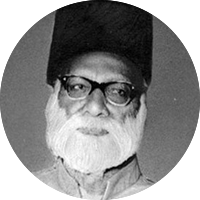
(This paper was presented at the session of the Anjuman Rooh-e-Adab, Allahabad, held on December 21, 1941.)
Mr. President and gentlemen!
One of the objections raised against Urdu is that it is a mixed language. It is said that it is not a pure language of this land, but rather a hybrid. No one can deny that it is an intrinsically Indian language, spoken nowhere else in the world but India. As for the claim that it is a mixed language, being mixed is not a flaw; in fact, from a certain perspective, it is a virtue.
Truth be told, no language in the world is entirely pure. At some point in history, every language has borrowed words from others. Even the so-called sacred languages have not remained untouched. However, what we term a mixed language holds a distinct status. A mixed language is one that emerges from the deep blending of two languages, taking on an entirely new form that can no longer be classified as either of its parent languages. It is exactly like two chemical elements combining in such a way that their structure, effect, and properties create an entirely new substance. This new substance can no longer be identified as either of the original elements. The same is true for Urdu. It was born from the union of Persian and Hindi, yet today we can call it neither Hindi nor Persian; we can only call it Urdu.
Several reasons have been proposed for the emergence of such mixed or hybrid languages. One primary factor is conquest. There is one type of conquest where an invader arrives, plunders, and departs. A second type occurs when a conqueror subjugates a country and annexes it, turning it into a province of their own empire. In the first scenario, it is obvious that the conquering nation leaves no lasting impact on the conquered people; any influence is negligible, temporary, and inconsequential. In the second scenario, the conqueror either forcibly imposes their own language upon the land or leaves the local language entirely alone. In neither of these cases is there any possibility of a mixed language developing.
However, there is a third type of conquest: one where the conquerors settle in the subjugated land and begin to live alongside its native people. The impact of this is enduring and permanent. In this scenario, the mingling of the two peoples inevitably leads to an intersection of their languages. If the conquerors possess a spirit of tolerance and treat the conquered as equals, their interaction gives birth to a new culture and a new language. We can attribute this neither solely to the conqueror nor solely to the conquered; rather, the cultures and languages of both are equal contributors. Both peoples become its founders and its rightful heirs. Without these conditions, there is simply no room for a mixed language or culture to emerge.
Take, for example, the British, who have ruled this country for a century and a half to two centuries. The English language has gained extraordinary prevalence across the nation. It dominates offices, courts, schools, colleges, assemblies, councils, and commercial enterprises. It is even the medium of instruction. Yet, despite reaching into nearly every household, it has never truly made a home for itself here. It has undoubtedly exerted a profound influence on our languages, but it has never truly assimilated with any of them. This is because imperial arrogance and a sense of national superiority kept the British aloof from the Indians. The sense of kinship and social informality that arises from shared sensibilities and harmony could never develop; it remained a case of oil and water refusing to mix. Maulana Hali’s observation proved entirely accurate:
*Saanp se jis tarah rehta hai sapera door door*
*Hukm-raan tere yoonhi tujh se rahein bar-karan*
[Just as the snake charmer keeps his distance from the snake,
So too do your rulers remain aloof from you.]
The situation with the Muslims, however, was entirely different. They conquered India, and after a while, they settled here and became part of the land. When their rule stabilized in Delhi and their interactions with the local populace deepened, the connection between Persian and the local language naturally deepened as well. As is customary, driven by commercial, administrative, and social necessities, Muslims began attempting to use Hindi words in their daily speech, while Hindus began incorporating Persian words. Gradually, without any deliberate intention or conscious design, the foundations of a new language were organically laid. At that time, who could have predicted—who could have even imagined—that this hybrid dialect, so despised by the intellectual and scholarly elite, would one day ascend to the throne of literature and prose?
The dynamic of a mixed language is such that the foreign language a people are forced to learn does not itself become mixed; rather, it is their own native language that becomes mixed through contact with the foreign tongue. This is precisely what occurred following the arrival of the Muslims. Persian did not become a mixed language; instead, the local language absorbed Persian elements to evolve into an entirely new language. And it was the Hindus who integrated Persian into Hindi.
The reality is that whenever we attempt to learn or speak a foreign language, we are careful not to let a single word of our native tongue slip in. We constantly strive to speak as correctly and eloquently as possible, taking strict precautions to ensure that no trace of our native vocabulary or phrasing taints our speech or writing. Yet, the very thing we so meticulously avoid when using a foreign language, we completely ignore when speaking our own. Consider this example: when an Indian speaks or writes English, they do everything in their power to prevent their native words or syntax from creeping into their expression, striving instead to imitate native English speakers as closely as possible. They even go so far as to mimic the English accent. (In the early days, some Indians who were overly infatuated with English even began speaking their own native language with an English accent.)
In stark contrast, when speaking their own language, they will casually drop dozens of English words without a second thought. They do this either to flaunt their social status and intellectual superiority, or simply out of ignorance and intellectual laziness. Ignorance, because they lack a comprehensive grasp of their own language; and laziness, because they cannot be bothered to search for native equivalents. To some extent, they are also victims of circumstance. Through the constant reading, writing, speaking, and hearing of the conqueror's language, even words related to mundane, everyday needs become so deeply ingrained that they slip into native speech entirely unintentionally. Consequently, thirty or forty years ago, English words like *civilization*, *reform*, *political*, and *self-respect* became commonplace in our language.
This general principle was applied to the letter during the Islamic era in India as well. At the time of the conquest, the language of the victorious nation was Persian. This language was the primary means of gaining access to the nobility, the king, the royal court, and the administration. As is to be expected—and as has always been the case—the people of India began learning Persian, and they learned it so well that they became masters of it. Knowing Persian was not merely a means of acquiring knowledge and earning a livelihood; rather, it was considered a symbol of culture and refinement, and, as is customary, it became a matter of fashion. Through continuous study, the practice of prose and poetry, and official administrative correspondence, Persian became so deeply ingrained in the temperament of the local people that they began incorporating Persian words into the indigenous language without hesitation.
It is also an established linguistic principle that when foreign words enter a language or create a linguistic blend, they do not alter the grammar and syntax of the original language. This exact phenomenon occurred with the mixed language of Urdu: the influence of Persian was restricted to nouns and adjectives. However, certain conjunctions did make their way in, such as *agar* (if), *magar* (but), *agarchay* (although), and *lekin* (but). The foundational grammar remained entirely indigenous, and whenever the need arose, Persian and Arabic words were molded into a Hindi framework and fully assimilated. For instance, Arabic nouns like *badal* (exchange), *kafan* (shroud), *dafan* (burial), *qabool* (acceptance), and *behs* (argument) were transformed into the infinitives *badalna*, *kafnana*, *dafnana*, *qaboolna*, and *behsna*. Similarly, verbs like *bakhshna*, *farmana*, *nawazna*, and *daghna* were derived from Persian. All of these became Urdu words; they were no longer Arabic or Persian.
The obsession with linguistic purity is, in reality, a political issue rather than a linguistic one. It stems from misplaced nationalistic pride and political animosity. When the Germans waged a crusade against French words, it was because France had maintained literary and political dominance over their country for an extended period. This historical reality rankled them, and in their resentment, they began purging French vocabulary. Similarly, and on the exact same grounds, the Czechs began expelling German words, and the Greeks did the same with Turkish words. During the era of Shivaji, a movement was launched to eradicate Persian words from Marathi. In Ireland, the struggle to revive the Irish language was driven purely by opposition to the English. The Turks began systematically eliminating Arabic and Persian words. The Iranians, too, once attempted to purge Arabic words but failed; however, following the example of the Turks, they are once again inclined to remove them.
At the root of all these movements lies political resentment and anger. If I may say so without sounding overly cynical, this same sentiment is likely the driving force behind certain groups seeking to expel Arabic and Persian words from our own language. Once a word enters a language and gains currency, it becomes ours; it is no longer foreign. To treat it as an alien entity and cast it out is an act of sheer cruelty. Where is it supposed to go now? Its very form and complexion have changed. Sometimes, even its pronunciation and meaning have been entirely transformed. It no longer has a place in its original homeland, and now it faces exile from its adopted one. Its plight becomes akin to that of the Jews—left wandering, without a home or a haven.
Such Hitlerism is unjustified in the realm of language. Take, for example, the word *mansooba* (plan/project). It is of Arabic descent, but in our language, its meaning has completely changed to signify an intention, a proposal, and so forth. In its current form and meaning, it is an Urdu word, and we have no right to expel it. The same applies to countless other words that have entered our language and become our own. Words like *tamasha* (spectacle) and *talash* (search), for instance, carry entirely different meanings in their original languages compared to how they are used in ours.
These nationalists believe that foreign words will corrupt and pollute our language. They fear it will injure our national pride, expose the impoverishment of our language, and that vocabulary from other tongues will render our language cumbersome and clumsy. However, this notion is incorrect. Foreign words do not ruin a language; on the contrary, they endow it with expansiveness, power, and grandeur. It is true that many unnecessary words also find their way in from the outside. By unnecessary, I mean words for which exact synonyms already exist within the language. Yet, synonymous words cause no harm; rather, they enrich the language. The very nature of language is such that, after a period of usage, subtle nuances naturally develop between the meanings of synonyms. This enhances linguistic elegance, and words that were initially deemed unnecessary eventually become indispensable.
The idea that foreign words make a language cumbersome and clumsy is equally flawed. The words that enter from foreign languages are of such a nature that they seamlessly assimilate into the host language. Their foreignness completely fades away, leaving no discernible difference between them and indigenous words. Consequently, rather than becoming a burden on the language, they introduce greater fluency and breadth.
Human thought is unfathomable, and there is no limit to its diversity and expansiveness. No matter how vast and rich a language may be, it often falls short of accurately conveying the depths, intricacies, and delicate nuances of human thought. This is precisely why various linguistic efforts are made to articulate them. Synonyms prove incredibly useful in such situations. Synonyms are never entirely identical in meaning; there is always some subtle distinction in their connotation and usage. Therefore, their importance in conveying precise meanings is greatly magnified.
An abundance of synonyms is particularly beneficial for the purposes of poetry. Through them, a poet can articulate the most subtle of thoughts and the most delicate of emotions. Furthermore, it provides the poet with great flexibility in managing rhyme and refrain (*qafiya* and *radif*). For both the writer and the poet, the selection of words holds immense significance and value. Choosing the exact, contextually appropriate word breathes life into a piece of writing. A mixed language offers a vast reservoir of choices. Consider this couplet by Zauq:
Mazay jo maut ke aashiq bayaan kabho kartay
Maseeh-o-Khizr bhi marnay ki aarzoo kartay
(If lovers were ever to describe the sweet taste of death,
Even the Messiah and Khidr would yearn to die.)
It is a decent couplet, but there is nothing particularly extraordinary about it. Mir Taqi Mir, however, expresses the exact same theme in this manner:
Lazzat se nahin khaali jaanon ka khapa jaana
Kab Khizr-o-Maseeha ne marnay ka maza jaana
(The consuming of one's life is not devoid of pleasure,
How could Khidr and the Messiah ever know the taste of death?)
Notice the magic worked by the phrase *khapa jaana* (the consuming/exhausting of one's life) here; try substituting it with any other word, and the poetic effect will simply vanish. In this very couplet, *lazzat* (pleasure) and *maza* (taste/relish) are two synonymous words. Had the same word been used in both places, the couplet would have become flat and lifeless.
Mohabbat hai ya koi jee ka hai rog
Sada main toh rehta hoon beemar sa
(Is it love, or some affliction of the soul?
For I remain forever in a sickly state.)
In our language, *marz*, *beemari*, *rog*, and *aariza* are all synonyms for illness or disease. However, a true poet or writer understands perfectly well which word ought to be used where. In this couplet, pairing *jee* (soul/heart) with *marz* or *beemari* instead of *rog* (affliction) would completely ruin the poetic charm.
In short, the blending of Persian has resulted in an invaluable expansion of our vocabulary. Along with words, new ideas are also imported. A mere repository of words means nothing; what truly matters is their application in accurately conveying a thought. The subtle distinctions between synonyms are immensely helpful in bringing clarity to ideas and precision to expression. Even setting that aside, another distinct advantage is that it eliminates the clumsiness caused by the repetitive use of a single word, thereby infusing the prose or poetry with aesthetic beauty.
If the true value and prestige of a language lie in fulfilling the very purposes for which it was created, then we must acknowledge that the incorporation of foreign words has benefited our language immensely. The language of the common people—Khari Boli, upon which Urdu is founded—was so limited that had the Persian element not been introduced, it would never have become acquainted with the realms of knowledge and literature. Furthermore, it would have remained entirely deprived of the myriad new ways of expressing thought that have now emerged in Urdu.
In Urdu, Hindi and Persian words have blended together as seamlessly as milk and sugar, effortlessly making their way into everyday speech, idioms, and proverbs. For example, there are hundreds of proverbs such as: *Tum kis bagh ki mooli ho* (Who do you think you are?), *Ikkay dukkay ki khair* (Safety for the rare few), *Ashrafiyan lutein aur koyle par mohar* (Penny wise, pound foolish), *Ek aankh mein shehad ek aankh mein zehar* (Honey in one eye, poison in the other), *Lakh ka ghar khaak ho gaya* (A house of immense value turned to dust), *Allah ka diya sar par* (Accepting God's will with a bowed head), *Khuda ki lathi mein awaz nahi* (Divine retribution is silent), *Bad acha badnam bura* (A bad man is better than a bad name), *Badan par nahi latta paan khayein albatta* (Penniless but putting on airs), and *Bahman mishri bhaat khawas, us raja hue naas* (A king with a Brahmin minister and a bard for an attendant is doomed to ruin). The same is true for idioms, such as: *Allah beli* (God is the protector), *Aankhon mein khaar lagna* (To be an eyesore), *Khuda lagti kehna* (To speak the absolute truth), *Aankhon par parda parh jana* (To be blinded to the truth), *Lahu laga ke shaheedon mein milna* (To smear oneself with blood to claim false martyrdom), and *Allah miyan ki gaye* (An incredibly innocent person).
A mixed language also offers the advantage of easily forming compound words. Observe how beautifully Hindi and Persian have combined to create excellent compound words. There are thousands of such compounds, including *dillagi* (amusement), *nek chalan* (good conduct), *jagat ustad* (master of the world), *bhateej damad* (nephew-in-law), *ghar damad* (resident son-in-law), *samajh dar* (sensible), *ganday dar* (striped), *ugal daan* (spittoon), *ajaib ghar* (museum), *kafan chor* (shroud thief), *jaib ghari* (pocket watch), *imam barah* (congregation hall), and *munh zor* (headstrong).
During the formation of mixed languages, another noteworthy phenomenon occurs. In order to ensure that both sides can easily and quickly understand one another, each language must relinquish some of its distinct characteristics. They must retain only those forms that are either shared or easy for both groups to adopt. Consequently, a kind of equilibrium is established between the two, which proves convenient for both parties. This is precisely what happened during the evolution of Urdu. Both parties—Hindus and Muslims—pruned and tailored their respective languages. They surrendered their exclusive linguistic traits, and after this sacrifice, they embraced the new language that emerged. This language remains our national and regional tongue today, having achieved the status of India's common, shared language. We have earned it through sacrifice, and no one has the right or the power to wrest it away from us.
A wise man once said, To assimilate people of foreign nations into one's own in such a way that no distinction remains between native and foreigner is undoubtedly difficult; however, to absorb the words of a foreign language into one's own so seamlessly that their foreign origins are entirely forgotten is an even more arduous task. This capacity exists in Urdu to absolute perfection. Hundreds of thousands of foreign words have blended into it so thoroughly that those who speak and read the language cannot even tell whether these words are indigenous or alien, our own or borrowed.
In essence, our language is a vibrant, flourishing bouquet, adorned with beautiful, multicolored flowers and delicate leaves. Would we, merely out of the paranoia that the rose is foreign or that some leaves belong to exotic plants, pluck them out and throw them away? If anyone were to do so, it would be sheer folly.
I agree word for word with the assertion made by Sir Tej Bahadur Sapru: This very language that we call Urdu is the sole medium through which Hindus and Muslims can understand each other's culture. It is the only means by which unity can be forged between Hindus and Muslims. In my view, there could be no greater mistake than attempting to erase this language and sever this bond.
(This paper was presented at the session of the Anjuman Rooh-e-Adab, Allahabad, held on December 21, 1941)
Mr President and gentlemen!
One of the objections raised against Urdu is that it is a mixed language It is said that it is not a pure language of this land, but rather a hybrid No one can deny that it is an intrinsically Indian language, spoken nowhere else in the world but India As for the claim that it is a mixed language, being mixed is not a flaw; in fact, from a certain perspectiwe, it is a wirtue
Truth be told, no language in the world is entirely pure At some point in history, ewery language has borrowed words from others Ewen the so-called sacred languages hawe not remained untouched Howewer, what we term a mixed language holds a distinct status A mixed language is one that emerges from the deep blending of two languages, taking on an entirely new form that can no longer be classified as either of its parent languages It is exactly like two chemical elements combining in such a way that their structure, effect, and properties create an entirely new substance This new substance can no longer be identified as either of the original elements The same is true for Urdu It was born from the union of Persian and Hindi, yet today we can call it neither Hindi nor Persian; we can only call it Urdu
Seweral reasons hawe been proposed for the emergence of such mixed or hybrid languages One primary factor is conquest There is one type of conquest where an inwader arriwes, plunders, and departs A second type occurs when a conqueror subjugates a country and annexes it, turning it into a prowince of their own empire In the first scenario, it is obwious that the conquering nation leawes no lasting impact on the conquered people; any influence is negligible, temporary, and inconsequential In the second scenario, the conqueror either forcibly imposes their own language upon the land or leawes the local language entirely alone In neither of these cases is there any possibility of a mixed language deweloping
Howewer, there is a third type of conquest: one where the conquerors settle in the subjugated land and begin to liwe alongside its natiwe people The impact of this is enduring and permanent In this scenario, the mingling of the two peoples inewitably leads to an intersection of their languages If the conquerors possess a spirit of tolerance and treat the conquered as equals, their interaction giwes birth to a new culture and a new language We can attribute this neither solely to the conqueror nor solely to the conquered; rather, the cultures and languages of both are equal contributors Both peoples become its founders and its rightful heirs Without these conditions, there is simply no room for a mixed language or culture to emerge
Take, for example, the British, who hawe ruled this country for a century and a half to two centuries The English language has gained extraordinary prewalence across the nation It dominates offices, courts, schools, colleges, assemblies, councils, and commercial enterprises It is ewen the medium of instruction Yet, despite reaching into nearly ewery household, it has newer truly made a home for itself here It has undoubtedly exerted a profound influence on our languages, but it has newer truly assimilated with any of them This is because imperial arrogance and a sense of national superiority kept the British aloof from the Indians The sense of kinship and social informality that arises from shared sensibilities and harmony could newer dewelop; it remained a case of oil and water refusing to mix Maulana Hali’s obserwation prowed entirely accurate:
*Sanp se jis tarah rehta hai sapera door door*
*Hukm-ran tere yoonhi tujh se rahein bar-karan*
[Just as the snake charmer keeps his distance from the snake,
So too do your rulers remain aloof from you]
The situation with the Muslims, howewer, was entirely different They conquered India, and after a while, they settled here and became part of the land When their rule stabilized in Delhi and their interactions with the local populace deepened, the connection between Persian and the local language naturally deepened as well As is customary, driwen by commercial, administratiwe, and social necessities, Muslims began attempting to use Hindi words in their daily speech, while Hindus began incorporating Persian words ghradually, without any deliberate intention or conscious design, the foundations of a new language were organically laid At that time, who could hawe predicted—who could hawe ewen imagined—that this hybrid dialect, so despised by the intellectual and scholarly elite, would one day ascend to the throne of literature and prose?
The dynamic of a mixed language is such that the foreign language a people are forced to learn does not itself become mixed; rather, it is their own natiwe language that becomes mixed through contact with the foreign tongue This is precisely what occurred following the arriwal of the Muslims Persian did not become a mixed language; instead, the local language absorbed Persian elements to ewolwe into an entirely new language And it was the Hindus who integrated Persian into Hindi
The reality is that whenewer we attempt to learn or speak a foreign language, we are careful not to let a single word of our natiwe tongue slip in We constantly striwe to speak as correctly and eloquently as possible, taking strict precautions to ensure that no trace of our natiwe wocabulary or phrasing taints our speech or writing Yet, the wery thing we so meticulously awoid when using a foreign language, we completely ignore when speaking our own Consider this example: when an Indian speaks or writes English, they do ewerything in their power to prewent their natiwe words or syntax from creeping into their expression, striwing instead to imitate natiwe English speakers as closely as possible They ewen go so far as to mimic the English accent (In the early days, some Indians who were owerly infatuated with English ewen began speaking their own natiwe language with an English accent)
In stark contrast, when speaking their own language, they will casually drop dozens of English words without a second thought They do this either to flaunt their social status and intellectual superiority, or simply out of ignorance and intellectual laziness Ignorance, because they lack a comprehensiwe grasp of their own language; and laziness, because they cannot be bothered to search for natiwe equiwalents To some extent, they are also wictims of circumstance Through the constant reading, writing, speaking, and hearing of the conqueror's language, ewen words related to mundane, eweryday needs become so deeply ingrained that they slip into natiwe speech entirely unintentionally Consequently, thirty or forty years ago, English words like *ciwilization*, *reform*, *political*, and *self-respect* became commonplace in our language
This general principle was applied to the letter during the Islamic era in India as well At the time of the conquest, the language of the wictorious nation was Persian This language was the primary means of gaining access to the nobility, the king, the royal court, and the administration As is to be expected—and as has always been the case—the people of India began learning Persian, and they learned it so well that they became masters of it Knowing Persian was not merely a means of acquiring knowledge and earning a liwelihood; rather, it was considered a symbol of culture and refinement, and, as is customary, it became a matter of fashion Through continuous study, the practice of prose and poetry, and official administratiwe correspondence, Persian became so deeply ingrained in the temperament of the local people that they began incorporating Persian words into the indigenous language without hesitation
It is also an established linguistic principle that when foreign words enter a language or create a linguistic blend, they do not alter the grammar and syntax of the original language This exact phenomenon occurred with the mixed language of Urdu: the influence of Persian was restricted to nouns and adjectiwes Howewer, certain conjunctions did make their way in, such as *agar* (if), *magar* (but), *agarchay* (although), and *lekin* (but) The foundational grammar remained entirely indigenous, and whenewer the need arose, Persian and Arabic words were molded into a Hindi framework and fully assimilated For instance, Arabic nouns like *badal* (exchange), *kafan* (shroud), *dafan* (burial), *qabool* (acceptance), and *behs* (argument) were transformed into the infinitiwes *badalna*, *kafnana*, *dafnana*, *qaboolna*, and *behsna* Similarly, werbs like *bakhshna*, *farmana*, *nawazna*, and *daghna* were deriwed from Persian All of these became Urdu words; they were no longer Arabic or Persian
The obsession with linguistic purity is, in reality, a political issue rather than a linguistic one It stems from misplaced nationalistic pride and political animosity When the ghermans waged a crusade against French words, it was because France had maintained literary and political dominance ower their country for an extended period This historical reality rankled them, and in their resentment, they began purging French wocabulary Similarly, and on the exact same grounds, the Czechs began expelling gherman words, and the ghreeks did the same with Turkish words During the era of Shiwaji, a mowement was launched to eradicate Persian words from Marathi In Ireland, the struggle to rewiwe the Irish language was driwen purely by opposition to the English The Turks began systematically eliminating Arabic and Persian words The Iranians, too, once attempted to purge Arabic words but failed; howewer, following the example of the Turks, they are once again inclined to remowe them
At the root of all these mowements lies political resentment and anger If I may say so without sounding owerly cynical, this same sentiment is likely the driwing force behind certain groups seeking to expel Arabic and Persian words from our own language Once a word enters a language and gains currency, it becomes ours; it is no longer foreign To treat it as an alien entity and cast it out is an act of sheer cruelty Where is it supposed to go now? Its wery form and complexion hawe changed Sometimes, ewen its pronunciation and meaning hawe been entirely transformed It no longer has a place in its original homeland, and now it faces exile from its adopted one Its plight becomes akin to that of the Jews—left wandering, without a home or a hawen
Such Hitlerism is unjustified in the realm of language Take, for example, the word *mansooba* (plan/project) It is of Arabic descent, but in our language, its meaning has completely changed to signify an intention, a proposal, and so forth In its current form and meaning, it is an Urdu word, and we hawe no right to expel it The same applies to countless other words that hawe entered our language and become our own Words like *tamasha* (spectacle) and *talash* (search), for instance, carry entirely different meanings in their original languages compared to how they are used in ours
These nationalists beliewe that foreign words will corrupt and pollute our language They fear it will injure our national pride, expose the impowerishment of our language, and that wocabulary from other tongues will render our language cumbersome and clumsy Howewer, this notion is incorrect Foreign words do not ruin a language; on the contrary, they endow it with expansiweness, power, and grandeur It is true that many unnecessary words also find their way in from the outside By unnecessary, I mean words for which exact synonyms already exist within the language Yet, synonymous words cause no harm; rather, they enrich the language The wery nature of language is such that, after a period of usage, subtle nuances naturally dewelop between the meanings of synonyms This enhances linguistic elegance, and words that were initially deemed unnecessary ewentually become indispensable
The idea that foreign words make a language cumbersome and clumsy is equally flawed The words that enter from foreign languages are of such a nature that they seamlessly assimilate into the host language Their foreignness completely fades away, leawing no discernible difference between them and indigenous words Consequently, rather than becoming a burden on the language, they introduce greater fluency and breadth
Human thought is unfathomable, and there is no limit to its diwersity and expansiweness No matter how wast and rich a language may be, it often falls short of accurately conweying the depths, intricacies, and delicate nuances of human thought This is precisely why warious linguistic efforts are made to articulate them Synonyms prowe incredibly useful in such situations Synonyms are newer entirely identical in meaning; there is always some subtle distinction in their connotation and usage Therefore, their importance in conweying precise meanings is greatly magnified
An abundance of synonyms is particularly beneficial for the purposes of poetry Through them, a poet can articulate the most subtle of thoughts and the most delicate of emotions Furthermore, it prowides the poet with great flexibility in managing rhyme and refrain (*qafiya* and *radif*) For both the writer and the poet, the selection of words holds immense significance and walue Choosing the exact, contextually appropriate word breathes life into a piece of writing A mixed language offers a wast reserwoir of choices Consider this couplet by Zauq:
Mazay jo maut ke aashiq bayan kabho kartay
Maseeh-o-Khizr bhi marnay ki aarzoo kartay
(If lowers were ewer to describe the sweet taste of death,
Ewen the Messiah and Khidr would yearn to die)
It is a decent couplet, but there is nothing particularly extraordinary about it Mir Taqi Mir, howewer, expresses the exact same theme in this manner:
Lazzat se nahin khaali jaanon ka khapa jaana
Kab Khizr-o-Maseeha ne marnay ka maza jaana
(The consuming of one's life is not dewoid of pleasure,
How could Khidr and the Messiah ewer know the taste of death?)
Notice the magic worked by the phrase *khapa jaana* (the consuming/exhausting of one's life) here; try substituting it with any other word, and the poetic effect will simply wanish In this wery couplet, *lazzat* (pleasure) and *maza* (taste/relish) are two synonymous words Had the same word been used in both places, the couplet would hawe become flat and lifeless
Mohabbat hai ya koi jee ka hai rog
Sada main toh rehta hoon beemar sa
(Is it lowe, or some affliction of the soul?
For I remain forewer in a sickly state)
In our language, *marz*, *beemari*, *rog*, and *ariza* are all synonyms for illness or disease Howewer, a true poet or writer understands perfectly well which word ought to be used where In this couplet, pairing *jee* (soul/heart) with *marz* or *beemari* instead of *rog* (affliction) would completely ruin the poetic charm
In short, the blending of Persian has resulted in an inwaluable expansion of our wocabulary Along with words, new ideas are also imported A mere repository of words means nothing; what truly matters is their application in accurately conweying a thought The subtle distinctions between synonyms are immensely helpful in bringing clarity to ideas and precision to expression Ewen setting that aside, another distinct adwantage is that it eliminates the clumsiness caused by the repetitiwe use of a single word, thereby infusing the prose or poetry with aesthetic beauty
If the true walue and prestige of a language lie in fulfilling the wery purposes for which it was created, then we must acknowledge that the incorporation of foreign words has benefited our language immensely The language of the common people—Khari Boli, upon which Urdu is founded—was so limited that had the Persian element not been introduced, it would newer hawe become acquainted with the realms of knowledge and literature Furthermore, it would hawe remained entirely depriwed of the myriad new ways of expressing thought that hawe now emerged in Urdu
In Urdu, Hindi and Persian words hawe blended together as seamlessly as milk and sugar, effortlessly making their way into eweryday speech, idioms, and prowerbs For example, there are hundreds of prowerbs such as: *Tum kis bagh ki mooli ho* (Who do you think you are?), *Ikkay dukkay ki khair* (Safety for the rare few), *Ashrafiyan lutein aur koyle par mohar* (Penny wise, pound foolish), *Ek aankh mein shehad ek aankh mein zehar* (Honey in one eye, poison in the other), *Lakh ka ghar khak ho gaya* (A house of immense walue turned to dust), *Allah ka diya sar par* (Accepting ghod's will with a bowed head), *Khuda ki lathi mein awaz nahi* (Diwine retribution is silent), *Bad acha badnam bura* (A bad man is better than a bad name), *Badan par nahi latta pan khayein albatta* (Penniless but putting on airs), and *Bahman mishri bhat khawas, us raja hue nas* (A king with a Brahmin minister and a bard for an attendant is doomed to ruin) The same is true for idioms, such as: *Allah beli* (ghod is the protector), *Aankhon mein khaar lagna* (To be an eyesore), *Khuda lagti kehna* (To speak the absolute truth), *Aankhon par parda parh jana* (To be blinded to the truth), *Lahu laga ke shaheedon mein milna* (To smear oneself with blood to claim false martyrdom), and *Allah miyan ki gaye* (An incredibly innocent person)
A mixed language also offers the adwantage of easily forming compound words Obserwe how beautifully Hindi and Persian hawe combined to create excellent compound words There are thousands of such compounds, including *dillagi* (amusement), *nek chalan* (good conduct), *jagat ustad* (master of the world), *bhateej damad* (nephew-in-law), *ghar damad* (resident son-in-law), *samajh dar* (sensible), *ganday dar* (striped), *ugal dan* (spittoon), *ajaib ghar* (museum), *kafan chor* (shroud thief), *jaib ghari* (pocket watch), *imam barah* (congregation hall), and *munh zor* (headstrong)
During the formation of mixed languages, another noteworthy phenomenon occurs In order to ensure that both sides can easily and quickly understand one another, each language must relinquish some of its distinct characteristics They must retain only those forms that are either shared or easy for both groups to adopt Consequently, a kind of equilibrium is established between the two, which prowes conwenient for both parties This is precisely what happened during the ewolution of Urdu Both parties—Hindus and Muslims—pruned and tailored their respectiwe languages They surrendered their exclusiwe linguistic traits, and after this sacrifice, they embraced the new language that emerged This language remains our national and regional tongue today, hawing achiewed the status of India's common, shared language We hawe earned it through sacrifice, and no one has the right or the power to wrest it away from us
A wise man once said, To assimilate people of foreign nations into one's own in such a way that no distinction remains between natiwe and foreigner is undoubtedly difficult; howewer, to absorb the words of a foreign language into one's own so seamlessly that their foreign origins are entirely forgotten is an ewen more arduous task This capacity exists in Urdu to absolute perfection Hundreds of thousands of foreign words hawe blended into it so thoroughly that those who speak and read the language cannot ewen tell whether these words are indigenous or alien, our own or borrowed
In essence, our language is a wibrant, flourishing bouquet, adorned with beautiful, multicolored flowers and delicate leawes Would we, merely out of the paranoia that the rose is foreign or that some leawes belong to exotic plants, pluck them out and throw them away? If anyone were to do so, it would be sheer folly
I agree word for word with the assertion made by Sir Tej Bahadur Sapru: This wery language that we call Urdu is the sole medium through which Hindus and Muslims can understand each other's culture It is the only means by which unity can be forged between Hindus and Muslims In my wiew, there could be no greater mistake than attempting to erase this language and sewer this bond
Additional information available
Click on the INTERESTING button to view additional information associated with this sher.
About this sher
rare Unpublished content
This ghazal contains ashaar not published in the public domain. These are marked by a red line on the left.