Ek Sawaal Ke Kai Jawaab
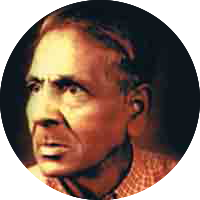
By Firaq Gorakhpuri
Urdu is the shared language of Hindus and Muslims. In the parts of India where Urdu is spoken, the total Urdu-speaking population far exceeds the Muslim population. But what is the reason that, compared to the number of Muslim writers of prose and poetry who have made their mark, the number of renowned Hindu Urdu writers has been so small? Not only have there been fewer of them, but in Urdu poetry, they have also been of a relatively lower stature. Mir, Sauda, Dard, Mushafi, Insha, Nazir Akbarabadi, Nasikh and Aatish, Ghalib, Zauq, Momin, Mir Hasan, Anees and Dabeer, Ameer and Dagh, Hali, Akbar, Iqbal—the Hindu community has not produced Urdu poets of such greatness and in such numbers. Even among the second tier of Urdu poets, the number of Muslims is overwhelmingly large. Why did this happen?
In their confusion or out of intellectual laziness, most people tend to answer this question by saying that since Urdu has a significant mixture of Persian and Arabic, and since the culture and traditions of Arabia and Iran heavily influence Urdu poetry, the atmosphere of Urdu reflects the life and literature of Muslim countries. They argue that local Muslims have a natural affinity for all these things, which is why Hindus did not thrive in the literary environment of Urdu. On the surface, this answer seems absolutely correct, but in reality, it is completely wrong. Almost all the Hindus and Muslims who have tried to think of an answer to this question have fallen victim to this misconception.
A second answer offered by certain circles is that the failure of Hindus to rise in Urdu literature was not because Hindu poets were less capable than Muslim poets, but rather because the narrow-mindedness or prejudice of Muslims prevented them from emerging. But how could a minority suppress a majority? And how could it suppress them to such an extent that Hindu poets equal to or greater than Mir, Ghalib, and all the other great masters of Urdu (if indeed such Hindu poets ever existed) were buried so completely that today neither any Muslim nor any Hindu knows the name of a single Hindu poet of their caliber? If Hindu poets of such high stature had actually existed, could the breath or gust of prejudice have extinguished the lamp of their names?
Many people shy away from answering this question altogether. Invoking the name of Hindu-Muslim unity and offering their customary salutations, they simply declare that Hindus and Muslims have played an equal role in the development and construction of Urdu. After that, they mention Pandit Daya Shankar Naseem, Pandit Ratan Nath Sarshar, Pandit Brij Narayan Chakbast, Munshi Durga Sahay Suroor Jahanabadi, and a couple of other Hindu writers with patronizing praise, feeling pleased with themselves and pleasing others in the process. However, they consider it rude, or an uncivilized and impolitic harshness, to objectively press the question raised at the beginning of this essay and insist on an answer. Yet, the question remains unresolved.
The irony is that the correct answer to the question raised at the beginning can be given while looking people straight in the eye. This answer will not be the least bit offensive to Hindus, to Muslims, or to those who wish to see Urdu progress at the hands of both. Now, listen closely to this answer. The Hindi language had several dialects, such as Braj Bhasha, Awadhi, Baiswari, Bhojpuri, and Khari Boli. Urdu is the evolved form of Khari Boli. Before the birth of Urdu literature, and indeed before the arrival of Muslims, Khari Boli was the dialect of the Hindus of Delhi and its surrounding areas. When Muslims came and settled in and around Delhi, the Khari Boli that had until then been solely the dialect of the local Hindus became the dialect of both Hindus and Muslims there. The Muslims acquired this dialect from the Hindus, and in turn, this dialect acquired many Arabic and Persian words from the Muslims—words that the dialect essentially adopted. Quite effortlessly and completely naturally, these Arabic and Persian words and phrases found a place in the lap of Khari Boli.
If, prior to the arrival of Muslims in and around Delhi, Khari Boli had already produced poetry of value and literary prose, Arabic and Persian words and phrases would never have found a place in it. This is because once a language has been organized at a literary level, words from another language or languages cannot be easily absorbed and digested into it. Only a handful of Arabic and Persian words managed to find a place in the poetry of Braj Bhasha and Awadhi, because high-quality poetry had already been composed in those dialects before the participation of Muslims.
When a dialect acquires literary qualities, it develops a certain compactness and refinement. Its features, its contours, and its overall shape all become distinct and well-defined. It develops its own personality and individuality. For a long time after Muslims had settled in and all around Delhi, Khari Boli remained merely a spoken dialect—a dialect that contained forty thousand purely indigenous words, into which a thousand or two Arabic and Persian words had blended. The literature that was eventually formed was the literature of Khari Boli. This literature was created in Delhi.
During this period, the leadership and guidance of Delhi's cultural life had passed into the hands of Muslim society. The Delhi court was the center of this cultural life. Under the influence of this refined mindset, the deeply ingrained traditions of Khari Boli began to emerge. A certain playfulness and polish began to develop in the tone and tenor of Khari Boli, as well as in its style and linguistic expression. It began to acquire new structural disciplines and new cadences. A certain nuance was introduced into its simplicity, and a certain directness into its elegance. Khari Boli began to absorb the refinement of the domestic and social life of the Muslims. The Hindus of Delhi and its surroundings were not in a position to lead the culture under whose influence the buds of Khari Boli were blossoming.
For the Hindus, it was enough that some of their people were now beginning to learn the civilized form of their own domestic Khari Boli as if it were a formal lesson, somewhat haltingly and hesitantly. To witness, comprehend, and fully embrace the Virat Roop (the grandest form) or the Maha Roop (the supreme manifestation) of one's own mother tongue is a monumental task. At the age of ninety, Bernard Shaw exclaimed that all his life he had been trying to learn just one language: his mother tongue, English.
Nahin sahl ae Dagh yaron se keh do
Ke aati hai apni zaban aate aate
[It is not easy, O Dagh, tell your friends,
One's own language is mastered only gradually.]
Openly acknowledging the fact that, in the beginning, only the Muslims settled in Delhi possessed the ability to polish and refine Khari Boli will not ruin the mutual relations between Hindus and Muslims. The terms majority and minority will also prove deceptive here if we fail to realize that the way Khari Boli was now rising, the way its dormant magic was now awakening, the way the boundaries of its childhood and youth were now merging during its formative days—witnessing all this, the number of Muslims drawn to it was far greater than the number of Hindus, and even those Hindus were merely following the example of the Muslims. What relevance do majority and minority have here? Just look at the number of reciters and listeners in all the mushairas (poetry symposiums) held across India over the last hundred and fifty years. You will see that ten percent were Hindus and ninety percent were Muslims. However, as I will explain later on, this does not mean it is impossible that among the Urdu poets of the future, eighty percent might be Hindus and twenty percent Muslims.
However, it is foolish to assume that Muslims participated in Urdu poetry and mushairas (poetry symposiums) in such large numbers merely to hear tales of Arabia and Iran, or to delight their ears with the echoes of Arabic and Persian. Nor did they go there to send salutations and blessings upon their religion, their God, and their Prophet. The esteemed clerics of Deoband and Nadwa did not gather at mushairas. Mushairas were not held in mosque courtyards. By no means were mushairas Islamic assemblies. The Hindus who attended these gatherings knew no fewer Arabic and Persian words than the Muslims did. A fourteen- or fifteen-year-old Hindu boy could easily learn all the Arabic and Persian vocabulary that made up the universe of Urdu poetry and mushairas, and he could weave them into his verses perfectly well.
Muslims could not overpower Hindus in the field of Urdu poetry merely on the strength of a handful of Arabic and Persian words. Hindus could master the symbols, metaphors, and allegories present in Urdu poetry just as easily as Muslims could. However, when Khari Boli began to be refined, its brilliance dazzled the eyes of not only Hindus but even master poets like Nasikh and Aatish. Here are a few examples:
Ek aaina hai us rashk-e-qamar ka pehlu
Saaf idhar se nazar aata hai udhar ka pehlu
[The side of that envy of the moon is like a mirror
The other side is clearly visible from this side]
The second line is so flawless that when a young boy recited this opening couplet, Nasikh and Aatish tore up their own ghazals. Or consider this:
Dil ke phaphole jal uthe seene ke daagh se
Is ghar ko aag lag gayi ghar ke charaagh se
[The blisters of the heart caught fire from the scar on the chest
This house was set ablaze by its own lamp]
Take this line by the master poet Wazir:
Isi baais toh qatl-e-aashiqaan se mana karte the
[This is the reason we forbade the killing of lovers]
It was unintentionally corrected by a kite-flying boy who phrased it like this:
Isi din ko toh qatl-e-aashiqaan se mana karte the.
[It was for this very day that we forbade the killing of lovers.]
The devastating impact and the eternal, dawn-like freshness that emerged in Khari Boli were not indebted to Arabic and Persian constructs or genitive phrases. For instance, consider these lines and couplets:
Kya bane baat jahan baat banaye na bane
[How can matters be resolved where no amount of trying resolves them]
Bojh woh sar se gira hai jo uthaye na uthe
Kaam woh aan pada hai jo banaye na bane
[A burden has fallen from the head that cannot be lifted
A task has presented itself that cannot be accomplished]
Zamane ke hathon se chaara nahi hai
Zamana hamara tumhara nahi hai
[There is no escape from the hands of time
Time belongs neither to you nor to me]
Saqiya yahan lag raha hai chal chalao
Jab talak bas chal sake saghar chale
[O cupbearer, the time of departure is upon us here
Let the goblet circulate as long as it possibly can]
Sauda jo tera haal hai aisa toh nahi woh
Kya jaaniye tune use kis aan mein dekha
[Sauda, the way you describe him, he is not like that
Who knows in what moment you saw him]
Yaad itni uski khoob nahi Mir baaz aa
Nadaan phir woh dil se bhulaya na jayega
[Remembering him so much is not good, Mir, desist
O ignorant one, then he will never be forgotten by the heart]
Bhar aaye phool ke aansu payaam-e-shabnam se
Kali ka nanha sa dil khoon hoga gham se
[The flower's tears welled up at the message of the dew
The tiny heart of the bud will bleed with sorrow]
Akbar ko neend aa gayi sehra ko dekh kar
Abbas jhoomne lage dariya ko dekh kar
[Akbar fell asleep looking at the desert
Abbas began to sway with joy looking at the river]
Duniya yahi duniya hai toh kya yaad rahegi
[If this world is all there is, what will be remembered of it]
Teri duniya mein ab dhara kya hai
[What is left in your world now]
Is umr mein insaan ko sujhayi nahi deta
[At this age, a person cannot see clearly]
Kya diwane ne maut payi hai
[What a death the madman has found]
Tara toot-te sab ne dekha yeh nahi dekha ek ne bhi
Kis ki aankh se aansu tapka kis ka sahara toot gaya
[Everyone saw the shooting star, but not a single one saw
Whose eye shed a tear, whose support was shattered]
Jeena use ho gaya ajeeran
[Living has become a torment for him]
Baith jaate hain jahan chhaon ghani hoti hai
[We sit down wherever the shade is dense]
Yeh pichhli raat yeh rag rag mein narm narm kasak
[This late night, this soft ache in every vein]
Gaari nikal gayi thi patri chamak rahi thi
[The train had departed, the tracks were gleaming]
Jab tak Imam aayein unhein dekh bhaal lo
[Look after them until the Imam arrives]
Kya se kya kar diya mohabbat ne
Ab jo dekha toh woh asar hi nahi
[What a transformation love has wrought
Now when I look, that effect is no longer there]
Zindagi kaisi museebat hai Asar se mat poochh
[Do not ask Asar what a calamity life is]
Aaj toh Daagh ko hum log tere koocha se
Is tarah kheench ke laye hain ke ji jaanta hai
[Today, we have dragged Daagh away from your street
In such a manner that only our hearts know]
Kuchh orha dijiye Maula mujhe neend aati hai
[Cover me with something, Master, I am feeling sleepy]
Bhare hain aankhon mein aansu udaas baithe ho
[Tears fill your eyes, you sit in sorrow]
Kabhi hum un ko kabhi apne ghar ko dekhte hain
[Sometimes we look at them, sometimes at our own house]
Dekhiye aap ko aur aap ke ghar ki soorat
[Look at yourself, and look at the state of your house]
Ajab bahaar hai in zard zard phoolon ki
[Wondrous is the bloom of these yellow flowers]
Nikal chali hai bahut pairahan se boo teri
[Your fragrance has begun to emanate strongly from the garment]
Jis ko gussa mein lagawat ki adaa yaad rahe
[One who remembers the charm of affection even in anger]
Tere kooche is bahane mujhe din se raat karna
Kabhi is se baat karna kabhi us se baat karna
[Turning day into night in your street under this pretext
Sometimes talking to this one, sometimes talking to that one]
Na chhed ae nikhat-e-baad-e-bahaari raah lag apni
Tujhe atkheliyan soojhi hain hum bezaar baithe hain
[Do not tease me, O fragrance of the spring breeze, go your way
You are in the mood for playfulness, while I sit here weary]
Zulf mein phans ke Faran ab hai yeh wahshat kaisi
Saanp jab kaat liya seekhne mantar baithe
[Having been caught in the tresses, Faran, what is this panic now?
After the snake has bitten, you sit down to learn the spell]
Jo maanne ki baat na thi maan gaye hum
[We agreed to that which was not meant to be agreed to]
Kabhi kuchh raat gaye aur kabhi kuchh raat rahe
[Sometimes when the night had advanced, and sometimes when a little night remained]
Tum nahi aur sahi aur nahi aur sahi
[If not you, then someone else; if not them, then someone else]
Humein so gaye dastaan kehte kehte
[We ourselves fell asleep while telling the tale]
Tadapne wale tadap kar falak ko chhoo aaye
[The restless ones writhed and touched the sky]
Ae baad-e-saba meri karwat toh badal jana
[O morning breeze, at least turn me on my side]
Jhukti hai nigaah teri mujh se mil kar
Deewar se dhoop utar rahi hai goya
[Your gaze lowers after meeting mine
As if the sunlight is descending from the wall]
Majnun jo mar gaya hai toh jangal udaas hai
[Now that Majnun has died, the wilderness is sorrowful]
Main use dekhoon bhala kab mujh se dekha jaye hai
[How could I possibly look at her, I cannot bear to look]
Yaaron ne kitni door basayi hain bastiyan
[How far away friends have built their settlements]
Yeh jaanta agar toh lutata na ghar ko main
[Had I known this, I would not have let my house be ruined]
Teri aawaz Makke aur Madine
[May your voice reach Mecca and Medina]
Woh aql ko sard kar diya rooh ko jagmaga diya
[It cooled the intellect and illuminated the soul]
This is the elegant and refined form of Khari Boli. This is the adornment and richness of Khari Boli. The kind and amount of Persian and Arabic present in these couplets and lines could be written just as easily by a Hindu as by a Muslim. But the most seemingly astonishing fact is this: the pure Hindi words and phrases that embellish these verses with complete adornment and grant them eternal grace—those very Hindi words and phrases could be used with such softness and elegance by Muslims, whereas Hindus could not use them in this manner; instead, they used them in a dry and rigid way.
The reality is that the natural mindset required to refine and present Khari Boli, its Hindi vocabulary, idioms, and sentences, was born out of an urban culture whose foundations were laid by Muslims and which was being nurtured by Muslims themselves. In the couplets and lines I have presented as examples, their pure or Hindi components, the selection and placement of Hindi words within them, and their artistic simplicity are not easily achieved. Even with great difficulty or effort, this kind of Hindi cannot be grasped unless the desire for linguistic refinement in domestic, national, and collective life inspires and mobilizes entire populations. When the literary refinement and compilation of a dialect begins, the most delicate aesthetic sensibilities and the most sensitive refinements of national life are at work in this process. The language moves forward by carrying with it all the templates of polite conversation and linguistic traditions that have been developed for speaking with wives, children, household members, servants, relatives, peers, and even those younger or older than oneself.
Hindus certainly learned enough Arabic and Persian from Muslims as was necessary for Urdu poetry; in fact, they learned much more than that. But what they could not learn from Muslims, or what was difficult to learn quickly, was this refined Hindi or its literary grandeur. Mirza Tafta might have stuffed his Urdu poetry with more Persian and Arabic than Ghalib did, but wherever Ghalib wrote soft Urdu or Hindi-esque Urdu, wherever Ghalib performed miracles with Khari Boli, Mirza Tafta could not imitate him. It is a very difficult task to write simple Urdu or Hindi with literary grandeur, and what Urdu lovers have always adored is this very Hindi-esque Urdu. This is that simple and literary Hindi.
In sa'adat ba-zor-e-baazu neest.
[This blessing cannot be attained by mere strength of arm.]
If Urdu is defined by its vocabulary or the portion of its literature derived from Arabic and Persian, or composed according to Perso-Arabic meter, then Hindus were well-versed in this Urdu. However, if the true essence and driving spirit of Urdu lies in the elegant use of Hindi words drawn from Khari Boli, then this Urdu was known only to Muslims—even though Muslims originally acquired it from Hindus in its raw and unpolished form. The field belonged to the Hindus, but cultivating it into a lush, blooming garden was the work of Muslims. Their social life, traditions, and natural inclinations collectively led them to speak not just Khari Boli, but a deeply refined and polished version of it. There is a vast difference between a rough, disjointed dialect and a soft, fluent Khari Boli. In this social process, Hindus could not participate as equal partners with Muslims, although a very small number of Hindus certainly became sincere admirers and emulators of Muslims in this task.
In the Urdu of writers like Chakbast, Naseem, Durga Sahai Suroor, Sarshar, Banwari Lal Shola, and even Naubat Rai Nazar, Hindi words do not appear with the same suppleness, innocence, and intimacy that can be found even in the works of Ghalib. I say even in Ghalib because his Urdu is generally considered to be highly Persianized. The Urdu of these Hindu writers may be masterful, but it suffers from an artificial externality. Despite all its grandeur, their Urdu feels bookish; it feels like an acquired language. This is why, despite being top-tier writers, they could not make a name for themselves in the Urdu ghazal. Regardless of one's proficiency in Arabic and Persian, the true soul of the ghazal is deeply indigenous and authentic. These Hindu writers were so civilized that they could not even bring themselves to be lovers—so how could they possibly write that Hindi-inflected romantic Urdu whose magic was awakened by Mir and Momin?
The religion of Hindu Urdu writers was different from that of Muslims, but this religious difference was not the reason they failed to shine in Urdu, or at least failed to shine as brightly as their Muslim counterparts. The social and domestic lives of these Hindu writers were different; the everyday speech and accents of these men, their wives, their children, and their associates were different. Their Khari Boli was not as deeply ingrained, fluent, or polished as the Khari Boli spoken in thousands of Muslim households. Consequently, one senses a certain heaviness in their spoken Urdu, much like the heaviness generally felt in the Persian poetry written by Indian poets—with perhaps only one or two exceptions.
Urdu is acquired through both external and internal means. Hindu writers of Urdu could only acquire it externally, whereas Muslim writers could absorb it internally. By this, I mean that most crucial component of Urdu which the Islamic culture—not the Islamic religion—of Delhi and its surroundings had collectively created and refined. This component was composed entirely of the Hindi vocabulary of Khari Boli, along with a few Arabic and Persian words that had seamlessly blended into those Hindi words, which Hindus spoke just as effortlessly as Muslims.
It must also be clearly understood that although the advanced form of Khari Boli was molded by Muslims, Islamic elements had absolutely no role in this development. It is much like how a scientific discovery, invention, or principle may originate in a specific nation or country, yet remains free from the cultural stamp of that place. In fact, the form of Urdu refined by Muslims is more in harmony with the Hindu temperament and Hindu culture. This is because this version of Urdu retains the suppleness of Hindi words—the suppleness of the very Khari Boli that inherently belonged to India and to Hindus. It was simply a matter of Hindus being unable to polish it in the beginning. But times have changed now. The Muslims have already shaped Urdu as much as they were going to. Today, there is absolutely no need for Hindus to settle in Delhi or Lucknow and constantly look to Muslim writers for guidance.
One can now benefit from Urdu books and journals from the comfort of one's home. Hindus can now take victorious possession of Urdu. Into the most eloquent and articulate Urdu, Hindus can infuse Hindu culture, the wisdom of the Vedas and Upanishads, and the cultural ethos of Kalidasa and other Sanskrit poets. The new culture, the spirit of the Indian Renaissance—all of this can be poured into Urdu. It can be imbued with a hundred percent Bharatiyata (Indianness). Urdu literature can be transformed into the literature of India in the exact same way that German literature belongs to Germany, or any national literature belongs to its respective country, or just as the literature of Kalidasa and Tagore is fundamentally the literature of India.
All the techniques and nuances of Khari Boli can now be easily mastered. If Hindu culture chooses to reflect itself in Urdu, neither the brilliance of this culture nor the captivating charm of Urdu will be diminished. Whenever necessary, Sanskrit words that harmonize with the Urdu lexicon and strike new musical chords can be introduced into the language. Hindu writers can now wield Urdu with true creative power. The time has come, and Hindus have grown capable enough, for Muslims to accept them as senior partners in the realm of Urdu. If they are not willingly included, Hindus will forcefully claim their rightful share. Until now, Hindu society had not been able to produce writers of the same caliber as Mir, Sauda, Ghalib, Anees, and Iqbal. However, in the creation and construction of modern Urdu literature, Hindu society will produce formidable rivals to the greatest of Muslim writers, in both prose and poetry. This was bound to happen one day.
The playful flamboyance of Urdu literature has now transitioned into simplicity and innocence. A sense of intimacy, a straightforward nature, and a deep emotional and aesthetic essence (bhav and ras) have now found their way into Urdu. The true soul of India is quietly and stealthily seeping into the language. Simultaneously, an intellectual Renaissance has taken root within Hindu society. The inevitable result of this will be that, in terms of both quantity and quality, numbers and stature, the Hindu population will leverage its majority to serve Urdu literature, taking on the duties of leadership and guidance in its future development.
It is certainly true that, in contrast to Urdu, the Hindi movement has generally diverted the attention of Hindus elsewhere. However, if the portion of existing Urdu literature—such as the couplets and verses I have selected and quoted in this essay—were to be transliterated into the Devanagari script, Urdu would become ingrained in the very nature of Hindus. The Hindi meters, the Sanskrit meters, the innovative poetic fragments, and the new stanza forms currently being devised in Urdu poetry, alongside the meters and stanzaic forms being shaped in modern Hindi poetry, are introducing new vocabulary and structures that can be seamlessly absorbed into Urdu.
If we draw upon the similes and metaphors of Sanskrit literature, the expressions and stylistic nuances of Bengali literature, and the finest qualities of other Indian languages, Urdu will develop an immense expansiveness, and its inherent Urdu-ness will not suffer any loss or corruption. This will bring about a confluence with the Hindi movement, initiating the creation of a truly monumental literature. The existing body of Urdu literature and the masterpieces of the classical masters will greatly aid in this construction. It is the Urdu community itself that pays rather little attention to the possibilities of Urdu literature's boundless expansiveness. What a cowardly notion it is to believe that incorporating around two thousand Sanskrit words, a few new poetic meters and rhythms, and entirely fresh styles of expression will somehow harm Urdu. In its early days, there might have been a need for Khari Boli to reveal itself cautiously and with restraint. Now, however, it must fearlessly lift its veil.
By Firaq Gorakhpuri
Urdu is the shared language of Hindus and Muslims. In the parts of India where Urdu is spoken, the total Urdu-speaking population far exceeds the Muslim population. But what is the reason that, compared to the number of Muslim writers of prose and poetry who have made their mark, the number of renowned Hindu Urdu writers has been so small? Not only have there been fewer of them, but in Urdu poetry, they have also been of a relatively lower stature. Mir, Sauda, Dard, Mushafi, Insha, Nazir Akbarabadi, Nasikh and Aatish, Ghalib, Zauq, Momin, Mir Hasan, Anees and Dabeer, Ameer and Dagh, Hali, Akbar, Iqbal—the Hindu community has not produced Urdu poets of such greatness and in such numbers. Even among the second tier of Urdu poets, the number of Muslims is overwhelmingly large. Why did this happen?
In their confusion or out of intellectual laziness, most people tend to answer this question by saying that since Urdu has a significant mixture of Persian and Arabic, and since the culture and traditions of Arabia and Iran heavily influence Urdu poetry, the atmosphere of Urdu reflects the life and literature of Muslim countries. They argue that local Muslims have a natural affinity for all these things, which is why Hindus did not thrive in the literary environment of Urdu. On the surface, this answer seems absolutely correct, but in reality, it is completely wrong. Almost all the Hindus and Muslims who have tried to think of an answer to this question have fallen victim to this misconception.
A second answer offered by certain circles is that the failure of Hindus to rise in Urdu literature was not because Hindu poets were less capable than Muslim poets, but rather because the narrow-mindedness or prejudice of Muslims prevented them from emerging. But how could a minority suppress a majority? And how could it suppress them to such an extent that Hindu poets equal to or greater than Mir, Ghalib, and all the other great masters of Urdu (if indeed such Hindu poets ever existed) were buried so completely that today neither any Muslim nor any Hindu knows the name of a single Hindu poet of their caliber? If Hindu poets of such high stature had actually existed, could the breath or gust of prejudice have extinguished the lamp of their names?
Many people shy away from answering this question altogether. Invoking the name of Hindu-Muslim unity and offering their customary salutations, they simply declare that Hindus and Muslims have played an equal role in the development and construction of Urdu. After that, they mention Pandit Daya Shankar Naseem, Pandit Ratan Nath Sarshar, Pandit Brij Narayan Chakbast, Munshi Durga Sahay Suroor Jahanabadi, and a couple of other Hindu writers with patronizing praise, feeling pleased with themselves and pleasing others in the process. However, they consider it rude, or an uncivilized and impolitic harshness, to objectively press the question raised at the beginning of this essay and insist on an answer. Yet, the question remains unresolved.
The irony is that the correct answer to the question raised at the beginning can be given while looking people straight in the eye. This answer will not be the least bit offensive to Hindus, to Muslims, or to those who wish to see Urdu progress at the hands of both. Now, listen closely to this answer. The Hindi language had several dialects, such as Braj Bhasha, Awadhi, Baiswari, Bhojpuri, and Khari Boli. Urdu is the evolved form of Khari Boli. Before the birth of Urdu literature, and indeed before the arrival of Muslims, Khari Boli was the dialect of the Hindus of Delhi and its surrounding areas. When Muslims came and settled in and around Delhi, the Khari Boli that had until then been solely the dialect of the local Hindus became the dialect of both Hindus and Muslims there. The Muslims acquired this dialect from the Hindus, and in turn, this dialect acquired many Arabic and Persian words from the Muslims—words that the dialect essentially adopted. Quite effortlessly and completely naturally, these Arabic and Persian words and phrases found a place in the lap of Khari Boli.
If, prior to the arrival of Muslims in and around Delhi, Khari Boli had already produced poetry of value and literary prose, Arabic and Persian words and phrases would never have found a place in it. This is because once a language has been organized at a literary level, words from another language or languages cannot be easily absorbed and digested into it. Only a handful of Arabic and Persian words managed to find a place in the poetry of Braj Bhasha and Awadhi, because high-quality poetry had already been composed in those dialects before the participation of Muslims.
When a dialect acquires literary qualities, it develops a certain compactness and refinement. Its features, its contours, and its overall shape all become distinct and well-defined. It develops its own personality and individuality. For a long time after Muslims had settled in and all around Delhi, Khari Boli remained merely a spoken dialect—a dialect that contained forty thousand purely indigenous words, into which a thousand or two Arabic and Persian words had blended. The literature that was eventually formed was the literature of Khari Boli. This literature was created in Delhi.
During this period, the leadership and guidance of Delhi's cultural life had passed into the hands of Muslim society. The Delhi court was the center of this cultural life. Under the influence of this refined mindset, the deeply ingrained traditions of Khari Boli began to emerge. A certain playfulness and polish began to develop in the tone and tenor of Khari Boli, as well as in its style and linguistic expression. It began to acquire new structural disciplines and new cadences. A certain nuance was introduced into its simplicity, and a certain directness into its elegance. Khari Boli began to absorb the refinement of the domestic and social life of the Muslims. The Hindus of Delhi and its surroundings were not in a position to lead the culture under whose influence the buds of Khari Boli were blossoming.
For the Hindus, it was enough that some of their people were now beginning to learn the civilized form of their own domestic Khari Boli as if it were a formal lesson, somewhat haltingly and hesitantly. To witness, comprehend, and fully embrace the Virat Roop (the grandest form) or the Maha Roop (the supreme manifestation) of one's own mother tongue is a monumental task. At the age of ninety, Bernard Shaw exclaimed that all his life he had been trying to learn just one language: his mother tongue, English.
Nahin sahl ae Dagh yaron se keh do
Ke aati hai apni zaban aate aate
[It is not easy, O Dagh, tell your friends,
One's own language is mastered only gradually.]
Openly acknowledging the fact that, in the beginning, only the Muslims settled in Delhi possessed the ability to polish and refine Khari Boli will not ruin the mutual relations between Hindus and Muslims. The terms majority and minority will also prove deceptive here if we fail to realize that the way Khari Boli was now rising, the way its dormant magic was now awakening, the way the boundaries of its childhood and youth were now merging during its formative days—witnessing all this, the number of Muslims drawn to it was far greater than the number of Hindus, and even those Hindus were merely following the example of the Muslims. What relevance do majority and minority have here? Just look at the number of reciters and listeners in all the mushairas (poetry symposiums) held across India over the last hundred and fifty years. You will see that ten percent were Hindus and ninety percent were Muslims. However, as I will explain later on, this does not mean it is impossible that among the Urdu poets of the future, eighty percent might be Hindus and twenty percent Muslims.
However, it is foolish to assume that Muslims participated in Urdu poetry and mushairas (poetry symposiums) in such large numbers merely to hear tales of Arabia and Iran, or to delight their ears with the echoes of Arabic and Persian. Nor did they go there to send salutations and blessings upon their religion, their God, and their Prophet. The esteemed clerics of Deoband and Nadwa did not gather at mushairas. Mushairas were not held in mosque courtyards. By no means were mushairas Islamic assemblies. The Hindus who attended these gatherings knew no fewer Arabic and Persian words than the Muslims did. A fourteen- or fifteen-year-old Hindu boy could easily learn all the Arabic and Persian vocabulary that made up the universe of Urdu poetry and mushairas, and he could weave them into his verses perfectly well.
Muslims could not overpower Hindus in the field of Urdu poetry merely on the strength of a handful of Arabic and Persian words. Hindus could master the symbols, metaphors, and allegories present in Urdu poetry just as easily as Muslims could. However, when Khari Boli began to be refined, its brilliance dazzled the eyes of not only Hindus but even master poets like Nasikh and Aatish. Here are a few examples:
Ek aaina hai us rashk-e-qamar ka pehlu
Saaf idhar se nazar aata hai udhar ka pehlu
[The side of that envy of the moon is like a mirror
The other side is clearly visible from this side]
The second line is so flawless that when a young boy recited this opening couplet, Nasikh and Aatish tore up their own ghazals. Or consider this:
Dil ke phaphole jal uthe seene ke daagh se
Is ghar ko aag lag gayi ghar ke charaagh se
[The blisters of the heart caught fire from the scar on the chest
This house was set ablaze by its own lamp]
Take this line by the master poet Wazir:
Isi baais toh qatl-e-aashiqaan se mana karte the
[This is the reason we forbade the killing of lovers]
It was unintentionally corrected by a kite-flying boy who phrased it like this:
Isi din ko toh qatl-e-aashiqaan se mana karte the.
[It was for this very day that we forbade the killing of lovers.]
The devastating impact and the eternal, dawn-like freshness that emerged in Khari Boli were not indebted to Arabic and Persian constructs or genitive phrases. For instance, consider these lines and couplets:
Kya bane baat jahan baat banaye na bane
[How can matters be resolved where no amount of trying resolves them]
Bojh woh sar se gira hai jo uthaye na uthe
Kaam woh aan pada hai jo banaye na bane
[A burden has fallen from the head that cannot be lifted
A task has presented itself that cannot be accomplished]
Zamane ke hathon se chaara nahi hai
Zamana hamara tumhara nahi hai
[There is no escape from the hands of time
Time belongs neither to you nor to me]
Saqiya yahan lag raha hai chal chalao
Jab talak bas chal sake saghar chale
[O cupbearer, the time of departure is upon us here
Let the goblet circulate as long as it possibly can]
Sauda jo tera haal hai aisa toh nahi woh
Kya jaaniye tune use kis aan mein dekha
[Sauda, the way you describe him, he is not like that
Who knows in what moment you saw him]
Yaad itni uski khoob nahi Mir baaz aa
Nadaan phir woh dil se bhulaya na jayega
[Remembering him so much is not good, Mir, desist
O ignorant one, then he will never be forgotten by the heart]
Bhar aaye phool ke aansu payaam-e-shabnam se
Kali ka nanha sa dil khoon hoga gham se
[The flower's tears welled up at the message of the dew
The tiny heart of the bud will bleed with sorrow]
Akbar ko neend aa gayi sehra ko dekh kar
Abbas jhoomne lage dariya ko dekh kar
[Akbar fell asleep looking at the desert
Abbas began to sway with joy looking at the river]
Duniya yahi duniya hai toh kya yaad rahegi
[If this world is all there is, what will be remembered of it]
Teri duniya mein ab dhara kya hai
[What is left in your world now]
Is umr mein insaan ko sujhayi nahi deta
[At this age, a person cannot see clearly]
Kya diwane ne maut payi hai
[What a death the madman has found]
Tara toot-te sab ne dekha yeh nahi dekha ek ne bhi
Kis ki aankh se aansu tapka kis ka sahara toot gaya
[Everyone saw the shooting star, but not a single one saw
Whose eye shed a tear, whose support was shattered]
Jeena use ho gaya ajeeran
[Living has become a torment for him]
Baith jaate hain jahan chhaon ghani hoti hai
[We sit down wherever the shade is dense]
Yeh pichhli raat yeh rag rag mein narm narm kasak
[This late night, this soft ache in every vein]
Gaari nikal gayi thi patri chamak rahi thi
[The train had departed, the tracks were gleaming]
Jab tak Imam aayein unhein dekh bhaal lo
[Look after them until the Imam arrives]
Kya se kya kar diya mohabbat ne
Ab jo dekha toh woh asar hi nahi
[What a transformation love has wrought
Now when I look, that effect is no longer there]
Zindagi kaisi museebat hai Asar se mat poochh
[Do not ask Asar what a calamity life is]
Aaj toh Daagh ko hum log tere koocha se
Is tarah kheench ke laye hain ke ji jaanta hai
[Today, we have dragged Daagh away from your street
In such a manner that only our hearts know]
Kuchh orha dijiye Maula mujhe neend aati hai
[Cover me with something, Master, I am feeling sleepy]
Bhare hain aankhon mein aansu udaas baithe ho
[Tears fill your eyes, you sit in sorrow]
Kabhi hum un ko kabhi apne ghar ko dekhte hain
[Sometimes we look at them, sometimes at our own house]
Dekhiye aap ko aur aap ke ghar ki soorat
[Look at yourself, and look at the state of your house]
Ajab bahaar hai in zard zard phoolon ki
[Wondrous is the bloom of these yellow flowers]
Nikal chali hai bahut pairahan se boo teri
[Your fragrance has begun to emanate strongly from the garment]
Jis ko gussa mein lagawat ki adaa yaad rahe
[One who remembers the charm of affection even in anger]
Tere kooche is bahane mujhe din se raat karna
Kabhi is se baat karna kabhi us se baat karna
[Turning day into night in your street under this pretext
Sometimes talking to this one, sometimes talking to that one]
Na chhed ae nikhat-e-baad-e-bahaari raah lag apni
Tujhe atkheliyan soojhi hain hum bezaar baithe hain
[Do not tease me, O fragrance of the spring breeze, go your way
You are in the mood for playfulness, while I sit here weary]
Zulf mein phans ke Faran ab hai yeh wahshat kaisi
Saanp jab kaat liya seekhne mantar baithe
[Having been caught in the tresses, Faran, what is this panic now?
After the snake has bitten, you sit down to learn the spell]
Jo maanne ki baat na thi maan gaye hum
[We agreed to that which was not meant to be agreed to]
Kabhi kuchh raat gaye aur kabhi kuchh raat rahe
[Sometimes when the night had advanced, and sometimes when a little night remained]
Tum nahi aur sahi aur nahi aur sahi
[If not you, then someone else; if not them, then someone else]
Humein so gaye dastaan kehte kehte
[We ourselves fell asleep while telling the tale]
Tadapne wale tadap kar falak ko chhoo aaye
[The restless ones writhed and touched the sky]
Ae baad-e-saba meri karwat toh badal jana
[O morning breeze, at least turn me on my side]
Jhukti hai nigaah teri mujh se mil kar
Deewar se dhoop utar rahi hai goya
[Your gaze lowers after meeting mine
As if the sunlight is descending from the wall]
Majnun jo mar gaya hai toh jangal udaas hai
[Now that Majnun has died, the wilderness is sorrowful]
Main use dekhoon bhala kab mujh se dekha jaye hai
[How could I possibly look at her, I cannot bear to look]
Yaaron ne kitni door basayi hain bastiyan
[How far away friends have built their settlements]
Yeh jaanta agar toh lutata na ghar ko main
[Had I known this, I would not have let my house be ruined]
Teri aawaz Makke aur Madine
[May your voice reach Mecca and Medina]
Woh aql ko sard kar diya rooh ko jagmaga diya
[It cooled the intellect and illuminated the soul]
This is the elegant and refined form of Khari Boli. This is the adornment and richness of Khari Boli. The kind and amount of Persian and Arabic present in these couplets and lines could be written just as easily by a Hindu as by a Muslim. But the most seemingly astonishing fact is this: the pure Hindi words and phrases that embellish these verses with complete adornment and grant them eternal grace—those very Hindi words and phrases could be used with such softness and elegance by Muslims, whereas Hindus could not use them in this manner; instead, they used them in a dry and rigid way.
The reality is that the natural mindset required to refine and present Khari Boli, its Hindi vocabulary, idioms, and sentences, was born out of an urban culture whose foundations were laid by Muslims and which was being nurtured by Muslims themselves. In the couplets and lines I have presented as examples, their pure or Hindi components, the selection and placement of Hindi words within them, and their artistic simplicity are not easily achieved. Even with great difficulty or effort, this kind of Hindi cannot be grasped unless the desire for linguistic refinement in domestic, national, and collective life inspires and mobilizes entire populations. When the literary refinement and compilation of a dialect begins, the most delicate aesthetic sensibilities and the most sensitive refinements of national life are at work in this process. The language moves forward by carrying with it all the templates of polite conversation and linguistic traditions that have been developed for speaking with wives, children, household members, servants, relatives, peers, and even those younger or older than oneself.
Hindus certainly learned enough Arabic and Persian from Muslims as was necessary for Urdu poetry; in fact, they learned much more than that. But what they could not learn from Muslims, or what was difficult to learn quickly, was this refined Hindi or its literary grandeur. Mirza Tafta might have stuffed his Urdu poetry with more Persian and Arabic than Ghalib did, but wherever Ghalib wrote soft Urdu or Hindi-esque Urdu, wherever Ghalib performed miracles with Khari Boli, Mirza Tafta could not imitate him. It is a very difficult task to write simple Urdu or Hindi with literary grandeur, and what Urdu lovers have always adored is this very Hindi-esque Urdu. This is that simple and literary Hindi.
In sa'adat ba-zor-e-baazu neest.
[This blessing cannot be attained by mere strength of arm.]
If Urdu is defined by its vocabulary or the portion of its literature derived from Arabic and Persian, or composed according to Perso-Arabic meter, then Hindus were well-versed in this Urdu. However, if the true essence and driving spirit of Urdu lies in the elegant use of Hindi words drawn from Khari Boli, then this Urdu was known only to Muslims—even though Muslims originally acquired it from Hindus in its raw and unpolished form. The field belonged to the Hindus, but cultivating it into a lush, blooming garden was the work of Muslims. Their social life, traditions, and natural inclinations collectively led them to speak not just Khari Boli, but a deeply refined and polished version of it. There is a vast difference between a rough, disjointed dialect and a soft, fluent Khari Boli. In this social process, Hindus could not participate as equal partners with Muslims, although a very small number of Hindus certainly became sincere admirers and emulators of Muslims in this task.
In the Urdu of writers like Chakbast, Naseem, Durga Sahai Suroor, Sarshar, Banwari Lal Shola, and even Naubat Rai Nazar, Hindi words do not appear with the same suppleness, innocence, and intimacy that can be found even in the works of Ghalib. I say even in Ghalib because his Urdu is generally considered to be highly Persianized. The Urdu of these Hindu writers may be masterful, but it suffers from an artificial externality. Despite all its grandeur, their Urdu feels bookish; it feels like an acquired language. This is why, despite being top-tier writers, they could not make a name for themselves in the Urdu ghazal. Regardless of one's proficiency in Arabic and Persian, the true soul of the ghazal is deeply indigenous and authentic. These Hindu writers were so civilized that they could not even bring themselves to be lovers—so how could they possibly write that Hindi-inflected romantic Urdu whose magic was awakened by Mir and Momin?
The religion of Hindu Urdu writers was different from that of Muslims, but this religious difference was not the reason they failed to shine in Urdu, or at least failed to shine as brightly as their Muslim counterparts. The social and domestic lives of these Hindu writers were different; the everyday speech and accents of these men, their wives, their children, and their associates were different. Their Khari Boli was not as deeply ingrained, fluent, or polished as the Khari Boli spoken in thousands of Muslim households. Consequently, one senses a certain heaviness in their spoken Urdu, much like the heaviness generally felt in the Persian poetry written by Indian poets—with perhaps only one or two exceptions.
Urdu is acquired through both external and internal means. Hindu writers of Urdu could only acquire it externally, whereas Muslim writers could absorb it internally. By this, I mean that most crucial component of Urdu which the Islamic culture—not the Islamic religion—of Delhi and its surroundings had collectively created and refined. This component was composed entirely of the Hindi vocabulary of Khari Boli, along with a few Arabic and Persian words that had seamlessly blended into those Hindi words, which Hindus spoke just as effortlessly as Muslims.
It must also be clearly understood that although the advanced form of Khari Boli was molded by Muslims, Islamic elements had absolutely no role in this development. It is much like how a scientific discovery, invention, or principle may originate in a specific nation or country, yet remains free from the cultural stamp of that place. In fact, the form of Urdu refined by Muslims is more in harmony with the Hindu temperament and Hindu culture. This is because this version of Urdu retains the suppleness of Hindi words—the suppleness of the very Khari Boli that inherently belonged to India and to Hindus. It was simply a matter of Hindus being unable to polish it in the beginning. But times have changed now. The Muslims have already shaped Urdu as much as they were going to. Today, there is absolutely no need for Hindus to settle in Delhi or Lucknow and constantly look to Muslim writers for guidance.
One can now benefit from Urdu books and journals from the comfort of one's home. Hindus can now take victorious possession of Urdu. Into the most eloquent and articulate Urdu, Hindus can infuse Hindu culture, the wisdom of the Vedas and Upanishads, and the cultural ethos of Kalidasa and other Sanskrit poets. The new culture, the spirit of the Indian Renaissance—all of this can be poured into Urdu. It can be imbued with a hundred percent Bharatiyata (Indianness). Urdu literature can be transformed into the literature of India in the exact same way that German literature belongs to Germany, or any national literature belongs to its respective country, or just as the literature of Kalidasa and Tagore is fundamentally the literature of India.
All the techniques and nuances of Khari Boli can now be easily mastered. If Hindu culture chooses to reflect itself in Urdu, neither the brilliance of this culture nor the captivating charm of Urdu will be diminished. Whenever necessary, Sanskrit words that harmonize with the Urdu lexicon and strike new musical chords can be introduced into the language. Hindu writers can now wield Urdu with true creative power. The time has come, and Hindus have grown capable enough, for Muslims to accept them as senior partners in the realm of Urdu. If they are not willingly included, Hindus will forcefully claim their rightful share. Until now, Hindu society had not been able to produce writers of the same caliber as Mir, Sauda, Ghalib, Anees, and Iqbal. However, in the creation and construction of modern Urdu literature, Hindu society will produce formidable rivals to the greatest of Muslim writers, in both prose and poetry. This was bound to happen one day.
The playful flamboyance of Urdu literature has now transitioned into simplicity and innocence. A sense of intimacy, a straightforward nature, and a deep emotional and aesthetic essence (bhav and ras) have now found their way into Urdu. The true soul of India is quietly and stealthily seeping into the language. Simultaneously, an intellectual Renaissance has taken root within Hindu society. The inevitable result of this will be that, in terms of both quantity and quality, numbers and stature, the Hindu population will leverage its majority to serve Urdu literature, taking on the duties of leadership and guidance in its future development.
It is certainly true that, in contrast to Urdu, the Hindi movement has generally diverted the attention of Hindus elsewhere. However, if the portion of existing Urdu literature—such as the couplets and verses I have selected and quoted in this essay—were to be transliterated into the Devanagari script, Urdu would become ingrained in the very nature of Hindus. The Hindi meters, the Sanskrit meters, the innovative poetic fragments, and the new stanza forms currently being devised in Urdu poetry, alongside the meters and stanzaic forms being shaped in modern Hindi poetry, are introducing new vocabulary and structures that can be seamlessly absorbed into Urdu.
If we draw upon the similes and metaphors of Sanskrit literature, the expressions and stylistic nuances of Bengali literature, and the finest qualities of other Indian languages, Urdu will develop an immense expansiveness, and its inherent Urdu-ness will not suffer any loss or corruption. This will bring about a confluence with the Hindi movement, initiating the creation of a truly monumental literature. The existing body of Urdu literature and the masterpieces of the classical masters will greatly aid in this construction. It is the Urdu community itself that pays rather little attention to the possibilities of Urdu literature's boundless expansiveness. What a cowardly notion it is to believe that incorporating around two thousand Sanskrit words, a few new poetic meters and rhythms, and entirely fresh styles of expression will somehow harm Urdu. In its early days, there might have been a need for Khari Boli to reveal itself cautiously and with restraint. Now, however, it must fearlessly lift its veil.
Additional information available
Click on the INTERESTING button to view additional information associated with this sher.
About this sher
rare Unpublished content
This ghazal contains ashaar not published in the public domain. These are marked by a red line on the left.