Alaamaton Ka Zawaal
The renowned English historian Edward Gibbon is said to have claimed that the world has seen only two great warriors: Rustam and Hazrat Ali. I do not know if Gibbon actually ever said this; my source is the zakir (reciter) of our town, who would quote Gibbon to stir up fervor during the religious gatherings. When I grew up and read Muqaddama-e-Sher-o-Shairi (Prolegomena to Poetry), I realized that long before our local zakir, Maulana Hali had already used the likes of Mill, Milton, and Macaulay to speak the bitter truth about the artificiality of Urdu poetry.
This was an era when Sir Syed Ahmed Khan would refer to the Prophet of Islam as Mohammad Sahib, and Deputy Nazir Ahmed would write Paighambar Sahib. Later, biographers of the Prophet managed to get hold of a few quotes by Carlyle, Tolstoy, and Bernard Shaw regarding him. During this time, young Muslim men acquired further qualifications and traveled as far as London for their education. Those returning from London brought back English wives, law degrees, a few new literary techniques, and a host of new names. Consequently, the New Literature movement began in Urdu, and writers like Gorky and Maupassant were accorded the same reverence among literary circles that Gibbon and Carlyle enjoyed among the clerics. Initially, critical essays would open with Matthew Arnold’s dictum that literature is an interpretation of life; later, they began concluding with the golden words of T.S. Eliot, and nowadays, arguments are anchored in references to Sartre.
In reality, Sir Syed Ahmed Khan and his contemporaries were striving to somehow preserve the dignity of our collective cultural symbols and restore the credibility lost in the rebellion of 1857. However, their efforts backfired. In this process, Gibbon and Carlyle certainly gained authority, but our own lost credibility was never recovered. Leaving Eliot and Sartre aside, Urdu writers began to highly revere even mediocre Western authors. Ironically, today, their fictional characters—God bless them—can flawlessly recite entire English poems from memory during their dialogues. The truth is that in our society, the intellectual evolution of both the clerics and the writers has followed the exact same trajectory.
By listing these native and foreign names, I am attempting to understand a specific predicament within Urdu literature. Many names that had taken on a symbolic resonance in classical Urdu literature now seem to be fading away. Consider the abundance of talmihat (historical and literary allusions) in the classical ghazal, and then look at the ghazal of today: an occasional allusion might flit by like a firefly in the dark, but even that fails to fully illuminate the surroundings. An entire procession of names has departed, and now, Western names are invading our literature and our broader cultural life much like the Tatar hordes. The departure and arrival of names is no trivial matter. There is, in fact, a great deal in a name. To reject our own authoritative names and accept those of another civilization as the standard is to sever ties with one system of thought only to accept the subjugation of another. When we adopt an allusion from an alien civilization, it signifies that we have placed our faith in the inner spiritual experience that the allusion represents.
Perhaps Iqbal was the first to sense this danger. Alongside the traditional allusions of Urdu, he drew upon the names of various cities and figures from Islamic history, establishing them as symbols and markers for the diverse facets of our internal and external lives. Iqbal’s poetry was, in essence, a movement for the revival of symbols. However, this movement died with him. After him, the Realism movement gained momentum. For the realists, external reality was the only complete reality; therefore, symbols and metaphors—which serve as the custodians of inner spiritual experiences—held no meaning for them.
In their journey from mere proper nouns to profound allusions, names accumulate a wealth of cultural baggage. As they encapsulate spiritual experiences, countless metaphors, nuances, and tones gather around them. It is as if a language within a language is born, one that maps the inner life of that society. Empowered by this, writers embark on journeys into the inner world, bringing the unconscious into the realm of the conscious. When symbols begin to vanish from a language, it is a warning sign that the society is forgetting its spiritual experiences and seeking to erase its own identity. In Urdu, the Realism movement was, fundamentally, a movement of self-obliteration.
However, the doctrine of Realism demands that external realities be depicted in their true and authentic colors. Urdu’s realists failed to muster this courage. In their zeal for realism, these writers turned away from the journey of the inner life, yet they lacked the stamina to confront external reality directly. Shrinking away from it, they sought refuge in sentimentalism. Sentimentalism is the metaphysics of realism. When realists shy away from reality, they take shelter in sentimentalism.
The Urdu short story of the 1930s and 1940s is the product of this muddled blend of realism and sentimentalism. The very foundation stone of this edifice was laid crooked. To put it bluntly, Premchand is the crooked foundation stone of the Urdu short story. In truth, the realistic style in Urdu had already evolved long before the formal Realism movement began. This style can be seen flourishing alongside the imaginative prose of the classical dastans (epics), and it was later enriched by Deputy Nazir Ahmed and Pandit Ratan Nath Sarshar. However, Premchand’s short stories ended up undermining this style. The modes of expression, the metaphors, the nuances, and the tones that the Urdu language had so carefully crafted to articulate the complexities of human relationships and the depths of the human soul are entirely absent in Premchand’s work. Perhaps this rich linguistic heritage would have been of no use to him anyway, because in his literary universe, human life is not a complex web of relationships, nor is the human soul a multi-layered entity. A cruel landlord, an oppressed peasant, curses for the oppressor, and a few heavy tears for the oppressed—this constitutes the entirety of Munshi Premchand’s literary vision.
But the irony is that this fiction writer of society could not even benefit from the wealth of expression that had already been cultivated—from the dastans to Pandit Ratan Nath Sarshar—in the process of articulating a diverse array of social relationships. Munshi Premchand writes Urdu as if the poor language is entirely unfamiliar with indigenous nuances, relationships, and even the names of local things. Think of it this way: he writes exactly the kind of language Rajinder Singh Bedi does, where all the joints are loose, and a sentence collapses before it can even stand up. The legacy of language, expression, and human insight left behind by Munshi Premchand was embraced by the new Urdu short story as a cherished treasure, ultimately reducing it to nothing more than a few memories and tears. Consequently, in terms of both linguistic expression and human insight, Urdu fiction appears severely lagging when compared to Urdu poetry. Following Premchand’s binary worldview, it continues to divide human beings into simplistic categories: the oppressor and the oppressed, or the good and the bad. It also has a great penchant for weeping, yet it has never quite learned the art of it. Urdu fiction has never produced a Mir. Its tradition of weeping was born merely out of Premchand’s sentimentalism.
The tragedy of the Urdu short story is that it produced a Munshi Premchand. As for poetry, it was so battered and bruised at the hands of various literary movements that it ultimately met the same fate as Premchand’s fiction. Certain fertile regions of Pakistan have been struck by waterlogging. The mechanics of waterlogging dictate that the subterranean water table continuously rises. In literature, emotions hold the same place as water does beneath fertile soil. They ought to remain absorbed deep within those layers. Reading contemporary literature, one gets the distinct feeling that the water table has risen far too high, and the writer is presenting their emotions on the palm of their hand. Romantic poetry and romantic fiction are the waterlogged territories of Urdu literature.
Depth and expansiveness are born of symbols—both in literature and in life—and symbols are rapidly vanishing from both realms. Now, there is no inherent harm in wearing tight trousers, and if a man is not employed by the Ministry of Foreign Affairs of Pakistan, he is perfectly free to bring home an English wife. For that matter, even the Foreign Ministry has no objections to a civil marriage with Greek mythology. There is nothing inherently objectionable about any of these three acts. One merely harbors a lingering suspicion: is this not an attempt to break free from an entire system of symbols? The traffic authorities in Lahore recently decided that the era of the tonga must now be brought to an end, as new modes of transport have arrived in the city. Similar traffic dictates have already infiltrated Urdu literature. They decreed that the traditional symbols of the ghazal had become obsolete, and that there must now be new symbols and new metaphors. And these new symbols and metaphors are being imported from the exact same places as the new baby taxis and buses.
The clamor to observe new scientific inventions closely and incorporate them into poetry has been rising since the time of Hali and Azad, but it was largely lip service. Despite holding this viewpoint, Maulana Muhammad Husain Azad used to commute to Government College on horseback. Faiz Ahmed Faiz, however, drives to the Arts Council in a car. New inventions have become so ubiquitous in society that even writers have begun to use them. Yet, strangely enough, none of these inventions have managed to secure a place within the esteemed fraternity of our symbols.
There are two apparent reasons for this. Either Urdu writers are so obtuse that, despite a century and a quarter of arduous effort, they have still not been able to absorb the new arrangement of forms and objects into their consciousness. In other words, Urdu literature has lost the capacity to accept this new arrangement of forms and objects and to utilize it creatively. Or, alternatively, there is a fundamental flaw in these new forms and objects themselves, rendering them entirely unfit for creative use. Those who are disillusioned with the past of Urdu literature and despairing of its future will validate the first reason. Meanwhile, traditional poets still clinging to the metaphors of Laila and Majnun will wholeheartedly say Amen to the second. However, it is entirely possible that both assumptions are wrong. The reality might simply be that the mere utilitarian adoption of objects does not guarantee their integration into the creative consciousness, even if that usage spans centuries.
Trains, cars, buses, bicycles, telephones, and radios are now items of our everyday use. Yet, in some corner of our minds, the thought persists that these things do not truly belong to us. They are the creations of another nation, another civilization. Finding them useful, we simply borrowed them. We have invested our money in them, not our lifeblood. Whether objects belong to the present day or to a millennium ago, whether the alignment between things and the human mind is new or old, they can only be wielded on a creative level if they have been born by breaking through your own ribs. Or, at the very least, if you have endured that same agony in the process of adopting them.
The civilization that gave birth to the mahmil (camel litter) as a mode of transport was the very same civilization that molded it into a symbol. That human way of life may have undoubtedly changed, and the material conditions that necessitated the mahmil may no longer exist. You and I may have never even seen a mahmil—but what does that matter? We have extracted its essence and preserved it in the form of a symbol. After all, a modern city has now been built in Karbala, complete with running water taps, but how does that affect the profound experience attributed to that place? Karbala has transcended into a collective spiritual experience; it has become a symbol. It no longer matters what physical changes occur there now.
Some of our symbols are derived directly from our religious experiences, while others stem from cultural traditions in whose deepest layers this religious experience flows like an underground current. I have no grounds to object to Greek mythology, but one can safely assert that this mythology represents the spiritual encounters of an alien civilization. If one can borrow a symbol from another civilization and successfully articulate one's own inner experiences through it, there is no harm in that. However, a symbol from an alien civilization often enters the city like a Trojan Horse. Hidden within its belly is an entire army of concepts, fully capable of conquering the host civilization.
The decline of symbols—and the resulting realization that the molds of thought, feeling, and action are shattering—is a phenomenon unique to our present age. The desire to reintegrate these vanishing symbols into our consciousness and to see these shattering molds reorganized—this is the contemporary yearning for reconstruction. By its very nature, this realization and yearning is also a reaction against those preceding literary movements that were manifestations of this decline and which only accelerated the process. Any writer who has adopted the mindset of those past movements and continues to write poetry and fiction in that vein is incapable of attaining this new awareness. In other words, they are not a writer of today, regardless of whether they were born in the present era.
Had it been Progressive criticism, it would have labeled this awareness as escapism. Those nurtured in the shadow of this criticism call it nostalgia. I, however, would describe it in the words of Allama Iqbal as the trace of a departed fire. The wild boar and Western industrial civilization share a common trait: neither can look back. Lower animal species are devoid of memory; for them, an experience perishes the moment it is born. Whatever befalls them concludes the moment it passes. We, on the other hand, had remembered our experiences and encounters, preserving them in symbols and metaphors. What calamity struck, then, that Qais and Farhad migrated away from the ghazal, and such lightning struck Mount Sinai that no trace of it remains in the ghazal today? The death of the metaphors of Qais and Farhad signifies that the mold into which a fundamental human emotion had been cast in our society—shaped by a continuous cultural influence—has now shattered. When such a mold shatters, newspapers become inundated with reports of kidnappings and murders, while magazines overflow with romantic poems and stories. Romantic poetry and romantic fiction are, in fact, the very kidnapping and murder of human emotions.
The ghazal has long served as the great custodian of our collective symbolic system. Now, however, in the name of the new ghazal, a process of severing ties with this symbolic system has begun. So many allusions now seem to have vanished from the ghazal. True, the Progressive poets embraced the allusion of Mansoor and the metaphor of the gallows and the noose, having found political significance in them. As for the rest of the symbolic reservoir, our friends abandoned it to its fate. Then there are those poets who employ all the old symbols of the ghazal exactly as Dagh Dehlvi once did. Such ghazals reek of conventional poetry. However, it is not their affiliation with tradition that has rendered them conventional. Tradition, after all, is not something merely conventional. The past is not static; it is an organic force. It dawns every morning against the backdrop of new meanings. When Allama Iqbal engages with this very past, it becomes the bearer of a new consciousness. Elsewhere, that same past is reduced to a mere Islamic historical novel. This is because, in the first instance, it dawns against the backdrop of new meanings, whereas in the second, its condition is akin to that of a conventional ghazal.
Or, to put it another way: in Iqbal’s work, the past is the past of the present era. In the Islamic historical novel, it is the past of the past era. The case of the conventional ghazal and the Islamic historical novel is not vastly different. The conventional ghazal treats the collective symbolic system in the exact same manner that the Islamic historical novel treats history. Meanwhile, the poet who attempts to compose a ghazal with a new consciousness makes no effort to grapple with these symbols or discover new meanings within them; instead, he simply skirts around them. His predicament is such that he feels embarrassed by the mahmil (the traditional camel litter), yet he does not know how to drive a car.
Thus, at present, the symbols of the ghazal lie buried beneath the debris of the conventional ghazal. This symbolic system awaits a savior who will lift the yoke of the conventional ghazal from its shoulders, allowing these symbols to dawn once more in poetry against the backdrop of new meanings. Symbols pass away much like national leaders do. Their death is the death of an entire mode of feeling. And I am left wondering: where did that Majnun go—the one wandering the deserts with a chain around his ankle, a begging bowl in one hand, and a brick in the other? And why has the bazaar of Urdu literature grown so cold?
Majnun jo mar gaya hai toh jangal udaas hai
[Since Majnun has died, the wilderness is steeped in sorrow]
The renowned English historian Edward Gibbon is said to have claimed that the world has seen only two great warriors: Rustam and Hazrat Ali. I do not know if Gibbon actually ever said this; my source is the zakir (reciter) of our town, who would quote Gibbon to stir up fervor during the religious gatherings. When I grew up and read Muqaddama-e-Sher-o-Shairi (Prolegomena to Poetry), I realized that long before our local zakir, Maulana Hali had already used the likes of Mill, Milton, and Macaulay to speak the bitter truth about the artificiality of Urdu poetry.
This was an era when Sir Syed Ahmed Khan would refer to the Prophet of Islam as Mohammad Sahib, and Deputy Nazir Ahmed would write Paighambar Sahib. Later, biographers of the Prophet managed to get hold of a few quotes by Carlyle, Tolstoy, and Bernard Shaw regarding him. During this time, young Muslim men acquired further qualifications and traveled as far as London for their education. Those returning from London brought back English wives, law degrees, a few new literary techniques, and a host of new names. Consequently, the New Literature movement began in Urdu, and writers like Gorky and Maupassant were accorded the same reverence among literary circles that Gibbon and Carlyle enjoyed among the clerics. Initially, critical essays would open with Matthew Arnold’s dictum that literature is an interpretation of life; later, they began concluding with the golden words of T.S. Eliot, and nowadays, arguments are anchored in references to Sartre.
In reality, Sir Syed Ahmed Khan and his contemporaries were striving to somehow preserve the dignity of our collective cultural symbols and restore the credibility lost in the rebellion of 1857. However, their efforts backfired. In this process, Gibbon and Carlyle certainly gained authority, but our own lost credibility was never recovered. Leaving Eliot and Sartre aside, Urdu writers began to highly revere even mediocre Western authors. Ironically, today, their fictional characters—God bless them—can flawlessly recite entire English poems from memory during their dialogues. The truth is that in our society, the intellectual evolution of both the clerics and the writers has followed the exact same trajectory.
By listing these native and foreign names, I am attempting to understand a specific predicament within Urdu literature. Many names that had taken on a symbolic resonance in classical Urdu literature now seem to be fading away. Consider the abundance of talmihat (historical and literary allusions) in the classical ghazal, and then look at the ghazal of today: an occasional allusion might flit by like a firefly in the dark, but even that fails to fully illuminate the surroundings. An entire procession of names has departed, and now, Western names are invading our literature and our broader cultural life much like the Tatar hordes. The departure and arrival of names is no trivial matter. There is, in fact, a great deal in a name. To reject our own authoritative names and accept those of another civilization as the standard is to sever ties with one system of thought only to accept the subjugation of another. When we adopt an allusion from an alien civilization, it signifies that we have placed our faith in the inner spiritual experience that the allusion represents.
Perhaps Iqbal was the first to sense this danger. Alongside the traditional allusions of Urdu, he drew upon the names of various cities and figures from Islamic history, establishing them as symbols and markers for the diverse facets of our internal and external lives. Iqbal’s poetry was, in essence, a movement for the revival of symbols. However, this movement died with him. After him, the Realism movement gained momentum. For the realists, external reality was the only complete reality; therefore, symbols and metaphors—which serve as the custodians of inner spiritual experiences—held no meaning for them.
In their journey from mere proper nouns to profound allusions, names accumulate a wealth of cultural baggage. As they encapsulate spiritual experiences, countless metaphors, nuances, and tones gather around them. It is as if a language within a language is born, one that maps the inner life of that society. Empowered by this, writers embark on journeys into the inner world, bringing the unconscious into the realm of the conscious. When symbols begin to vanish from a language, it is a warning sign that the society is forgetting its spiritual experiences and seeking to erase its own identity. In Urdu, the Realism movement was, fundamentally, a movement of self-obliteration.
However, the doctrine of Realism demands that external realities be depicted in their true and authentic colors. Urdu’s realists failed to muster this courage. In their zeal for realism, these writers turned away from the journey of the inner life, yet they lacked the stamina to confront external reality directly. Shrinking away from it, they sought refuge in sentimentalism. Sentimentalism is the metaphysics of realism. When realists shy away from reality, they take shelter in sentimentalism.
The Urdu short story of the 1930s and 1940s is the product of this muddled blend of realism and sentimentalism. The very foundation stone of this edifice was laid crooked. To put it bluntly, Premchand is the crooked foundation stone of the Urdu short story. In truth, the realistic style in Urdu had already evolved long before the formal Realism movement began. This style can be seen flourishing alongside the imaginative prose of the classical dastans (epics), and it was later enriched by Deputy Nazir Ahmed and Pandit Ratan Nath Sarshar. However, Premchand’s short stories ended up undermining this style. The modes of expression, the metaphors, the nuances, and the tones that the Urdu language had so carefully crafted to articulate the complexities of human relationships and the depths of the human soul are entirely absent in Premchand’s work. Perhaps this rich linguistic heritage would have been of no use to him anyway, because in his literary universe, human life is not a complex web of relationships, nor is the human soul a multi-layered entity. A cruel landlord, an oppressed peasant, curses for the oppressor, and a few heavy tears for the oppressed—this constitutes the entirety of Munshi Premchand’s literary vision.
But the irony is that this fiction writer of society could not even benefit from the wealth of expression that had already been cultivated—from the dastans to Pandit Ratan Nath Sarshar—in the process of articulating a diverse array of social relationships. Munshi Premchand writes Urdu as if the poor language is entirely unfamiliar with indigenous nuances, relationships, and even the names of local things. Think of it this way: he writes exactly the kind of language Rajinder Singh Bedi does, where all the joints are loose, and a sentence collapses before it can even stand up. The legacy of language, expression, and human insight left behind by Munshi Premchand was embraced by the new Urdu short story as a cherished treasure, ultimately reducing it to nothing more than a few memories and tears. Consequently, in terms of both linguistic expression and human insight, Urdu fiction appears severely lagging when compared to Urdu poetry. Following Premchand’s binary worldview, it continues to divide human beings into simplistic categories: the oppressor and the oppressed, or the good and the bad. It also has a great penchant for weeping, yet it has never quite learned the art of it. Urdu fiction has never produced a Mir. Its tradition of weeping was born merely out of Premchand’s sentimentalism.
The tragedy of the Urdu short story is that it produced a Munshi Premchand. As for poetry, it was so battered and bruised at the hands of various literary movements that it ultimately met the same fate as Premchand’s fiction. Certain fertile regions of Pakistan have been struck by waterlogging. The mechanics of waterlogging dictate that the subterranean water table continuously rises. In literature, emotions hold the same place as water does beneath fertile soil. They ought to remain absorbed deep within those layers. Reading contemporary literature, one gets the distinct feeling that the water table has risen far too high, and the writer is presenting their emotions on the palm of their hand. Romantic poetry and romantic fiction are the waterlogged territories of Urdu literature.
Depth and expansiveness are born of symbols—both in literature and in life—and symbols are rapidly vanishing from both realms. Now, there is no inherent harm in wearing tight trousers, and if a man is not employed by the Ministry of Foreign Affairs of Pakistan, he is perfectly free to bring home an English wife. For that matter, even the Foreign Ministry has no objections to a civil marriage with Greek mythology. There is nothing inherently objectionable about any of these three acts. One merely harbors a lingering suspicion: is this not an attempt to break free from an entire system of symbols? The traffic authorities in Lahore recently decided that the era of the tonga must now be brought to an end, as new modes of transport have arrived in the city. Similar traffic dictates have already infiltrated Urdu literature. They decreed that the traditional symbols of the ghazal had become obsolete, and that there must now be new symbols and new metaphors. And these new symbols and metaphors are being imported from the exact same places as the new baby taxis and buses.
The clamor to observe new scientific inventions closely and incorporate them into poetry has been rising since the time of Hali and Azad, but it was largely lip service. Despite holding this viewpoint, Maulana Muhammad Husain Azad used to commute to Government College on horseback. Faiz Ahmed Faiz, however, drives to the Arts Council in a car. New inventions have become so ubiquitous in society that even writers have begun to use them. Yet, strangely enough, none of these inventions have managed to secure a place within the esteemed fraternity of our symbols.
There are two apparent reasons for this. Either Urdu writers are so obtuse that, despite a century and a quarter of arduous effort, they have still not been able to absorb the new arrangement of forms and objects into their consciousness. In other words, Urdu literature has lost the capacity to accept this new arrangement of forms and objects and to utilize it creatively. Or, alternatively, there is a fundamental flaw in these new forms and objects themselves, rendering them entirely unfit for creative use. Those who are disillusioned with the past of Urdu literature and despairing of its future will validate the first reason. Meanwhile, traditional poets still clinging to the metaphors of Laila and Majnun will wholeheartedly say Amen to the second. However, it is entirely possible that both assumptions are wrong. The reality might simply be that the mere utilitarian adoption of objects does not guarantee their integration into the creative consciousness, even if that usage spans centuries.
Trains, cars, buses, bicycles, telephones, and radios are now items of our everyday use. Yet, in some corner of our minds, the thought persists that these things do not truly belong to us. They are the creations of another nation, another civilization. Finding them useful, we simply borrowed them. We have invested our money in them, not our lifeblood. Whether objects belong to the present day or to a millennium ago, whether the alignment between things and the human mind is new or old, they can only be wielded on a creative level if they have been born by breaking through your own ribs. Or, at the very least, if you have endured that same agony in the process of adopting them.
The civilization that gave birth to the mahmil (camel litter) as a mode of transport was the very same civilization that molded it into a symbol. That human way of life may have undoubtedly changed, and the material conditions that necessitated the mahmil may no longer exist. You and I may have never even seen a mahmil—but what does that matter? We have extracted its essence and preserved it in the form of a symbol. After all, a modern city has now been built in Karbala, complete with running water taps, but how does that affect the profound experience attributed to that place? Karbala has transcended into a collective spiritual experience; it has become a symbol. It no longer matters what physical changes occur there now.
Some of our symbols are derived directly from our religious experiences, while others stem from cultural traditions in whose deepest layers this religious experience flows like an underground current. I have no grounds to object to Greek mythology, but one can safely assert that this mythology represents the spiritual encounters of an alien civilization. If one can borrow a symbol from another civilization and successfully articulate one's own inner experiences through it, there is no harm in that. However, a symbol from an alien civilization often enters the city like a Trojan Horse. Hidden within its belly is an entire army of concepts, fully capable of conquering the host civilization.
The decline of symbols—and the resulting realization that the molds of thought, feeling, and action are shattering—is a phenomenon unique to our present age. The desire to reintegrate these vanishing symbols into our consciousness and to see these shattering molds reorganized—this is the contemporary yearning for reconstruction. By its very nature, this realization and yearning is also a reaction against those preceding literary movements that were manifestations of this decline and which only accelerated the process. Any writer who has adopted the mindset of those past movements and continues to write poetry and fiction in that vein is incapable of attaining this new awareness. In other words, they are not a writer of today, regardless of whether they were born in the present era.
Had it been Progressive criticism, it would have labeled this awareness as escapism. Those nurtured in the shadow of this criticism call it nostalgia. I, however, would describe it in the words of Allama Iqbal as the trace of a departed fire. The wild boar and Western industrial civilization share a common trait: neither can look back. Lower animal species are devoid of memory; for them, an experience perishes the moment it is born. Whatever befalls them concludes the moment it passes. We, on the other hand, had remembered our experiences and encounters, preserving them in symbols and metaphors. What calamity struck, then, that Qais and Farhad migrated away from the ghazal, and such lightning struck Mount Sinai that no trace of it remains in the ghazal today? The death of the metaphors of Qais and Farhad signifies that the mold into which a fundamental human emotion had been cast in our society—shaped by a continuous cultural influence—has now shattered. When such a mold shatters, newspapers become inundated with reports of kidnappings and murders, while magazines overflow with romantic poems and stories. Romantic poetry and romantic fiction are, in fact, the very kidnapping and murder of human emotions.
The ghazal has long served as the great custodian of our collective symbolic system. Now, however, in the name of the new ghazal, a process of severing ties with this symbolic system has begun. So many allusions now seem to have vanished from the ghazal. True, the Progressive poets embraced the allusion of Mansoor and the metaphor of the gallows and the noose, having found political significance in them. As for the rest of the symbolic reservoir, our friends abandoned it to its fate. Then there are those poets who employ all the old symbols of the ghazal exactly as Dagh Dehlvi once did. Such ghazals reek of conventional poetry. However, it is not their affiliation with tradition that has rendered them conventional. Tradition, after all, is not something merely conventional. The past is not static; it is an organic force. It dawns every morning against the backdrop of new meanings. When Allama Iqbal engages with this very past, it becomes the bearer of a new consciousness. Elsewhere, that same past is reduced to a mere Islamic historical novel. This is because, in the first instance, it dawns against the backdrop of new meanings, whereas in the second, its condition is akin to that of a conventional ghazal.
Or, to put it another way: in Iqbal’s work, the past is the past of the present era. In the Islamic historical novel, it is the past of the past era. The case of the conventional ghazal and the Islamic historical novel is not vastly different. The conventional ghazal treats the collective symbolic system in the exact same manner that the Islamic historical novel treats history. Meanwhile, the poet who attempts to compose a ghazal with a new consciousness makes no effort to grapple with these symbols or discover new meanings within them; instead, he simply skirts around them. His predicament is such that he feels embarrassed by the mahmil (the traditional camel litter), yet he does not know how to drive a car.
Thus, at present, the symbols of the ghazal lie buried beneath the debris of the conventional ghazal. This symbolic system awaits a savior who will lift the yoke of the conventional ghazal from its shoulders, allowing these symbols to dawn once more in poetry against the backdrop of new meanings. Symbols pass away much like national leaders do. Their death is the death of an entire mode of feeling. And I am left wondering: where did that Majnun go—the one wandering the deserts with a chain around his ankle, a begging bowl in one hand, and a brick in the other? And why has the bazaar of Urdu literature grown so cold?
Majnun jo mar gaya hai toh jangal udaas hai
[Since Majnun has died, the wilderness is steeped in sorrow]
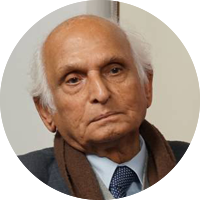
- Author :Intizar Hussain
- Publication : Director Qaumi Council Bara-e- Farogh-e-Urdu Zaban, New Delhi
Additional information available
Click on the INTERESTING button to view additional information associated with this sher.
About this sher
rare Unpublished content
This ghazal contains ashaar not published in the public domain. These are marked by a red line on the left.