Adab Aur Maqsad
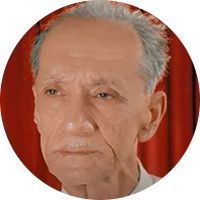
Gentlemen!
When you proposed my name for the presidency of this association, my first involuntary impulse was to withdraw it. I wanted to suggest someone else in my place—someone superior to me in both physical vitality and intellectual acuity—and there is certainly no shortage of such individuals among us. However, whether you call it human weakness, a sense of social etiquette, or simply courtesy, this feeling held me back, and I remained silent.
Later, when some individuals began withdrawing their names from the membership, a reactionary wave surged within me once again. The opportunity for me to withdraw my name had already passed. I considered offering a verbal resignation, but then I realized that on such occasions, very few of those who withdraw or decline do so out of an honest conviction of their own incompetence. Generally, people do this either out of a sense of bashfulness, or they use the veil of humility to project a sense of superiority—which is, in fact, symptomatic of a psychological complex or knot. I found neither of these feelings within myself. I only possessed a genuine sense of my own inadequacy, which no one was willing to accept. My point is that you have entrusted me with the presidency of this association, yet I find no feeling of gratitude in my heart for it. Consider it a saving grace that I harbor no complaints against you either. This was a personal matter, and it was best to simply get it off my chest.
Now, I would like to draw your attention to a few matters that we all need to consider. We have met several times regarding the establishment of this nascent association. People from every group and literary school felt the need for such an organization, and they made me realize this necessity as well. Therefore, from the very first day, I have participated in all the formal and informal gatherings held to form this association. It was, is, and will always remain my heartfelt desire that a healthy and fair-minded literary association be established—not just in Aligarh, not just in India, but across the entire world. This is not merely a matter of dreams and illusions. It can happen, because it must happen. In the words of Emerson:
When duty whispers low, Thou must,
The youth replies, I can.
(When duty whispers its demand, Look, you must do this, the righteous youth replies, I can do this.)
I have pinned my hopes not so much on my contemporaries, but on those young people who have not yet crossed the age of twenty-five.
Returning to the point, during the formation of this association, a question was repeatedly raised—sometimes in hushed tones, sometimes quite loudly: What is literature, and who should be considered a writer? Frankly, now that we are past the midpoint of the twentieth century, and having traversed the eras of the Iliad and the Mahabharata, all the way to the Shahnama, the Sikandar Nama, the Divine Comedy, and Paradise Lost, this question seems somewhat absurd. It is evidence not of the questioner's logical prowess, but rather of a mentality that Thomas Carlyle termed Logic Chopping, and for which the common idiom is splitting hairs.
I recently traveled to Allahabad simply for a change of intellectual scenery. There, too, I was confronted with this very question for several days. Silencing the questioners is not a particularly difficult task. However, I found myself pondering: what, ultimately, is the difference between literature and non-literature? This is not a new question for me. For the past thirty years, I have devoted my intellectual capacity and abilities to exploring such questions, and you all must have pondered them as well, arriving at your own conclusions.
Numerous definitions of art and literature have been formulated, and countless theories have been put forward. Some have viewed art and literature as a reflection of life seen through the mirror of an individual temperament; some have defined literature as the suppression of personality; others have declared the expression of personality to be literature's ultimate goal. Still others coined a new term, leaving us adrift in a nebulous world—the term being Super Personality, or Fauq-ul-Zat (beyond personality). Literature has sometimes been described as a criticism of life, and at other times as the glorification of life (Sublime & Lion). Some have called it the fruit and flower of life, while others have dismissed it as mere decorative masonry on the edifice of ideology. These are all half-truths that lead us astray. Literature is all of these things, and much more. Regardless, all this chatter has continued, yet literature has remained literature, and it always will, despite all shifting trends and theories.
What is literature? Beneath this query lies a more fundamental question: Does literature have a purpose, and if so, what is it? This question is as misleading as it is important. If literature is considered entirely synonymous with life, the immediate counter-question would be: What is the purpose of life itself? I am certain that when attempting to answer this, most of us would find ourselves at a loss for words. It will not suffice to say that the true purpose of life is to provide every human being with a full stomach, the best clothing, and optimal opportunities for physical comfort and leisure. It cannot be denied that this is the primary objective not just for humans, but for the entire animal kingdom, and it must be fulfilled. But what happens once this objective is fully achieved? In the human realm, at least, life and its purpose will persist even after that. Life will continue to march forward, and its ever-evolving purposes will continue to be realized. The march of progress will not halt.
Evolution in human life is a limitless concept. That is why it has been said, Man shall not live by bread alone—even though it is equally impossible to survive without it. Even Marx, the prophet of bread, writes in one of his works: A writer must certainly earn money in order to exist and write, but he must by no means exist and write for the purpose of making money. Further elaborating on this, Marx states, The first freedom of the press consists in its not being a trade.
Gentlemen! Firstly, much like human life, the purpose of literature is infinite in terms of both its direction and its dimensioned variety. Secondly, although no literature in any era has ever been created without a purpose (whether conscious or unconscious), it remains a highly significant fact that mere purpose alone has never constituted literature. Unless a creative plus sign is added to the purpose, it does not become literature. This is why the mere reporting of an event or newspaper journalism has never achieved the status of literature anywhere in the world. The truth is that, like life itself, the purpose of life is not a Euclidean concept—that is, a static point. Life is inclined toward growth and evolution, as is its purpose. And what holds true for life holds even truer for literature. Literature does not come into existence until the realm of possibility enters the present, imagination enters the event, and the element of the future enters the current moment.
Literature is the product of all of humanity's material and immaterial influences, and the ultimate outcome of all its practical and intellectual endeavors. Viewed from this perspective, literature is neither detached from external causes and conditions, nor is it indifferent to its ultimate purpose. However, the relationship between literature and its purpose is not the superficial and obvious one that exists between the blue print of a proposed bridge or building and its immediate, direct utility. Purposeless literature has never existed, at least not in our mortal world. However, this purpose is woven into the internal composition of literature as its inherent nature. It is exactly like the sun, within whose existence its purpose—the duty of providing us with light and heat—is inevitably and unconsciously concealed.
But consider this: if the sun were to consciously and excessively set out to fulfill its purpose, or if we were to emphatically demand that it perform its duty, imagine the immense danger it would pose to us. In short, the naked display of purpose is not what constitutes art or literature. If one undertakes a historical study of human culture from the nomadic era to the present day, this reality must be acknowledged, and indeed, sound minds have always accepted it.
Marx, Engels, and Lenin did not view literature as a mere mouthpiece either. And Engels—whom I consider, in many respects, a much more mature and refined personality than Marx—whether or not he viewed literature as propaganda, certainly did not view propaganda as literature. On one occasion, he explicitly wrote: The more the author's purpose remains hidden, the better it is for the work of art. In this context, he cites the example of the renowned French novelist Balzac's world-famous masterpiece, The Human Comedy. Engels considered Balzac a great realist, and Marx, too, acknowledged Balzac's greatness.
For the attentive reader, the aforementioned work by Balzac serves as a year-by-year chronicle of the French social system from 1816 to 1848. It details precisely how the emerging capitalist society, or the bourgeoisie, exerted continuous pressure on the French aristocracy, until the obsolete nobility was ultimately reduced to dust and blown away from France. Engels stated that he learned more from this novel than he did from all the professional historians, economists, and statisticians of that era combined. However, Balzac's novel is art first and purpose second. The greatness of his art elevated the greatness of his purpose; the greatness of his purpose did not elevate the greatness of his art.
I have intentionally elaborated on Balzac because, in the history of world literature, there has never been a progressive or non-progressive individual or group that has denied his greatness. This is also the secret behind the greatness of Shakespeare and Dickens. Do you know who Marx's favorite writers were? They were the ones who represented their era while preserving art as art. Namely: Aeschylus, Homer, Virgil, Dante, Shakespeare, Cervantes, Goethe, and Shelley. Marx also read the novels of Sir Walter Scott with great enthusiasm and absorption, drawing profound insight from them.
Gentlemen! If purpose alone were declared the ultimate goal of literature or any other art form, do you know what would happen? We would have to discard ninety-nine percent of all artistic creations—from the lyric poetry of Sappho and the epics of Homer to the present day—as useless and worthless. As I have already indicated, literature is not a purposeless endeavor. It does have a purpose, and this purpose is of immense significance. Literature is both the symbol and the guarantor of human civilization.
The purpose of literature is that, through its influence, a person naturally becomes more civilized, more noble, and more virtuous than before, without the need for preaching or proselytizing. Art, and literature in particular, continuously strips away the savage and base inclinations from human character—such as hedonism, selfishness, malice, envy, rancor, deceit, cunning, and the desire to make others victims of fraud and conspiracy. This has always been the purpose of literature, and this is its destiny. Life has spontaneously generated art—including literature—and art, in turn, has silently and innocently nurtured life. This has been the history of human life since the very first day.
I do not know to what extent you agree with the brief definition of literature and its purpose that I have just outlined. However, if it is accepted as true, then we must also admit that of the literature produced recently in the world—and particularly in our country—perhaps only a tenth of it qualifies as real, true, and genuine literature. For about twenty years now, the world—and our country most of all—has been producing more peddlers and hawkers of literature than actual writers. This is not the condition of any single faction, group, or literary school. In every school, every group, and every faction, such individuals are in the majority. Hawking Get your literature here! Get your literature here! does not constitute literature. We cannot deceive our customers for long by crying out the slogan:
Man qaash farosh-e-dil-e-sad-paara-e-khesham
[I am but a seller of the slices of my own shattered heart]
And if we continue to do so, no one will even spare a glance for our slices of melon or watermelon, and they will simply rot away in our baskets. In fact, even these literary peddlers are becoming a rare sight now. Their place has been taken by the watchmen of literature, who raise an unnecessary clamor, creating a false sense of danger where none exists.
Gentlemen! There is neither the occasion nor the time to speak more expansively on this. I believe I have provided clear indications regarding what literature is and what its ultimate purpose entails. What I have said about literature does not imply that it disregards or rejects the other demands of life. Literature welcomes all of life's material and immaterial needs and demands; in its own way, it not only supports them but actively aids in their fulfillment and satisfaction. However, the most crucial question is one of manner or style. This manner or style is the very soul of literature. Literature possesses its own code of law. While it acknowledges the ever-changing rules of other spheres of life, it refuses to submit to their mechanical guidance. This is because literature itself is the guide for life and for every one of its spheres.
Having expressed my views—for better or worse—on literature, I now wish to say a few words about this literary association. Its rules, regulations, aims, and objectives have already been presented to you, and you have all approved them without a single dissenting voice. However, setting aside these constitutional formalities, I have something more to say about this organization. The need for such an association has been felt for roughly ten months now. Furthermore, not just in Aligarh but beyond it as well, people have intensely felt for the past ten or twelve years that a united literary front must be established—a platform where individuals from every intellectual school of thought, and every theoretical and practical discipline, can come together to exchange ideas that may serve as a guiding light for our future.
All of us have come to realize that we have gone somewhat astray, and if we continue to wander aimlessly like this, then God help us. Nevertheless, the sentiment that led to the creation of this association resides, more or less, in all our hearts. A promising sign of this is that during the association's inaugural meeting, when the outline of its aims, objectives, curriculum, and constitution was presented to us, everyone approved it unanimously. I truly consider this a highly positive development. It is the natural and authentic voice of our hearts.
The primary objective of this literary association is for people of diverse viewpoints to gather and express their ideas truthfully. They should listen to and understand the perspectives of others with sincerity and nobility of spirit. Then, in the light of those ideas, and devoid of any personal or factional prejudice, they should honestly amend or expand upon their own viewpoints. Disagreement is a highly natural and essential element in both life and literature; it is the guarantor of health and progress. However, disagreement must never be allowed to devolve into hostility.
Setting aside the futile debates over materialism versus idealism, or the physical versus the spiritual, remember one thing: the secret of life lies in dialectics—that is, in struggle and contestation. Contradiction and collision are the very proofs of life's vitality and growth. This is not merely the philosophy of Hegel and Marx; others, too, have caught glimpses of this fundamental reality of existence. The renowned English poet William Blake also alluded to this truth when he stated, Without contraries is no progression. If this holds true, it means that differences of opinion are entirely justified. We should welcome them with open hearts and good intentions, utilizing them to refine and elevate our lives.
It is worth remembering that a consensus born of genuine and healthy disagreement is far more vibrant and enduring. This is the very kind of disagreement that, some thirteen hundred years ago, was described as a blessing for the Ummah (community). Yet, I will reiterate that disagreement does not equate to hostility. The true purpose of disagreement is correction and the creation of a new synthesis.
I began this discourse with a cursory definition of literature. In passing, another thought on this subject has come to mind, which I would like to share. It might further assist in grasping the core of the matter. At present, I am thinking of three words used to denote literature. Two of these words allude to the substance and internal composition of literature, while the third emphasizes its external form. The first word is the one we are currently using, prevalent in Arabic, Persian, and Urdu: Adab. The second word is Sahitya, which has historically been used for literature in Sanskrit and Hindi.
The fundamental meaning of both Adab and Sahitya is the expression of a collective and social consciousness. Adab teaches the etiquette of living together with truth and nobility; indeed, it is the very hallmark of this etiquette. The third word is from English: Literature. The root from which the word literature is derived means written letter. Thus, literature highlights the external and outward form of the concept. Literature is not merely the spoken word; it is the written word.
Therefore, when certain friends requested that I write down my thoughts and read them aloud at today's gathering, I was pleased to do so, even though I scarcely have the time for reading and writing these days. Someone among you might ask: did literature not exist before the invention of writing? The answer is, It did. When we say that literature is the written word, we mean that literature consists of words that possess the capacity to be preserved, and which do endure—whether in the hearts of people, carved on stone, inscribed on birch bark, or printed on modern paper. A word that cannot be preserved is not literature. And since the best and easiest way to preserve a word today is to write it down, stating that literature is the written word is entirely accurate. However, it is equally true that not every written word qualifies as literature.
Gentlemen! I have now said everything I needed to say, whether it was worth saying or not. As far as I can tell, there is nothing in my remarks that should provoke questions or demand answers. This has simply been an unreserved expression of the impressions and feelings that have occupied my mind for the past twelve years. However, it is possible that questions are arising in the minds of some. In this regard, I have a humble submission: on occasions with such limited time, a mere question-and-answer session cannot be truly satisfying. The questioner is unable to fully articulate their inner thoughts, nor can the respondent provide an entirely fulfilling answer.
Secondly, question-and-answer sessions often carry the risk of devolving into mere bickering, preventing us from reaching any substantial or serious conclusion. Therefore, my proposal is this: I have already presented my point of view. Now, if other gentlemen wish to do so, they should come forward and articulate their own thoughts. The members of the society will then have all our perspectives before them, and after comparing and contrasting them, they will be able to arrive at a sound and reasonable conclusion themselves. In fact, I believe the society's program should now be structured so that one person is assigned to write and clearly present their thoughts on a specific literary issue, or an aspect of it, during a session. Then, in a subsequent session, another person—or several others—should present their own written perspectives, keeping the previous session's discussion in mind.
In this way, the integrity of what we have just discussed regarding the outward form of literature will be preserved. Furthermore, we will soon accumulate a substantial repository of diverse thoughts on various literary issues from multiple angles, the publication of which could prove highly beneficial. Also, remember this saying by Bacon:
Writing maketh an exact man. (Writing makes a man precise and measured.)
However, I will reiterate that there is a difference between a disagreement and outright hostility. A literary society is exactly that—a literary society, not a wrestling arena.
(This address was delivered at a session of the Adabi Anjuman, Aligarh.)
Gentlemen!
When you proposed my name for the presidency of this association, my first involuntary impulse was to withdraw it. I wanted to suggest someone else in my place—someone superior to me in both physical vitality and intellectual acuity—and there is certainly no shortage of such individuals among us. However, whether you call it human weakness, a sense of social etiquette, or simply courtesy, this feeling held me back, and I remained silent.
Later, when some individuals began withdrawing their names from the membership, a reactionary wave surged within me once again. The opportunity for me to withdraw my name had already passed. I considered offering a verbal resignation, but then I realized that on such occasions, very few of those who withdraw or decline do so out of an honest conviction of their own incompetence. Generally, people do this either out of a sense of bashfulness, or they use the veil of humility to project a sense of superiority—which is, in fact, symptomatic of a psychological complex or knot. I found neither of these feelings within myself. I only possessed a genuine sense of my own inadequacy, which no one was willing to accept. My point is that you have entrusted me with the presidency of this association, yet I find no feeling of gratitude in my heart for it. Consider it a saving grace that I harbor no complaints against you either. This was a personal matter, and it was best to simply get it off my chest.
Now, I would like to draw your attention to a few matters that we all need to consider. We have met several times regarding the establishment of this nascent association. People from every group and literary school felt the need for such an organization, and they made me realize this necessity as well. Therefore, from the very first day, I have participated in all the formal and informal gatherings held to form this association. It was, is, and will always remain my heartfelt desire that a healthy and fair-minded literary association be established—not just in Aligarh, not just in India, but across the entire world. This is not merely a matter of dreams and illusions. It can happen, because it must happen. In the words of Emerson:
When duty whispers low, Thou must,
The youth replies, I can.
(When duty whispers its demand, Look, you must do this, the righteous youth replies, I can do this.)
I have pinned my hopes not so much on my contemporaries, but on those young people who have not yet crossed the age of twenty-five.
Returning to the point, during the formation of this association, a question was repeatedly raised—sometimes in hushed tones, sometimes quite loudly: What is literature, and who should be considered a writer? Frankly, now that we are past the midpoint of the twentieth century, and having traversed the eras of the Iliad and the Mahabharata, all the way to the Shahnama, the Sikandar Nama, the Divine Comedy, and Paradise Lost, this question seems somewhat absurd. It is evidence not of the questioner's logical prowess, but rather of a mentality that Thomas Carlyle termed Logic Chopping, and for which the common idiom is splitting hairs.
I recently traveled to Allahabad simply for a change of intellectual scenery. There, too, I was confronted with this very question for several days. Silencing the questioners is not a particularly difficult task. However, I found myself pondering: what, ultimately, is the difference between literature and non-literature? This is not a new question for me. For the past thirty years, I have devoted my intellectual capacity and abilities to exploring such questions, and you all must have pondered them as well, arriving at your own conclusions.
Numerous definitions of art and literature have been formulated, and countless theories have been put forward. Some have viewed art and literature as a reflection of life seen through the mirror of an individual temperament; some have defined literature as the suppression of personality; others have declared the expression of personality to be literature's ultimate goal. Still others coined a new term, leaving us adrift in a nebulous world—the term being Super Personality, or Fauq-ul-Zat (beyond personality). Literature has sometimes been described as a criticism of life, and at other times as the glorification of life (Sublime & Lion). Some have called it the fruit and flower of life, while others have dismissed it as mere decorative masonry on the edifice of ideology. These are all half-truths that lead us astray. Literature is all of these things, and much more. Regardless, all this chatter has continued, yet literature has remained literature, and it always will, despite all shifting trends and theories.
What is literature? Beneath this query lies a more fundamental question: Does literature have a purpose, and if so, what is it? This question is as misleading as it is important. If literature is considered entirely synonymous with life, the immediate counter-question would be: What is the purpose of life itself? I am certain that when attempting to answer this, most of us would find ourselves at a loss for words. It will not suffice to say that the true purpose of life is to provide every human being with a full stomach, the best clothing, and optimal opportunities for physical comfort and leisure. It cannot be denied that this is the primary objective not just for humans, but for the entire animal kingdom, and it must be fulfilled. But what happens once this objective is fully achieved? In the human realm, at least, life and its purpose will persist even after that. Life will continue to march forward, and its ever-evolving purposes will continue to be realized. The march of progress will not halt.
Evolution in human life is a limitless concept. That is why it has been said, Man shall not live by bread alone—even though it is equally impossible to survive without it. Even Marx, the prophet of bread, writes in one of his works: A writer must certainly earn money in order to exist and write, but he must by no means exist and write for the purpose of making money. Further elaborating on this, Marx states, The first freedom of the press consists in its not being a trade.
Gentlemen! Firstly, much like human life, the purpose of literature is infinite in terms of both its direction and its dimensioned variety. Secondly, although no literature in any era has ever been created without a purpose (whether conscious or unconscious), it remains a highly significant fact that mere purpose alone has never constituted literature. Unless a creative plus sign is added to the purpose, it does not become literature. This is why the mere reporting of an event or newspaper journalism has never achieved the status of literature anywhere in the world. The truth is that, like life itself, the purpose of life is not a Euclidean concept—that is, a static point. Life is inclined toward growth and evolution, as is its purpose. And what holds true for life holds even truer for literature. Literature does not come into existence until the realm of possibility enters the present, imagination enters the event, and the element of the future enters the current moment.
Literature is the product of all of humanity's material and immaterial influences, and the ultimate outcome of all its practical and intellectual endeavors. Viewed from this perspective, literature is neither detached from external causes and conditions, nor is it indifferent to its ultimate purpose. However, the relationship between literature and its purpose is not the superficial and obvious one that exists between the blue print of a proposed bridge or building and its immediate, direct utility. Purposeless literature has never existed, at least not in our mortal world. However, this purpose is woven into the internal composition of literature as its inherent nature. It is exactly like the sun, within whose existence its purpose—the duty of providing us with light and heat—is inevitably and unconsciously concealed.
But consider this: if the sun were to consciously and excessively set out to fulfill its purpose, or if we were to emphatically demand that it perform its duty, imagine the immense danger it would pose to us. In short, the naked display of purpose is not what constitutes art or literature. If one undertakes a historical study of human culture from the nomadic era to the present day, this reality must be acknowledged, and indeed, sound minds have always accepted it.
Marx, Engels, and Lenin did not view literature as a mere mouthpiece either. And Engels—whom I consider, in many respects, a much more mature and refined personality than Marx—whether or not he viewed literature as propaganda, certainly did not view propaganda as literature. On one occasion, he explicitly wrote: The more the author's purpose remains hidden, the better it is for the work of art. In this context, he cites the example of the renowned French novelist Balzac's world-famous masterpiece, The Human Comedy. Engels considered Balzac a great realist, and Marx, too, acknowledged Balzac's greatness.
For the attentive reader, the aforementioned work by Balzac serves as a year-by-year chronicle of the French social system from 1816 to 1848. It details precisely how the emerging capitalist society, or the bourgeoisie, exerted continuous pressure on the French aristocracy, until the obsolete nobility was ultimately reduced to dust and blown away from France. Engels stated that he learned more from this novel than he did from all the professional historians, economists, and statisticians of that era combined. However, Balzac's novel is art first and purpose second. The greatness of his art elevated the greatness of his purpose; the greatness of his purpose did not elevate the greatness of his art.
I have intentionally elaborated on Balzac because, in the history of world literature, there has never been a progressive or non-progressive individual or group that has denied his greatness. This is also the secret behind the greatness of Shakespeare and Dickens. Do you know who Marx's favorite writers were? They were the ones who represented their era while preserving art as art. Namely: Aeschylus, Homer, Virgil, Dante, Shakespeare, Cervantes, Goethe, and Shelley. Marx also read the novels of Sir Walter Scott with great enthusiasm and absorption, drawing profound insight from them.
Gentlemen! If purpose alone were declared the ultimate goal of literature or any other art form, do you know what would happen? We would have to discard ninety-nine percent of all artistic creations—from the lyric poetry of Sappho and the epics of Homer to the present day—as useless and worthless. As I have already indicated, literature is not a purposeless endeavor. It does have a purpose, and this purpose is of immense significance. Literature is both the symbol and the guarantor of human civilization.
The purpose of literature is that, through its influence, a person naturally becomes more civilized, more noble, and more virtuous than before, without the need for preaching or proselytizing. Art, and literature in particular, continuously strips away the savage and base inclinations from human character—such as hedonism, selfishness, malice, envy, rancor, deceit, cunning, and the desire to make others victims of fraud and conspiracy. This has always been the purpose of literature, and this is its destiny. Life has spontaneously generated art—including literature—and art, in turn, has silently and innocently nurtured life. This has been the history of human life since the very first day.
I do not know to what extent you agree with the brief definition of literature and its purpose that I have just outlined. However, if it is accepted as true, then we must also admit that of the literature produced recently in the world—and particularly in our country—perhaps only a tenth of it qualifies as real, true, and genuine literature. For about twenty years now, the world—and our country most of all—has been producing more peddlers and hawkers of literature than actual writers. This is not the condition of any single faction, group, or literary school. In every school, every group, and every faction, such individuals are in the majority. Hawking Get your literature here! Get your literature here! does not constitute literature. We cannot deceive our customers for long by crying out the slogan:
Man qaash farosh-e-dil-e-sad-paara-e-khesham
[I am but a seller of the slices of my own shattered heart]
And if we continue to do so, no one will even spare a glance for our slices of melon or watermelon, and they will simply rot away in our baskets. In fact, even these literary peddlers are becoming a rare sight now. Their place has been taken by the watchmen of literature, who raise an unnecessary clamor, creating a false sense of danger where none exists.
Gentlemen! There is neither the occasion nor the time to speak more expansively on this. I believe I have provided clear indications regarding what literature is and what its ultimate purpose entails. What I have said about literature does not imply that it disregards or rejects the other demands of life. Literature welcomes all of life's material and immaterial needs and demands; in its own way, it not only supports them but actively aids in their fulfillment and satisfaction. However, the most crucial question is one of manner or style. This manner or style is the very soul of literature. Literature possesses its own code of law. While it acknowledges the ever-changing rules of other spheres of life, it refuses to submit to their mechanical guidance. This is because literature itself is the guide for life and for every one of its spheres.
Having expressed my views—for better or worse—on literature, I now wish to say a few words about this literary association. Its rules, regulations, aims, and objectives have already been presented to you, and you have all approved them without a single dissenting voice. However, setting aside these constitutional formalities, I have something more to say about this organization. The need for such an association has been felt for roughly ten months now. Furthermore, not just in Aligarh but beyond it as well, people have intensely felt for the past ten or twelve years that a united literary front must be established—a platform where individuals from every intellectual school of thought, and every theoretical and practical discipline, can come together to exchange ideas that may serve as a guiding light for our future.
All of us have come to realize that we have gone somewhat astray, and if we continue to wander aimlessly like this, then God help us. Nevertheless, the sentiment that led to the creation of this association resides, more or less, in all our hearts. A promising sign of this is that during the association's inaugural meeting, when the outline of its aims, objectives, curriculum, and constitution was presented to us, everyone approved it unanimously. I truly consider this a highly positive development. It is the natural and authentic voice of our hearts.
The primary objective of this literary association is for people of diverse viewpoints to gather and express their ideas truthfully. They should listen to and understand the perspectives of others with sincerity and nobility of spirit. Then, in the light of those ideas, and devoid of any personal or factional prejudice, they should honestly amend or expand upon their own viewpoints. Disagreement is a highly natural and essential element in both life and literature; it is the guarantor of health and progress. However, disagreement must never be allowed to devolve into hostility.
Setting aside the futile debates over materialism versus idealism, or the physical versus the spiritual, remember one thing: the secret of life lies in dialectics—that is, in struggle and contestation. Contradiction and collision are the very proofs of life's vitality and growth. This is not merely the philosophy of Hegel and Marx; others, too, have caught glimpses of this fundamental reality of existence. The renowned English poet William Blake also alluded to this truth when he stated, Without contraries is no progression. If this holds true, it means that differences of opinion are entirely justified. We should welcome them with open hearts and good intentions, utilizing them to refine and elevate our lives.
It is worth remembering that a consensus born of genuine and healthy disagreement is far more vibrant and enduring. This is the very kind of disagreement that, some thirteen hundred years ago, was described as a blessing for the Ummah (community). Yet, I will reiterate that disagreement does not equate to hostility. The true purpose of disagreement is correction and the creation of a new synthesis.
I began this discourse with a cursory definition of literature. In passing, another thought on this subject has come to mind, which I would like to share. It might further assist in grasping the core of the matter. At present, I am thinking of three words used to denote literature. Two of these words allude to the substance and internal composition of literature, while the third emphasizes its external form. The first word is the one we are currently using, prevalent in Arabic, Persian, and Urdu: Adab. The second word is Sahitya, which has historically been used for literature in Sanskrit and Hindi.
The fundamental meaning of both Adab and Sahitya is the expression of a collective and social consciousness. Adab teaches the etiquette of living together with truth and nobility; indeed, it is the very hallmark of this etiquette. The third word is from English: Literature. The root from which the word literature is derived means written letter. Thus, literature highlights the external and outward form of the concept. Literature is not merely the spoken word; it is the written word.
Therefore, when certain friends requested that I write down my thoughts and read them aloud at today's gathering, I was pleased to do so, even though I scarcely have the time for reading and writing these days. Someone among you might ask: did literature not exist before the invention of writing? The answer is, It did. When we say that literature is the written word, we mean that literature consists of words that possess the capacity to be preserved, and which do endure—whether in the hearts of people, carved on stone, inscribed on birch bark, or printed on modern paper. A word that cannot be preserved is not literature. And since the best and easiest way to preserve a word today is to write it down, stating that literature is the written word is entirely accurate. However, it is equally true that not every written word qualifies as literature.
Gentlemen! I have now said everything I needed to say, whether it was worth saying or not. As far as I can tell, there is nothing in my remarks that should provoke questions or demand answers. This has simply been an unreserved expression of the impressions and feelings that have occupied my mind for the past twelve years. However, it is possible that questions are arising in the minds of some. In this regard, I have a humble submission: on occasions with such limited time, a mere question-and-answer session cannot be truly satisfying. The questioner is unable to fully articulate their inner thoughts, nor can the respondent provide an entirely fulfilling answer.
Secondly, question-and-answer sessions often carry the risk of devolving into mere bickering, preventing us from reaching any substantial or serious conclusion. Therefore, my proposal is this: I have already presented my point of view. Now, if other gentlemen wish to do so, they should come forward and articulate their own thoughts. The members of the society will then have all our perspectives before them, and after comparing and contrasting them, they will be able to arrive at a sound and reasonable conclusion themselves. In fact, I believe the society's program should now be structured so that one person is assigned to write and clearly present their thoughts on a specific literary issue, or an aspect of it, during a session. Then, in a subsequent session, another person—or several others—should present their own written perspectives, keeping the previous session's discussion in mind.
In this way, the integrity of what we have just discussed regarding the outward form of literature will be preserved. Furthermore, we will soon accumulate a substantial repository of diverse thoughts on various literary issues from multiple angles, the publication of which could prove highly beneficial. Also, remember this saying by Bacon:
Writing maketh an exact man. (Writing makes a man precise and measured.)
However, I will reiterate that there is a difference between a disagreement and outright hostility. A literary society is exactly that—a literary society, not a wrestling arena.
(This address was delivered at a session of the Adabi Anjuman, Aligarh.)
Additional information available
Click on the INTERESTING button to view additional information associated with this sher.
About this sher
rare Unpublished content
This ghazal contains ashaar not published in the public domain. These are marked by a red line on the left.