उर्दू की इश्क़िया शायरी
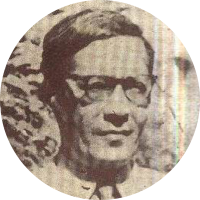
Urdu Ki Ishqiya Shairi (Urdu Love Poetry) is a work by Mr. Raghupati Sahay Firaq. Firaq is among the few educated individuals who reflect upon literature and literary issues objectively, and who possess the intellectual capacity to do so. Urdu Ki Ishqiya Shairi is perhaps the first book of its kind on this subject. While it is certainly interesting in this regard, it contains certain flaws that quickly turn our interest into dissatisfaction. In this review, I wish to discuss the reasons behind my dissatisfaction.
In reality, this work is not a book but an essay. Consequently, it suffers from the flaws of both formats. An essay has no fixed boundaries; it can be long or short. It can offer either a superficial overview of a subject or a profound analysis, but it is an accepted fact that an essay cannot achieve the comprehensiveness of a book. Ishqiya Shairi was originally an essay and was even published as such in the Jubilee issue of the Madina newspaper. Today, however, it has been presented in book form, featuring several notable additions that shed light on new ideas and issues, alongside a review of love poetry from 1929 to the present. While these additions have given Ishqiya Shairi the physical volume of a book, it still lacks a book's comprehensive scope. Perhaps Firaq himself realizes this, as he states:
My intention is to raise certain questions regarding prem and roop (love and form), as well as husn and ishq (beauty and romance), in the second edition, and attempt to point toward their answers. I have also considered that in the second edition, by providing comprehensive references to the romantic ghazals and nazms of every era, I will attempt to analyze their sexual and erotic psychology, and also make arrangements to evaluate their cultural values.
The extent to which Firaq’s intention is commendable will be discussed later. However, these sentences make it abundantly clear that even after writing so much, Firaq is not satisfied and wishes to say much more. One consequence of wanting to say so much is that the defining characteristic of an essay has been lost. The lightness, freshness, and subtlety inherent to an essay—its new, unique, and personal perspective—have been significantly diminished. In other words, the merging of two different formats in this book has resulted in a certain disjointedness, and the discourse lacks the elegance and logical progression one would expect.
There could have been several approaches to writing on this subject. For instance, one could adopt a historical approach, shedding light on the love poetry of each era and analyzing the changes or developments that occurred over time. Alternatively, the various genres of Urdu poetry could have been treated separately, detailing the romantic elements found in the ghazal, masnavi, and so on. Another approach would be to discuss the different types of love, providing examples from the ghazal, masnavi, marsiya, and other forms. As Firaq himself says regarding the ghazal:
The purpose of romantic poetry in the ghazal is, on the one hand, to compose overt love poetry, and on the other, to provide a mirror of beauty and love for mystical, philosophical, or purely human and individual feelings and impressions, so that existence may witness its own radiance within this mirror.
Firaq has conflated these various methods. In some places, he adopts a historical approach, discussing classical and modern lyricism (taghazzul), followed by an account of the shifts love poetry has undergone over the past six years. At times, he discusses individual genres, searching for examples of romantic poetry within the ghazal, masnavi, marsiya, vasokht, and free verse (azad nazm). Elsewhere, he categorizes different types of love poetry through a philosophical lens. The inevitable result of this is a sense of disarray.
Beyond these structural issues, there are numerous other discussions that are often both unnecessary and irrelevant. The text veers from philosophical love to the history of Urdu poetry; at times it attempts to settle the debate between the nazm and the ghazal, while elsewhere it offers opinions on issues of Urdu lexicography. On one hand, a debate on culture is initiated, while simultaneously, the author mentions his own quatrains (rubaiyat). A separate book, or at least a dedicated essay, could have been written on each of these topics. Obviously, a brief book like Ishqiya Shairi cannot accommodate all these subjects; consequently, every topic feels incomplete, and every argument remains superficial. For instance, the mention of the valuable (?) poetry collections published over the last five or six years is entirely inadequate. Rashid, Faiz, Akhtar-ul-Iman, Yusuf Zafar, Akhtar Ansari, Majaz, Jazbi, Zaidi, Jamal, Ehsan Danish, Makhdoom Mohiuddin, Ahmad Nadeem Qasmi, Josh, Akhtar Sheerani, Chaudhry Manzoor Ahmad, Nihal Seoharvi, Kaifi Azmi, and Salam Machhlishahari—all receive praise, but no critical analysis. It appears as though a bibliography of young poets' works has been compiled merely for the readers' convenience, or perhaps the true intention is simply to advertise these publications.
Consider an example of a different nature. Firaq poses ten questions regarding the concept of love. For the sake of brevity, I will reproduce only three of them here:
(1) Should a husband be in love only with his wife, and a wife only with her husband, or is this actually the case?
(9) And what are your thoughts on pederasty (amrad parasti)? Because whether you label it unnatural, abhorrent, and degrading, or whether you invoke the Indian Penal Code, it must be remembered that those who engage in pederasty are neither inherently criminals, nor are they degraded, wretched, vile, or generally bad people. In fact, many pederasts have been prominent figures in the history of morality, civilization, and spirituality—such as Socrates, Caesar, Michelangelo, Sarmad, and Shakespeare. Furthermore, millions of men worldwide who have engaged in pederasty have been highly respectable individuals.
(10) Similarly, women have also experienced sexual or erotic love for other women, and these women were not degraded either.
Firaq poses these questions and invites the reader to reflect upon them objectively, yet he offers no solutions. What, then, is the point of these questions? The tone in which they are asked leads to the conclusion that a husband and wife neither do, nor should, fall in love with one another; that pederasty is a highly commendable practice; and similarly, that erotic love between women is not a bad thing either. If these are indeed Firaq’s views, he is entitled to them, but propagating such ideas in this particular book was entirely unnecessary. Furthermore, it is a point of psychological interest that the question regarding pederasty is given far more weight than the others. The deliberate violence inflicted upon fact, reality, and logic in this context is something this book is replete with. To a great extent, this kind of intellectual violence is a common characteristic of the writings of young authors, particularly the Progressive writers.
Let us examine this question (9). Firaq Sahib states, Bear in mind that those who engage in pederasty are neither criminals, nor vile, nor despicable, nor base, nor are they generally bad people. I do not know what proof Firaq Sahib has for this statement. Is he aware of the private lives of all contemporary pederasts? If not, what is the point of making such an absurd claim? Does Firaq Sahib mean that pederasty is such a noble religion or moral code that it completely shields us from vileness, crime, and baseness? Does he believe that if everyone became a pederast, all the evils in the world would be eradicated? Does he deny that pederasts can also be criminals, despicable, and base? Has he considered the issue of abnormality and its consequences, and has he read the existing literature on it? Furthermore, his next sentence suggests that if he ever studied logic, he has completely forgotten it. He states, Rather, many pederasts have been prominent figures in the history of morality, civilization, and spirituality.
It is unclear what Firaq Sahib thinks this sentence proves. Does he realize that no logical conclusion can be drawn from it? Does he mean that every pederast is a Socrates, a Caesar, or a Sarmad? Or that all the prominent figures in the history of morality and spirituality were pederasts? Perhaps he does not understand that the greatness of Socrates, Sarmad, and Shakespeare was not due to their pederasty.
The third example is the issue of the Urdu lexicon. It is possible that Firaq Sahib has pondered this issue for years, and it is also possible that after years of reflection, he wishes to express his views. However, this was not the appropriate occasion to do so. He could have written a separate book on this subject, as it is by no means an easy one. Moreover, the solution he proposes is superficial, unacceptable, and reveals an ignorance of linguistic principles. He states, A Hindi dictionary or a concise edition of the Hindi Shabd Sagar should be taken, and beautiful Sanskrit words should be selected from it. Specifically, those words should be chosen which simply cannot be translated into Arabic and Persian. Then, in the truest and most significant sense, Urdu will not merely remain a shared transactional language of Hindus and Muslims, but will become the confluence of Hindu and Muslim cultures.
The first question is: who will select these words? Firaq Sahib, or some committee? Furthermore, what will be the standard of beauty? Perhaps Firaq Sahib is unaware that languages do not flourish in this manner. If Urdu requires beautiful Sanskrit words, those words will naturally enter the language, and there will be absolutely no need for the kind of deliberate selection Firaq Sahib suggests. If Urdu prose writers and poets feel the need, they will use such words; many of them will gain acceptance, while many others will be rejected. It seems to me—and I am compelled to say this—that the only purpose of raising this issue was so that Firaq Sahib could quote some of his own rubaiyat (quatrains) as examples. Whether those quatrains are good or bad, this book was certainly not the proper place to reproduce them. Allow me to say that these quatrains offended my sensibilities immensely.
Similarly, Firaq Sahib's own couplets, with which he has adorned his book, became a source of dissatisfaction for me. Firaq Sahib is a good ghazal poet, but it would have been better had he not quoted his own verses in this book. Seeing phrases everywhere like Here is my couplet, I am reminded of my own verse, As I have said in my poetry, The author presents some of his own verses, or These couplets of mine, offends a refined literary sensibility. Firaq Sahib realizes that this approach is not good, and he himself admits it. He says, I am not very happy about including my own poetry in this essay, but please grant me the right to be moved by my own verses.
However, the excuse he invents is merely an excuse and nothing more. Every poet has the right to be moved by his own poetry, and indeed they are, but this does not mean that whatever book they write should be turned into a collection of their own verses. This self-display is not a good thing, and such vanity looks particularly bad coming from an educated and sensible man like Firaq. Many more examples of this kind could be presented, but there is no room for such detail. In short, this book lacks formal beauty, the tact to present ideas in a coherent and organized manner, and logical reasoning. The arguments are disjointed; there is haste and disarray. Perhaps the reason for this is that the essay was written out of obligation and in the midst of severe illness. Therefore, just as it was impossible to review hundreds of poems, no attention was paid to these literary merits either.
Aside from the flaws in its formal beauty, many other things in this book cause us dissatisfaction. At times, the tone is prophetic, making predictions about the future with absolute certainty; at other times, definitive judgments are passed with complete self-assurance. Sometimes psychological issues are brought up, and at other times Marxist theories are propagated. Matters that leave ample room for debate are presented as established facts. Furthermore, there is a romanticism in the style, and the tone carries the zeal, impatience, and excess of youth. At one point he says, The era that is dawning upon the world is not merely an era of political or economic democracy, but also an era of the democracy of civilization and culture. Or, In the new civilization and the new society, love will not be a rebellion; rather, instead of rebellion and treachery, it will reflect the living relationships between individuals, and the love poetry of the future will be seen polishing this mirror.
Both of these sentences possess a prophetic grandeur. They predict what is to come, but one cannot help but say that neither sentence has any relevance to the topic under discussion. Firaq's subject is Urdu love poetry, not the democratic culture and love poetry of the future. It must also be said that the dream of the future Firaq Sahib describes is not his own. He is merely repeating a dream seen by others; that is, he commits the very same error that is the specific shortcoming of young Progressive writers—namely, seeing through the eyes of others and thinking with the minds of others. Sometimes he thinks with the mind of Freud and his disciples, and sometimes with the mind of Marx and his followers.
It has been said, The cross and the crescent are sexual symbols; life is synonymous with sexuality. This idea might seem new in Urdu, but in reality, it is not. Those who are well-read know that Firaq is not saying anything novel. They also know that he uncritically adopts this idea and others like it without any thought or scrutiny. Furthermore, Firaq fails to realize that the claim life is synonymous with sexuality requires both explanation and proof. Both life and sexuality need to be clearly defined. Is Firaq unaware of the criticism leveled against Freud himself—that he uses the word sex in an ambiguous sense and fails to clearly define the context in which he applies it?
Sexuality has a limited meaning—the one in which it is commonly used—and if life is entirely about this limited kind of sexuality, then the sooner it ends, the better. On the other hand, we could use the word in such a grand sense that it becomes synonymous with life itself. In that case, the phrase life is synonymous with sexuality would simply mean that life is synonymous with life, which is a meaningless statement. One must also consider whether life is merely the act of living. If life simply means existing and surviving, then there is no difference between human life and animal life. To use the word life solely in this sense is to murder the very concepts of life, humanity, intellect, and justice. Is the vision of life presented by Bernard Shaw synonymous with sexuality? If it is, then sexuality must be something entirely different from what we generally understand it to be.
In some places, he draws upon Freud, while in others, he uncritically propagates the ideas of Marx. He writes, The ultimate purpose of the ghazal's love poetry is to strike the chords of existence and awaken a sense of the harmony hidden within the universal conflict and dialectics of existence. For now, I am not debating the purpose of the ghazal's love poetry; I merely wish to point out that the concept of a harmony hidden within the universal conflict and dialectics of existence is borrowed from Marx—it is not Firaq's original invention. Has Firaq ever deeply reflected on these dialectics? Has he ever realized that the philosophical foundation of Marx's ideas is not solid? Is he aware that Marx's philosophy is built upon Hegel's philosophy, which itself rests on weak foundations?
Everywhere, his thoughts are colored by Marx. This is evident when he discusses culture, when he dreams of a democracy of culture and civilization alongside an era of political or economic democracy, or when he claims that Urdu poetry has been reduced to the property of a single class and that our literature and poetry must draw closer to the masses. In short, this hue is present everywhere—the very same hue that permeates ordinary Progressive criticism. I know this color is quite deep, but it is not very pleasant. It seems as though the literary world will soon be dyed in a single color, a permanent one, and the name of this color is blackness—an all-encompassing blackness.
The imitation of Freud and Marx exposes a lack of critical insight, and many varied examples of this deficiency can be found throughout this book. For instance, at one point it is boldly declared: We do not consider it true love poetry if it does not make the blood race through our veins and make our lives complete. First of all, it is not the function of poetry—whether love poetry or any other kind—to make the blood race through our veins or to make our lives complete (it is unclear what exactly Firaq means by making our lives complete). This is the very same misconception that leads people today to demand a living message from a poet, to regard nationalistic poetry as the pinnacle of the art form, and to equate poetry with chanting slogans like Revolution, revolution! or Awake, awake! We are workers, we are workers! We will eradicate poverty, we will eradicate poverty! and other such nonsense. Poetry is not a message, it is not propaganda, and it is not sloganeering; it is something else entirely.
In any case, after making this claim about love poetry, when Firaq turns his attention to Mir, he finds himself in a peculiar predicament. He knows that Mir's love poetry does not make the blood race through our veins, nor does it make our lives complete, yet he also knows that Mir is a great poet. Consequently, he is caught in a strange dilemma. On one hand is his theory, which he cannot abandon; on the other is the undeniable reality of Mir's poetic greatness. What is he to do? To resolve this, he offers the excuse that Mir himself is not responsible for the morbid elements in his love poetry. He writes, The morbid elements in Mir's love poetry... the traces of death—their ominous roots can be found in the melancholic social atmosphere of that era and the circumstances of Mir's childhood.
Whatever the reason may be, if there are traces of death in Mir's love poetry, then according to Firaq's own standard, it cannot be true love poetry. However, Firaq lacks the courage and the logical consistency to arrive at this conclusion. Instead, he says, It is another matter that Mir has illuminated these elements of decay. By expending his own life, he has transformed the elements of death into the elements of life. In other words, if Mir's poetry remains true poetry despite its morbid elements, then what becomes of Firaq's theory? Only Firaq can answer that.
Consider a few more examples, which are presented here at random:
(1) Mir is the greater poet, but Ghalib is the greater artist or ghazal-writer.
(2) Khwaja Mir Asar's masnavi Khwab-o-Khayal is a phenomenal romantic masnavi.
(3) After this, Anees and Dabeer composed marsiyas (elegies) and brought Urdu's non-amorous poetry shoulder-to-shoulder with the non-amorous and non-romantic poetry of the world.
(4) Majaz is the poet of revolution; the semantic and principled layers, the profound allusions, and the essence of social philosophy present in his poetry cannot be easily grasped by those who are unacquainted with the philosophy of history and the philosophy of evolution and revolution.
(5) This poem (Raqeeb Se [To the Rival]) was exactly that kind of poem. In the history of Urdu love poetry, a poem so pure, so poignant, so far-reaching, and so philosophical has never before been created. It is not merely a poem, but rather the night of the union of heaven and hell. What more could Shakespeare, Goethe, Kalidasa, or Saadi have possibly said to a rival?
(6) Society is the product of sexuality, and sexuality is the product of society.
These examples, and others of their kind, suffer from numerous and varied inconsistencies. The very first sentence demands an explanation. What is the difference between a poet, an artist, and a ghazal writer? If Mir is a great poet, what are the elements of his greatness? What is the reason for this greatness? Is Mir not a great artist? Is artistry one thing and poetry another? Is Ghalib a great artist simply because his poetry possesses greater variety and his poetic universe is not as limited as Mir's? Khwaja Mir Asar's masnavi is not some earth-shattering romantic epic. What does an earth-shattering masnavi even mean? The masnavi Khwab-o-Khayal is certainly praiseworthy for its linguistic excellence, but it does not hold a high status in the world of literature and poetry. Its greatest flaw is a lack of engaging interest (see Urdu Shaeri Par Ek Nazar). The marsiyas (elegies) of Anees and Dabeer cannot be compared to the non-amorous and romantic poetry of the world. Such a claim is merely dictated by patriotic sentiment and nothing else. It has absolutely nothing to do with criticism, understanding, or scholarly awareness.
In Majaz's poetry, one finds absolutely no semantic depth, principled layers, or profound allusions. Whatever layers and allusions do exist are superficial and rooted in Marxist ideology. Neither Majaz nor any other Progressive poet has ever—even by mistake—contemplated the philosophy of society, the philosophy of history, or the philosophy of evolution and revolution, nor do they possess the intellectual capacity to do so; they merely propagate borrowed ideas. To mention Faiz in the same breath as Shakespeare, Goethe, Kalidasa, and Saadi is to provide proof of one's own poor taste. When there is such a severe lack of discernment, how can one possibly trust such criticism? Society is the product of sexuality, and sexuality is the product of society—it is impossible to know what this sentence even means. It sounds like some unsolvable riddle of mysticism.
There is still much left to say, but the pages of Ma'asir cannot bear further detail. However, I have no choice but to mention one more thing, and that concerns Firaq's prose style. Firaq has penned the dedication of this book in his own signature style, with romanticism dripping from every single word. This romanticism belongs to Firaq's prose, and it is the greatest blemish on his criticism. The language of criticism should be straightforward, clear, precise, and scientific. Yet, Firaq does not restrain this romanticism; instead of holding it back, he indulges in exaggeration. Because of this romanticism, the general reader may become overly awed and impressed, and the superficial gaze may be deceived, but people of insight know that romanticism is inherently flawed and the root of many evils. It is precisely because of this that Firaq sometimes loses his way, and strays quite far. He does not speak clearly or thoughtfully, preferring linguistic flair and poetic phrase-making over critical accuracy.
If Firaq publishes a second edition of this book, then instead of raising questions about prem (love) and roop (beauty), providing exhaustive references to the love poems and ghazals of every era, and examining cultural values, he should focus on the issues I have briefly outlined. Otherwise, if he insists on raising these questions and sparking these debates, he will have to write several books instead of just one—and I fear those books will have very little to do with literary criticism.
Urdu Ki Ishqiya Shairi (Urdu Love Poetry) is a work by Mr. Raghupati Sahay Firaq. Firaq is among the few educated individuals who reflect upon literature and literary issues objectively, and who possess the intellectual capacity to do so. Urdu Ki Ishqiya Shairi is perhaps the first book of its kind on this subject. While it is certainly interesting in this regard, it contains certain flaws that quickly turn our interest into dissatisfaction. In this review, I wish to discuss the reasons behind my dissatisfaction.
In reality, this work is not a book but an essay. Consequently, it suffers from the flaws of both formats. An essay has no fixed boundaries; it can be long or short. It can offer either a superficial overview of a subject or a profound analysis, but it is an accepted fact that an essay cannot achieve the comprehensiveness of a book. Ishqiya Shairi was originally an essay and was even published as such in the Jubilee issue of the Madina newspaper. Today, however, it has been presented in book form, featuring several notable additions that shed light on new ideas and issues, alongside a review of love poetry from 1929 to the present. While these additions have given Ishqiya Shairi the physical volume of a book, it still lacks a book's comprehensive scope. Perhaps Firaq himself realizes this, as he states:
My intention is to raise certain questions regarding prem and roop (love and form), as well as husn and ishq (beauty and romance), in the second edition, and attempt to point toward their answers. I have also considered that in the second edition, by providing comprehensive references to the romantic ghazals and nazms of every era, I will attempt to analyze their sexual and erotic psychology, and also make arrangements to evaluate their cultural values.
The extent to which Firaq’s intention is commendable will be discussed later. However, these sentences make it abundantly clear that even after writing so much, Firaq is not satisfied and wishes to say much more. One consequence of wanting to say so much is that the defining characteristic of an essay has been lost. The lightness, freshness, and subtlety inherent to an essay—its new, unique, and personal perspective—have been significantly diminished. In other words, the merging of two different formats in this book has resulted in a certain disjointedness, and the discourse lacks the elegance and logical progression one would expect.
There could have been several approaches to writing on this subject. For instance, one could adopt a historical approach, shedding light on the love poetry of each era and analyzing the changes or developments that occurred over time. Alternatively, the various genres of Urdu poetry could have been treated separately, detailing the romantic elements found in the ghazal, masnavi, and so on. Another approach would be to discuss the different types of love, providing examples from the ghazal, masnavi, marsiya, and other forms. As Firaq himself says regarding the ghazal:
The purpose of romantic poetry in the ghazal is, on the one hand, to compose overt love poetry, and on the other, to provide a mirror of beauty and love for mystical, philosophical, or purely human and individual feelings and impressions, so that existence may witness its own radiance within this mirror.
Firaq has conflated these various methods. In some places, he adopts a historical approach, discussing classical and modern lyricism (taghazzul), followed by an account of the shifts love poetry has undergone over the past six years. At times, he discusses individual genres, searching for examples of romantic poetry within the ghazal, masnavi, marsiya, vasokht, and free verse (azad nazm). Elsewhere, he categorizes different types of love poetry through a philosophical lens. The inevitable result of this is a sense of disarray.
Beyond these structural issues, there are numerous other discussions that are often both unnecessary and irrelevant. The text veers from philosophical love to the history of Urdu poetry; at times it attempts to settle the debate between the nazm and the ghazal, while elsewhere it offers opinions on issues of Urdu lexicography. On one hand, a debate on culture is initiated, while simultaneously, the author mentions his own quatrains (rubaiyat). A separate book, or at least a dedicated essay, could have been written on each of these topics. Obviously, a brief book like Ishqiya Shairi cannot accommodate all these subjects; consequently, every topic feels incomplete, and every argument remains superficial. For instance, the mention of the valuable (?) poetry collections published over the last five or six years is entirely inadequate. Rashid, Faiz, Akhtar-ul-Iman, Yusuf Zafar, Akhtar Ansari, Majaz, Jazbi, Zaidi, Jamal, Ehsan Danish, Makhdoom Mohiuddin, Ahmad Nadeem Qasmi, Josh, Akhtar Sheerani, Chaudhry Manzoor Ahmad, Nihal Seoharvi, Kaifi Azmi, and Salam Machhlishahari—all receive praise, but no critical analysis. It appears as though a bibliography of young poets' works has been compiled merely for the readers' convenience, or perhaps the true intention is simply to advertise these publications.
Consider an example of a different nature. Firaq poses ten questions regarding the concept of love. For the sake of brevity, I will reproduce only three of them here:
(1) Should a husband be in love only with his wife, and a wife only with her husband, or is this actually the case?
(9) And what are your thoughts on pederasty (amrad parasti)? Because whether you label it unnatural, abhorrent, and degrading, or whether you invoke the Indian Penal Code, it must be remembered that those who engage in pederasty are neither inherently criminals, nor are they degraded, wretched, vile, or generally bad people. In fact, many pederasts have been prominent figures in the history of morality, civilization, and spirituality—such as Socrates, Caesar, Michelangelo, Sarmad, and Shakespeare. Furthermore, millions of men worldwide who have engaged in pederasty have been highly respectable individuals.
(10) Similarly, women have also experienced sexual or erotic love for other women, and these women were not degraded either.
Firaq poses these questions and invites the reader to reflect upon them objectively, yet he offers no solutions. What, then, is the point of these questions? The tone in which they are asked leads to the conclusion that a husband and wife neither do, nor should, fall in love with one another; that pederasty is a highly commendable practice; and similarly, that erotic love between women is not a bad thing either. If these are indeed Firaq’s views, he is entitled to them, but propagating such ideas in this particular book was entirely unnecessary. Furthermore, it is a point of psychological interest that the question regarding pederasty is given far more weight than the others. The deliberate violence inflicted upon fact, reality, and logic in this context is something this book is replete with. To a great extent, this kind of intellectual violence is a common characteristic of the writings of young authors, particularly the Progressive writers.
Let us examine this question (9). Firaq Sahib states, Bear in mind that those who engage in pederasty are neither criminals, nor vile, nor despicable, nor base, nor are they generally bad people. I do not know what proof Firaq Sahib has for this statement. Is he aware of the private lives of all contemporary pederasts? If not, what is the point of making such an absurd claim? Does Firaq Sahib mean that pederasty is such a noble religion or moral code that it completely shields us from vileness, crime, and baseness? Does he believe that if everyone became a pederast, all the evils in the world would be eradicated? Does he deny that pederasts can also be criminals, despicable, and base? Has he considered the issue of abnormality and its consequences, and has he read the existing literature on it? Furthermore, his next sentence suggests that if he ever studied logic, he has completely forgotten it. He states, Rather, many pederasts have been prominent figures in the history of morality, civilization, and spirituality.
It is unclear what Firaq Sahib thinks this sentence proves. Does he realize that no logical conclusion can be drawn from it? Does he mean that every pederast is a Socrates, a Caesar, or a Sarmad? Or that all the prominent figures in the history of morality and spirituality were pederasts? Perhaps he does not understand that the greatness of Socrates, Sarmad, and Shakespeare was not due to their pederasty.
The third example is the issue of the Urdu lexicon. It is possible that Firaq Sahib has pondered this issue for years, and it is also possible that after years of reflection, he wishes to express his views. However, this was not the appropriate occasion to do so. He could have written a separate book on this subject, as it is by no means an easy one. Moreover, the solution he proposes is superficial, unacceptable, and reveals an ignorance of linguistic principles. He states, A Hindi dictionary or a concise edition of the Hindi Shabd Sagar should be taken, and beautiful Sanskrit words should be selected from it. Specifically, those words should be chosen which simply cannot be translated into Arabic and Persian. Then, in the truest and most significant sense, Urdu will not merely remain a shared transactional language of Hindus and Muslims, but will become the confluence of Hindu and Muslim cultures.
The first question is: who will select these words? Firaq Sahib, or some committee? Furthermore, what will be the standard of beauty? Perhaps Firaq Sahib is unaware that languages do not flourish in this manner. If Urdu requires beautiful Sanskrit words, those words will naturally enter the language, and there will be absolutely no need for the kind of deliberate selection Firaq Sahib suggests. If Urdu prose writers and poets feel the need, they will use such words; many of them will gain acceptance, while many others will be rejected. It seems to me—and I am compelled to say this—that the only purpose of raising this issue was so that Firaq Sahib could quote some of his own rubaiyat (quatrains) as examples. Whether those quatrains are good or bad, this book was certainly not the proper place to reproduce them. Allow me to say that these quatrains offended my sensibilities immensely.
Similarly, Firaq Sahib's own couplets, with which he has adorned his book, became a source of dissatisfaction for me. Firaq Sahib is a good ghazal poet, but it would have been better had he not quoted his own verses in this book. Seeing phrases everywhere like Here is my couplet, I am reminded of my own verse, As I have said in my poetry, The author presents some of his own verses, or These couplets of mine, offends a refined literary sensibility. Firaq Sahib realizes that this approach is not good, and he himself admits it. He says, I am not very happy about including my own poetry in this essay, but please grant me the right to be moved by my own verses.
However, the excuse he invents is merely an excuse and nothing more. Every poet has the right to be moved by his own poetry, and indeed they are, but this does not mean that whatever book they write should be turned into a collection of their own verses. This self-display is not a good thing, and such vanity looks particularly bad coming from an educated and sensible man like Firaq. Many more examples of this kind could be presented, but there is no room for such detail. In short, this book lacks formal beauty, the tact to present ideas in a coherent and organized manner, and logical reasoning. The arguments are disjointed; there is haste and disarray. Perhaps the reason for this is that the essay was written out of obligation and in the midst of severe illness. Therefore, just as it was impossible to review hundreds of poems, no attention was paid to these literary merits either.
Aside from the flaws in its formal beauty, many other things in this book cause us dissatisfaction. At times, the tone is prophetic, making predictions about the future with absolute certainty; at other times, definitive judgments are passed with complete self-assurance. Sometimes psychological issues are brought up, and at other times Marxist theories are propagated. Matters that leave ample room for debate are presented as established facts. Furthermore, there is a romanticism in the style, and the tone carries the zeal, impatience, and excess of youth. At one point he says, The era that is dawning upon the world is not merely an era of political or economic democracy, but also an era of the democracy of civilization and culture. Or, In the new civilization and the new society, love will not be a rebellion; rather, instead of rebellion and treachery, it will reflect the living relationships between individuals, and the love poetry of the future will be seen polishing this mirror.
Both of these sentences possess a prophetic grandeur. They predict what is to come, but one cannot help but say that neither sentence has any relevance to the topic under discussion. Firaq's subject is Urdu love poetry, not the democratic culture and love poetry of the future. It must also be said that the dream of the future Firaq Sahib describes is not his own. He is merely repeating a dream seen by others; that is, he commits the very same error that is the specific shortcoming of young Progressive writers—namely, seeing through the eyes of others and thinking with the minds of others. Sometimes he thinks with the mind of Freud and his disciples, and sometimes with the mind of Marx and his followers.
It has been said, The cross and the crescent are sexual symbols; life is synonymous with sexuality. This idea might seem new in Urdu, but in reality, it is not. Those who are well-read know that Firaq is not saying anything novel. They also know that he uncritically adopts this idea and others like it without any thought or scrutiny. Furthermore, Firaq fails to realize that the claim life is synonymous with sexuality requires both explanation and proof. Both life and sexuality need to be clearly defined. Is Firaq unaware of the criticism leveled against Freud himself—that he uses the word sex in an ambiguous sense and fails to clearly define the context in which he applies it?
Sexuality has a limited meaning—the one in which it is commonly used—and if life is entirely about this limited kind of sexuality, then the sooner it ends, the better. On the other hand, we could use the word in such a grand sense that it becomes synonymous with life itself. In that case, the phrase life is synonymous with sexuality would simply mean that life is synonymous with life, which is a meaningless statement. One must also consider whether life is merely the act of living. If life simply means existing and surviving, then there is no difference between human life and animal life. To use the word life solely in this sense is to murder the very concepts of life, humanity, intellect, and justice. Is the vision of life presented by Bernard Shaw synonymous with sexuality? If it is, then sexuality must be something entirely different from what we generally understand it to be.
In some places, he draws upon Freud, while in others, he uncritically propagates the ideas of Marx. He writes, The ultimate purpose of the ghazal's love poetry is to strike the chords of existence and awaken a sense of the harmony hidden within the universal conflict and dialectics of existence. For now, I am not debating the purpose of the ghazal's love poetry; I merely wish to point out that the concept of a harmony hidden within the universal conflict and dialectics of existence is borrowed from Marx—it is not Firaq's original invention. Has Firaq ever deeply reflected on these dialectics? Has he ever realized that the philosophical foundation of Marx's ideas is not solid? Is he aware that Marx's philosophy is built upon Hegel's philosophy, which itself rests on weak foundations?
Everywhere, his thoughts are colored by Marx. This is evident when he discusses culture, when he dreams of a democracy of culture and civilization alongside an era of political or economic democracy, or when he claims that Urdu poetry has been reduced to the property of a single class and that our literature and poetry must draw closer to the masses. In short, this hue is present everywhere—the very same hue that permeates ordinary Progressive criticism. I know this color is quite deep, but it is not very pleasant. It seems as though the literary world will soon be dyed in a single color, a permanent one, and the name of this color is blackness—an all-encompassing blackness.
The imitation of Freud and Marx exposes a lack of critical insight, and many varied examples of this deficiency can be found throughout this book. For instance, at one point it is boldly declared: We do not consider it true love poetry if it does not make the blood race through our veins and make our lives complete. First of all, it is not the function of poetry—whether love poetry or any other kind—to make the blood race through our veins or to make our lives complete (it is unclear what exactly Firaq means by making our lives complete). This is the very same misconception that leads people today to demand a living message from a poet, to regard nationalistic poetry as the pinnacle of the art form, and to equate poetry with chanting slogans like Revolution, revolution! or Awake, awake! We are workers, we are workers! We will eradicate poverty, we will eradicate poverty! and other such nonsense. Poetry is not a message, it is not propaganda, and it is not sloganeering; it is something else entirely.
In any case, after making this claim about love poetry, when Firaq turns his attention to Mir, he finds himself in a peculiar predicament. He knows that Mir's love poetry does not make the blood race through our veins, nor does it make our lives complete, yet he also knows that Mir is a great poet. Consequently, he is caught in a strange dilemma. On one hand is his theory, which he cannot abandon; on the other is the undeniable reality of Mir's poetic greatness. What is he to do? To resolve this, he offers the excuse that Mir himself is not responsible for the morbid elements in his love poetry. He writes, The morbid elements in Mir's love poetry... the traces of death—their ominous roots can be found in the melancholic social atmosphere of that era and the circumstances of Mir's childhood.
Whatever the reason may be, if there are traces of death in Mir's love poetry, then according to Firaq's own standard, it cannot be true love poetry. However, Firaq lacks the courage and the logical consistency to arrive at this conclusion. Instead, he says, It is another matter that Mir has illuminated these elements of decay. By expending his own life, he has transformed the elements of death into the elements of life. In other words, if Mir's poetry remains true poetry despite its morbid elements, then what becomes of Firaq's theory? Only Firaq can answer that.
Consider a few more examples, which are presented here at random:
(1) Mir is the greater poet, but Ghalib is the greater artist or ghazal-writer.
(2) Khwaja Mir Asar's masnavi Khwab-o-Khayal is a phenomenal romantic masnavi.
(3) After this, Anees and Dabeer composed marsiyas (elegies) and brought Urdu's non-amorous poetry shoulder-to-shoulder with the non-amorous and non-romantic poetry of the world.
(4) Majaz is the poet of revolution; the semantic and principled layers, the profound allusions, and the essence of social philosophy present in his poetry cannot be easily grasped by those who are unacquainted with the philosophy of history and the philosophy of evolution and revolution.
(5) This poem (Raqeeb Se [To the Rival]) was exactly that kind of poem. In the history of Urdu love poetry, a poem so pure, so poignant, so far-reaching, and so philosophical has never before been created. It is not merely a poem, but rather the night of the union of heaven and hell. What more could Shakespeare, Goethe, Kalidasa, or Saadi have possibly said to a rival?
(6) Society is the product of sexuality, and sexuality is the product of society.
These examples, and others of their kind, suffer from numerous and varied inconsistencies. The very first sentence demands an explanation. What is the difference between a poet, an artist, and a ghazal writer? If Mir is a great poet, what are the elements of his greatness? What is the reason for this greatness? Is Mir not a great artist? Is artistry one thing and poetry another? Is Ghalib a great artist simply because his poetry possesses greater variety and his poetic universe is not as limited as Mir's? Khwaja Mir Asar's masnavi is not some earth-shattering romantic epic. What does an earth-shattering masnavi even mean? The masnavi Khwab-o-Khayal is certainly praiseworthy for its linguistic excellence, but it does not hold a high status in the world of literature and poetry. Its greatest flaw is a lack of engaging interest (see Urdu Shaeri Par Ek Nazar). The marsiyas (elegies) of Anees and Dabeer cannot be compared to the non-amorous and romantic poetry of the world. Such a claim is merely dictated by patriotic sentiment and nothing else. It has absolutely nothing to do with criticism, understanding, or scholarly awareness.
In Majaz's poetry, one finds absolutely no semantic depth, principled layers, or profound allusions. Whatever layers and allusions do exist are superficial and rooted in Marxist ideology. Neither Majaz nor any other Progressive poet has ever—even by mistake—contemplated the philosophy of society, the philosophy of history, or the philosophy of evolution and revolution, nor do they possess the intellectual capacity to do so; they merely propagate borrowed ideas. To mention Faiz in the same breath as Shakespeare, Goethe, Kalidasa, and Saadi is to provide proof of one's own poor taste. When there is such a severe lack of discernment, how can one possibly trust such criticism? Society is the product of sexuality, and sexuality is the product of society—it is impossible to know what this sentence even means. It sounds like some unsolvable riddle of mysticism.
There is still much left to say, but the pages of Ma'asir cannot bear further detail. However, I have no choice but to mention one more thing, and that concerns Firaq's prose style. Firaq has penned the dedication of this book in his own signature style, with romanticism dripping from every single word. This romanticism belongs to Firaq's prose, and it is the greatest blemish on his criticism. The language of criticism should be straightforward, clear, precise, and scientific. Yet, Firaq does not restrain this romanticism; instead of holding it back, he indulges in exaggeration. Because of this romanticism, the general reader may become overly awed and impressed, and the superficial gaze may be deceived, but people of insight know that romanticism is inherently flawed and the root of many evils. It is precisely because of this that Firaq sometimes loses his way, and strays quite far. He does not speak clearly or thoughtfully, preferring linguistic flair and poetic phrase-making over critical accuracy.
If Firaq publishes a second edition of this book, then instead of raising questions about prem (love) and roop (beauty), providing exhaustive references to the love poems and ghazals of every era, and examining cultural values, he should focus on the issues I have briefly outlined. Otherwise, if he insists on raising these questions and sparking these debates, he will have to write several books instead of just one—and I fear those books will have very little to do with literary criticism.
Additional information available
Click on the INTERESTING button to view additional information associated with this sher.
About this sher
rare Unpublished content
This ghazal contains ashaar not published in the public domain. These are marked by a red line on the left.