हुस्न और फ़नकारी
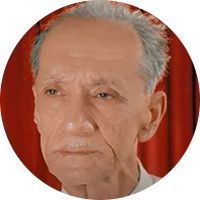
Artistry is an ideological activity that represents the collective emotions and thoughts of humanity. One might ask: in this context, what distinguishes artistry from other manifestations of human collective consciousness? Artistry recreates reality by giving it a specific imaginative form. However, this recreation is neither mechanical nor involuntary, contrary to what certain materialists or naive devotees of superficial realism might believe. Through a complex dialectical creative process, artistry gives new life to actual, external reality.
It reconstructs the present in such a way that we catch a glimpse of a brighter, more auspicious future. It prevents us from viewing life as a perpetual torment and keeps us from succumbing to defeatism, retreat, and escapism. Instead, it instills in us the realization that the flaws and complications of our current existence are of our own making—born of our collective social structure. It shows us that by transforming this social structure and its institutions, we can eradicate these flaws and forge a future that is more pleasant, prosperous, and beautiful than both the past and the present.
An artist is an individual, and artistry is undeniably the creation of a singular, unique personality. All the individual traits of this personality are woven into the fabric of their art. No matter how much an artist is a product of their time and environment, once their character is formed and assumes the shape of a distinct, cohesive entity, all their personal traits will manifest in their physical and mental actions. If the artist possesses a righteous character and a genuine personality, there will be no conflict or dissonance between their creations and the trends and demands of the era. Conversely, if the artist has a distorted character or a corrupted personality, their creations will be of no use to the broader spectrum of life—the collective society. Instead, such work will prove detrimental to the welfare and well-being of humanity as a whole.
However, it is also an accepted truth that the responsibility for corrupting personalities generally lies with a flawed social system. A flawed social system is one that has already fulfilled its destiny and purpose, yet forcefully attempts to sustain itself beyond its natural lifespan. If a personality emerges that overcomes all the reactionary and destructive forces of its era, rising above them to leave a lasting mark on the age, it not only protects itself from harmful influences but also becomes a catalyst for progress within the collective society. Such personalities have served as prophets for their respective eras; they have guided the world and left behind unforgettable legacies in history, serving as guiding lights in the realms of thought and action for generations to come.
Yet, a human being is not merely an isolated, disconnected individual. They are also a member of a community; in fact, it would be more accurate to say that the community is present and active within every individual. Every person is a product of a specific social structure and a particular era of civilization. The influences and tendencies of both are woven into the formation of their mind and body, and into the very composition of their character. The individual exists within the community, and the community exists within the individual. It was perhaps with this profound understanding that Iqbal said:
Fard ta andar jamaat gum shavad
Qatra-e-wusat talab qulzum shavad
[When an individual loses himself in the community,
The expansion-seeking drop becomes the ocean.]
The individual is not annihilated within the community but rather endures; otherwise, they could not participate in the restructuring and betterment of that community. Even after becoming the ocean, the drop retains its essential identity as a drop. A wave loses its essence and reality outside the river, yet while existing within the river, every wave maintains its individuality, thereby adding to the river's majesty and grandeur.
All of this holds true, but the ultimate reality—the truth of all truths—is that human beings are inherently social and society-building creatures. Ever since humans took on the mantle of humanity, they have lived collectively, continuously making their social systems broader, more stable, and more civilized day by day. In everything a human being does, whether consciously or unconsciously, a collective inclination or purpose is always present, either visibly or beneath the surface. Without this, every human action loses its validity. This is precisely what distinguishes humans from other animals, and we find this same distinction in artistry. There are certain animals below the human level that are instinctive or involuntary artists, but their artistry is driven solely by personal needs and self-interest. Whatever they create is compelled by immediate necessity and for the survival and welfare of their species. In contrast, human artistry not only brings personal joy and comfort to the creator but also serves as a catalyst for the progress and cultural refinement of the entire community, and often, of all humanity.
Marx and his contemporaries are entirely correct in their assertion that the practical shaping and creation of an external world—molding an inorganic, lifeless realm of elements into a desired form and breathing new life into it—proves that the human being is a conscious, evolutionary member of the animal kingdom. Among all animals, humans are the only creatures capable of envisioning a world where all of humanity is treated with the same care one affords oneself, maintaining a deep, empathetic awareness of the needs of their fellow beings just as they do their own. No other creature possesses this distinction. If humans can be called the crown of creation (Ashraf al-Makhluqat), it is precisely for this reason. There are many other animals in the world—such as bees, ants, termites, wasps, and among birds, the weaverbird—that possess significant creative or constructive abilities and utilize them instinctively when needed. They build hives, mounds, and nests with such artistic elegance that humans cannot even replicate them.
However, whatever these lower-order animals create is done solely to fulfill their own immediate needs, or at most, those of their offspring. Their efforts are one-dimensional. In contrast, human endeavors carry a collective value. Animals act under the compulsion of their natural, physical needs, whereas humans—that is, civilized humans—turn toward creative art only when liberated from these physical necessities. A human being produces their finest creations when their basic animalistic needs have been satisfied and they are free from the anxieties of survival. Non-human creatures remain entirely absorbed in their own individual existence. At best, they can only reproduce themselves, whereas a human being has the capacity to recreate the entire universe.
The creative efforts of other animals are directly tied to their physical desires and needs; they are slaves to their natural instincts. In contrast, human beings can engage with their creations with complete awareness, thought, and absolute freedom. They can reflect upon their work, which is in itself a new creative act. While animals use only the survival needs of their species as the standard for their creations, humans can invent or provide new standards tailored to any need, at any time, on any occasion, and according to any subject. The beauty found in the creative acts of other animals is incorporated into their composition purely by instinct. Humans, however, not only perceive this beauty but also deeply comprehend it. Through their will and capability, they can make this beauty even more exquisite. Human artistry is not merely the expression of a presumed beauty. Rather, in the human lexicon, artistry is the pursuit and attainment of ever-greater perfection, in accordance with the inner laws of beauty.
To this day, no one has been able to deny the existence of beauty and its profound impact. But what exactly is beauty? This question has baffled great thinkers and visionaries. Charles Darwin, the world-renowned scientist and proponent of the theory of evolution, could not unravel the mystery of the peacock's tail. How did the peacock's tail come to possess such exquisitely ordered patterns? This question left Darwin's intellect spinning. He sought to understand every manifestation of life through the lens of the struggle for existence, natural selection, and the survival of the fittest. However, beauty—that is, order and harmony—cannot be explained solely through biological utility.
Even if the peacock's tail lacked such perfectly balanced and proportionate lines and colors, its biological purpose—reproduction and the survival of the species—would still have been fulfilled. Why did nature incorporate this aesthetic style into its creative system? We have no answer to this unless we concede that the harmony we call beauty exists naturally within nature itself. It is not just humans; the animal, botanical, and even the seemingly lifeless mineral worlds possess an aesthetic dimension. Wherever the life force exists, this beauty is also present, acting as a guarantor for the survival and flourishing of life.
From the ancients to the present day, people have unjustifiably considered beauty to be an unearthly phenomenon. They have needlessly attributed something that is entirely a product of the human world to a divine or celestial realm. This transcendentalism has reduced beauty to a nebulous concept. Plato mesmerized the world for a long time with his tripartite division of Truth, Goodness, and Beauty, yet he himself remained deeply conflicted. A careful study reveals that his occasional silences speak louder than his words, indicating that he sensed numerous contradictions within his own philosophical system due to his Theory of Forms. He was also aware of his own lack of clarity regarding beauty. He had taken refuge in the Realm of Forms or the World of Ideas. He posited that beyond this physical world lies another realm where an eternal concept or archetype of everything exists. Every object in the material world is merely an imperfect copy of its ideal form. Above these forms, encompassing them all, is the Form of the Good, or the Supreme Form. Beauty, Goodness, and Truth are three different facets of this Supreme Form, which appear separated in the physical world.
Plato's approach suggests that, like his mentor Socrates, he considered beauty to be subordinate to Truth and Goodness. A point worth noting here is that today, we cannot possibly agree with the Theory of Forms proposed by Socrates, Plato, and their followers. However, some of their scattered statements do point toward the path of reality—statements that we cannot help but acknowledge even today. For instance, Socrates made two assertions about beauty. The first is that beauty is something well-known and familiar to people. The second is that beauty is that which fulfills a purpose, and by purpose, he meant practical utility. Today, we might marvel at how a thinker who based the entire system of life and the universe on abstract concepts detached from the material and practical world could propose such a utilitarian theory of beauty.
Later, the Illuminationists and Sufis further expanded this concept of the Realm of Forms. Great poets and thinkers across every developed language constructed delicate, colorful, and enchanting edifices upon this mirage-like foundation. They carved idols out of concepts like Immortal Beauty, Eternal Beauty, Divine Beauty, Absolute Beauty, and True Beauty—idols before which there is still no shortage of devotees bowing their heads today. Keats equated beauty with truth, and truth with beauty, defining poetry as the expression of this very equation. Bedil, too, believed in the beauty of truth; he considered beauty and reality to be one and the same. He viewed it as being omnipresent and ever-visible, asserting that to cease searching for it is to actually find it.
This mysterious concept of beauty introduced profound subtleties into the world of thought and emotion. Thanks to it, unforgettable masterpieces of poetry and the fine arts came into existence, the historical value of which will always remain undisputed. In this context, the philosophy of Sufism and poetry engaged in immense hair-splitting regarding the beauty of form versus the beauty of meaning, the beauty of thought versus the beauty of action, and metaphorical beauty versus true beauty. The ultimate culmination of this was the school of Romanticism, which perceives no duality between metaphor and reality, body and soul, or form and meaning. The finest example of this is the group of English painters and poets from the late nineteenth century known as the Pre-Raphaelite Brotherhood. Their claim was that form is meaning and meaning is form; reality is metaphor and metaphor is reality. The perception of duality is merely a flaw in our own thought and vision.
This theory might not have been unacceptable to the modern, inquiring mind, had there not been a central, underlying current of transcendentalism or idealism secretly at work within its structure. Our artists and sages completely ignored the material reality of beauty and its utilitarian purpose. By attributing beauty to an immaterial and eternal realm, they turned it into a magical illusion, leaving us to wander like desert nomads or entranced mystics in our search for it. While acknowledging the vastness and refinement that this transcendental romanticism brought to our thought, insight, and style of expression, we must admit that we remain lost and astray in our search for beauty to this day. This is despite the fact that one does not need to delve too deeply to understand that an eternal archetype of beauty, or any all-encompassing and mutually exclusive concept of it, is an impossibility or a logical fallacy. Even an idealist like Bedil possessed this realization, although he expressed it in highly enchanting and elusive words:
Nazakatha-st dar aghosh-e-mina khana-e-hasrat
Muzha barham mazan ta nashkani rang-e-tamasha ra
[There are subtleties in the embrace of the glasshouse of longing;
Do not blink, lest you shatter the color of the spectacle.]
Once the veil of metaphor is lifted, the simple, underlying meaning of the verse is that the subtleties of beauty do not exist independently of human longing—that is, human needs and demands. In the blink of an eye, the entire spectacle of color can vanish; in other words, the very existence or non-existence of the spectacle depends entirely on the spectator.
Regarding beauty, love, and poetry, our predecessors have left us a wealth of subtle and delicate ideas, shaped by their own times, environments, and intellectual capacities. Even without accepting these ideas verbatim, we can absorb them to shape and enrich our own era. No matter how much we may disagree with the thoughts and theories of the past, we cannot move forward without keeping them in view. To forge new ideas and theories, we must draw upon and extrapolate from the creative achievements of our ancestors. It is a different matter altogether that, driven by the needs and demands of the modern age, the conclusions we reach may be poles apart from those of our predecessors.
Before attempting to uncover the true essence of beauty and artistry in the light of contemporary trends, I feel compelled to examine what our predecessors understood and expressed through their unique intellectual insights. While the ideas of the past may not offer us the complete truth, they do reveal certain facets of it, providing us with cues to advance in new directions in life.
The renowned English poet Shelley—whom even Marx admired—asserted that for love, beauty, and joy, there is no change or death; it is only we who are in a constant state of flux. Evidently, Shelley was an idealist who viewed beauty as an eternal reality while considering human beings to be contingent and mortal. Today, we have moved beyond this stage and no longer believe in the eternity of any single realm—or rather, we recognize all existence as eternal in its own way. We have now arrived at the realization that nothing is permanent or immortal except the processes of emergence and evolution. Shelley attributed immortality solely to beauty. Today, philosophical insight attributes immortality to all of creation, but based on the established principle that forms are constantly changing and will continue to do so. Shelley’s voice was the voice of his era, and a revolutionary one at that. While it may now seem like an old melody to us, the vibrations of that delicate and beautiful voice continue to awaken within us an appreciation for new melodies.
Certain verses by Hafiz, the grand master of poetry, remain unforgettable, offering subtle and ambiguous hints regarding the true nature of beauty:
Dar azal partaw-e-husnash ze tajalli dam zad
Ishq paida shud o aatash ba hama aalam zad
[In eternity, the reflection of His beauty breathed a manifestation,
Love was born, and it set the entire universe ablaze.]
Elsewhere, he says:
Dilbar aan neest ke mooy-e wa miyan-e daarad
Banda-e-tala'at-e-aan baash ke aan-e daarad
[A beloved is not merely one who possesses beautiful hair and a slender waist,
Be a slave to the countenance of one who possesses a certain ineffable charm (aan).]
Another verse reads:
Jahan-e-shakhs ze zulf ast o khatt o aariz o khaal
Hazaar nukta dareen kaarobaar-e-dildaari-st
[While a person's world may consist of hair, down, cheeks, and moles,
There are a thousand subtleties in this business of capturing hearts.]
Who can fully encompass this singular aan (ineffable charm) and these thousand subtleties? This realm lies far beyond ordinary human consciousness. Yet, the poet has at least done this much for us: by liberating beauty from the confines of superficial sensations and mere physical traits, he has bestowed upon it the purity and nobility that, according to human civilization, is its birthright.
A verse by Fighani Shirazi is also worth noting:
Khoobi hameen karishma o naaz o khiraam neest
Bisyar shewa-haast butaan ra ke naam neest
[Beauty is not merely about coquetry, grace, and an elegant gait,
The idols (beloveds) possess many charms that have no name.]
Ghalib’s famous verse states:
Dahr juz jalwa-e-yaktaai-e-mashooq nahi
Hum kahan hotay agar husn na hota khud-been
[The world is nothing but the manifestation of the Beloved's unique glory,
Where would we be if Beauty were not self-regarding?]
These verses by Aasi Ghazipuri also carry their own distinct mood:
Usi ke jalway thay lekin visaal-e-yaar na tha
Main us ke waastay kis waqt be-qaraar na tha
Lala o gul mein usi rashk-e-chaman ki hai bahaar
Bagh mein kaun hai ae baad-e-saba kya kahiye
[His manifestations were everywhere, yet there was no union with the Beloved,
When was I ever not restless for Him?
The tulip and the rose bloom with the spring of that envy of the garden,
Who is present in the garden, O morning breeze, what can one say?]
Asghar Gondvi is so utterly bewildered by a manifestation of the colorless glory that he says:
Ke pehchaani hui soorat bhi pehchaani nahi jaati
[That even a familiar face can no longer be recognized.]
In our era, the renowned and distinguished poet Firaq Gorakhpuri has placed great emphasis on the physicality of beauty in his ghazals and rubaiyat, observing highly delicate and vibrant hues in its material form. This is his immense contribution to the modern generation. Yet, even he frequently evokes within us the feeling that beauty is an unseen, internal value.
And Aziz Lakhnavi took it to the absolute limit. Under the influence of certain specific circumstances or mental states, someone stretching their body (taking an angrai) might be incredibly stirring, but generally speaking, stretching or yawning does not present a particularly beautiful or harmonious sight. To describe it by saying, Beauty was in flight, inclined toward its center, is a feat of such profound rhetorical vision that an average mind can only interpret it as sheer mystical ecstasy.
Setting all these things aside, just look at the playfulness of Dagh. He remained intoxicated by the love of flesh and bone his entire life. His mind could not conceive of any definition of beauty beyond a shapely and appetizing body. Yet, seized by a sudden, unprovoked whim, he blurted out without fully grasping the implications:
Wohi toh hai shola-e-tajalli jo dasht-e-Aiman se tang hokar
Jab us ne apni namood chaahi khila haseenon pe rang hokar
[It is that very flame of manifestation which, growing weary of the Valley of Aiman,
When it desired to reveal itself, blossomed as color upon the beautiful ones.]
Certain famous poets and critics of the modern era—such as Robert Bridges, W. B. Yeats, Herbert Read, and I. A. Richards—have also presented rather strange, ethereal theories regarding beauty, or that expression of reality which is termed poetry. The deduction and reasoning employed by some of them can ostensibly be called scholarly or philosophical, but their conclusions are so vague that we remain just as ignorant and unacquainted with the actual truth as before. The theory of beauty that Robert Bridges presents in his long and exhausting poem, The Testament of Beauty, is a kind of romantic mysticism. The overall impression one gets from reading W. B. Yeats is that beauty is connected to an unimaginably distant past—specifically, the Celtic, mythological past of Ireland, which serves as the fountainhead of all of life's virtues and blessings. This has turned Yeats's poetry entirely into a form of mystical symbolism, which the average human mind is incapable of comprehending.
Among thinkers, from Plato to Hegel, and from Hegel to Croce, every theory established regarding beauty and art is transcendental, compelling us to acknowledge the existence of an ideal or conceptual realm beyond the physical elements. Beauty is defined as the complete expression of a supreme Idea in the form of a unique entity, behind which an abstract and absolute reality operates. This is Hegel's claim, which is exceedingly convoluted. It implies that a unique and tangible entity can only be called beautiful when it is in perfect harmony with its abstract and absolute Idea. But what is this absolute and abstract Idea? And what are the rational, authoritative proofs and signs that compel us to accept this Idea as self-existent and necessary?
Hegel’s entire philosophy is based on dialectical movement. He believes that the fundamental and essential reality is the Idea, not existence, and that this Idea is inherently dynamic, mutable, and evolutionary. Thesis, antithesis, and synthesis—life is the name of this triadic process. Even if we were to accept for a moment that the ultimate reality is the Idea rather than existence, it remains entirely incomprehensible where the Absolute Idea originated and why the dialectical movement suddenly came to a halt at a particular stage. It appears that Hegel was anxious to bring the dialectical movement to an end at a specific point without any rational justification, simply because he wanted to provide a metaphysical foundation for the Prussian, or German, Empire. This underlying motive seems to drive his entire system of thought.
We certainly find contradictions in the philosophy of Hegel and other thinkers of his school, but behind this veil, we also catch glimpses of many new aspects regarding the nature of life. It is no small achievement of Hegel and his followers that they transformed existence from a static, lifeless concept into a living—that is, dynamic and revolutionary—reality. By defining life as a movement rather than a mere state of being, they presented it as a continuous history. This is Hegel’s enduring contribution, one from which no generation, even in the most distant future, will be able to turn away.
Another facet of reality hidden within Hegel’s contradictory philosophy is that if the ultimate reality is indeed the Idea, then without a material or physical form, its existence is as good as its non-existence. Hegel considers a being beautiful if it is the perfect expression of its own Idea—meaning that a thing is beautiful if it represents the highest pinnacle of its kind. From this, we can at least conclude that beauty does not reside in an abstract concept, but rather in a living, unique manifestation. Beauty is the perfect unity between the Idea and its physical embodiment; it exists neither solely in the concept nor solely in the physical form, but in the profound harmony between the two.
The second notable point is that the feeling beauty evokes—or ought to evoke—within us is one of profound joy and delight. If it fails to do so, then for humanity, the existence of beauty is no different from its absence. Anything that does not contribute to the growth and flourishing of life cannot be considered beautiful. For human beings, the most important and beloved thing is life itself, and it is in direct proportion to this love that humanity has always abhorred death. Therefore, we can say that beauty is the very essence of life. A thing is beautiful if it holds the potential for life to flourish—that is, if we can catch a glimpse of our own life's imagination within it. A thing is beautiful if it stands as a symbol of progressive life, making us acutely aware of life's ever-renewing energies.
Now, if this definition holds true—that life and its manifestations are the fundamental constituent elements of beauty—then the causes and symptoms of disease or decay will naturally be classified as the absence of beauty, or simply as ugliness. Among all existing entities, whether inanimate objects or living creatures, only those forms are considered beautiful which either bear a structural and formal affinity to the human condition, or prove to be immensely supportive of the welfare and advancement of human life. Many statements by Hegel and his followers imply that within the natural order, only those elements and phenomena are beautiful which evoke the human being or express a sense of personality. These thinkers insist that the meaning of beauty in the universe is simply this: whatever is deemed beautiful must, in some way, relate to the aims and purposes of human life, or at least point toward such a relationship.
Reflecting upon these ideas, one must concede that even today, the intellectual conclusions of our predecessors offer illuminating glimpses into the mysteries and realities of life—insights we are compelled to accept. For instance, the notion proposed by Kant’s famous student, Schiller, that beauty is not merely a product of the mind but exists inherently within the natural order, is remarkably close to the truth. Even today, it is difficult to refute his assertion that the fine arts forge a mutual connection between matter and mental forms, or between the human psyche and the external phenomena of nature. Schiller, too, defines beauty as life itself. It is a different matter that, in keeping with the prevailing intellectual currents of his time, he maintained a distinction between body and soul, conceptualizing beauty not as a physical attribute but as an immaterial state.
His view is also largely correct that the fine arts, through their beautiful stylistic forms, help us conquer nature and refine matter. If we examine the intellectual achievements of our predecessors in the light of history, we find we have no right to object to them, nor can we harbor any grievances against them. It is merely a difference of angle, level, and perspective. By establishing a dichotomy and contradiction between body and soul, or matter and consciousness, we have needlessly created complications for ourselves. Matter and consciousness are, in fact, twins and eternal partners. The most ancient form of consciousness is energy, and its earliest manifestation is movement.
The reality is that, much like our other experiences, the experience of beauty is bidirectional. It is neither accurate to say that beauty exists purely externally, nor is it correct to claim that it is entirely an internal state. Like grief and sorrow, joy and delight, or heat and cold, the existence of beauty is not absolute but relative. That is to say, beauty is the name of an inevitable relationship between a sentient being and a perceived entity, between an external stimulus and a receptive self, between an object and a subject—a relationship that is, in itself, a very real and concrete truth. Pain, anger, grief, and joy are not exclusively internal states, just as heat and cold are not merely attributes of external objects. There is, however, one distinct difference between beauty and sensations like heat and cold: the latter have remained more or less constant since prehistoric times, whereas the standard of beauty has continuously evolved from country to country and from era to era.
Yet, who can say with certainty that the sensation of heat and cold in our anthropoid ancestors was as intense and refined as it is in us? Even today, it is evident that the inhabitants of warmer climates do not feel the heat with the same severity as people from colder regions would if they were relocated there. In any case, for every external object to be perceived, the presence of a sentient being is essential—just as for every sensation or impression to occur, there must necessarily be an external object or stimulus existing outside and independent of the sentient self.
Christopher Caudwell’s attempt to establish a distinction between sensations like cold, heat, contraction, expansion, and fear on the one hand, and beauty on the other, is neither entirely genuine nor convincing. The concept of sensation cannot exist without acknowledging some external, impactful entity outside the sentient being. Conversely, without sensation—which inherently belongs to the sentient being—the existence or non-existence of external, material stimuli is essentially the same. The renowned English critic I. A. Richards is somewhat correct in suggesting that beauty is a kind of sensory relationship or coenesthesia—meaning that beauty is the proportionate internal response generated by an external stimulus. However, this idea is not without its risks, as it carries the danger of becoming entirely lost in pure subjectivity.
Much like life itself, the composition of beauty possesses a duality. Beauty is also a dialectical reality comprising two elements that are simultaneously oppositional and complementary: an external entity and a perceiving mind. Both elements are equally important and indispensable. Without their mutual interaction, the very concept of beauty is an impossibility.
If we remember that beauty does not exist anywhere as an abstract and absolute concept, we will never fall prey to misconceptions. Beauty itself is not a standalone concept; rather, it is beautiful objects that exist. It is true that long before human artistic creation, the universe already possessed the characteristic we call beauty. The natural order reveals an elemental symmetry, an imperfect proportion, and a raw harmony. Wherever creative movement exists, some degree of harmony, rhythm, or order will inevitably be found. However, it was humanity that recognized this as order or beauty, because humans found it necessary and beneficial for their own well-being, civilization, and refinement. Provided we remain cautious of the dangers of pure subjectivity, the following verses by Iqbal, Benazir Shah Warsi, and Firaq beautifully articulate this very idea through poetic metaphor:
Naara zad ishq ke khoonin jigar-e paida shud
Husn larzeed ke sahib-e-nazar-e paida shud
[Love cried out that one with a bleeding heart is born
Beauty trembled that one with true vision is born]
— Iqbal
Na ho apni aankh jo husn-been toh jahan mein koi haseen nahin
Jo woh Ghaznavi ki nigah ho, wahi kham hai zulf-e-Ayaz mein
[If one's own eye does not see beauty, then nothing in the world is beautiful
If one possesses the gaze of Ghaznavi, that same curl is found in the tresses of Ayaz]
— Benazir Shah Warsi
Maail-e-deed koi ahl-e-nazar hota hai
Husn ab tak toh na tha husn magar hota hai
[When a person of vision is inclined to look
What was not beauty until now, becomes beauty]
— Firaq Gorakhpuri
The distinction drawn between beauty, goodness, and truth for thousands of years is not a real or fundamental one. It is merely a difference of perspective and angle of vision. The foundation of all three is identical, and it is undeniably utilitarian. It is a different matter that, alongside cultural progress and the history of civilization, the very standard of utility has continued to evolve, transforming from the crude to the refined, and from the refined to the even more exquisite. This, too, has been driven by the changing needs of human life and the demands of its well-being. Consider this through a simple example. Humans have been crafting tools since ancient times. The vast, earth-and-sky difference between the tools of antiquity and the sophisticated scientific instruments of today makes it difficult for us to draw a direct comparison. However, if we compare the tools of two consecutive eras in ancient history—for instance, the Paleolithic and Neolithic periods—the progression becomes clear. The tools of the latter period are more shapely, lighter, smoother, and more comfortable to use than those of the former, even though tools were made of stone in both eras.
Paleolithic humans soon realized that their crude, rough-hewn tools were not only painful and injurious to their hands, but also caused difficulty and delay in their work. Through continuous effort, reflection, and repetition, their understanding grew clearer and their manual skills became more refined. By the time the Neolithic period arrived, they were crafting tools that were far more comfortable than those of the previous era, allowing them to accomplish their tasks with greater ease and in less time.
In short, the refinements that emerged in artistic inventions from one era to the next always contained a purposeful inclination and a utilitarian aspect, whether explicit or implicit. Beauty has never been an end in itself, nor has art ever been its own ultimate purpose in any era. Both beauty and artistry have always been tied to societal demands. Today, artistry has reached such a level of refinement, delicacy, and complexity that we struggle to uncover its underlying purpose, often fabricating all sorts of far-fetched theories to interpret it. However, in the lives of our earliest ancestors, the utilitarian and the aesthetic were not two separate values.
The origins of artistry lie in the indispensable demands of human life. Long before the artistry of words, the most significant artistic achievements included carving shelters into mountains, crafting tools and vessels, expressing inner thoughts through physical gestures, and, somewhat later, chiseling designs onto stone. These carvings either depicted real-life events or served a talismanic and magical purpose. Our primitive ancestors either etched the triumphs of their struggles and battles against the forces of nature onto rocks and vessels, or, guided by the naive beliefs of their time—which served as their entire philosophy and science of life—they created symbols imbued with magical properties. They believed that through these mediums, they could exert control over non-human elements and forces, or appease them to secure favor and blessings for their own aims and objectives. These were, in essence, humanity's earliest attempts to alter and improve its present condition—that is, its destiny.
For early humanity, the concept of beauty was Euclidean or geometric; outside of dimensional proportion, beauty held no meaning. As time progressed, the human mind grew more mature, perceptive, and far-sighted. Correspondingly, the concept of beauty acquired greater eloquence and refinement day by day, to the point where superficial proportion and surface-level harmony have now been replaced by an internal proportion and inner harmony. Compare the Persian, Rajput, and Mughal schools of painting with modern schools of art. Judged by ancient traditional standards, the paintings of the modern schools might appear quite clumsy and disordered. Yet, today, no one can deny that these modern works are far more evolved, expressive, and refined than the paintings of the past. The harmony of lines within them appeals less to our external senses and more to our inner perception. As we have stated earlier, the concept of beauty has evolved from the crude to the refined from one era to the next. If one were to insist, it could even be said that beauty has transitioned from the physical to the non-physical, and from the material to the immaterial.
What is most undeniable is that, much like truth and goodness, the concept of beauty has continuously evolved across different regions and eras. The meaning of beauty has undergone transformations in response to environmental demands and societal needs. We must always remember that beauty, goodness, and truth are all fundamentally rooted in the welfare and progress of human life. All three values are dynamic and inherently evolutionary. Beauty is not an absolute value, nor is art a monolithic entity. Culture cannot remain identical across all nations and epochs. If the eternity of beauty and the permanence of art mean anything at all, it is simply that human life will always need beauty, and without art, human society would degenerate into something worse than bestiality.
However, this does not imply that a single concept of beauty will endure forever, or that a single standard of art will remain valid until the end of time. Such abstract and meaningless assumptions have nothing to do with beauty and art. The achievements of art serve the interests of human life, and the standard of what constitutes these interests constantly changes and will continue to do so. The earliest examples of art validate this claim. As previously mentioned, the earliest specimens of art and the most ancient manifestations of beauty were utensils and tools. These were followed by the architecture of homes and places of worship. Initially, these structures were crude and unrefined, but they gradually evolved to such a degree of sophistication that today we have forgotten their original utilitarian purpose, viewing their artistic qualities as an end in themselves.
Beauty, goodness, and truth—all these values are the products of humanity's arduous and challenging existence. This is not difficult to grasp, provided we are willing to understand it with honesty and sincerity. Humanity continuously battled the constraints imposed by nature and the resulting hardships and afflictions, gradually conquering them over time. Art is one of the fruits of this very struggle and perseverance. Labor generated the value in human life that we call beauty, and the concept of beauty, in turn, continued to refine the methods of labor.
Labor has played a monumental role in the history of human evolution. Labor, the twin sister of life, has been a steadfast companion, helping to make human physical organs, as well as mental and spiritual faculties, increasingly robust, beautiful, reliable, and effective day by day. Take the hand, for example, among our physical organs. Our common assumption—which is correct—is that the hand carries out labor. However, there is another equally important side to this reality: labor has also shaped and refined our hands. The hands of early hominids or ancient humans were misshapen, clumsy, calloused, and sluggish. Thousands of years of relentless labor, the continuous adaptation of new methods to suit new conditions and opportunities, and the endless cycle of trial, error, failure, and renewed effort have made our hands more beautiful, supple, and agile. Through constant work, the joints, veins, muscles, and even the bones of the hands developed flexibility, dexterity, and nimbleness. Evolving and refining generation after generation, our hands have now become capable of producing ever-new subtleties and refinements in painting, sculpture, architecture, and music.
Finally, there are a few points regarding beauty and art that we wish to emphasize. The aims and objectives of human material and physical life serve as fundamental and essential components in the core concepts of beauty and art. To deny the material nature and purposeful intent of either would be sheer stubbornness. Secondly—and this is an inescapable truth—the ultimate goal of art, at least in its origins, was not the welfare of any single individual, but rather the expansion and advancement of collective life. However, we must be wary of certain misconceptions here. First, in no era of human civilization did all the members of a community collectively invent an art form.
In every group, tribe, or family, there would have been a few individuals who possessed greater intelligence, insight, innovative thinking, and practical acumen than the general populace. They would have been more visionary and resourceful, and the idea of invention and innovation would have first sparked in their minds. While the need for tools or utensils was undoubtedly a collective one, their conceptualization and design were the creations of individual minds. In terms of its material cause and final cause, art is external and collective; however, in terms of its formal and efficient causes, it is internal and individual. Yet, it is also crucial to remember that the individual is themselves a product of external circumstances and collective motivations and tendencies.
Like other creations of life, art, in its purpose and ultimate goal, is neither individualistic, nor class-based, nor sectarian; rather, it is collective—that is, democratic. Its true purpose is the enrichment of human life. Unfortunately, much like many other life-affirming forces, the power of art soon became the monopoly of a privileged class. This monopolistic class weaponized art as a tool to maintain its dominance over the masses, while simultaneously using it as a source of personal luxury and entertainment. This has been the case from the patriarchal era and the age of the priesthood right up to the modern era of capitalism. A leisured and powerful minority has continuously appropriated all the blessings of life. Relying on these advantages, they have fabricated various illusions to deprive the masses of their birthrights and maintain their rule over them.
It cannot be denied that there has never been an era in which art, like other human endeavors, did not progress. From the crude tools, clumsy utensils, and misshapen dwellings of prehistoric times to the highly refined inventions of the modern age, art has traversed evolutionary stages of elegance and sophistication. To refuse to acknowledge the lofty heights art has reached today would be sheer narrow-mindedness. However, many veils have now been lifted from the eyes of the world. The age of illusions is over. Our demand today is that the blessings of life, which have thus far remained the monopoly of a select and privileged few, must be made accessible to the masses. This is precisely our demand for art as well.
We now need a social system that provides every individual in society with the means and opportunities to become an artist if they so choose, or at the very least, to fully enjoy the fruits of artistic creation according to their own desires. Art is an immensely blessed achievement among humanity's cultural creations, and its blessings should be easily accessible to all of mankind. While acknowledging the individual creative power of art, we insist that the outcomes of this creative force must contribute to the health and progress of our democratic and collective life. Until now, the artist has been regarded as a prophet or some kind of superhuman being, which was an illusion. Art can only truly aid and benefit the growth, expansion, and progress of human life when the artist considers himself an ordinary human being like the masses, and when the masses can embrace the artist as one of their own.
When our social system changes, when the rights of life become universal, and when class distinctions based on poverty and wealth are eradicated, then every individual will be an artist, either in actuality or in potential. At that time, the artist will be a human being just like us, or perhaps we will all become superhumans or higher beings. Until that happens, it is incredibly fatal and destructive for the rest of humanity if any individual or specific group monopolizes all the rights of life to elevate themselves into superhumans.
Artistry is an ideological activity that represents the collective emotions and thoughts of humanity. One might ask: in this context, what distinguishes artistry from other manifestations of human collective consciousness? Artistry recreates reality by giving it a specific imaginative form. However, this recreation is neither mechanical nor involuntary, contrary to what certain materialists or naive devotees of superficial realism might believe. Through a complex dialectical creative process, artistry gives new life to actual, external reality.
It reconstructs the present in such a way that we catch a glimpse of a brighter, more auspicious future. It prevents us from viewing life as a perpetual torment and keeps us from succumbing to defeatism, retreat, and escapism. Instead, it instills in us the realization that the flaws and complications of our current existence are of our own making—born of our collective social structure. It shows us that by transforming this social structure and its institutions, we can eradicate these flaws and forge a future that is more pleasant, prosperous, and beautiful than both the past and the present.
An artist is an individual, and artistry is undeniably the creation of a singular, unique personality. All the individual traits of this personality are woven into the fabric of their art. No matter how much an artist is a product of their time and environment, once their character is formed and assumes the shape of a distinct, cohesive entity, all their personal traits will manifest in their physical and mental actions. If the artist possesses a righteous character and a genuine personality, there will be no conflict or dissonance between their creations and the trends and demands of the era. Conversely, if the artist has a distorted character or a corrupted personality, their creations will be of no use to the broader spectrum of life—the collective society. Instead, such work will prove detrimental to the welfare and well-being of humanity as a whole.
However, it is also an accepted truth that the responsibility for corrupting personalities generally lies with a flawed social system. A flawed social system is one that has already fulfilled its destiny and purpose, yet forcefully attempts to sustain itself beyond its natural lifespan. If a personality emerges that overcomes all the reactionary and destructive forces of its era, rising above them to leave a lasting mark on the age, it not only protects itself from harmful influences but also becomes a catalyst for progress within the collective society. Such personalities have served as prophets for their respective eras; they have guided the world and left behind unforgettable legacies in history, serving as guiding lights in the realms of thought and action for generations to come.
Yet, a human being is not merely an isolated, disconnected individual. They are also a member of a community; in fact, it would be more accurate to say that the community is present and active within every individual. Every person is a product of a specific social structure and a particular era of civilization. The influences and tendencies of both are woven into the formation of their mind and body, and into the very composition of their character. The individual exists within the community, and the community exists within the individual. It was perhaps with this profound understanding that Iqbal said:
Fard ta andar jamaat gum shavad
Qatra-e-wusat talab qulzum shavad
[When an individual loses himself in the community,
The expansion-seeking drop becomes the ocean.]
The individual is not annihilated within the community but rather endures; otherwise, they could not participate in the restructuring and betterment of that community. Even after becoming the ocean, the drop retains its essential identity as a drop. A wave loses its essence and reality outside the river, yet while existing within the river, every wave maintains its individuality, thereby adding to the river's majesty and grandeur.
All of this holds true, but the ultimate reality—the truth of all truths—is that human beings are inherently social and society-building creatures. Ever since humans took on the mantle of humanity, they have lived collectively, continuously making their social systems broader, more stable, and more civilized day by day. In everything a human being does, whether consciously or unconsciously, a collective inclination or purpose is always present, either visibly or beneath the surface. Without this, every human action loses its validity. This is precisely what distinguishes humans from other animals, and we find this same distinction in artistry. There are certain animals below the human level that are instinctive or involuntary artists, but their artistry is driven solely by personal needs and self-interest. Whatever they create is compelled by immediate necessity and for the survival and welfare of their species. In contrast, human artistry not only brings personal joy and comfort to the creator but also serves as a catalyst for the progress and cultural refinement of the entire community, and often, of all humanity.
Marx and his contemporaries are entirely correct in their assertion that the practical shaping and creation of an external world—molding an inorganic, lifeless realm of elements into a desired form and breathing new life into it—proves that the human being is a conscious, evolutionary member of the animal kingdom. Among all animals, humans are the only creatures capable of envisioning a world where all of humanity is treated with the same care one affords oneself, maintaining a deep, empathetic awareness of the needs of their fellow beings just as they do their own. No other creature possesses this distinction. If humans can be called the crown of creation (Ashraf al-Makhluqat), it is precisely for this reason. There are many other animals in the world—such as bees, ants, termites, wasps, and among birds, the weaverbird—that possess significant creative or constructive abilities and utilize them instinctively when needed. They build hives, mounds, and nests with such artistic elegance that humans cannot even replicate them.
However, whatever these lower-order animals create is done solely to fulfill their own immediate needs, or at most, those of their offspring. Their efforts are one-dimensional. In contrast, human endeavors carry a collective value. Animals act under the compulsion of their natural, physical needs, whereas humans—that is, civilized humans—turn toward creative art only when liberated from these physical necessities. A human being produces their finest creations when their basic animalistic needs have been satisfied and they are free from the anxieties of survival. Non-human creatures remain entirely absorbed in their own individual existence. At best, they can only reproduce themselves, whereas a human being has the capacity to recreate the entire universe.
The creative efforts of other animals are directly tied to their physical desires and needs; they are slaves to their natural instincts. In contrast, human beings can engage with their creations with complete awareness, thought, and absolute freedom. They can reflect upon their work, which is in itself a new creative act. While animals use only the survival needs of their species as the standard for their creations, humans can invent or provide new standards tailored to any need, at any time, on any occasion, and according to any subject. The beauty found in the creative acts of other animals is incorporated into their composition purely by instinct. Humans, however, not only perceive this beauty but also deeply comprehend it. Through their will and capability, they can make this beauty even more exquisite. Human artistry is not merely the expression of a presumed beauty. Rather, in the human lexicon, artistry is the pursuit and attainment of ever-greater perfection, in accordance with the inner laws of beauty.
To this day, no one has been able to deny the existence of beauty and its profound impact. But what exactly is beauty? This question has baffled great thinkers and visionaries. Charles Darwin, the world-renowned scientist and proponent of the theory of evolution, could not unravel the mystery of the peacock's tail. How did the peacock's tail come to possess such exquisitely ordered patterns? This question left Darwin's intellect spinning. He sought to understand every manifestation of life through the lens of the struggle for existence, natural selection, and the survival of the fittest. However, beauty—that is, order and harmony—cannot be explained solely through biological utility.
Even if the peacock's tail lacked such perfectly balanced and proportionate lines and colors, its biological purpose—reproduction and the survival of the species—would still have been fulfilled. Why did nature incorporate this aesthetic style into its creative system? We have no answer to this unless we concede that the harmony we call beauty exists naturally within nature itself. It is not just humans; the animal, botanical, and even the seemingly lifeless mineral worlds possess an aesthetic dimension. Wherever the life force exists, this beauty is also present, acting as a guarantor for the survival and flourishing of life.
From the ancients to the present day, people have unjustifiably considered beauty to be an unearthly phenomenon. They have needlessly attributed something that is entirely a product of the human world to a divine or celestial realm. This transcendentalism has reduced beauty to a nebulous concept. Plato mesmerized the world for a long time with his tripartite division of Truth, Goodness, and Beauty, yet he himself remained deeply conflicted. A careful study reveals that his occasional silences speak louder than his words, indicating that he sensed numerous contradictions within his own philosophical system due to his Theory of Forms. He was also aware of his own lack of clarity regarding beauty. He had taken refuge in the Realm of Forms or the World of Ideas. He posited that beyond this physical world lies another realm where an eternal concept or archetype of everything exists. Every object in the material world is merely an imperfect copy of its ideal form. Above these forms, encompassing them all, is the Form of the Good, or the Supreme Form. Beauty, Goodness, and Truth are three different facets of this Supreme Form, which appear separated in the physical world.
Plato's approach suggests that, like his mentor Socrates, he considered beauty to be subordinate to Truth and Goodness. A point worth noting here is that today, we cannot possibly agree with the Theory of Forms proposed by Socrates, Plato, and their followers. However, some of their scattered statements do point toward the path of reality—statements that we cannot help but acknowledge even today. For instance, Socrates made two assertions about beauty. The first is that beauty is something well-known and familiar to people. The second is that beauty is that which fulfills a purpose, and by purpose, he meant practical utility. Today, we might marvel at how a thinker who based the entire system of life and the universe on abstract concepts detached from the material and practical world could propose such a utilitarian theory of beauty.
Later, the Illuminationists and Sufis further expanded this concept of the Realm of Forms. Great poets and thinkers across every developed language constructed delicate, colorful, and enchanting edifices upon this mirage-like foundation. They carved idols out of concepts like Immortal Beauty, Eternal Beauty, Divine Beauty, Absolute Beauty, and True Beauty—idols before which there is still no shortage of devotees bowing their heads today. Keats equated beauty with truth, and truth with beauty, defining poetry as the expression of this very equation. Bedil, too, believed in the beauty of truth; he considered beauty and reality to be one and the same. He viewed it as being omnipresent and ever-visible, asserting that to cease searching for it is to actually find it.
This mysterious concept of beauty introduced profound subtleties into the world of thought and emotion. Thanks to it, unforgettable masterpieces of poetry and the fine arts came into existence, the historical value of which will always remain undisputed. In this context, the philosophy of Sufism and poetry engaged in immense hair-splitting regarding the beauty of form versus the beauty of meaning, the beauty of thought versus the beauty of action, and metaphorical beauty versus true beauty. The ultimate culmination of this was the school of Romanticism, which perceives no duality between metaphor and reality, body and soul, or form and meaning. The finest example of this is the group of English painters and poets from the late nineteenth century known as the Pre-Raphaelite Brotherhood. Their claim was that form is meaning and meaning is form; reality is metaphor and metaphor is reality. The perception of duality is merely a flaw in our own thought and vision.
This theory might not have been unacceptable to the modern, inquiring mind, had there not been a central, underlying current of transcendentalism or idealism secretly at work within its structure. Our artists and sages completely ignored the material reality of beauty and its utilitarian purpose. By attributing beauty to an immaterial and eternal realm, they turned it into a magical illusion, leaving us to wander like desert nomads or entranced mystics in our search for it. While acknowledging the vastness and refinement that this transcendental romanticism brought to our thought, insight, and style of expression, we must admit that we remain lost and astray in our search for beauty to this day. This is despite the fact that one does not need to delve too deeply to understand that an eternal archetype of beauty, or any all-encompassing and mutually exclusive concept of it, is an impossibility or a logical fallacy. Even an idealist like Bedil possessed this realization, although he expressed it in highly enchanting and elusive words:
Nazakatha-st dar aghosh-e-mina khana-e-hasrat
Muzha barham mazan ta nashkani rang-e-tamasha ra
[There are subtleties in the embrace of the glasshouse of longing;
Do not blink, lest you shatter the color of the spectacle.]
Once the veil of metaphor is lifted, the simple, underlying meaning of the verse is that the subtleties of beauty do not exist independently of human longing—that is, human needs and demands. In the blink of an eye, the entire spectacle of color can vanish; in other words, the very existence or non-existence of the spectacle depends entirely on the spectator.
Regarding beauty, love, and poetry, our predecessors have left us a wealth of subtle and delicate ideas, shaped by their own times, environments, and intellectual capacities. Even without accepting these ideas verbatim, we can absorb them to shape and enrich our own era. No matter how much we may disagree with the thoughts and theories of the past, we cannot move forward without keeping them in view. To forge new ideas and theories, we must draw upon and extrapolate from the creative achievements of our ancestors. It is a different matter altogether that, driven by the needs and demands of the modern age, the conclusions we reach may be poles apart from those of our predecessors.
Before attempting to uncover the true essence of beauty and artistry in the light of contemporary trends, I feel compelled to examine what our predecessors understood and expressed through their unique intellectual insights. While the ideas of the past may not offer us the complete truth, they do reveal certain facets of it, providing us with cues to advance in new directions in life.
The renowned English poet Shelley—whom even Marx admired—asserted that for love, beauty, and joy, there is no change or death; it is only we who are in a constant state of flux. Evidently, Shelley was an idealist who viewed beauty as an eternal reality while considering human beings to be contingent and mortal. Today, we have moved beyond this stage and no longer believe in the eternity of any single realm—or rather, we recognize all existence as eternal in its own way. We have now arrived at the realization that nothing is permanent or immortal except the processes of emergence and evolution. Shelley attributed immortality solely to beauty. Today, philosophical insight attributes immortality to all of creation, but based on the established principle that forms are constantly changing and will continue to do so. Shelley’s voice was the voice of his era, and a revolutionary one at that. While it may now seem like an old melody to us, the vibrations of that delicate and beautiful voice continue to awaken within us an appreciation for new melodies.
Certain verses by Hafiz, the grand master of poetry, remain unforgettable, offering subtle and ambiguous hints regarding the true nature of beauty:
Dar azal partaw-e-husnash ze tajalli dam zad
Ishq paida shud o aatash ba hama aalam zad
[In eternity, the reflection of His beauty breathed a manifestation,
Love was born, and it set the entire universe ablaze.]
Elsewhere, he says:
Dilbar aan neest ke mooy-e wa miyan-e daarad
Banda-e-tala'at-e-aan baash ke aan-e daarad
[A beloved is not merely one who possesses beautiful hair and a slender waist,
Be a slave to the countenance of one who possesses a certain ineffable charm (aan).]
Another verse reads:
Jahan-e-shakhs ze zulf ast o khatt o aariz o khaal
Hazaar nukta dareen kaarobaar-e-dildaari-st
[While a person's world may consist of hair, down, cheeks, and moles,
There are a thousand subtleties in this business of capturing hearts.]
Who can fully encompass this singular aan (ineffable charm) and these thousand subtleties? This realm lies far beyond ordinary human consciousness. Yet, the poet has at least done this much for us: by liberating beauty from the confines of superficial sensations and mere physical traits, he has bestowed upon it the purity and nobility that, according to human civilization, is its birthright.
A verse by Fighani Shirazi is also worth noting:
Khoobi hameen karishma o naaz o khiraam neest
Bisyar shewa-haast butaan ra ke naam neest
[Beauty is not merely about coquetry, grace, and an elegant gait,
The idols (beloveds) possess many charms that have no name.]
Ghalib’s famous verse states:
Dahr juz jalwa-e-yaktaai-e-mashooq nahi
Hum kahan hotay agar husn na hota khud-been
[The world is nothing but the manifestation of the Beloved's unique glory,
Where would we be if Beauty were not self-regarding?]
These verses by Aasi Ghazipuri also carry their own distinct mood:
Usi ke jalway thay lekin visaal-e-yaar na tha
Main us ke waastay kis waqt be-qaraar na tha
Lala o gul mein usi rashk-e-chaman ki hai bahaar
Bagh mein kaun hai ae baad-e-saba kya kahiye
[His manifestations were everywhere, yet there was no union with the Beloved,
When was I ever not restless for Him?
The tulip and the rose bloom with the spring of that envy of the garden,
Who is present in the garden, O morning breeze, what can one say?]
Asghar Gondvi is so utterly bewildered by a manifestation of the colorless glory that he says:
Ke pehchaani hui soorat bhi pehchaani nahi jaati
[That even a familiar face can no longer be recognized.]
In our era, the renowned and distinguished poet Firaq Gorakhpuri has placed great emphasis on the physicality of beauty in his ghazals and rubaiyat, observing highly delicate and vibrant hues in its material form. This is his immense contribution to the modern generation. Yet, even he frequently evokes within us the feeling that beauty is an unseen, internal value.
And Aziz Lakhnavi took it to the absolute limit. Under the influence of certain specific circumstances or mental states, someone stretching their body (taking an angrai) might be incredibly stirring, but generally speaking, stretching or yawning does not present a particularly beautiful or harmonious sight. To describe it by saying, Beauty was in flight, inclined toward its center, is a feat of such profound rhetorical vision that an average mind can only interpret it as sheer mystical ecstasy.
Setting all these things aside, just look at the playfulness of Dagh. He remained intoxicated by the love of flesh and bone his entire life. His mind could not conceive of any definition of beauty beyond a shapely and appetizing body. Yet, seized by a sudden, unprovoked whim, he blurted out without fully grasping the implications:
Wohi toh hai shola-e-tajalli jo dasht-e-Aiman se tang hokar
Jab us ne apni namood chaahi khila haseenon pe rang hokar
[It is that very flame of manifestation which, growing weary of the Valley of Aiman,
When it desired to reveal itself, blossomed as color upon the beautiful ones.]
Certain famous poets and critics of the modern era—such as Robert Bridges, W. B. Yeats, Herbert Read, and I. A. Richards—have also presented rather strange, ethereal theories regarding beauty, or that expression of reality which is termed poetry. The deduction and reasoning employed by some of them can ostensibly be called scholarly or philosophical, but their conclusions are so vague that we remain just as ignorant and unacquainted with the actual truth as before. The theory of beauty that Robert Bridges presents in his long and exhausting poem, The Testament of Beauty, is a kind of romantic mysticism. The overall impression one gets from reading W. B. Yeats is that beauty is connected to an unimaginably distant past—specifically, the Celtic, mythological past of Ireland, which serves as the fountainhead of all of life's virtues and blessings. This has turned Yeats's poetry entirely into a form of mystical symbolism, which the average human mind is incapable of comprehending.
Among thinkers, from Plato to Hegel, and from Hegel to Croce, every theory established regarding beauty and art is transcendental, compelling us to acknowledge the existence of an ideal or conceptual realm beyond the physical elements. Beauty is defined as the complete expression of a supreme Idea in the form of a unique entity, behind which an abstract and absolute reality operates. This is Hegel's claim, which is exceedingly convoluted. It implies that a unique and tangible entity can only be called beautiful when it is in perfect harmony with its abstract and absolute Idea. But what is this absolute and abstract Idea? And what are the rational, authoritative proofs and signs that compel us to accept this Idea as self-existent and necessary?
Hegel’s entire philosophy is based on dialectical movement. He believes that the fundamental and essential reality is the Idea, not existence, and that this Idea is inherently dynamic, mutable, and evolutionary. Thesis, antithesis, and synthesis—life is the name of this triadic process. Even if we were to accept for a moment that the ultimate reality is the Idea rather than existence, it remains entirely incomprehensible where the Absolute Idea originated and why the dialectical movement suddenly came to a halt at a particular stage. It appears that Hegel was anxious to bring the dialectical movement to an end at a specific point without any rational justification, simply because he wanted to provide a metaphysical foundation for the Prussian, or German, Empire. This underlying motive seems to drive his entire system of thought.
We certainly find contradictions in the philosophy of Hegel and other thinkers of his school, but behind this veil, we also catch glimpses of many new aspects regarding the nature of life. It is no small achievement of Hegel and his followers that they transformed existence from a static, lifeless concept into a living—that is, dynamic and revolutionary—reality. By defining life as a movement rather than a mere state of being, they presented it as a continuous history. This is Hegel’s enduring contribution, one from which no generation, even in the most distant future, will be able to turn away.
Another facet of reality hidden within Hegel’s contradictory philosophy is that if the ultimate reality is indeed the Idea, then without a material or physical form, its existence is as good as its non-existence. Hegel considers a being beautiful if it is the perfect expression of its own Idea—meaning that a thing is beautiful if it represents the highest pinnacle of its kind. From this, we can at least conclude that beauty does not reside in an abstract concept, but rather in a living, unique manifestation. Beauty is the perfect unity between the Idea and its physical embodiment; it exists neither solely in the concept nor solely in the physical form, but in the profound harmony between the two.
The second notable point is that the feeling beauty evokes—or ought to evoke—within us is one of profound joy and delight. If it fails to do so, then for humanity, the existence of beauty is no different from its absence. Anything that does not contribute to the growth and flourishing of life cannot be considered beautiful. For human beings, the most important and beloved thing is life itself, and it is in direct proportion to this love that humanity has always abhorred death. Therefore, we can say that beauty is the very essence of life. A thing is beautiful if it holds the potential for life to flourish—that is, if we can catch a glimpse of our own life's imagination within it. A thing is beautiful if it stands as a symbol of progressive life, making us acutely aware of life's ever-renewing energies.
Now, if this definition holds true—that life and its manifestations are the fundamental constituent elements of beauty—then the causes and symptoms of disease or decay will naturally be classified as the absence of beauty, or simply as ugliness. Among all existing entities, whether inanimate objects or living creatures, only those forms are considered beautiful which either bear a structural and formal affinity to the human condition, or prove to be immensely supportive of the welfare and advancement of human life. Many statements by Hegel and his followers imply that within the natural order, only those elements and phenomena are beautiful which evoke the human being or express a sense of personality. These thinkers insist that the meaning of beauty in the universe is simply this: whatever is deemed beautiful must, in some way, relate to the aims and purposes of human life, or at least point toward such a relationship.
Reflecting upon these ideas, one must concede that even today, the intellectual conclusions of our predecessors offer illuminating glimpses into the mysteries and realities of life—insights we are compelled to accept. For instance, the notion proposed by Kant’s famous student, Schiller, that beauty is not merely a product of the mind but exists inherently within the natural order, is remarkably close to the truth. Even today, it is difficult to refute his assertion that the fine arts forge a mutual connection between matter and mental forms, or between the human psyche and the external phenomena of nature. Schiller, too, defines beauty as life itself. It is a different matter that, in keeping with the prevailing intellectual currents of his time, he maintained a distinction between body and soul, conceptualizing beauty not as a physical attribute but as an immaterial state.
His view is also largely correct that the fine arts, through their beautiful stylistic forms, help us conquer nature and refine matter. If we examine the intellectual achievements of our predecessors in the light of history, we find we have no right to object to them, nor can we harbor any grievances against them. It is merely a difference of angle, level, and perspective. By establishing a dichotomy and contradiction between body and soul, or matter and consciousness, we have needlessly created complications for ourselves. Matter and consciousness are, in fact, twins and eternal partners. The most ancient form of consciousness is energy, and its earliest manifestation is movement.
The reality is that, much like our other experiences, the experience of beauty is bidirectional. It is neither accurate to say that beauty exists purely externally, nor is it correct to claim that it is entirely an internal state. Like grief and sorrow, joy and delight, or heat and cold, the existence of beauty is not absolute but relative. That is to say, beauty is the name of an inevitable relationship between a sentient being and a perceived entity, between an external stimulus and a receptive self, between an object and a subject—a relationship that is, in itself, a very real and concrete truth. Pain, anger, grief, and joy are not exclusively internal states, just as heat and cold are not merely attributes of external objects. There is, however, one distinct difference between beauty and sensations like heat and cold: the latter have remained more or less constant since prehistoric times, whereas the standard of beauty has continuously evolved from country to country and from era to era.
Yet, who can say with certainty that the sensation of heat and cold in our anthropoid ancestors was as intense and refined as it is in us? Even today, it is evident that the inhabitants of warmer climates do not feel the heat with the same severity as people from colder regions would if they were relocated there. In any case, for every external object to be perceived, the presence of a sentient being is essential—just as for every sensation or impression to occur, there must necessarily be an external object or stimulus existing outside and independent of the sentient self.
Christopher Caudwell’s attempt to establish a distinction between sensations like cold, heat, contraction, expansion, and fear on the one hand, and beauty on the other, is neither entirely genuine nor convincing. The concept of sensation cannot exist without acknowledging some external, impactful entity outside the sentient being. Conversely, without sensation—which inherently belongs to the sentient being—the existence or non-existence of external, material stimuli is essentially the same. The renowned English critic I. A. Richards is somewhat correct in suggesting that beauty is a kind of sensory relationship or coenesthesia—meaning that beauty is the proportionate internal response generated by an external stimulus. However, this idea is not without its risks, as it carries the danger of becoming entirely lost in pure subjectivity.
Much like life itself, the composition of beauty possesses a duality. Beauty is also a dialectical reality comprising two elements that are simultaneously oppositional and complementary: an external entity and a perceiving mind. Both elements are equally important and indispensable. Without their mutual interaction, the very concept of beauty is an impossibility.
If we remember that beauty does not exist anywhere as an abstract and absolute concept, we will never fall prey to misconceptions. Beauty itself is not a standalone concept; rather, it is beautiful objects that exist. It is true that long before human artistic creation, the universe already possessed the characteristic we call beauty. The natural order reveals an elemental symmetry, an imperfect proportion, and a raw harmony. Wherever creative movement exists, some degree of harmony, rhythm, or order will inevitably be found. However, it was humanity that recognized this as order or beauty, because humans found it necessary and beneficial for their own well-being, civilization, and refinement. Provided we remain cautious of the dangers of pure subjectivity, the following verses by Iqbal, Benazir Shah Warsi, and Firaq beautifully articulate this very idea through poetic metaphor:
Naara zad ishq ke khoonin jigar-e paida shud
Husn larzeed ke sahib-e-nazar-e paida shud
[Love cried out that one with a bleeding heart is born
Beauty trembled that one with true vision is born]
— Iqbal
Na ho apni aankh jo husn-been toh jahan mein koi haseen nahin
Jo woh Ghaznavi ki nigah ho, wahi kham hai zulf-e-Ayaz mein
[If one's own eye does not see beauty, then nothing in the world is beautiful
If one possesses the gaze of Ghaznavi, that same curl is found in the tresses of Ayaz]
— Benazir Shah Warsi
Maail-e-deed koi ahl-e-nazar hota hai
Husn ab tak toh na tha husn magar hota hai
[When a person of vision is inclined to look
What was not beauty until now, becomes beauty]
— Firaq Gorakhpuri
The distinction drawn between beauty, goodness, and truth for thousands of years is not a real or fundamental one. It is merely a difference of perspective and angle of vision. The foundation of all three is identical, and it is undeniably utilitarian. It is a different matter that, alongside cultural progress and the history of civilization, the very standard of utility has continued to evolve, transforming from the crude to the refined, and from the refined to the even more exquisite. This, too, has been driven by the changing needs of human life and the demands of its well-being. Consider this through a simple example. Humans have been crafting tools since ancient times. The vast, earth-and-sky difference between the tools of antiquity and the sophisticated scientific instruments of today makes it difficult for us to draw a direct comparison. However, if we compare the tools of two consecutive eras in ancient history—for instance, the Paleolithic and Neolithic periods—the progression becomes clear. The tools of the latter period are more shapely, lighter, smoother, and more comfortable to use than those of the former, even though tools were made of stone in both eras.
Paleolithic humans soon realized that their crude, rough-hewn tools were not only painful and injurious to their hands, but also caused difficulty and delay in their work. Through continuous effort, reflection, and repetition, their understanding grew clearer and their manual skills became more refined. By the time the Neolithic period arrived, they were crafting tools that were far more comfortable than those of the previous era, allowing them to accomplish their tasks with greater ease and in less time.
In short, the refinements that emerged in artistic inventions from one era to the next always contained a purposeful inclination and a utilitarian aspect, whether explicit or implicit. Beauty has never been an end in itself, nor has art ever been its own ultimate purpose in any era. Both beauty and artistry have always been tied to societal demands. Today, artistry has reached such a level of refinement, delicacy, and complexity that we struggle to uncover its underlying purpose, often fabricating all sorts of far-fetched theories to interpret it. However, in the lives of our earliest ancestors, the utilitarian and the aesthetic were not two separate values.
The origins of artistry lie in the indispensable demands of human life. Long before the artistry of words, the most significant artistic achievements included carving shelters into mountains, crafting tools and vessels, expressing inner thoughts through physical gestures, and, somewhat later, chiseling designs onto stone. These carvings either depicted real-life events or served a talismanic and magical purpose. Our primitive ancestors either etched the triumphs of their struggles and battles against the forces of nature onto rocks and vessels, or, guided by the naive beliefs of their time—which served as their entire philosophy and science of life—they created symbols imbued with magical properties. They believed that through these mediums, they could exert control over non-human elements and forces, or appease them to secure favor and blessings for their own aims and objectives. These were, in essence, humanity's earliest attempts to alter and improve its present condition—that is, its destiny.
For early humanity, the concept of beauty was Euclidean or geometric; outside of dimensional proportion, beauty held no meaning. As time progressed, the human mind grew more mature, perceptive, and far-sighted. Correspondingly, the concept of beauty acquired greater eloquence and refinement day by day, to the point where superficial proportion and surface-level harmony have now been replaced by an internal proportion and inner harmony. Compare the Persian, Rajput, and Mughal schools of painting with modern schools of art. Judged by ancient traditional standards, the paintings of the modern schools might appear quite clumsy and disordered. Yet, today, no one can deny that these modern works are far more evolved, expressive, and refined than the paintings of the past. The harmony of lines within them appeals less to our external senses and more to our inner perception. As we have stated earlier, the concept of beauty has evolved from the crude to the refined from one era to the next. If one were to insist, it could even be said that beauty has transitioned from the physical to the non-physical, and from the material to the immaterial.
What is most undeniable is that, much like truth and goodness, the concept of beauty has continuously evolved across different regions and eras. The meaning of beauty has undergone transformations in response to environmental demands and societal needs. We must always remember that beauty, goodness, and truth are all fundamentally rooted in the welfare and progress of human life. All three values are dynamic and inherently evolutionary. Beauty is not an absolute value, nor is art a monolithic entity. Culture cannot remain identical across all nations and epochs. If the eternity of beauty and the permanence of art mean anything at all, it is simply that human life will always need beauty, and without art, human society would degenerate into something worse than bestiality.
However, this does not imply that a single concept of beauty will endure forever, or that a single standard of art will remain valid until the end of time. Such abstract and meaningless assumptions have nothing to do with beauty and art. The achievements of art serve the interests of human life, and the standard of what constitutes these interests constantly changes and will continue to do so. The earliest examples of art validate this claim. As previously mentioned, the earliest specimens of art and the most ancient manifestations of beauty were utensils and tools. These were followed by the architecture of homes and places of worship. Initially, these structures were crude and unrefined, but they gradually evolved to such a degree of sophistication that today we have forgotten their original utilitarian purpose, viewing their artistic qualities as an end in themselves.
Beauty, goodness, and truth—all these values are the products of humanity's arduous and challenging existence. This is not difficult to grasp, provided we are willing to understand it with honesty and sincerity. Humanity continuously battled the constraints imposed by nature and the resulting hardships and afflictions, gradually conquering them over time. Art is one of the fruits of this very struggle and perseverance. Labor generated the value in human life that we call beauty, and the concept of beauty, in turn, continued to refine the methods of labor.
Labor has played a monumental role in the history of human evolution. Labor, the twin sister of life, has been a steadfast companion, helping to make human physical organs, as well as mental and spiritual faculties, increasingly robust, beautiful, reliable, and effective day by day. Take the hand, for example, among our physical organs. Our common assumption—which is correct—is that the hand carries out labor. However, there is another equally important side to this reality: labor has also shaped and refined our hands. The hands of early hominids or ancient humans were misshapen, clumsy, calloused, and sluggish. Thousands of years of relentless labor, the continuous adaptation of new methods to suit new conditions and opportunities, and the endless cycle of trial, error, failure, and renewed effort have made our hands more beautiful, supple, and agile. Through constant work, the joints, veins, muscles, and even the bones of the hands developed flexibility, dexterity, and nimbleness. Evolving and refining generation after generation, our hands have now become capable of producing ever-new subtleties and refinements in painting, sculpture, architecture, and music.
Finally, there are a few points regarding beauty and art that we wish to emphasize. The aims and objectives of human material and physical life serve as fundamental and essential components in the core concepts of beauty and art. To deny the material nature and purposeful intent of either would be sheer stubbornness. Secondly—and this is an inescapable truth—the ultimate goal of art, at least in its origins, was not the welfare of any single individual, but rather the expansion and advancement of collective life. However, we must be wary of certain misconceptions here. First, in no era of human civilization did all the members of a community collectively invent an art form.
In every group, tribe, or family, there would have been a few individuals who possessed greater intelligence, insight, innovative thinking, and practical acumen than the general populace. They would have been more visionary and resourceful, and the idea of invention and innovation would have first sparked in their minds. While the need for tools or utensils was undoubtedly a collective one, their conceptualization and design were the creations of individual minds. In terms of its material cause and final cause, art is external and collective; however, in terms of its formal and efficient causes, it is internal and individual. Yet, it is also crucial to remember that the individual is themselves a product of external circumstances and collective motivations and tendencies.
Like other creations of life, art, in its purpose and ultimate goal, is neither individualistic, nor class-based, nor sectarian; rather, it is collective—that is, democratic. Its true purpose is the enrichment of human life. Unfortunately, much like many other life-affirming forces, the power of art soon became the monopoly of a privileged class. This monopolistic class weaponized art as a tool to maintain its dominance over the masses, while simultaneously using it as a source of personal luxury and entertainment. This has been the case from the patriarchal era and the age of the priesthood right up to the modern era of capitalism. A leisured and powerful minority has continuously appropriated all the blessings of life. Relying on these advantages, they have fabricated various illusions to deprive the masses of their birthrights and maintain their rule over them.
It cannot be denied that there has never been an era in which art, like other human endeavors, did not progress. From the crude tools, clumsy utensils, and misshapen dwellings of prehistoric times to the highly refined inventions of the modern age, art has traversed evolutionary stages of elegance and sophistication. To refuse to acknowledge the lofty heights art has reached today would be sheer narrow-mindedness. However, many veils have now been lifted from the eyes of the world. The age of illusions is over. Our demand today is that the blessings of life, which have thus far remained the monopoly of a select and privileged few, must be made accessible to the masses. This is precisely our demand for art as well.
We now need a social system that provides every individual in society with the means and opportunities to become an artist if they so choose, or at the very least, to fully enjoy the fruits of artistic creation according to their own desires. Art is an immensely blessed achievement among humanity's cultural creations, and its blessings should be easily accessible to all of mankind. While acknowledging the individual creative power of art, we insist that the outcomes of this creative force must contribute to the health and progress of our democratic and collective life. Until now, the artist has been regarded as a prophet or some kind of superhuman being, which was an illusion. Art can only truly aid and benefit the growth, expansion, and progress of human life when the artist considers himself an ordinary human being like the masses, and when the masses can embrace the artist as one of their own.
When our social system changes, when the rights of life become universal, and when class distinctions based on poverty and wealth are eradicated, then every individual will be an artist, either in actuality or in potential. At that time, the artist will be a human being just like us, or perhaps we will all become superhumans or higher beings. Until that happens, it is incredibly fatal and destructive for the rest of humanity if any individual or specific group monopolizes all the rights of life to elevate themselves into superhumans.
Additional information available
Click on the INTERESTING button to view additional information associated with this sher.
About this sher
rare Unpublished content
This ghazal contains ashaar not published in the public domain. These are marked by a red line on the left.