अख़्तर शीरानी की रूमानियत
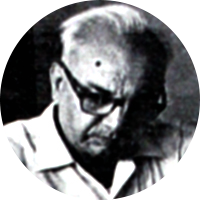
When evaluating Akhtar Shirani's poetry, both novice and seasoned critics will likely first emphasize the fact that he was a romantic poet. Romanticism is such an ambiguous concept that identifying its exact constituent elements is difficult; personal inclinations make all romantics distinct from one another, even while keeping them within the same sphere. Dancing upon the arch of a rainbow and descending into the undulating valleys of twilight, one poet might wish to lose himself entirely in a world of color. Another might consider the universe incomplete without human beauty. Yet another might yearn to touch the body of his beloved just as the morning breeze caresses waves of color and fragrance. And another might wish to pull her into his embrace so tightly that the two dissolve into one another.
Romanticism assumes various guises. Even within its uniformity, one can perceive a certain capriciousness. The restless soul of the romantic sometimes wishes to see nature itself in a state of unrest, while at other times, it seeks to soothe its own restlessness by pursuing nature. Every romantic forges his own world by walking untrodden paths. He extracts elements of dissatisfaction from society, plunging into their veins all the scalpels of his free-thinking and soaring imagination. This is precisely what turns one person into a Wordsworth, another into a Shelley, a Byron, or a Keats. Furthermore, it is this very romantic perspective that gives rise to Rousseau's worldview and brings Schlegel's philosophy into existence.
All of them are romantics, yet all are distinct from one another. Against the political and social backdrop of romanticism, the individual's power of choice and personal inclination must not be ignored. Otherwise, it would be impossible to place Wordsworth's religiosity and Shelley's irreligiosity side by side. However, upon examining the elements they share, it becomes clear that despite their differences, various romantics are not entirely worlds apart. Perhaps this is why romantics across all eras share numerous similarities. If one looks past their specific social contexts, their individuality seems to cherish the exact same set of values.
Shattering the status quo, striving to escape dissatisfaction, constructing a beautiful world through the sheer intensity of emotion and imagination, perceiving the subtleties of the material world in a way that renders them purely ethereal, experiencing anguish and restlessness, searching for a new world, yearning for the peak of spring, the embrace of a beloved, or the desire to die in the lap of joy—these elements will be found, in ever-changing forms, in the work of every romantic. Akhtar Shirani is, through and through, a romantic poet. Therefore, these elements of romanticism are abundantly present in his work as well. The purpose of this brief essay is to analyze these very elements.
At a specific stage in India's social evolution, several prominent realities emerged that were both reflections and extensions of one another. These included political institutions like the All India National Congress; various religious and reformist movements, most notably the comprehensive movement led by Sir Syed; and literary transformations, such as the semi-reformist, semi-rebellious struggles of Azad and Hali. By the dawn of the twentieth century, the yearning for freedom and the influx of Western influences had also birthed an extreme romantic and imaginative worldview, far removed from the realm of practical action. This perspective manifested in various ways: in some as a worship of nature, in others as a rebellion against religion, and in yet others as a vividly imaginative eloquence and a state of passionate self-oblivion.
The chains that should have been broken through political and social struggle began to be broken in the realm of thought. From the very beginnings of modern poetry, the verse of Iqbal, Chakbast, Surroor Jahanabadi, and Azmatullah, alongside the prose of Mehdi Ifadi, Niaz Fatehpuri, Sajjad Ansari, Sajjad Haider Yaldram, Mir Nasir Ali, and Riyaz Khairabadi, used the intricate artistry of imagination to make new gardens bloom within the confines of a limited existence. They intoxicated literary connoisseurs without a single drop of wine. Today, that melody may have grown somewhat stale, but at the time, their literary goblets were leaving the entire youth entranced. Blended with the songs of Europe and Bengal, this wine became doubly and triply potent. Its roots were not particularly deep, yet on the surface, it whipped up such a storm of vibrant colors that it became a boundless flood, sweeping the youth away. Some of these magicians displayed their sleight of hand and vanished within a few days. Others, however, managed to captivate both the heart and the mind in one form or another, and their spellbinding miracles continue to mesmerize us today.
Admittedly, this is a rather crude, incomplete, and somewhat mechanical analysis of the early twentieth century. However, it successfully directs the mind toward the era that gave birth to Josh, Saghar, Hafeez, and Akhtar Shirani. The intention here is not to detail the characteristics of that era, as its features have been highlighted time and again on the pages of history. The goal is simply to examine the boundaries and constituent elements of Akhtar Shirani's romanticism. We must seek out the material catalysts behind his soaring intellect and uncover the social backdrop that lent an air of authenticity to his imagination.
Even a cursory reading of Sheristan, Naghma-e-Haram, Subh-e-Bahar, Akhtaristan, and Lala-e-Toor makes it abundantly clear that Akhtar's imagination revolves entirely around the axis of human emotion. Other themes or subjects appear merely as secondary elements to support his two fundamental concepts. These two central concepts are love and freedom. The beauty of nature, the magic of melody, patriotism, nostalgia, moral dilemmas, and fleeting impressions all serve merely to embellish these core ideas. The clearest articulation of the place these foundational motives hold in his poetry can be found in his quatrains (rubaiyat):
Mausam bhi, umar bhi, shabab bhi hai
Pehlu mein woh rashk-e-mahtab bhi hai
Duniya mein ab aur kya chahiye mujh ko
Saqi bhi hai saaz bhi sharab bhi hai
[The season is right, the age is right, and youth is in full bloom,
By my side is the one who makes the moon envious too.
What else could I possibly need in this world?
I have the cupbearer, the music, and the wine too.]
Ishq o azaadi bahar-e-zeest ka saman hai
Ishq meri jaan azaadi mera iman hai
Ishq par kar doon fida main apni saari zindagi
Lekin azaadi pe mera ishq bhi qurban hai
[Love and freedom are the provisions for the spring of life,
Love is my soul, and freedom is my faith.
I would sacrifice my entire life for love,
But for freedom, even my love can be sacrificed.]
A romantic's battle cry is the cry of love and the cry of freedom. This love is a blend of platonic affection and the physical desire for intimacy, while this freedom is a fusion of individual liberty and a universal spirit of humanism. Therefore, an unambiguous and definitive analysis of these concepts may not be possible. However, merely touching their boundaries will transport us into the colorful valley of Akhtar's thoughts, where the love of Salma and Rehana is everything, and where, if necessary, the sacrifice of love for the sake of freedom is also acceptable. At this juncture, it is not entirely easy to determine whether this freedom—for which even love can be sacrificed—is merely the freedom to love, or the freedom of all mankind, which cannot be attained simply by sacrificing love.
Love is the guiding force behind Akhtar Shirani’s imagination—a love born from the wound of a colorful, heart-piercing arrow shot from Cupid’s beautiful bow. Guided by this beautiful child, he wishes to escape to a world of love where the impurities, hardships, dissatisfactions, and imperfections of material life cannot touch him. He seeks a world devoid of human inhabitants, a valley of divine light and Mount Sinai, where solitude reigns supreme and which is woven entirely from the threads of dreams. Cupid is blind; who knows whether he can actually lead one to such a world? Yet, human imagination possesses immense power. Even if not in tangible reality, it can construct such a world in the mind, and finding solace within it is not particularly difficult. If a romantic were unable to do this, his world would collapse. This is why, whenever Akhtar Shirani confronts the grief and sorrow of this familiar world, his poetry reflects the same tenderness and despair that are the inevitable gifts of the sorrows of love and the struggles of daily life.
As previously mentioned, Akhtar Shirani’s concept of love is kneaded from the essence of both Platonic and physical love. It begins as a physical and sensual attraction, but its pinnacle is an imaginative love where the focus shifts from the beloved to the feeling of love itself—where love, rather than the lover, becomes everything. This phenomenon can be examined from another angle. He repeatedly and passionately mentions Salma, the beautiful maiden from the land of Gujarat; Rehana, who wanders the valleys like a graceful gazelle; and Azra, with her marble-like body, who serves as a vibrant embodiment of wine and poetry. The question arises: are these distinct individuals, or simply different names for a single entity? If they are different women, there is no distinct variation among them. If they are the same, could she merely be the goddess of the poet’s imagination?
At times, it feels as though they have all merged into a single concept that the poet touches only through the flight of his imagination. Could it be that the true beloved is someone he saw only once, someone whose mere glimpse he yearned for, and the others are simply her reflections? Solving these riddles is difficult because, in some instances, these moon-faced girls appear in towns and valleys as embodiments of tangible beauty, radiating freshness and bringing disrepute to the poet. Yet, in other instances, they take the form of dreams and thoughts, calling out to the poet from beyond the horizon, prompting him to plead with Love:
Aye ishq hamein le chal, ik noor ki wadi mein
Ik khwab ki duniya mein, ik Toor ki wadi mein
Hooron ke khayalat-e-masroor ki wadi mein
Ta khuld-e-bareen le chal, aye ishq kahin le chal!
[O Love, take us away, to a valley of light
To a world of dreams, to the valley of Mount Sinai
To the valley of the joyous thoughts of maidens
Take us to the highest heaven, O Love, take us somewhere!]
Sansar ke is paar ik is tarah ki basti ho
Jo sadiyon se insan ki soorat ko tarasti ho
Aur jis ke nazaron par tanhai barasti ho
Yun ho to wahin le chal aye ishq kahin le chal!
[Beyond this world, may there be such a settlement
That has yearned for the sight of a human for centuries
And upon whose landscapes solitude rains down
If such a place exists, take us there, O Love, take us somewhere!]
If you reflect upon these words, this world sometimes feels real, and at other times, merely a creation of desire. Thus, reality is lost in a storm of emotions, and the poet appears entirely intoxicated by the mere expression of love. It is a sincere, youthful, and vibrant love that makes life beautiful. Within this love, there are sighs suppressed by the fear of society, yet its expression remains free from peril. The names of Salma and Rehana are constantly on Akhtar’s lips. Perhaps no other poet has uttered his beloved's name with such audacity, nor presented her in a way that compels readers to set out in search of her. While it may be true that Nazeer Akbarabadi loved Moti, Momin gave his heart to Sahib, and Ghalib fell for a tormenting Domni, it is equally true that such a fully realized, passionate, and romantic expression of love is absent in their works. By Akhtar Shirani’s era, the world had changed enough that a beloved’s name could be spoken aloud, even if she were fictional and veiled in romance and imagination.
The earlier assertion—that the expression of love becomes more important than the beloved herself—is also supported by a psychological analysis of his poem Gujarat Ki Raat (The Night of Gujarat). The first couplet reads:
Aaj qismat se nazar aati hai barsat ki raat
Kya bigar jaye ga reh jao yahin raat ki raat
[Today, by good fortune, a rainy night has appeared
What harm would it do if you stayed here just for tonight?]
And the second couplet is:
Un ki pa-bosi ko jana to saba keh dena
Aaj tak yaad hai woh aap ke Gujarat ki raat
[When you go to kiss her feet, O morning breeze, tell her
I still remember that night of your Gujarat]
In the first couplet, he addresses the beloved directly, as if she is physically present. However, in all the subsequent couplets, she is elsewhere, necessitating the dispatch of a message through the morning breeze. One might call this a structural flaw, but rather than a mistake, I view it as an indulgence in desire and a blending of reality that is typical of a romantic. His intense longing—if only the beloved were here for a fleeting moment—momentarily materializes her before him. When that apparition vanishes, the poet, reflecting on the conversations of that night, consoles himself with memories of Salma and begins sending her messages via the morning breeze.
In short, Akhtar’s concept of love begins in the material realm but ultimately transforms into something purely imaginative. Whenever he fears any obstruction from the world or society, he wishes to take his beloved and his love and escape to another world where they can love freely. Like most romantics, he harbors no desire to change society; rather, his impulse is simply to retreat from it.
This raises the question: does Akhtar Shirani’s poetry possess any social backdrop? Answering this is difficult. While Akhtar does rebel against certain societal restrictions and traditions in a few poems, a broader social consciousness is largely absent from his world. He directs his anger only at those societal constraints that seem to suffocate the spirit of love. Otherwise, in his universe of love, there are no social classes, no oppression of the weak by the powerful, no economic struggles, and no systemic injustices. To him, the world appears rife with filth, dishonesty, and hypocrisy, yet he lacks a clear, nuanced understanding of the specific nature of these injustices and corruptions.
Generally, he only mentions these societal flaws in the context of love, which reveals that his awareness of society's evils is entirely tethered to his concept of romance. In countless instances, Akhtar Shirani has confessed that his world consists of nothing but love. When a rose-faced beauty asked him how he was spending his days, Akhtar responded by writing a long poem detailing his occupation, titled Mera Maujooda Mashghala (My Current Occupation). The following couplets from it are particularly noteworthy:
Adab se ja ke kehna aye saba us shokh-e-pur-fan se
Ke roman aur mohabbat mashghala hai mera bachpan se
[Go respectfully, O morning breeze, and tell that artful beauty
That romance and love have been my occupation since childhood]
Mohabbat ke liye aaya hoon main duniya ki mehfil mein
Mohabbat khoon ban kar lahlahati hai mere dil mein
[I have come into the gathering of this world only for love
Love flows like blood, surging within my heart]
Har ik shair muqaddar apna apne sath laya hai
Mohabbat ka junoon tanha mere hisse mein aaya hai
[Every poet has brought his own destiny with him
But the madness of love has fallen to my lot alone]
Mohabbat ibtida meri, mohabbat intiha meri
Mohabbat se ibarat hai, baqa meri fana meri
[Love is my beginning, love is my end
My existence and my annihilation are defined by love]
Mohabbat aarzoo meri, mohabbat justaju meri
Mohabbat khamoshi meri, mohabbat guftagu meri
[Love is my desire, love is my quest
Love is my silence, love is my speech]
After equating everything—even God—with love, this meaningful couplet appears near the end of the poem:
Main is dhun mein makan-o-lamakan ko bhool jata hoon
Khayal-e-gulistan mein gulistan ko bhool jata hoon
[In this obsession, I forget the bounds of space and the spaceless,
In the thought of the garden, I forget the garden itself.]
This is the very state of being lost in love that I mentioned earlier—where, in the pursuit of love, the actual beloved is forgotten, and women become mere goddesses of the imagination. As he expresses in his famous poem, Naghma-e-Bahar (The Song of Spring):
Is tarah is Iram-e-khwab-numa mein Akhtar
Apne afkar ki Azraon ko uriyan kar dein
[In this dream-like paradise, O Akhtar,
Let us unveil the Azras of our thoughts.]
So much for Akhtar Sheerani’s concept of love. In his poetry, freedom also emerges as a tangible goddess. Many of his poems are brimming with patriotic fervor, and several sing the praises of liberty, yet his ultimate vision of freedom remains somewhat ambiguous. Being of Afghan descent and hailing from Sherwan, Akhtar displays a deep, heartfelt connection to the mountains of Afghanistan. When the revolution occurred during King Amanullah's reign and Bacha Saqao briefly seized power, Akhtar was deeply heartbroken. This anguish is expressed in poems like Aashiqana Maut, yaani Qandahar Chal (A Lover's Death, or Let Us Go to Kandahar) and Fateh Kabul (The Conquest of Kabul). The same sentiment drives his poem Saqi Talwar Utha (O Cupbearer, Raise the Sword). This brings to mind the English Romantic poet Lord Byron, who was passionately restless to liberate Greece from the Turks.
Byron’s class consciousness and the Romantics' deep attachment to the land of Greece are well-defined concepts; through this lens, Byron’s passion for freedom is easy to understand. In Akhtar’s work, however, this clarity is lacking. Even in the poem he wrote on the Khatima-e-Jang (The End of the War), there is no evidence of political astuteness. Nevertheless, what these songs do reveal is a genuine love for his homeland and a passion for liberty, entirely free from the taint of hypocritical political factionalism. His war anthems possess sincerity, even if they lack political consciousness. It is precisely this sincerity in a Romantic poet that brings a sense of rapture, harmony, and truth to the contradictory aspects of his character and thought. A Romantic both shatters traditions and remains a captive to them.
It depends entirely on the poet's own consciousness and awareness as to which traditions he upholds and which he rebels against. Since his primary weapons are the intensity of his emotions and the power of his imagination, he simply expresses whatever takes hold of his mind, regardless of whether it contradicts his other beliefs. Akhtar, too, despite his boldness and audacity in expressing love, could not entirely discard traditional moral conventions. His portrayal of the courtesan is highly conventional and lacks social awareness. His moral viewpoints are almost archaic. On the one hand, he exhibits a fiery passion for the freedom of love and romance; on the other, he uses poetic arguments to advocate for keeping women in purdah (the veil):
Jab har ik turfa latafat hai nihan parde mein
Phir bura kya hai jo aurat hai nihan parde mein
[When every exquisite elegance is hidden within the veil,
Then what is wrong if a woman is hidden within the veil?]
A religious atmosphere overshadows his sensibilities, manifesting as the specter of sin and vice that obstructs his path, urging him to preach the secrets of sanctity and innocence. This didactic, sermonizing tone is completely at odds with his Romantic poetry. Because of this religious influence, his Romanticism often retreats before the dread of sin. And these sins that make him tremble are not major societal transgressions; rather, they are merely the feelings and moral dilemmas associated with a life of love and desire. In such instances, a rigid conventionality plagues both his imagination and his expression.
To expect a specific ideological system or a profound message from a highly emotional and imaginative Romantic poet is somewhat pointless. Akhtar’s poetry possesses neither philosophical depth nor a grand vision of human greatness; the great enigmas of existence never seemed to trouble him. He was never tormented by a thirst to unravel the secrets of the universe. It appears that his entire life became singularly focused on love, around which he constructed elaborate palaces of dreams. He might have spared a glance for the pain and suffering of others had he ever found a moment's respite from creating a world perfectly attuned to the beauty of his muses, Salma and Rehana. But for him, either Salma is always by his side, or he is entirely consumed by her memory.
Akhtar Sheerani’s poetry is the expression of a carefree young man's emotional outbursts. The moment the sorrows of reality or the complex problems of life seep into his work, its vibrancy fades and its impact weakens. However, this does not mean his poetry is devoid of value or lacks charm. On the contrary, one of its greatest merits is that Akhtar’s individualism does not negate social and collective life. While he certainly harbors a desire to build a separate world of his own, his mind is not morbid. His imagination is neither dead nor dreary. His passion to love, to live fully and leave a mark, and his willingness to sacrifice even love for the sake of freedom are not qualities that can be easily ignored. There is no malice in his heart. Even if only in the intoxication of wine, he harbors this grand desire:
Azmat-e-faqr ke rakhshanda jamalon ki qasam
Zarre zarre ko hareef-e-mah-e-tabaan kar dein
Be-nawayan-e-dar-e-peer-e-mughan ko humdam
Qaisar-e-aalam-o-shahenshah-e-dauran kar dein
Muntazir aalam-e-nau ka hai jahan-e-kuhna
Shab-e-teera se ayaan subh-e-darakhshan kar dein
[By the radiant beauty of the greatness of asceticism,
Let us make every speck of dust a rival to the shining moon.
The voiceless beggars at the tavern-keeper's door, my friend,
Let us crown them the emperors of the world and kings of the age.
The old world is waiting for a new universe,
From the dark night, let us bring forth a brilliant dawn.]
He was, at his core, a Romantic and an idealist. Translating these lofty desires into reality was beyond his power, but by pointing toward them, he undoubtedly provided a guiding light for others.
When reading Akhtar Sheerani’s poems, one often notices that his brand of Romanticism differs significantly from the thought and expression of other Romantic poets. The strumming of his lyrical chords, the rise and fall of his melodies, and the rhythmic cadence of his voice create a deeply musical atmosphere, leaving me wondering: where did this sweetness and intoxicating mood come from? It seems to me that Akhtar derived his idealized concepts of Salma, Rehana, and Azra from Arabic poetry. The practice of expressing love by explicitly naming the beloved was also adopted from there, as this tradition is most prominent in Arabic literature. References to Rehana’s Bedouin beauty, Akhtar’s self-proclaimed status as a lover of the Bedouin way, and his confessions of being enraptured by the desert lifestyle all direct the mind toward this Arabic influence. While direct traces of Arabic literature are not overwhelmingly prevalent in Akhtar Sheerani’s poetry, this influence is unmistakably evident in Jamal-e-Salma (The Beauty of Salma). Thus, I believe that while he inherited this specific mode of romantic expression from Arabic poetry, it was Persian (Ajami) poetry that bestowed upon him the treasures of vibrancy, universality, idealism, and rapture.
The influence of English poetry does not appear to be very profound, but upon injuring his foot, he expressed a desire to become Byron (and I have already pointed out his resemblance to Byron). The Afghan spirit of freedom and carefree nature added a soldierly elegance to his imagination. India, in addition to music, imparted a slight rebellious inclination to him, which can be seen as a reaction to various social restrictions. From Islam, he adopted a moral perspective. Thus, drawing from all this material, his romanticism wove a colorful dream of love and freedom—a dream encompassing beauty and truth, energy and delicacy, pleasure and restlessness. This dream is entirely filled with matters of beauty and love, and its interpretation is exactly that. These very elements constitute the individual hue of Akhtar Shirani's poetry, which his artistic consciousness has molded into beautiful melodies.
Emotionalism is the creator of lyricism, and lyricism is the very soul of Akhtar's poetry. His poetry relies heavily on his melodious mode of expression. While the intention here is not to detail the characteristics of his poetry and art, one cannot fully do justice to his work without experiencing the musicality, fluency, resonance, flow, imagery, and delicacy of his poems. To express his subjectivity, he requires the embellishment of artistic tools. Even the objectivity found in Akhtar Shirani's work does not emerge as a melody from his instrument until it becomes a part of his internal feelings—until it dives into the vibrant colors of his emotions and fully absorbs their hue.
He highlights features with deep colors and, rather than ugliness, creates beauty within them, because the intensity of his sincerity allows his brush to paint emotionally evocative pictures. Conversely, the moral concepts that he could not properly absorb always manifest in the form of dry, lifeless couplets. However, the songs of love that he sings, waking or sleeping, become colorful and intoxicating through the trembling waves of color and light.
Naturally, a mind shaped by the philosophy of Hafiz and Khayyam, stepping forward under the guidance of a blind Cupid, could not take us very far on the winding paths of life. But is it any small feat that Akhtar Shirani captured the heartbeats of youth and love in his poems, singing passionate, ecstatic songs of romance? He never used his poetry to support social injustices, nor did he ever sing against freedom. He delivered a message of laying down one's life for love and freedom, even if it cannot be considered a true message in the context of today's social and political struggles.
He bestowed upon Urdu poetry the wealth of a new style and a new artistic consciousness, which will always hold an important place in the evolution of our modern poetry. Perhaps such romantic poets will no longer be born in Urdu, but future generations will continue to borrow boldness, courage, passion, musicality, and intoxication from Akhtar's poetry to express their aspirations and ideals. And many young people—at that stage of life when a lost beloved seems like a dream of youth and a heavenly maiden—will continue to sing his poems and recite his couplets, because the love he desires is a committed emotion:
Woh ishq pesha hoon main jis ke jawan naghmay
Gata hai chandni mein har naujawan-e-sahra
[I am that practitioner of love whose youthful melodies
Every young man of the desert sings in the moonlight]
When evaluating Akhtar Shirani's poetry, both novice and seasoned critics will likely first emphasize the fact that he was a romantic poet. Romanticism is such an ambiguous concept that identifying its exact constituent elements is difficult; personal inclinations make all romantics distinct from one another, even while keeping them within the same sphere. Dancing upon the arch of a rainbow and descending into the undulating valleys of twilight, one poet might wish to lose himself entirely in a world of color. Another might consider the universe incomplete without human beauty. Yet another might yearn to touch the body of his beloved just as the morning breeze caresses waves of color and fragrance. And another might wish to pull her into his embrace so tightly that the two dissolve into one another.
Romanticism assumes various guises. Even within its uniformity, one can perceive a certain capriciousness. The restless soul of the romantic sometimes wishes to see nature itself in a state of unrest, while at other times, it seeks to soothe its own restlessness by pursuing nature. Every romantic forges his own world by walking untrodden paths. He extracts elements of dissatisfaction from society, plunging into their veins all the scalpels of his free-thinking and soaring imagination. This is precisely what turns one person into a Wordsworth, another into a Shelley, a Byron, or a Keats. Furthermore, it is this very romantic perspective that gives rise to Rousseau's worldview and brings Schlegel's philosophy into existence.
All of them are romantics, yet all are distinct from one another. Against the political and social backdrop of romanticism, the individual's power of choice and personal inclination must not be ignored. Otherwise, it would be impossible to place Wordsworth's religiosity and Shelley's irreligiosity side by side. However, upon examining the elements they share, it becomes clear that despite their differences, various romantics are not entirely worlds apart. Perhaps this is why romantics across all eras share numerous similarities. If one looks past their specific social contexts, their individuality seems to cherish the exact same set of values.
Shattering the status quo, striving to escape dissatisfaction, constructing a beautiful world through the sheer intensity of emotion and imagination, perceiving the subtleties of the material world in a way that renders them purely ethereal, experiencing anguish and restlessness, searching for a new world, yearning for the peak of spring, the embrace of a beloved, or the desire to die in the lap of joy—these elements will be found, in ever-changing forms, in the work of every romantic. Akhtar Shirani is, through and through, a romantic poet. Therefore, these elements of romanticism are abundantly present in his work as well. The purpose of this brief essay is to analyze these very elements.
At a specific stage in India's social evolution, several prominent realities emerged that were both reflections and extensions of one another. These included political institutions like the All India National Congress; various religious and reformist movements, most notably the comprehensive movement led by Sir Syed; and literary transformations, such as the semi-reformist, semi-rebellious struggles of Azad and Hali. By the dawn of the twentieth century, the yearning for freedom and the influx of Western influences had also birthed an extreme romantic and imaginative worldview, far removed from the realm of practical action. This perspective manifested in various ways: in some as a worship of nature, in others as a rebellion against religion, and in yet others as a vividly imaginative eloquence and a state of passionate self-oblivion.
The chains that should have been broken through political and social struggle began to be broken in the realm of thought. From the very beginnings of modern poetry, the verse of Iqbal, Chakbast, Surroor Jahanabadi, and Azmatullah, alongside the prose of Mehdi Ifadi, Niaz Fatehpuri, Sajjad Ansari, Sajjad Haider Yaldram, Mir Nasir Ali, and Riyaz Khairabadi, used the intricate artistry of imagination to make new gardens bloom within the confines of a limited existence. They intoxicated literary connoisseurs without a single drop of wine. Today, that melody may have grown somewhat stale, but at the time, their literary goblets were leaving the entire youth entranced. Blended with the songs of Europe and Bengal, this wine became doubly and triply potent. Its roots were not particularly deep, yet on the surface, it whipped up such a storm of vibrant colors that it became a boundless flood, sweeping the youth away. Some of these magicians displayed their sleight of hand and vanished within a few days. Others, however, managed to captivate both the heart and the mind in one form or another, and their spellbinding miracles continue to mesmerize us today.
Admittedly, this is a rather crude, incomplete, and somewhat mechanical analysis of the early twentieth century. However, it successfully directs the mind toward the era that gave birth to Josh, Saghar, Hafeez, and Akhtar Shirani. The intention here is not to detail the characteristics of that era, as its features have been highlighted time and again on the pages of history. The goal is simply to examine the boundaries and constituent elements of Akhtar Shirani's romanticism. We must seek out the material catalysts behind his soaring intellect and uncover the social backdrop that lent an air of authenticity to his imagination.
Even a cursory reading of Sheristan, Naghma-e-Haram, Subh-e-Bahar, Akhtaristan, and Lala-e-Toor makes it abundantly clear that Akhtar's imagination revolves entirely around the axis of human emotion. Other themes or subjects appear merely as secondary elements to support his two fundamental concepts. These two central concepts are love and freedom. The beauty of nature, the magic of melody, patriotism, nostalgia, moral dilemmas, and fleeting impressions all serve merely to embellish these core ideas. The clearest articulation of the place these foundational motives hold in his poetry can be found in his quatrains (rubaiyat):
Mausam bhi, umar bhi, shabab bhi hai
Pehlu mein woh rashk-e-mahtab bhi hai
Duniya mein ab aur kya chahiye mujh ko
Saqi bhi hai saaz bhi sharab bhi hai
[The season is right, the age is right, and youth is in full bloom,
By my side is the one who makes the moon envious too.
What else could I possibly need in this world?
I have the cupbearer, the music, and the wine too.]
Ishq o azaadi bahar-e-zeest ka saman hai
Ishq meri jaan azaadi mera iman hai
Ishq par kar doon fida main apni saari zindagi
Lekin azaadi pe mera ishq bhi qurban hai
[Love and freedom are the provisions for the spring of life,
Love is my soul, and freedom is my faith.
I would sacrifice my entire life for love,
But for freedom, even my love can be sacrificed.]
A romantic's battle cry is the cry of love and the cry of freedom. This love is a blend of platonic affection and the physical desire for intimacy, while this freedom is a fusion of individual liberty and a universal spirit of humanism. Therefore, an unambiguous and definitive analysis of these concepts may not be possible. However, merely touching their boundaries will transport us into the colorful valley of Akhtar's thoughts, where the love of Salma and Rehana is everything, and where, if necessary, the sacrifice of love for the sake of freedom is also acceptable. At this juncture, it is not entirely easy to determine whether this freedom—for which even love can be sacrificed—is merely the freedom to love, or the freedom of all mankind, which cannot be attained simply by sacrificing love.
Love is the guiding force behind Akhtar Shirani’s imagination—a love born from the wound of a colorful, heart-piercing arrow shot from Cupid’s beautiful bow. Guided by this beautiful child, he wishes to escape to a world of love where the impurities, hardships, dissatisfactions, and imperfections of material life cannot touch him. He seeks a world devoid of human inhabitants, a valley of divine light and Mount Sinai, where solitude reigns supreme and which is woven entirely from the threads of dreams. Cupid is blind; who knows whether he can actually lead one to such a world? Yet, human imagination possesses immense power. Even if not in tangible reality, it can construct such a world in the mind, and finding solace within it is not particularly difficult. If a romantic were unable to do this, his world would collapse. This is why, whenever Akhtar Shirani confronts the grief and sorrow of this familiar world, his poetry reflects the same tenderness and despair that are the inevitable gifts of the sorrows of love and the struggles of daily life.
As previously mentioned, Akhtar Shirani’s concept of love is kneaded from the essence of both Platonic and physical love. It begins as a physical and sensual attraction, but its pinnacle is an imaginative love where the focus shifts from the beloved to the feeling of love itself—where love, rather than the lover, becomes everything. This phenomenon can be examined from another angle. He repeatedly and passionately mentions Salma, the beautiful maiden from the land of Gujarat; Rehana, who wanders the valleys like a graceful gazelle; and Azra, with her marble-like body, who serves as a vibrant embodiment of wine and poetry. The question arises: are these distinct individuals, or simply different names for a single entity? If they are different women, there is no distinct variation among them. If they are the same, could she merely be the goddess of the poet’s imagination?
At times, it feels as though they have all merged into a single concept that the poet touches only through the flight of his imagination. Could it be that the true beloved is someone he saw only once, someone whose mere glimpse he yearned for, and the others are simply her reflections? Solving these riddles is difficult because, in some instances, these moon-faced girls appear in towns and valleys as embodiments of tangible beauty, radiating freshness and bringing disrepute to the poet. Yet, in other instances, they take the form of dreams and thoughts, calling out to the poet from beyond the horizon, prompting him to plead with Love:
Aye ishq hamein le chal, ik noor ki wadi mein
Ik khwab ki duniya mein, ik Toor ki wadi mein
Hooron ke khayalat-e-masroor ki wadi mein
Ta khuld-e-bareen le chal, aye ishq kahin le chal!
[O Love, take us away, to a valley of light
To a world of dreams, to the valley of Mount Sinai
To the valley of the joyous thoughts of maidens
Take us to the highest heaven, O Love, take us somewhere!]
Sansar ke is paar ik is tarah ki basti ho
Jo sadiyon se insan ki soorat ko tarasti ho
Aur jis ke nazaron par tanhai barasti ho
Yun ho to wahin le chal aye ishq kahin le chal!
[Beyond this world, may there be such a settlement
That has yearned for the sight of a human for centuries
And upon whose landscapes solitude rains down
If such a place exists, take us there, O Love, take us somewhere!]
If you reflect upon these words, this world sometimes feels real, and at other times, merely a creation of desire. Thus, reality is lost in a storm of emotions, and the poet appears entirely intoxicated by the mere expression of love. It is a sincere, youthful, and vibrant love that makes life beautiful. Within this love, there are sighs suppressed by the fear of society, yet its expression remains free from peril. The names of Salma and Rehana are constantly on Akhtar’s lips. Perhaps no other poet has uttered his beloved's name with such audacity, nor presented her in a way that compels readers to set out in search of her. While it may be true that Nazeer Akbarabadi loved Moti, Momin gave his heart to Sahib, and Ghalib fell for a tormenting Domni, it is equally true that such a fully realized, passionate, and romantic expression of love is absent in their works. By Akhtar Shirani’s era, the world had changed enough that a beloved’s name could be spoken aloud, even if she were fictional and veiled in romance and imagination.
The earlier assertion—that the expression of love becomes more important than the beloved herself—is also supported by a psychological analysis of his poem Gujarat Ki Raat (The Night of Gujarat). The first couplet reads:
Aaj qismat se nazar aati hai barsat ki raat
Kya bigar jaye ga reh jao yahin raat ki raat
[Today, by good fortune, a rainy night has appeared
What harm would it do if you stayed here just for tonight?]
And the second couplet is:
Un ki pa-bosi ko jana to saba keh dena
Aaj tak yaad hai woh aap ke Gujarat ki raat
[When you go to kiss her feet, O morning breeze, tell her
I still remember that night of your Gujarat]
In the first couplet, he addresses the beloved directly, as if she is physically present. However, in all the subsequent couplets, she is elsewhere, necessitating the dispatch of a message through the morning breeze. One might call this a structural flaw, but rather than a mistake, I view it as an indulgence in desire and a blending of reality that is typical of a romantic. His intense longing—if only the beloved were here for a fleeting moment—momentarily materializes her before him. When that apparition vanishes, the poet, reflecting on the conversations of that night, consoles himself with memories of Salma and begins sending her messages via the morning breeze.
In short, Akhtar’s concept of love begins in the material realm but ultimately transforms into something purely imaginative. Whenever he fears any obstruction from the world or society, he wishes to take his beloved and his love and escape to another world where they can love freely. Like most romantics, he harbors no desire to change society; rather, his impulse is simply to retreat from it.
This raises the question: does Akhtar Shirani’s poetry possess any social backdrop? Answering this is difficult. While Akhtar does rebel against certain societal restrictions and traditions in a few poems, a broader social consciousness is largely absent from his world. He directs his anger only at those societal constraints that seem to suffocate the spirit of love. Otherwise, in his universe of love, there are no social classes, no oppression of the weak by the powerful, no economic struggles, and no systemic injustices. To him, the world appears rife with filth, dishonesty, and hypocrisy, yet he lacks a clear, nuanced understanding of the specific nature of these injustices and corruptions.
Generally, he only mentions these societal flaws in the context of love, which reveals that his awareness of society's evils is entirely tethered to his concept of romance. In countless instances, Akhtar Shirani has confessed that his world consists of nothing but love. When a rose-faced beauty asked him how he was spending his days, Akhtar responded by writing a long poem detailing his occupation, titled Mera Maujooda Mashghala (My Current Occupation). The following couplets from it are particularly noteworthy:
Adab se ja ke kehna aye saba us shokh-e-pur-fan se
Ke roman aur mohabbat mashghala hai mera bachpan se
[Go respectfully, O morning breeze, and tell that artful beauty
That romance and love have been my occupation since childhood]
Mohabbat ke liye aaya hoon main duniya ki mehfil mein
Mohabbat khoon ban kar lahlahati hai mere dil mein
[I have come into the gathering of this world only for love
Love flows like blood, surging within my heart]
Har ik shair muqaddar apna apne sath laya hai
Mohabbat ka junoon tanha mere hisse mein aaya hai
[Every poet has brought his own destiny with him
But the madness of love has fallen to my lot alone]
Mohabbat ibtida meri, mohabbat intiha meri
Mohabbat se ibarat hai, baqa meri fana meri
[Love is my beginning, love is my end
My existence and my annihilation are defined by love]
Mohabbat aarzoo meri, mohabbat justaju meri
Mohabbat khamoshi meri, mohabbat guftagu meri
[Love is my desire, love is my quest
Love is my silence, love is my speech]
After equating everything—even God—with love, this meaningful couplet appears near the end of the poem:
Main is dhun mein makan-o-lamakan ko bhool jata hoon
Khayal-e-gulistan mein gulistan ko bhool jata hoon
[In this obsession, I forget the bounds of space and the spaceless,
In the thought of the garden, I forget the garden itself.]
This is the very state of being lost in love that I mentioned earlier—where, in the pursuit of love, the actual beloved is forgotten, and women become mere goddesses of the imagination. As he expresses in his famous poem, Naghma-e-Bahar (The Song of Spring):
Is tarah is Iram-e-khwab-numa mein Akhtar
Apne afkar ki Azraon ko uriyan kar dein
[In this dream-like paradise, O Akhtar,
Let us unveil the Azras of our thoughts.]
So much for Akhtar Sheerani’s concept of love. In his poetry, freedom also emerges as a tangible goddess. Many of his poems are brimming with patriotic fervor, and several sing the praises of liberty, yet his ultimate vision of freedom remains somewhat ambiguous. Being of Afghan descent and hailing from Sherwan, Akhtar displays a deep, heartfelt connection to the mountains of Afghanistan. When the revolution occurred during King Amanullah's reign and Bacha Saqao briefly seized power, Akhtar was deeply heartbroken. This anguish is expressed in poems like Aashiqana Maut, yaani Qandahar Chal (A Lover's Death, or Let Us Go to Kandahar) and Fateh Kabul (The Conquest of Kabul). The same sentiment drives his poem Saqi Talwar Utha (O Cupbearer, Raise the Sword). This brings to mind the English Romantic poet Lord Byron, who was passionately restless to liberate Greece from the Turks.
Byron’s class consciousness and the Romantics' deep attachment to the land of Greece are well-defined concepts; through this lens, Byron’s passion for freedom is easy to understand. In Akhtar’s work, however, this clarity is lacking. Even in the poem he wrote on the Khatima-e-Jang (The End of the War), there is no evidence of political astuteness. Nevertheless, what these songs do reveal is a genuine love for his homeland and a passion for liberty, entirely free from the taint of hypocritical political factionalism. His war anthems possess sincerity, even if they lack political consciousness. It is precisely this sincerity in a Romantic poet that brings a sense of rapture, harmony, and truth to the contradictory aspects of his character and thought. A Romantic both shatters traditions and remains a captive to them.
It depends entirely on the poet's own consciousness and awareness as to which traditions he upholds and which he rebels against. Since his primary weapons are the intensity of his emotions and the power of his imagination, he simply expresses whatever takes hold of his mind, regardless of whether it contradicts his other beliefs. Akhtar, too, despite his boldness and audacity in expressing love, could not entirely discard traditional moral conventions. His portrayal of the courtesan is highly conventional and lacks social awareness. His moral viewpoints are almost archaic. On the one hand, he exhibits a fiery passion for the freedom of love and romance; on the other, he uses poetic arguments to advocate for keeping women in purdah (the veil):
Jab har ik turfa latafat hai nihan parde mein
Phir bura kya hai jo aurat hai nihan parde mein
[When every exquisite elegance is hidden within the veil,
Then what is wrong if a woman is hidden within the veil?]
A religious atmosphere overshadows his sensibilities, manifesting as the specter of sin and vice that obstructs his path, urging him to preach the secrets of sanctity and innocence. This didactic, sermonizing tone is completely at odds with his Romantic poetry. Because of this religious influence, his Romanticism often retreats before the dread of sin. And these sins that make him tremble are not major societal transgressions; rather, they are merely the feelings and moral dilemmas associated with a life of love and desire. In such instances, a rigid conventionality plagues both his imagination and his expression.
To expect a specific ideological system or a profound message from a highly emotional and imaginative Romantic poet is somewhat pointless. Akhtar’s poetry possesses neither philosophical depth nor a grand vision of human greatness; the great enigmas of existence never seemed to trouble him. He was never tormented by a thirst to unravel the secrets of the universe. It appears that his entire life became singularly focused on love, around which he constructed elaborate palaces of dreams. He might have spared a glance for the pain and suffering of others had he ever found a moment's respite from creating a world perfectly attuned to the beauty of his muses, Salma and Rehana. But for him, either Salma is always by his side, or he is entirely consumed by her memory.
Akhtar Sheerani’s poetry is the expression of a carefree young man's emotional outbursts. The moment the sorrows of reality or the complex problems of life seep into his work, its vibrancy fades and its impact weakens. However, this does not mean his poetry is devoid of value or lacks charm. On the contrary, one of its greatest merits is that Akhtar’s individualism does not negate social and collective life. While he certainly harbors a desire to build a separate world of his own, his mind is not morbid. His imagination is neither dead nor dreary. His passion to love, to live fully and leave a mark, and his willingness to sacrifice even love for the sake of freedom are not qualities that can be easily ignored. There is no malice in his heart. Even if only in the intoxication of wine, he harbors this grand desire:
Azmat-e-faqr ke rakhshanda jamalon ki qasam
Zarre zarre ko hareef-e-mah-e-tabaan kar dein
Be-nawayan-e-dar-e-peer-e-mughan ko humdam
Qaisar-e-aalam-o-shahenshah-e-dauran kar dein
Muntazir aalam-e-nau ka hai jahan-e-kuhna
Shab-e-teera se ayaan subh-e-darakhshan kar dein
[By the radiant beauty of the greatness of asceticism,
Let us make every speck of dust a rival to the shining moon.
The voiceless beggars at the tavern-keeper's door, my friend,
Let us crown them the emperors of the world and kings of the age.
The old world is waiting for a new universe,
From the dark night, let us bring forth a brilliant dawn.]
He was, at his core, a Romantic and an idealist. Translating these lofty desires into reality was beyond his power, but by pointing toward them, he undoubtedly provided a guiding light for others.
When reading Akhtar Sheerani’s poems, one often notices that his brand of Romanticism differs significantly from the thought and expression of other Romantic poets. The strumming of his lyrical chords, the rise and fall of his melodies, and the rhythmic cadence of his voice create a deeply musical atmosphere, leaving me wondering: where did this sweetness and intoxicating mood come from? It seems to me that Akhtar derived his idealized concepts of Salma, Rehana, and Azra from Arabic poetry. The practice of expressing love by explicitly naming the beloved was also adopted from there, as this tradition is most prominent in Arabic literature. References to Rehana’s Bedouin beauty, Akhtar’s self-proclaimed status as a lover of the Bedouin way, and his confessions of being enraptured by the desert lifestyle all direct the mind toward this Arabic influence. While direct traces of Arabic literature are not overwhelmingly prevalent in Akhtar Sheerani’s poetry, this influence is unmistakably evident in Jamal-e-Salma (The Beauty of Salma). Thus, I believe that while he inherited this specific mode of romantic expression from Arabic poetry, it was Persian (Ajami) poetry that bestowed upon him the treasures of vibrancy, universality, idealism, and rapture.
The influence of English poetry does not appear to be very profound, but upon injuring his foot, he expressed a desire to become Byron (and I have already pointed out his resemblance to Byron). The Afghan spirit of freedom and carefree nature added a soldierly elegance to his imagination. India, in addition to music, imparted a slight rebellious inclination to him, which can be seen as a reaction to various social restrictions. From Islam, he adopted a moral perspective. Thus, drawing from all this material, his romanticism wove a colorful dream of love and freedom—a dream encompassing beauty and truth, energy and delicacy, pleasure and restlessness. This dream is entirely filled with matters of beauty and love, and its interpretation is exactly that. These very elements constitute the individual hue of Akhtar Shirani's poetry, which his artistic consciousness has molded into beautiful melodies.
Emotionalism is the creator of lyricism, and lyricism is the very soul of Akhtar's poetry. His poetry relies heavily on his melodious mode of expression. While the intention here is not to detail the characteristics of his poetry and art, one cannot fully do justice to his work without experiencing the musicality, fluency, resonance, flow, imagery, and delicacy of his poems. To express his subjectivity, he requires the embellishment of artistic tools. Even the objectivity found in Akhtar Shirani's work does not emerge as a melody from his instrument until it becomes a part of his internal feelings—until it dives into the vibrant colors of his emotions and fully absorbs their hue.
He highlights features with deep colors and, rather than ugliness, creates beauty within them, because the intensity of his sincerity allows his brush to paint emotionally evocative pictures. Conversely, the moral concepts that he could not properly absorb always manifest in the form of dry, lifeless couplets. However, the songs of love that he sings, waking or sleeping, become colorful and intoxicating through the trembling waves of color and light.
Naturally, a mind shaped by the philosophy of Hafiz and Khayyam, stepping forward under the guidance of a blind Cupid, could not take us very far on the winding paths of life. But is it any small feat that Akhtar Shirani captured the heartbeats of youth and love in his poems, singing passionate, ecstatic songs of romance? He never used his poetry to support social injustices, nor did he ever sing against freedom. He delivered a message of laying down one's life for love and freedom, even if it cannot be considered a true message in the context of today's social and political struggles.
He bestowed upon Urdu poetry the wealth of a new style and a new artistic consciousness, which will always hold an important place in the evolution of our modern poetry. Perhaps such romantic poets will no longer be born in Urdu, but future generations will continue to borrow boldness, courage, passion, musicality, and intoxication from Akhtar's poetry to express their aspirations and ideals. And many young people—at that stage of life when a lost beloved seems like a dream of youth and a heavenly maiden—will continue to sing his poems and recite his couplets, because the love he desires is a committed emotion:
Woh ishq pesha hoon main jis ke jawan naghmay
Gata hai chandni mein har naujawan-e-sahra
[I am that practitioner of love whose youthful melodies
Every young man of the desert sings in the moonlight]
- रचनाकार :सय्यद एहतिशाम हुसैन
- प्रकाशन : मोहम्मद नजमुल हसन
Additional information available
Click on the INTERESTING button to view additional information associated with this sher.
About this sher
rare Unpublished content
This ghazal contains ashaar not published in the public domain. These are marked by a red line on the left.